AI Communications










Slower support, feature gaps, and an AI roadmap pointed elsewhere: what’s driving enterprise teams to look beyond Vonage in 2026.
If you’re evaluating alternatives to Vonage, the reasons are practical: support tickets take longer to close than they used to, feature requests sit dormant past a release cycle, and the AI capabilities competitors are pitching never make it into your renewal conversation.
There’s a structural reason for it. Ericsson bought Vonage for $6.2 billion in 2022, mainly for its developer API platform, the infrastructure that lets telecoms and enterprises embed voice, messaging, and video into their own products. For teams weighing renewal, the ownership change matters less than the outcome: investment and product decisions have shifted toward a different market.
The platform still works. Support still answers. But investment, engineering, and roadmap priorities increasingly point toward CPaaS, not the packaged UCaaS experience you’re trying to replace.
The seven alternatives in this guide are the platforms enterprise and mid-market teams are actively choosing instead, each assessed on uptime service-level agreements (SLAs), native AI, integration depth, and what it actually costs to move your numbers over.
Key takeaways
- Vonage is now an Ericsson subsidiary, and its product direction shifted toward developer APIs rather than packaged UCaaS.
- Top Vonage alternatives for enterprise and mid-market teams include RingCentral, Nextiva, 8×8, Dialpad, GoTo Connect, Zoom Phone, and Ooma.
- RingCentral leads with a 99.999% uptime SLA, agentic AI built in at no extra cost, and over 500 integrations, without the API-first complexity Vonage now emphasizes.
- When evaluating alternatives, prioritize uptime SLA, native AI features (not add-ons), integration depth with your CRM and helpdesk, and number porting speed.
Why businesses are switching from Vonage
Four concerns come up repeatedly across analyst reviews, buyer community forums, and support discussions about Vonage competitors:
1. Ericsson acquisition and product direction shift
After the 2022 acquisition, Vonage’s UCaaS roadmap has been subordinated to Ericsson’s broader communications API and CPaaS strategy. Buyers who want a purpose-built, managed UCaaS platform with a clear roadmap for AI, video, and contact center convergence are finding that Vonage no longer fits that description. The platform continues to function, but strategic investment has moved elsewhere.
2. FTC enforcement action
In 2023, the Federal Trade Commission ordered Vonage to pay $100 million in consumer refunds after finding the company made it difficult for customers to cancel subscriptions and charged undisclosed fees. That enforcement history is a material concern for IT buyers who need a vendor with transparent billing and predictable total cost of ownership.
3. Add-on pricing model
Vonage’s AI, international calling, call recording, and contact center capabilities are often packaged as separate products or add-ons. For teams that want a unified platform where AI is included rather than bolted on, this structure adds complexity and cost.
4. Usability and support friction
Customer reviews often cite the administration portal and onboarding process as recurring pain points. For IT teams managing call queues and platform rollouts at scale, that friction carries a direct operational cost.
How we evaluated these Vonage alternatives
The six criteria below reflect what actually matters to enterprise and mid-market buyers, not what sounded good in 2021. Each alternative was assessed on:
- Call quality and uptime SLA: The enterprise standard is 99.999% uptime, which translates to about five minutes of downtime per year. Any alternative that doesn’t publish or contractually commit to this number carries meaningful operational risk.
- AI features (native vs. add-on): There’s a material difference between AI that’s included at every plan tier and AI that requires a separate purchase. Native AI changes how organizations approach interactive voice response (IVR), call routing, summaries, and coaching. Add-on AI creates procurement complexity and uneven adoption.
- Integration depth with CRM, helpdesk, and productivity tools: A communications platform that doesn’t connect cleanly to Salesforce, ServiceNow, Microsoft 365, or Google Workspace creates manual work and data gaps. Integration depth, not just integration count, matters here.
- Pricing model transparency: Total cost of ownership includes base licensing, add-on costs, number porting fees, and international calling rates. Platforms with straightforward per-seat pricing and no surprise line items are significantly easier to budget.
- Ease of migration and number porting: Number porting timelines vary across providers. For large organizations, a three-to-four-week porting window with dedicated migration support is the baseline expectation.
- Enterprise scalability: The platform needs to handle growth in seat count, geography, and channel complexity without requiring a platform swap at 500 seats.
7 Vonage alternatives for business
The platforms below address the core reasons buyers leave Vonage: add-on AI pricing, integration gaps, and a product roadmap that’s moved on.
| Platform | Native AI | Integration depth | Best for |
|---|---|---|---|
| RingCentral RingEX | Yes | Over 500 | Mid-market and enterprise |
| Nextiva | Limited | Moderate | SMBs prioritizing support and simplicity |
| 8×8 | Limited | Moderate | Organizations with heavy international calling volume |
| Dialpad | Yes | Moderate | AI coaching priority, Google Workspace orgs |
| GoTo Connect | Limited | Limited | Combined UCaaS and basic contact center, mid-market |
| Zoom Phone | Improving | Moderate | Organizations already standardized on Zoom |
| Ooma | No | Limited | Very small teams, strict budget constraints |
1. RingCentral RingEX
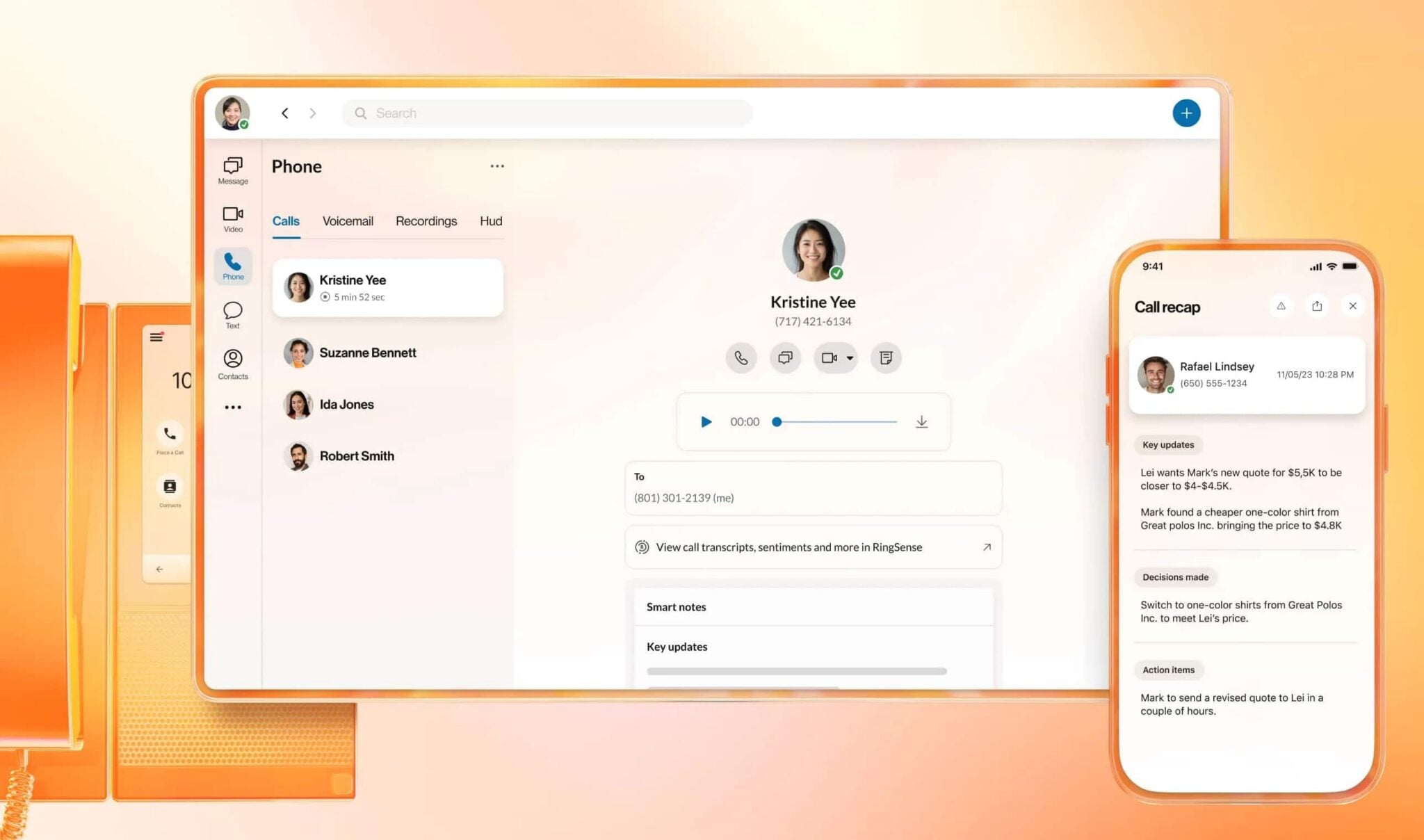
RingCentral’s RingEX is the strongest like-for-like replacement for Vonage’s UCaaS platform. It covers every core channel (voice, SMS, fax, messaging, video), includes AI capabilities at the plan level without add-on fees, and scales from 10 seats to global enterprise deployments.
What RingEX does well:
- Uptime SLA: 99.999% uptime, contractually committed across all plans, backed by a geographically redundant cloud architecture.
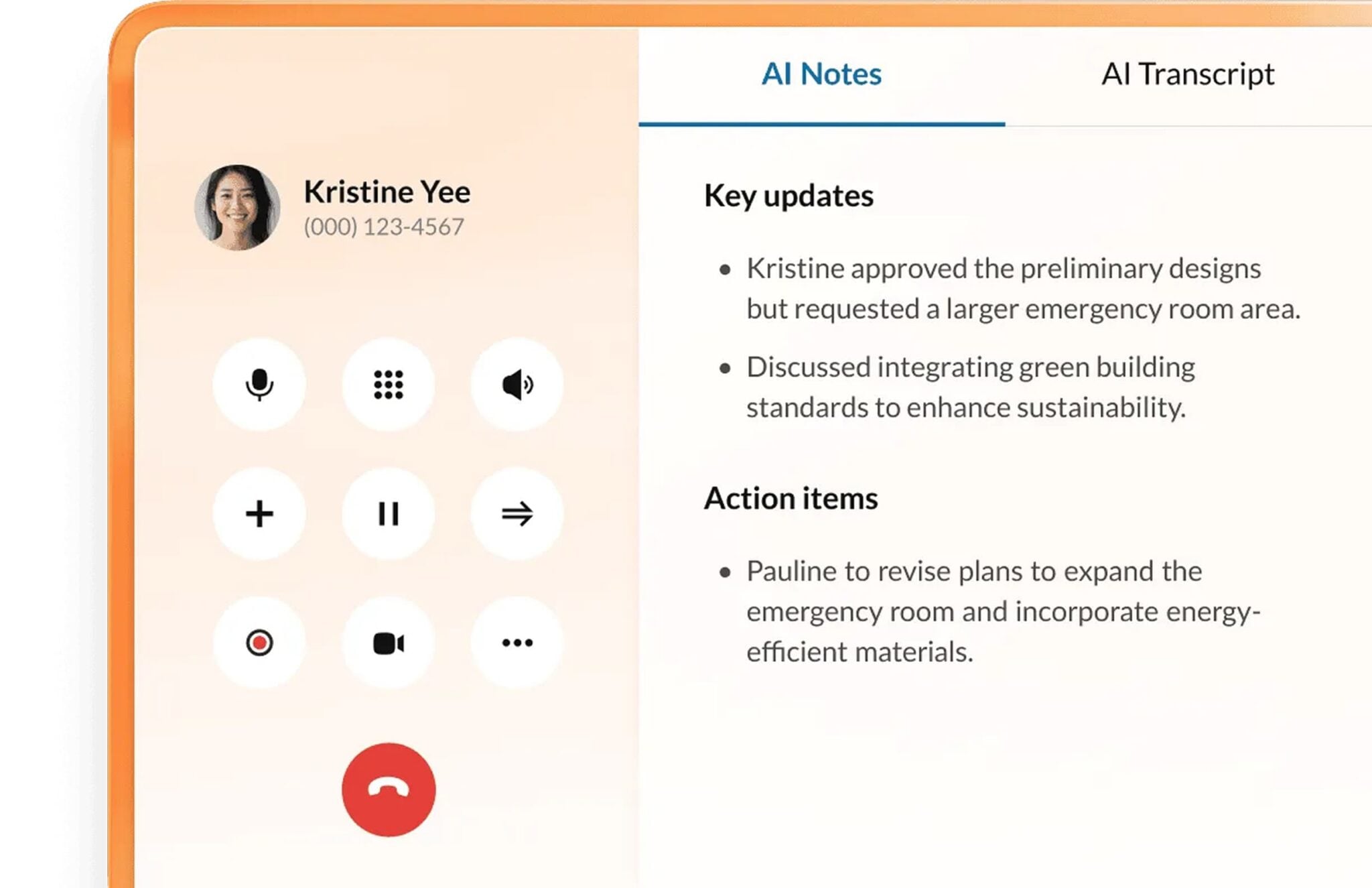
- AI built in: RingCentral’s AI capabilities are built into RingEX at the plan level—AI Virtual Assistant (AVA) delivers automatic meeting summaries, call transcription, and post-call recall without a separate license, unlike Vonage’s AI add-on model. You can also add on AI Receptionist (AIR), which handles after-hours and overflow calls.
- Integration coverage: Over 500 pre-built integrations covering Salesforce, Microsoft 365, Google Workspace, ServiceNow, Zendesk, and more. Salesforce integration includes call logging, click-to-dial, and screen pop and caller ID.
- Channel breadth: Business phone, SMS, online fax, team messaging, and video conferencing in a single app, with no per-channel add-on required.
- Support: 24/7 live support via phone, chat, and email at all plan tiers.
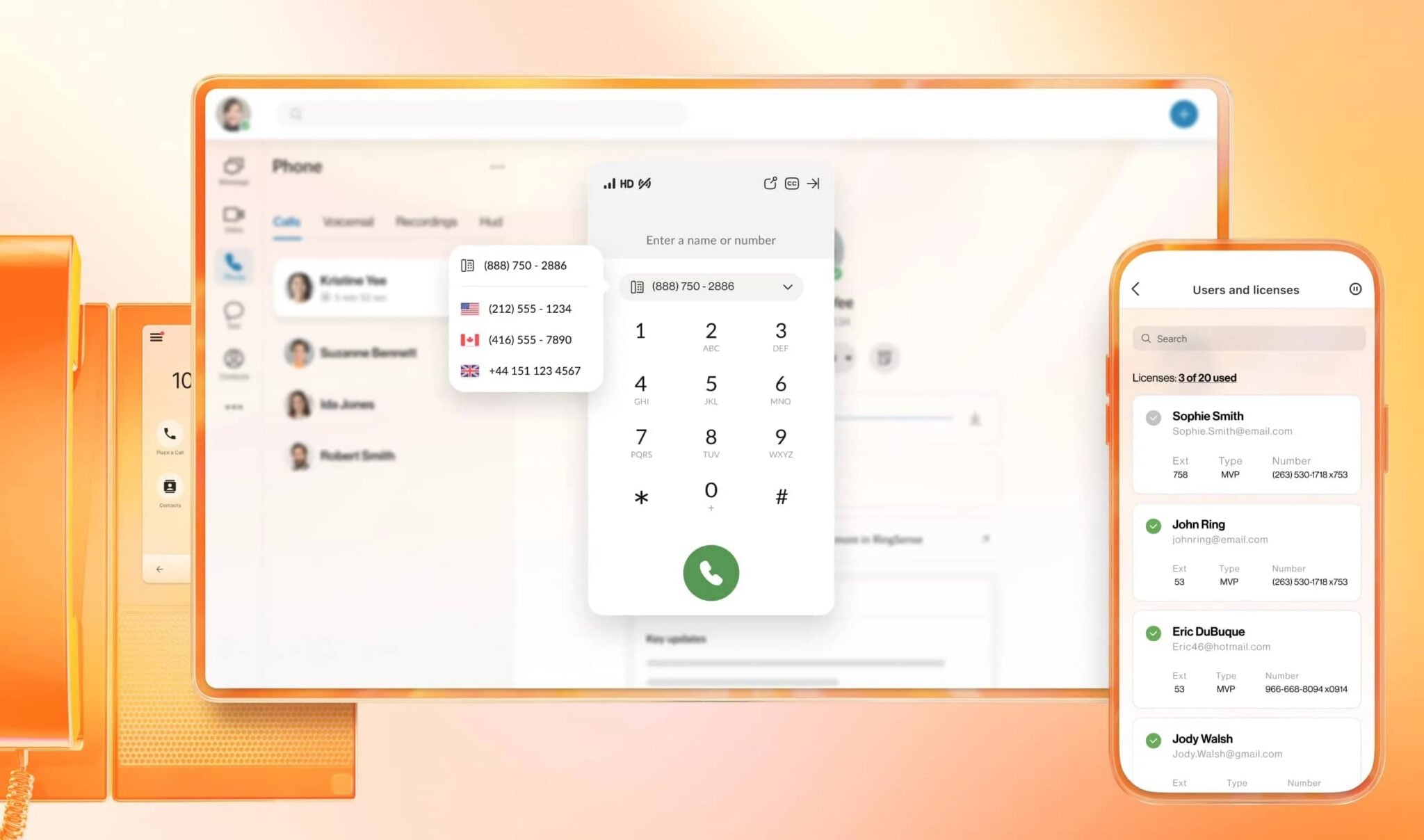
- Global footprint: Full cloud PBX service available in more than 40 countries with local numbers across over 200 area codes.
Best for: Mid-market and enterprise teams that need a unified communications platform with built-in AI, deep CRM integration, and a contractual uptime commitment. RingEX is particularly well-matched for teams moving off Vonage who want to avoid the API-first complexity Ericsson has pushed into Vonage’s roadmap.
Calculate the value RingEX AI brings to your operations
See how AI-powered meetings, summaries, and team collaboration reduce costs and save time.
2. Nextiva
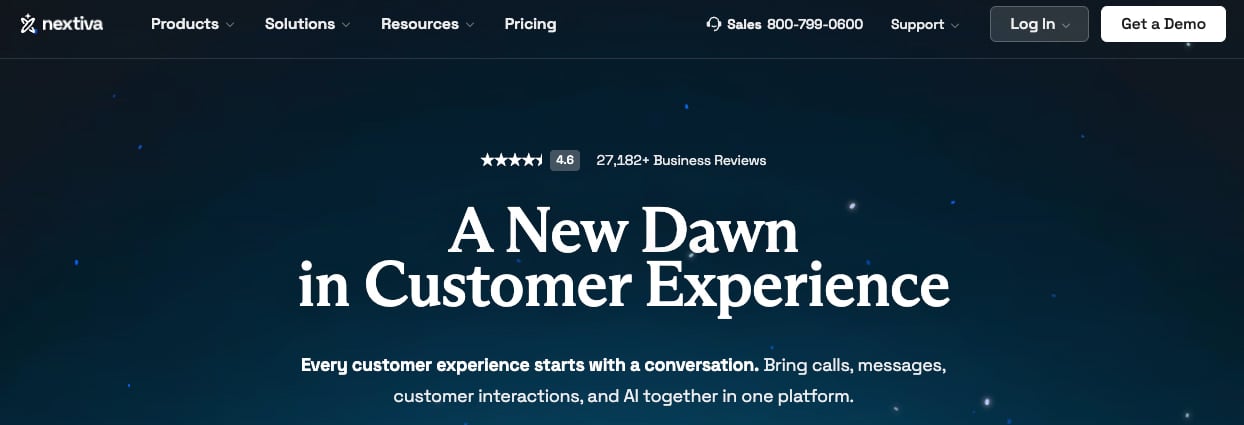
Nextiva serves the SMB and lower mid-market with bundled UCaaS features (voice, video, messaging, and fax) included at most plan tiers without add-ons, and an admin portal that’s less complex than Vonage’s. Its 24/7 live support consistently gets high marks, which matters for teams without a dedicated IT function handling platform issues. Toll-free minute allocations are generous by default, reducing surprise charges in inbound-heavy call environments.
The gaps show up at scale. Nextiva’s integration library is narrower than the larger platforms here. AI features trail what RingCentral and Dialpad include in their base plans, which becomes a real constraint for teams where call coaching or intelligent routing are part of the requirements.
For small to mid-sized teams that want a simple platform and strong customer support without deep CRM connectivity or advanced AI, Nextiva covers the basics well.
3. 8×8
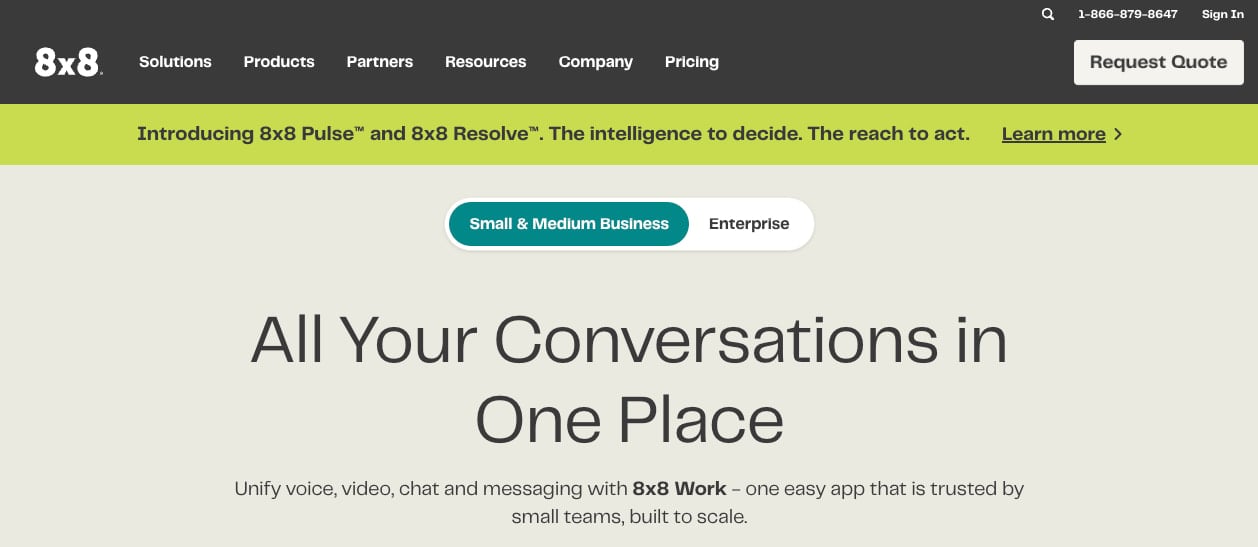
Since its 2022 acquisition of Fuze, 8×8 has sharpened its focus on international calling coverage as its primary differentiator. Unmetered international calling across more than 40 countries is the clearest reason to put 8×8 on a shortlist. For organizations with globally distributed teams, it eliminates the per-minute billing that inflates costs on other platforms. 8×8 also runs unified communications and contact center on a single platform, which reduces vendor complexity for teams that need both.
The integration library is narrower than other platforms’, which creates friction for teams with complex requirements. Live phone support isn’t available across all plans, and AI capabilities are less mature than the category leaders. For teams where integration depth or AI-assisted workflows are primary criteria, 8×8 won’t cover the full requirement.
It’s the right fit for organizations where international calling volume is the dominant cost variable and distributed global coverage is the priority. If your evaluation has expanded beyond Vonage, how other UCaaS providers compare on the same criteria is worth reviewing before narrowing the shortlist.
4. Dialpad
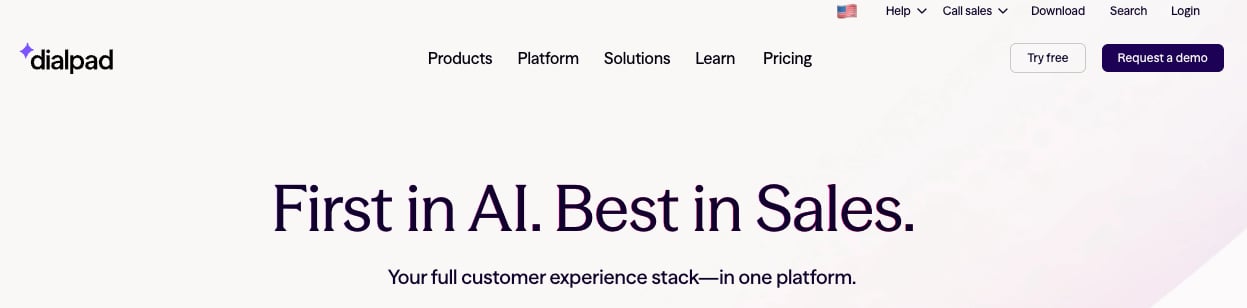
Dialpad has made AI the center of its product strategy, and the current platform backs that up. AI transcription, real-time call coaching, and post-call scoring are included on all plans. For organizations already standardized on Google Workspace, Dialpad’s deep integration with the Google suite removes most of the adoption friction.
The constraints are structural. Dialpad’s AI runs on a proprietary engine, which performs well within its own ecosystem but limits flexibility for teams that want to connect AI outputs to external analytics platforms or CRM workflows.
Dialpad is worth prioritizing if AI-assisted coaching is the top evaluation criterion and the team is already standardized on Google Workspace. Organizations with broader integration requirements or complex contact center needs will find it too constrained.
5. GoTo Connect
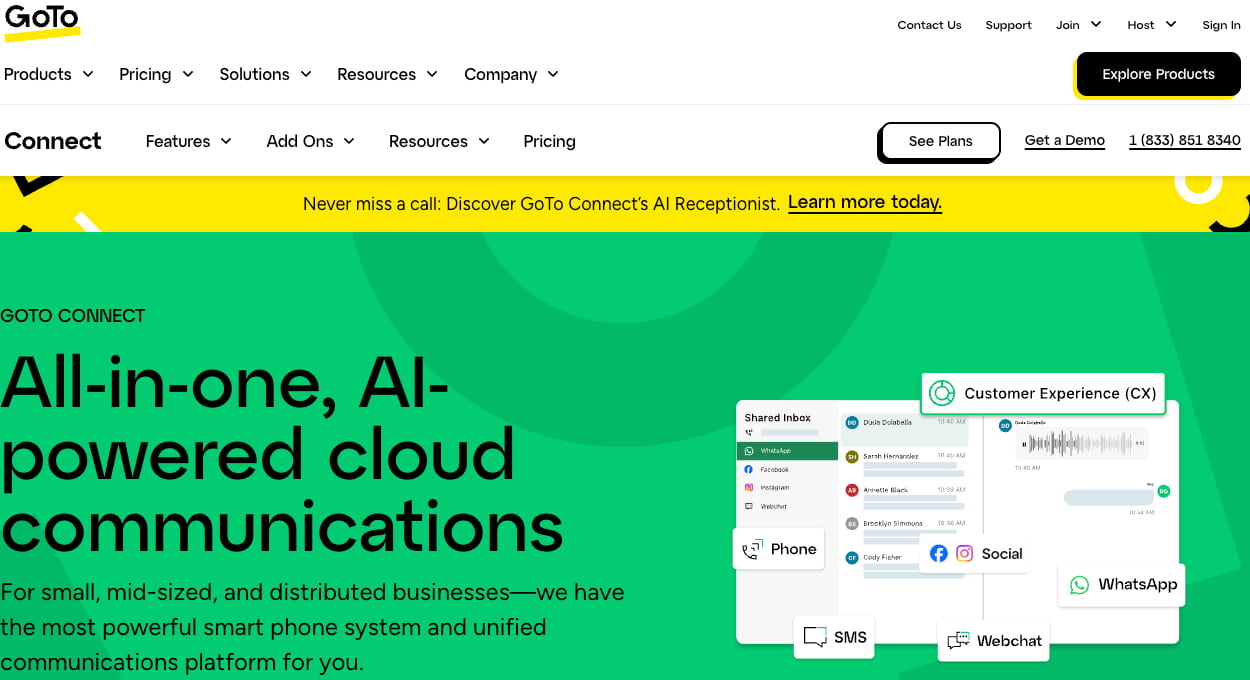
GoTo Connect combines UCaaS and basic contact center functionality into a single platform, including voice, video, and messaging channels with auto-attendants, call handling, and call analytics features. It also includes broad international number availability for teams spread across multiple countries. The admin portal is built for IT generalists rather than specialists, which keeps management overhead low for teams handling it alongside other infrastructure responsibilities.
The limitations show up at scale and in AI depth. GoTo Connect’s AI capabilities trail the category leaders, and the third-party integration library is more limited than the larger platforms in this comparison. For organizations with complex routing requirements, compliance obligations, or a growing seat count, the feature ceiling becomes a real constraint.
It’s a sensible choice for mid-market teams, particularly those that previously evaluated Fuze, that want a single vendor for UCaaS and light contact center without enterprise-tier pricing.
6. Zoom Phone
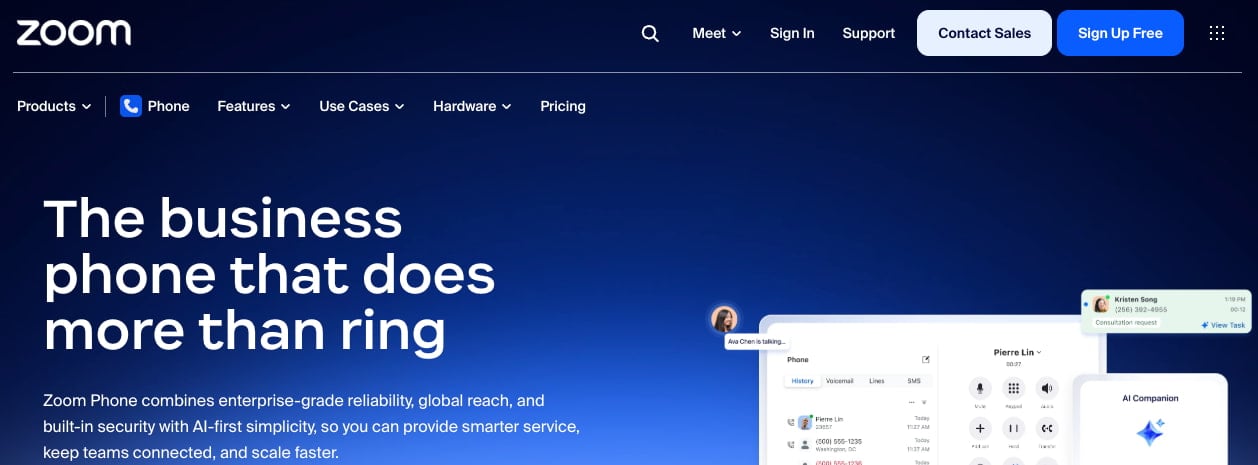
Zoom Phone’s case is simple: If your organization is already running Zoom for video, adding Zoom Phone puts calling into the same application, the same contact directory, and the same admin console. That eliminates context-switching and simplifies IT management for Zoom-heavy environments. End-user adoption is faster when the phone interface lives inside a tool people already use every day.
Outside the Zoom ecosystem, the case for Zoom is weaker. Third-party CRM and helpdesk integrations are solid but not as extensive as some libraries. AI capabilities are improving but remain less deeply embedded in the telephony workflow than the category leaders. The platform’s value depends entirely on an existing Zoom footprint, and organizations that haven’t standardized on Zoom for video will find Zoom Phone a harder sell as a standalone UCaaS replacement.
Zoom Phone is the right call for organizations already relying on Zoom that want to consolidate their communications stack. If you’re also evaluating Zoom’s broader suite, we analyzed how each Zoom alternative stacks up on UCaaS fundamentals.
7. Ooma
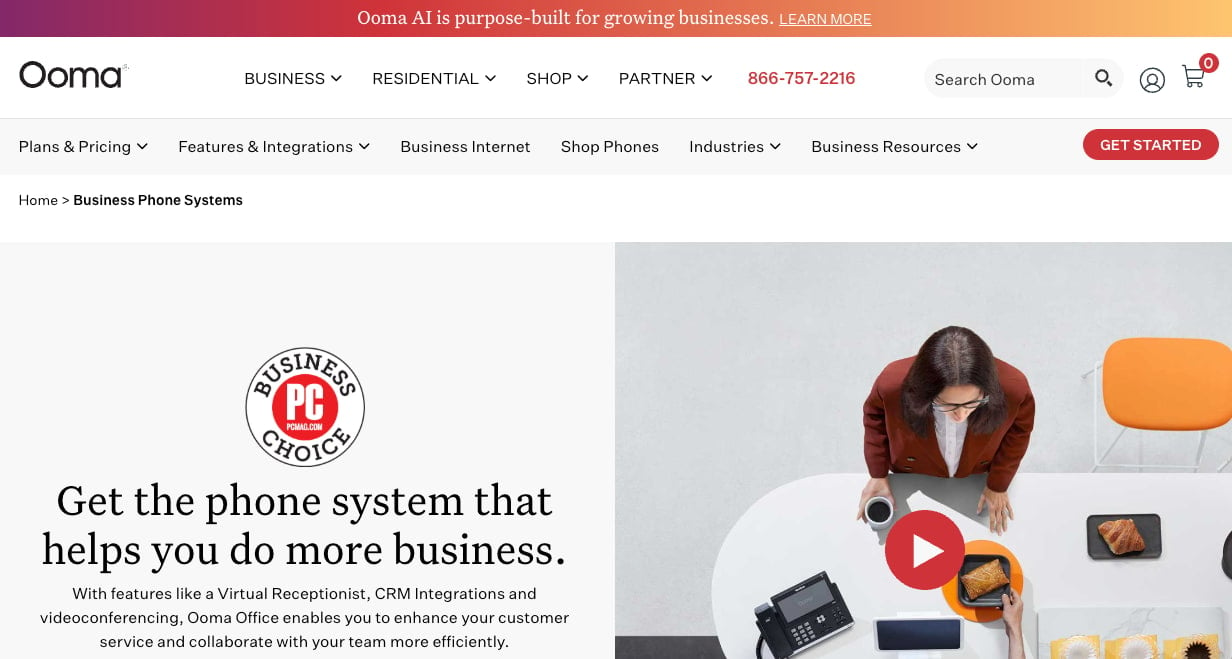
Ooma is the budget-tier option in this comparison, built for small teams that need a working business phone system with toll-free numbers and no long-term contract. Per-seat pricing is among the lowest in the market, deployment doesn’t require IT support, and month-to-month pricing removes the commitment risk that comes with multi-year agreements.
The tradeoffs are significant for any team expecting to grow. AI capabilities are minimal, the integration library is thin, and Salesforce or enterprise helpdesk connectivity is limited or unavailable. Ooma isn’t built for enterprise-scale deployments, so organizations approaching 100 seats or more will likely need to migrate again before long.
It’s the right fit for very small or budget-constrained teams that need basic calling, want to avoid long-term contracts, and don’t require AI or deep integrations. Teams that anticipate outgrowing Ooma quickly can compare how VoIP options scale for small businesses before making a longer-term commitment.
What to look for when choosing a Vonage alternative
The criteria that separate platforms at the mid-market and enterprise level go deeper from there:
Uptime SLAs
The enterprise standard for uptime SLA is 99.999%, or roughly five minutes of downtime per year. A provider that won’t commit to that number in writing is telling you something about the risk you’re taking on.
Check the vendor’s status page and outage history before you sign, since ownership changes and leadership turnover can erode reliability even when the SLA on paper hasn’t changed.
Native AI features
The difference between AI included at every plan tier and AI that requires a separate add-on purchase matters at contract time and again at renewal. Native AI changes how your team handles after-hours routing, call summaries, coaching, and call monitoring. Bolted-on AI creates procurement complexity and uneven adoption across your team.
Integration depth with your CRM and helpdesk
Integration count is a marketing metric. What matters is whether the integration with Salesforce (or ServiceNow, or Zendesk) actually logs calls, pops screens, and syncs data without custom development. Test the specific integration your team depends on before finalizing the evaluation.
Pricing transparency
Get to total cost of ownership, not just per-seat rate. Add-on costs for AI, international calling, number porting fees, and overage charges can move the number significantly from the quote on the pricing page.
Number porting speed and process
For organizations porting a large block of numbers, the porting timeline and dedicated migration support available from the vendor are material factors. Ask for specifics: how long does porting take, who manages it, and what happens if a number fails to port cleanly.
Enterprise scalability
Confirm the platform handles your projected seat count and geographic footprint without a platform change. For a deeper look at how unified communications platforms compare on these dimensions at scale, analyst benchmarks and vendor documentation are worth reviewing side by side. The cost of migrating again in three years is real.
Match the platform to the risk you’re trying to eliminate
Every alternative in this guide solves a specific piece of what’s broken with Vonage: pricing, support responsiveness, AI maturity, or global calling reach. Which one fits depends on which risk your team can least afford to carry into next year’s renewal.
For most enterprise and mid-market teams, that risk touches uptime, AI depth, and integration coverage all at once. RingEX is built around a 99.999% uptime SLA, AI built into the platform through AVA, and 500+ integrations, including Salesforce and Microsoft Teams.
A migration only pays off when the vendor you land on has a roadmap you can still trust in five years, not just a feature list that looks good today.
FAQs about Vonage alternatives
Why are businesses switching from Vonage?
The primary drivers are Ericsson’s acquisition and resulting product direction shift toward developer APIs, the FTC’s 2023 $100 million refund order for billing and cancellation practices, Vonage’s add-on pricing model for AI features, and reported friction with the administration portal and onboarding process.
Buyers who need a purpose-built, turnkey UCaaS platform with built-in AI are finding that Vonage’s current roadmap doesn’t align with those requirements.
Is Vonage still a good business phone system in 2026?
Vonage continues to function as a business phone system, but product investment under Ericsson has shifted toward CPaaS and developer APIs. Buyers who need a managed UCaaS platform with a clear roadmap for AI, contact center integration, and enterprise scalability will find stronger options among RingCentral, Dialpad, Zoom Phone, and more.
What is the best Vonage alternative for enterprise teams?
For enterprise teams, RingCentral RingEX is the strongest alternative. It’s the only platform in this comparison that combines a contractual 99.999% uptime SLA, native AI at every plan tier, over 500 integrations, and a global cloud PBX footprint across more than 40 countries. Dialpad is worth evaluating if AI-assisted coaching is the primary driver and the team is standardized on Google Workspace.
Can I keep my phone number when switching from Vonage?
Yes. Number porting allows you to transfer your existing phone numbers to a new provider. The porting process typically takes two to four weeks depending on the receiving carrier and the complexity of the number block being moved.
Most enterprise UCaaS providers, including RingCentral, offer dedicated migration support to manage the porting process.
What happened to Vonage after the Ericsson acquisition?
Ericsson completed its acquisition of Vonage in 2022 for approximately $6.2 billion. Since then, Vonage’s product strategy has shifted to align with Ericsson’s API/CPaaS business rather than competing directly in the packaged UCaaS market.
The Vonage brand and UCaaS products continue to operate, but the strategic roadmap is now oriented around network API exposure and developer tools rather than the managed communications platform that originally built Vonage’s enterprise customer base.
Updated Jul 08, 2026