AI Communications








It’s no secret that call centers are concerned with metrics and performance.
Reps have to be fast at not only picking up the phone and responding to customers, but also solving those issues—sometimes, even when they’re quite complex. Hey, life isn’t always fair.
That’s exactly why you can’t ignore your call center’s average handle time (AHT).
From avoiding lengthy hold-times to making sure that your customer service team is actually having productive conversations, your average handle time is crucial if you want to respect the schedules of your customers and employees alike.
In this guide, we’ll break down everything you need to know about AHT and how to measure it. We’ll also delve into the actionable ways to speed up your customer communications—that won’t require you to reinvent the wheel.
Key takeaways
- AHT and FCR work together. Reducing handle time only adds value when agents are also resolving issues on the first contact. Chasing a lower AHT at the expense of resolution quality will hurt customer satisfaction.
- AI agents are already moving the needle. Organizations deploying or testing AI agents report 61% increased productivity and 58% faster workflows—teams investing in the right tools are pulling ahead.
- Routing and IVR design are underrated levers. Sending the right call to the right agent from the start—and keeping IVR menus simple—eliminates unnecessary transfers and talk time before a conversation even begins.
- Supervisors need real-time tools, not just reports. Live monitoring, whisper coaching, and barge-in capabilities let managers fix problems in the moment, not after the damage is done.
Learn about the damage that long hold times can do, and what customers expect from call or contact centers today.
What is average handle time (AHT), anyway?
Average handle time (AHT) measures the average duration of time it takes for an agent to resolve a service call from beginning to end. This includes hold-times, actual conversations with customers, and any necessary follow-ups.
Although AHT typically refers to service calls, the metric also applies to communication via email, social media, or live chat.
Basically, average handle time represents the average amount of time (in second or minutes) required for an agent to consider a call “complete.” You can measure AHT either per agent or across an entire contact center.
How is average handle time calculated?
Good question. Here’s an average handle time formula that we can work with:
(Time on hold + time talking to customers + time spent following up) / (# of calls completed)
The easiest way to track average handle time without having to calculate it by hand is through call monitoring and analytics features in your contact center platform, which does all the hard work for you.
Given everything on your agents’ plates, manual call-logging probably isn’t an ideal use of their time. Remember: they should be empowered to build relationships with customers, not deal with repetitive low-value tasks.
Keep in mind the distinction between average handle time and average hold time. The second one measures how long a customer waits on hold before their call is answered. Here’s an average hold time formula for reference: (# of minutes or seconds customers spend on hold) / (# of calls completed).
What’s considered a “good” average handle time?
It depends. If you’re looking for an average handle time industry standard for reference, data from Call Centre Helper Magazine’s Erlang calculator takes real-world data from hundreds of thousands of calls to come up with a working average:
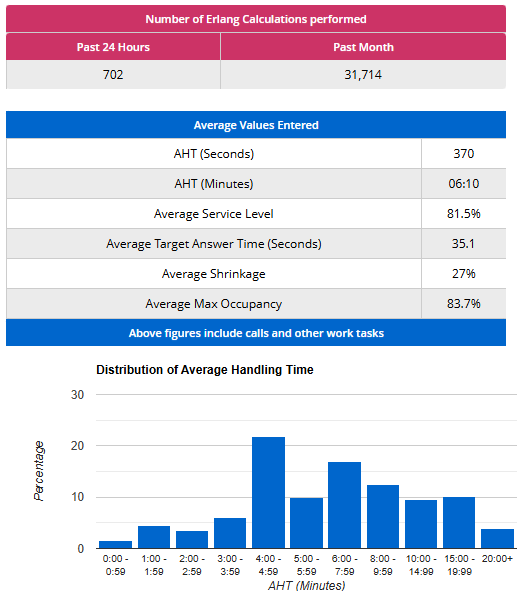
According to their sample data, AHT for call centers sits somewhere around six minutes. However, this doesn’t take into account variables like industry and team size.
In fact, this is what makes average handle time a tricky metric to track. Call centers aren’t all making their numbers readily available, meaning that you might have to use your own benchmarks and internal data.
There are quite a few variables that impact your average handle time.
- Team size: Smaller teams that can’t handle a larger volume of calls or messages are going to have higher average handle times, spending more time on hold or in-between calls.
- Departments: From marketing and sales to accounts receivable and beyond, different departments may tend to have longer (or shorter) calls that skew your average handle time.
- Industry: For example, a SaaS company selling a service with tons of complicated features will likely have a longer handle time than a retail business that primarily handles billing and shipping questions.
Also, service calls shouldn’t be seen as a matter of “quantity over quality.” Agents shouldn’t sacrifice customer satisfaction just for the sake of quicker calls. The goal here is to find ways to become more efficient, not micromanage your agents to the point where they’re trying to sprint through their conversations. This essentially means there is no “rignt” AHT.
That said, there is clear room for improvement across the industry. Research from RingCentral’s Agentic AI Trends 2026 report—based on a Q4 2025 survey of 2,000 IT, HR, and CX leaders—found that organizations deploying or testing AI agents report 61% increased productivity and 58% faster workflows, signaling that teams actively investing in the right tools are already pulling ahead of those that aren’t.
See how AllThingsCX reduced their average call handle time by an incredible 25%.
What about utilization rate?
If you’re concerned about productivity and efficiency at your call center, your team’s utilization rate is another metric to watch in addition to AHT.
Utilization rate measures the amount of time that agents actively spent logging and conducting calls compared to the rest of their tasks. Here’s a calculation of a sample utilization rate:
[(# of hours logging calls) / (total hours per week)] x 100
For example, an agent who spends 30 hours logging calls during a 40-hour workweek would have a utilization rate of 75%.
What is a good utilization rate for a call center?
Much like average handle time, what makes a “good” utilization rate is up for debate.
For example, the previously mentioned Cell Centre Helper Magazine suggests a strong utilization rate sits around 80%—and anything above that is approaching burnout. The key is finding a sustainable balance that keeps agents productive without running them ragged, particularly as AI tools take on more of the low-value repetitive work.
Consider that your team may have other tasks (including meetings and training) that impact their utilization rate. As AI handles more routine interactions, agents’ time should increasingly shift toward higher-complexity conversations where human judgment genuinely matters.
Why is average handle time so important to a call center?
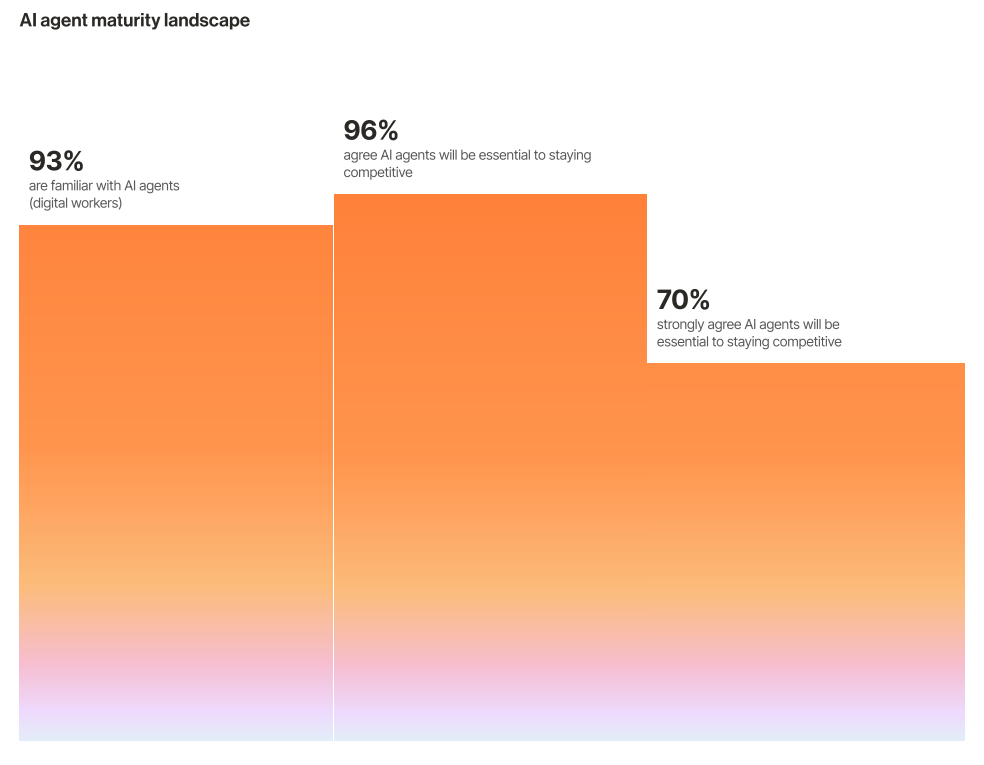
Meeting customer expectations goes hand in hand with long-term loyalty—and to do that, you need to prioritize speed in your live customer service channels. According to RingCentral’s Agentic AI Trends 2026 report, 96% of business leaders agree that AI agents will be essential to staying competitive, and organizations already deploying AI agents report improved customer experience (49%) and improved customer satisfaction (45%). The message is clear: customers expect faster, smarter service, and falling behind on efficiency has real consequences for retention.
Voice remains a central channel in that equation. The same research found that preference for voice interactions is expected to grow from 14% to 23% over the next two years as AI agents become more embedded in workflows—reinforcing that phone-based service isn’t going anywhere, and that optimizing AHT for voice interactions is as relevant as ever.
Looking specifically at your average handle time helps you focus on uncovering inefficiencies and have more productive conversations with customers—a win-win for both your agents and customers..
What causes a slow average handle time?
So, why do so many call centers lag behind when it comes to AHT? Let’s take a look at some of the most common culprits.
Lack of omnichannel contact routing
Call centers can’t afford to “wing it” when it comes to routing calls to the right reps. Not to mention this cuts down on unnecessary holds and ensures customers receive personalized service. Tools such as omnichannel contact routing are a must-have today—with a constant pulse on which agents are available and what’s been logged, it’s much easier to spot where your agents are winning (and where they can improve).
Tangents and time-wasting
Finding the balance between relationship-building and just shooting the breeze can be tough. Your team obviously wants to get to know your customers, but conversations about the weather aren’t exactly the best use of your time.
Similarly, many outbound and inbound call centers incorporate unnecessarily long greetings and sign-offs that add to their handle times, which could be better spent getting down to business.
Sure, you don’t want your agents to be cold or curt. That said, you should strive to respect the time of your employees and your customers.
Repeat calls and redundant information
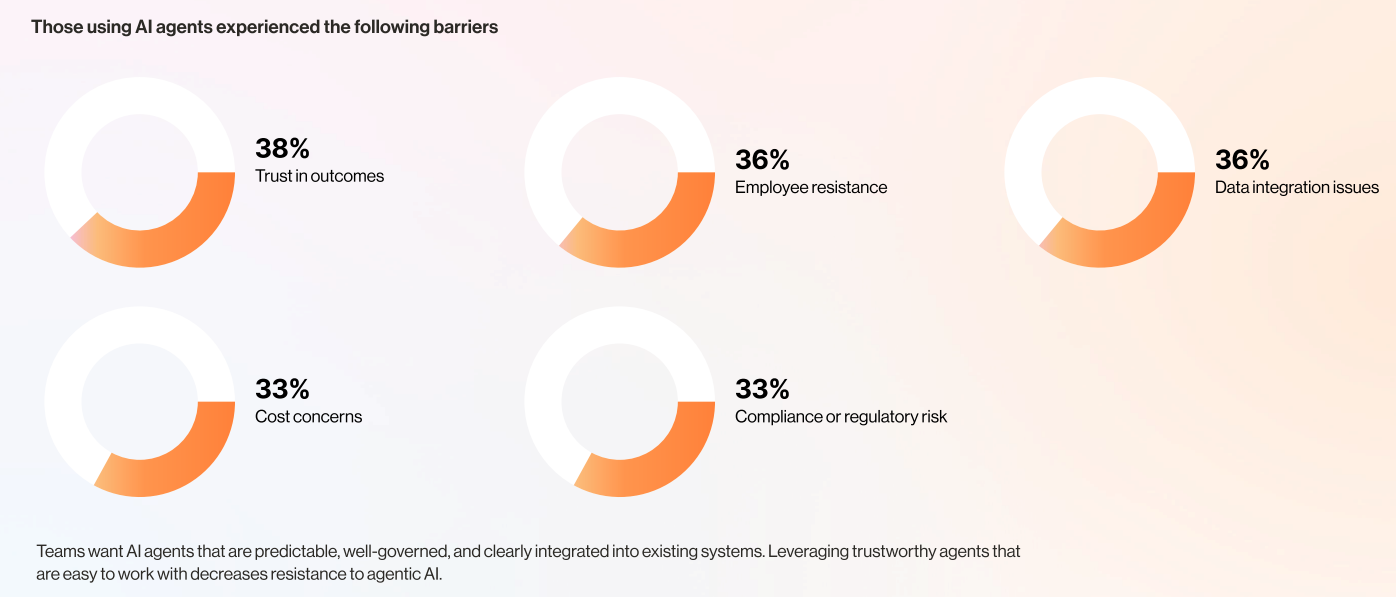
According to RingCentral’s Agentic AI Trends 2026 report, being forced to repeat information—often due to poor context passing between agents or systems—is one of the most friction-heavy parts of the customer experience. In fact, 36% of organizations that paused or canceled an AI initiative cited integration complexity as the reason, suggesting that the tools meant to address this problem often fail to connect properly. Having customer history and context readily accessible is quickly becoming a non-negotiable customer service standard.
Overly complex IVR menus
Complex IVR menus are a frequently overlooked contributor to poor AHT. When IVR trees are too long or poorly structured, customers get frustrated and are often routed to the wrong agent, adding unnecessary transfers and talk time. Simplifying your IVR menus increases the likelihood that customers reach an agent who can actually handle their problem efficiently from the start.
What is first call resolution (FCR), and why does it matter?
Average handle time and first call resolution (FCR) are two metrics that are best managed together. FCR, which can also refer to First Contact Resolution, measures how many customer issues are resolved the first time someone contacts your call center—without requiring a follow-up call or transfer.
FCR matters because it’s directly linked to customer satisfaction. When agents resolve problems on the first attempt, customers leave the interaction feeling heard and valued—which translates into loyalty. Longer handle times are sometimes acceptable if they result in first-call resolution; what you want to avoid is both a long handle time AND a failure to resolve.
As with AHT, FCR can’t be looked at in isolation. Companies with complex products or services may naturally see lower FCR rates than those in simpler industries. The goal is continuous improvement, not hitting an arbitrary benchmark.
10 ways to slash your contact center’s average handle time
To improve AHT, as well as your FCR, the following tactics are a good place to start.
1. Step up your call center training for new and struggling agents
Maybe the best way to trim down your AHT is by making a conscious effort to train all of your agents to become more efficient from the word “go.”
Here are some points to emphasize when you’re onboarding new hires to speed up your handle times:
- Familiarize agents with your product and service with demos, webinars, and blog posts; doing this helps them spend less time later looking up answers to questions they should already know.
- Recommend and practice call handling techniques (think: quick greetings, close-ended questions).
- Allow your new (and struggling) agents to shadow your existing support staff.
- Review and roleplay the scenarios that most often result in lengthy and complicated calls (think: confused or angry customers).
- Allow your agents to ask questions and collaborate with each other.
The last point is especially important as we’re seeing more and more companies hire remote call center staff. With communication tools like RingCentral, you can encourage more effective teamwork through channels like messaging and video calls.
This is a great way of letting your agents share advice, resources, and customer feedback with you more proactively during the training process:
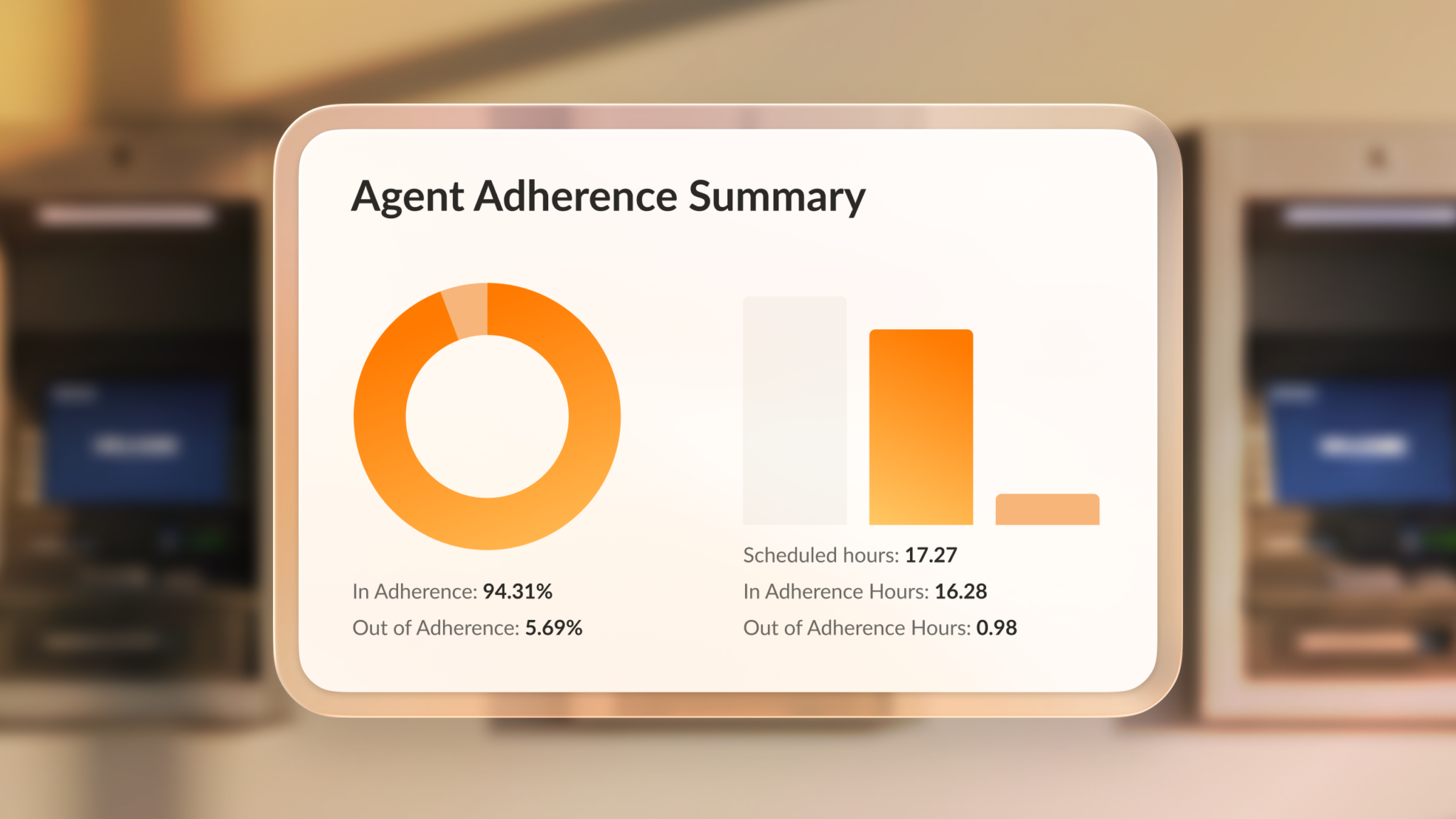
RingCentral AI Quality Management takes this further by automating performance feedback at scale. Instead of manually reviewing the typical 1-2% of calls, AI Quality Management analyzes 100% of interactions—automatically scoring agents, surfacing coaching opportunities, and generating personalized training plans with a single click. That means new agents get targeted, evidence-based development from day one, not just generic onboarding materials.
2. Empower your reps with scripts for common customer questions
Despite popular belief, using scripts for customer service doesn’t necessarily mean robotic or “one-size-fits-all” support.
Scripts are fantastic tools for efficiency when it comes to dealing with common questions or concerns, particularly over email or social media.
Let’s say you sell software that has a particularly complex feature that often confuses your customers. By having a script or templated reply handy, you can provide faster answers to your customers without having to come up with a response from scratch every time.
Scripts can also become second nature to agents over the phone, ultimately making them more knowledgeable about your service in the long run.
3. Gather relevant information before hopping on a customer call
The more you know about your customers before a call, the better. Ideally, you should have your customers’ history and contact information front and center as soon as you pick up the phone. For example, customer intake forms (like this one from Box.com) help you understand key details about customers or leads, enabling you to better route and serve them.

Better yet, use a CRM that stores your customer interactions. Here’s an example using Zoho CRM (which integrates with RingCentral to show a pop-up with your customer’s information on the screen when you’re prepping for a call):

With a CRM, you can see how long someone’s been a customer, which products they’re using, and who they’ve spoken to in the past. This allows you to route customers to agents they already know and trust, leading to fewer introductions and less repeat information relayed.
RingCX integrates with 50+ CRMs and business tools, surfacing full customer history the moment a conversation begins—across voice, chat, email, and 20+ digital channels, all in one agent workspace. When agents have complete context before they say a word, they spend less time gathering information and more time solving problems.
4. Make sure you’re routing calls to the right agents
The importance of this is two-fold. For starters, customers should be automatically routed to the right departments (think: sales, accounts receivable) to avoid being bounced around or needlessly transferred. Not only that, your agents should also be receiving an appropriate number of inbound calls based on their availability, skill-level, and overall call volume.
Imagine a newer agent, Gina, who’s still building experience, and a three-year veteran, Joe, who’s handled a wide range of complex issues. Intelligent, skills-based routing sends more difficult cases to Joe while directing straightforward problems to Gina. Both agents work more efficiently, customers get better service, and your AHT improves across the board.
RingCX Omnichannel’s intelligent routing engine handles this automatically—matching customers to the right agent based on skills, availability, channel, and interaction history, while keeping a real-time pulse on queue performance across every channel.
5. Empower agents with the right tools and internal collaboration features
Agents armed with the right contact center technology are better positioned to handle anything a customer needs on the spot—including escalating to the right internal expert fast. Two features that are especially valuable for both AHT and FCR:
Internal directory with presence indicator: lets agents see in real time which colleagues are available, so they can quickly loop in an internal expert rather than putting the customer on hold while they track someone down.
File sharing and collaboration: allows customers to share relevant documents, screenshots, or account details directly with agents, reducing back-and-forth and speeding up resolution.
When agents can reach a colleague for answers in seconds, it’s easier and faster to solve customer problems—and there’s a much greater chance those problems get resolved on the first contact.
RingCentral AVA Agent Assist is purpose-built to eliminate the frantic, mid-call search for information. During a live interaction, AVA surfaces instant answers from your knowledge base, CRM, FAQs, and troubleshooting guides—so agents never have to put a customer on hold to look something up.
6. Model what an effective call actually sounds like
One of the most effective ways to set a clear performance standard is to show agents what a great call actually looks like.
Giving your agents real recordings and transcripts (RingCentral does both!) of some of your best agents’ calls lets you both reinforce your training and prove that positive, timely calls aren’t just a pipe dream. These recordings can be part of your training program or reference resources that your team can review on their own time.
RingCentral AI Quality Management makes this systematic rather than ad hoc. Every interaction is automatically scored and transcribed, so supervisors can quickly search for the specific moments—the phrases, the pivots, the empathy moves—that separate a great call from an average one. Those moments become the foundation for targeted coaching and training, not just occasional spot-checks. Learn more about AI Quality Management.
7. Build out your knowledge base and self-service resources
With customer resources and an in-depth knowledge base, you’re basically empowering customers to try to answer their own questions before reaching out to you for a call.
Knowledge bases are awesome for not only helping customers diagnose problems but also providing agents with resolutions to product questions they may not already be familiar with.
For example, companies like Dyson, Campaign Monitor, and Zendesk boast a variety of guides and videos that take customers step by step through potential problems. Pointing to your knowledge base is both time-efficient and straightforward for agents, especially those working with customers via chat or email:

Self-service options also give you more accurate metrics. Consider a banking call center without self-service: every time customers want to check their balance, they call in. Agents resolve it quickly, giving you a high FCR—but it’s not an efficient use of anyone’s time. Routing simple, repetitive queries to self-service frees agents to focus on interactions that genuinely require human judgment, improving both AHT and FCR.
RingCentral AI Receptionist Pro (AIR Pro) handles exactly this—delivering 24/7 self-service across both voice and digital channels. When a conversation exceeds what AI can resolve, it hands off to a live agent with full context already in place, so no customer ever has to repeat themselves.
8. Use supervisor tools to diagnose the root of the problem
Cloud contact center solutions include robust supervisor tools that go beyond reporting—they help managers understand what’s actually happening inside interactions. Supervisors can evaluate built-in analytics that measure how customers respond to what agents are saying or typing, and search for key phrases and topics to better understand what barriers exist to first call resolution.
Real-time call monitoring takes this further: supervisors can detect problems during a live interaction and use whisper coaching (heard only by the agent) or barge-in functionality to steer the conversation toward a better outcome—before a single interaction turns into a callback.
RingCentral AVA Supervisor Assist brings this to a new level with AI-powered real-time alerts that automatically surface the calls that need attention—so supervisors aren’t manually scanning a dashboard looking for trouble. Live summaries and transcripts let them barge or coach without missing context, and the tool scales: one supervisor can effectively monitor a much larger team without dropping the ball on any individual interaction.
9. Let analytics guide your support strategy
Having all of your call center metrics and customer service KPIs in one place is key to improving your AHT.
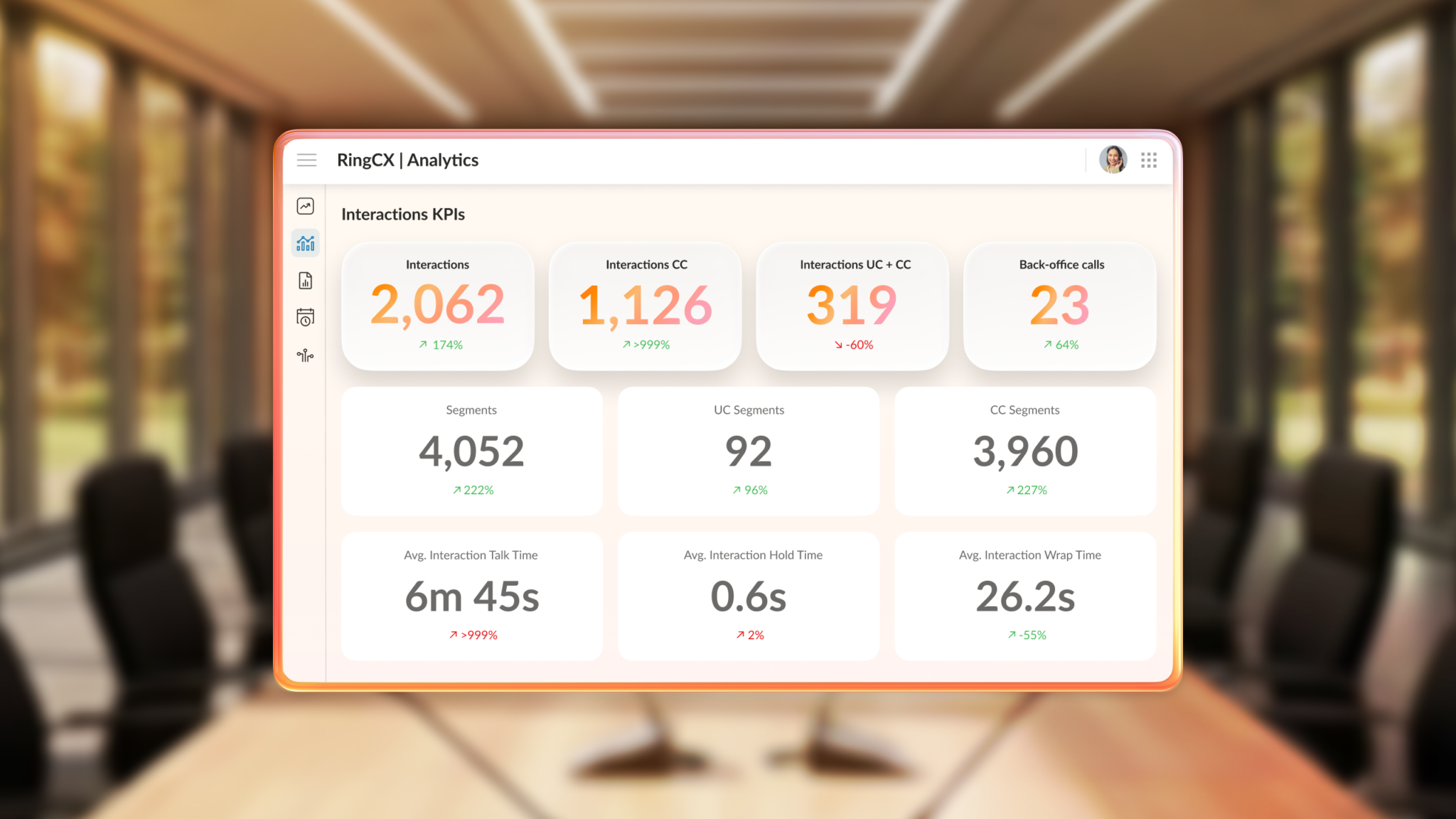
With a dedicated analytics tool and dashboard, you can understand who’s handling the most calls, what the average calls per hour look like, and where individuals or teams need support.
RingCentral AI Interaction Analytics goes beyond standard reporting by analyzing 100% of customer interactions to automatically calculate predictive CSAT—without relying on post-call surveys that only a fraction of customers complete. It pinpoints the specific topics, phrases, and interaction patterns that drag satisfaction (and AHT) up, giving teams a clear, prioritized improvement agenda rather than a general sense that something isn’t working.
🕹️ Get a hands-on look at how RingCentral works by booking a product tour:
10. Regularly communicate performance and expectations to your agents
You can’t expect reps to improve their AHT until they know what’s expected of them. Agents should have context around what’s considered “good” in terms of your company’s AHT and other customer service KPIs—not just a directive to go faster.
RingWEM makes this a continuous feedback loop rather than a quarterly review. AI-powered scorecards show agents exactly how they’re being evaluated after every interaction, while AI-driven forecasting ensures that staffing levels are optimized—so agents aren’t burning out during peak periods and AHT isn’t inflated by under-resourcing.
What are you doing to speed up the average handle time in your call center?
There is no single way to improve your AHT, and doing so doesn’t happen by accident.That said, a combination of the tactics above—smarter routing, better training, self-service options, real-time supervisor tools, and the right technology—can definitely do the trick.
The organizations pulling ahead aren’t just optimizing AHT in isolation. According to RingCentral’s Agentic AI Trends 2026 report, 57% of organizations are now beyond the early exploration stage with AI agents—and those deploying them are already seeing faster workflows, higher productivity, and better customer outcomes. The question is no longer whether to invest in smarter tools. It’s whether you’re moving fast enough.
Updated Jul 29, 2026