AI Communications








Hybrid work for small business highlights
This article includes findings from our recent research into hybrid work, including:
- More and more businesses are going hybrid, with small businesses leading the way
- Benefits include better work-life balance and cost savings
- Watch out for challenges like loneliness and decreased productivity
- The right tools will help hybrid teams communicate effectively
Organizations have increasingly recognized the value of flexible work arrangements. While some initially adopted remote work out of necessity, it proved that with the right technology, businesses could not only survive but thrive.
Having experienced the benefits of working from home, business owners and employees have decisions to make. Those who enjoyed working remotely may not be keen to work in a physical office full-time, while others will be chomping at the bit.
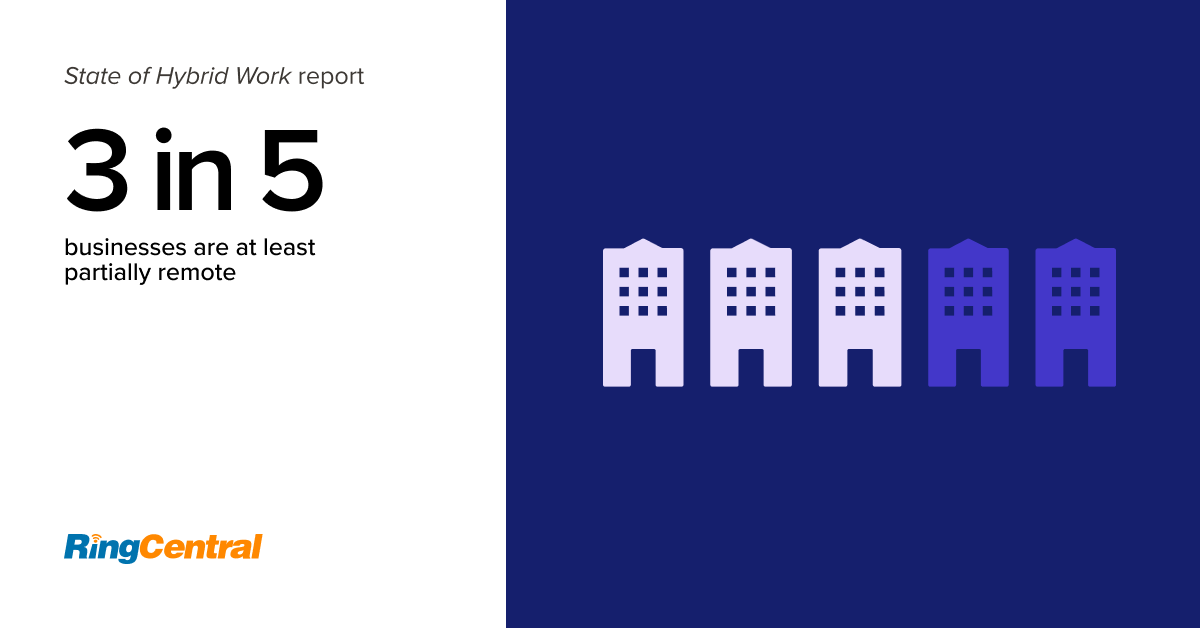
The popular answer seems to be a hybrid work model. According to our research, over half of businesses are at least partially remote right now:
Hybrid working can be highly effective, but it’s not without challenges. This post explores why companies are embracing the concept and how the right strategies and tools can help. We’ll be pulling out findings from our recent State of Hybrid Work report—just click to read the whole thing.
🤔 Is your business fully prepared for hybrid work? Set your business up for success with our State of Hybrid Work report.
What is hybrid work?
A hybrid work model includes a mixture of remote, semi-remote, and in-office employees. Depending on the company setup, hybrid workers may attend the office on fixed days, or they may pick and choose. Others may be permanently office-based or work remotely full-time.
Modern businesses have evolved significantly from traditional office-only models. Our research shows that three in five organizations are now at least partially remote. Small businesses are leading the way, and the majority of organizations across all sizes continue to embrace hybrid workforce arrangements as a permanent operating model.
Hybrid workplaces use technology (like RingCentral MVP™ collaboration tools) to enable working from anywhere and keep everyone connected. If you’re considering this model, it’s vital that you put strategies in place to foster team culture as well as business growth.

What are the benefits of hybrid work for small businesses?
Better for employees
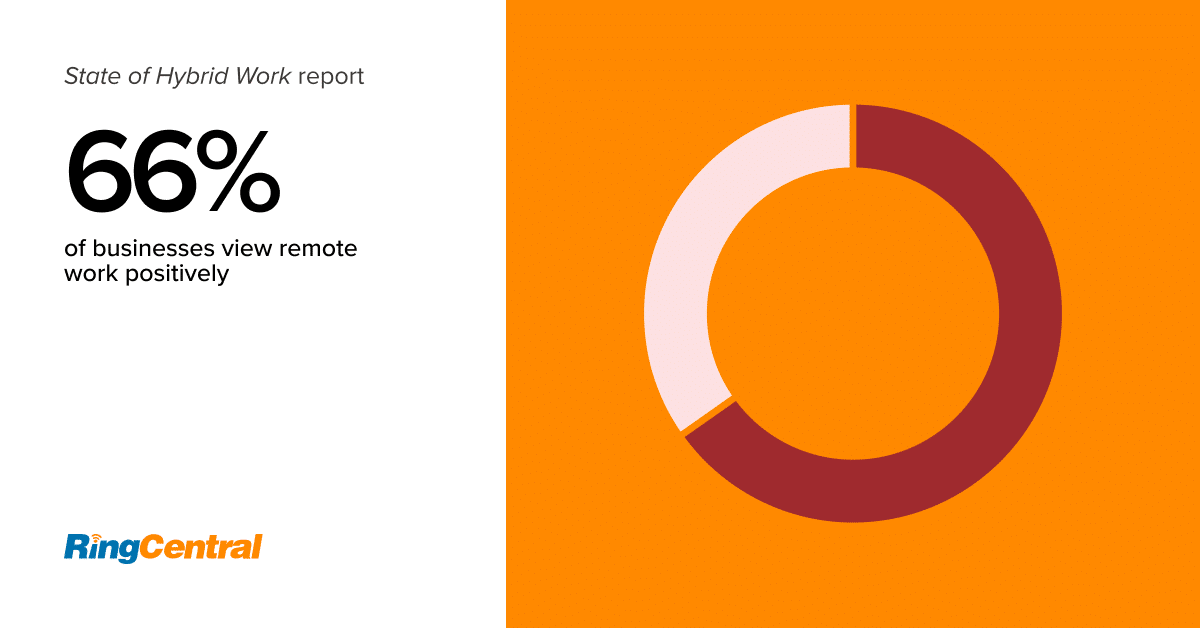
Our survey showed that attitudes towards remote work have improved, with 66% of businesses viewing it positively. More than a quarter of employees said they’ve enjoyed spending more time with family thanks to flexible working patterns.
Flexible work options have become a standard expectation for today’s workforce. Hybrid working enables a better work-life balance and improved mental health, with employees feeling more relaxed when they can fit work around their lifestyle and commitments.
If workers don’t need to be in the office every day, they’ll have fewer stressful, costly, and time-consuming commutes. Plus, working remotely means they don’t have to live near the office—so they can choose to live in more affordable regions rather than moving to a large town or city.
All of this means a happier, more engaged workforce, which in turn brings improved performance. And it’s simple to connect hybrid workers with an app like RingCentral MVP, which puts business calls, team messaging, and video conferencing in one place:
Better for business
The flexibility of hybrid work is great for businesses, especially because it improves employee retention. In fact, 53% of small business employees said they are more likely to leave if denied flexible working arrangements.
A hybrid team means your business benefits from a wider mix of people and skills. While those living locally could work in the office, you can also recruit remote workers from anywhere in the world (and operate 24/7 with workers in different timezones). This concept is also scalable for a growing business.
The hybrid work model reduces costs, which is ideal for small businesses. With fewer in-office workers, you can have a much smaller office space, perhaps located out of town rather than an expensive city. You’ll save on rent, utility bills, and equipment.
You won’t have to pay so many travel expenses, and it helps the environment to have fewer people commuting to a workplace. With a smaller in-office team, you can also create a more comfortable and spacious workspace that supports employee wellbeing.
It’s no wonder that 66% of business leaders we surveyed view hybrid work in a positive light:
What challenges can small businesses face with hybrid work?
Balancing act for small business owners
Hybrid working takes some lateral thinking for business owners. You’ll need to decide working patterns, potentially find smaller premises, sort out the technology, and keep everyone in the loop.
Negotiations over flexible hours can also be tricky, as workers may want to spend more of the week working remotely than business owners would like. Plus, if you’re asking that employees work remotely, you may need to provide home office equipment.
Remember that the hybrid model will take a while to get used to. Rather than trying to retrofit old working practices onto the hybrid approach, develop new ways of working to suit it—including using the right technology, such as RingCentral MVP.
Lack of connection for (some) employees
Hybrid collaboration can take some getting used to. Remote workers often miss face-to-face connections, which is something businesses need to proactively address. More than 25% of employees in our study report having less frequent interactions with their colleagues when working remotely.
Modern workplaces rely heavily on software like Slack and Microsoft Teams—and maintaining online forms of communication is vital in the hybrid model. (Although if you want all your comms in one handy package, you’d do better with RingCentral.)
Our respondents ranked email as the #1 choice for communicating socially with coworkers, followed by phone and text. Businesses should choose a reliable, easy-to-use email and phone system and make sure it includes video conferencing, too.
Keeping an eye on productivity
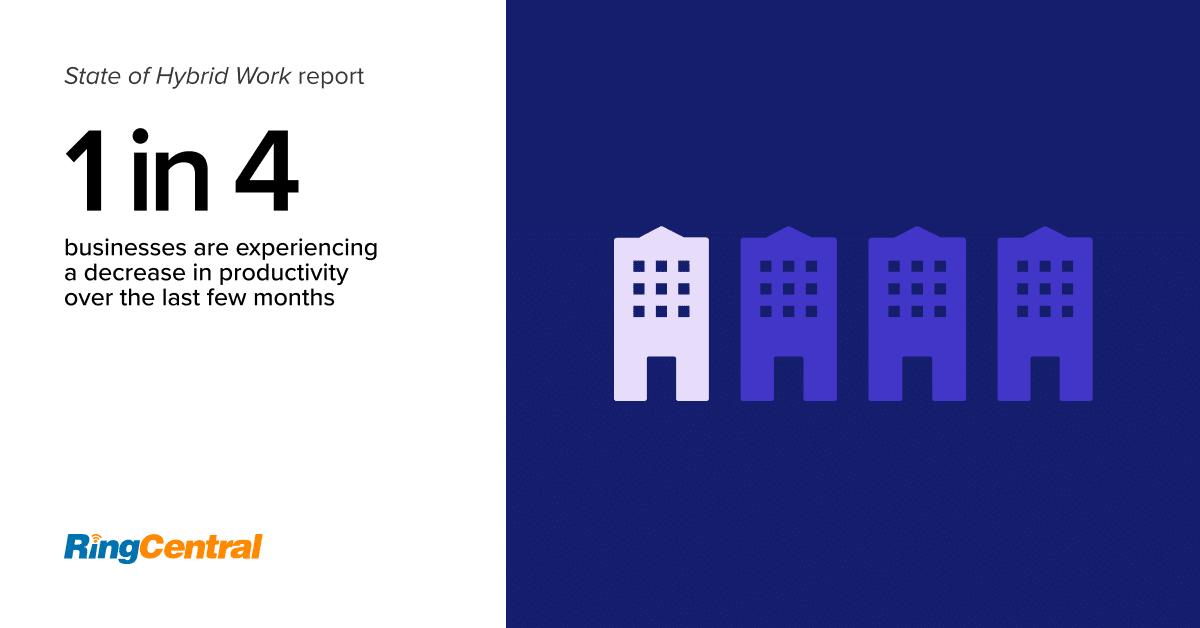
It can be difficult for hybrid workers to keep motivated and productive. Our study revealed that one in four businesses experienced a decrease in productivity as they adapted to hybrid work—it’s something to keep an eye on.
You can boost productivity and maximize teamwork by giving employees the means to collaborate seamlessly across messages, video, and phone. However, don’t bombard remote workers with constant video calls and monitoring.
Some remote employees can find themselves working longer hours as the lines between work and home become blurred. Check in with your team to ensure they don’t suffer from stress and burnout.
4 tips for effective hybrid work for small businesses
Now that we know the pros and cons of hybrid work, let’s cover a few ways small businesses can avoid common pitfalls and successfully transition to a hybrid work model:
1. Keep communicating
This is the #1 path to effective hybrid working. Keep team members connected by giving them multiple channels of communication, and do regular check-ins to ensure everyone’s happy and productive.
Video conferencing is especially useful, and not just for meetings. Think onboarding and ice-breaker sessions for newbies and quizzes or virtual drinks to encourage bonds between remote and in-office workers.
2. Get (and use) the right tools
You can’t expect hybrid teams to be effective if they don’t have the means to do so. Tools for communication, collaboration, and productivity are essential to the hybrid workplace.
According to our study, video conferencing remains one of the most critical tools. Almost a third of businesses have a more positive view of it as a core communication channel, with two in five using it more frequently.
Imagine HD video conferencing and powerful team messaging in one easy-to-use app. We’re talking file sharing, task tracking, and one-click flip to video. That’s RingCentral!

📙 READ MORE: 15 best remote working tools
3. Stay flexible
Respect the fact that people have learned to work in a new way, and embrace it. Flexible working hours can mean the difference between someone staying with your company or leaving, so don’t be slow to adopt the culture.
In the office itself, you could create a more relaxed work environment by moving away from traditional layouts—how about standing desks and a comfortable coffee-break area?
4. Set expectations on both sides
Clear instructions are crucial to ensure that both in-office and remote teams are aware of their working hours, tasks, and deadlines. Trust is also important—if you’re going to monitor remote workers with time-tracking or call monitoring, let them know and give them the chance to ask questions.
The best software for hybrid work and small businesses
Well, you’ve probably figured it out by now… RingCentral MVP has everything you need for seamless and effective hybrid working. In one app, it gives you video, phone, messaging, file sharing, and task management—plus loads of integrations, including: GMail, Google Drive, Outlook, Salesforce, and even cloud phone services for Microsoft Teams.
These smart tools make it a cinch to communicate and collaborate, whether you’re working remotely or in the office. Seven layers of security keep your data protected, and with a 99.999% SLA there are no concerns about downtime.
The future of work
Hybrid work is the future because it gives businesses and workers the best of both worlds. The transition brings opportunities and challenges, and hopefully, we’ve shown you how to approach this way of working.
Keep these insights and tips in your back pocket, and you’ll be all set to enjoy the benefits of hybrid work. Don’t forget to contact RingCentral to discover how unified communications can boost your business.
Updated Feb 02, 2026