AI Communications





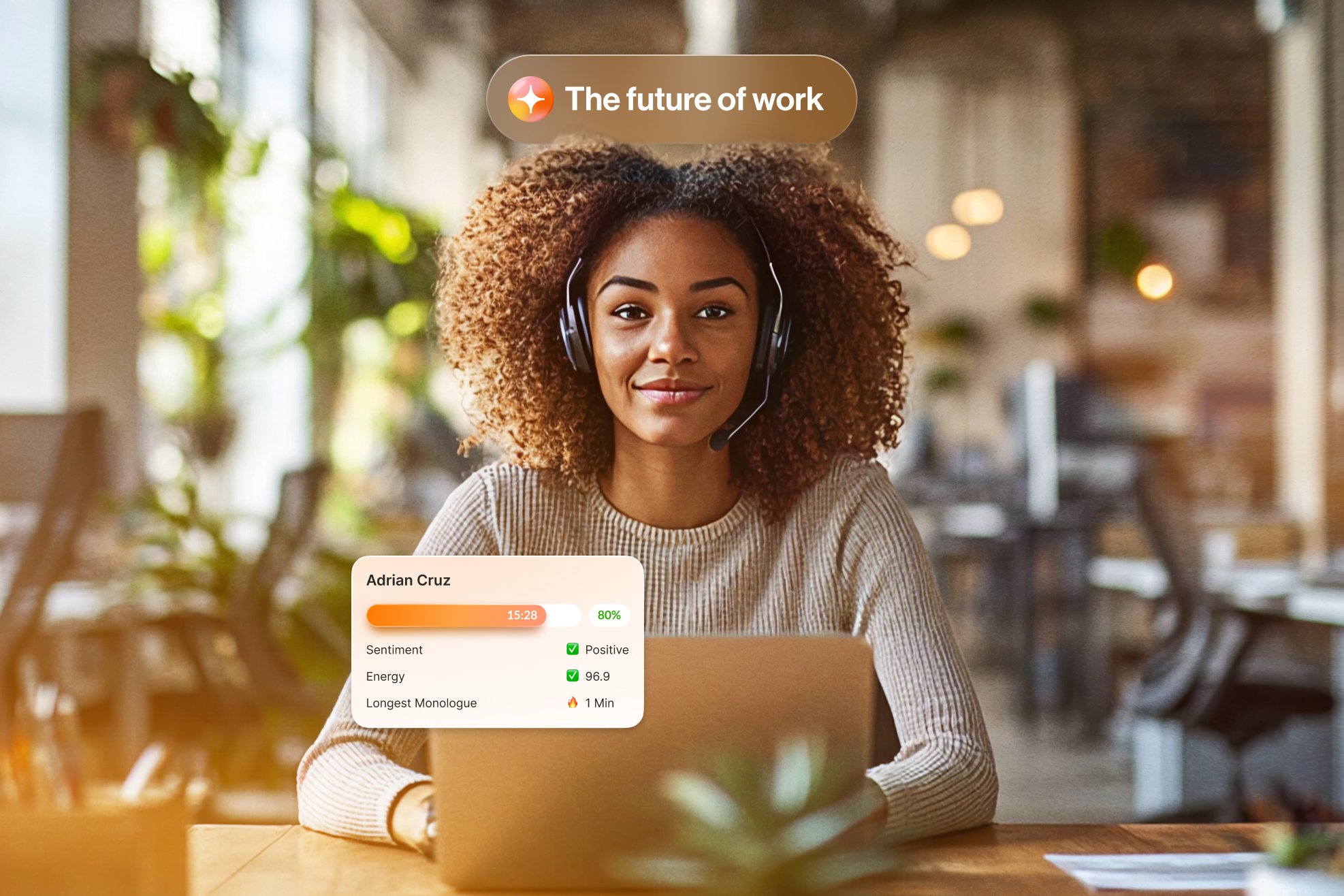

Burnout isn’t creeping into support teams; it’s flooding in. Agents are juggling more tools, higher expectations, and more emotionally charged conversations than ever before. While automation has helped lighten the load, it hasn’t solved the underlying strain: disjointed systems, repetitive tasks, and rising customer urgency.
That’s the real challenge agentic AI is designed to solve. We believe the key to delivering it at scale, in real time, with genuine empathy, starts with voice.
Why voice must come first
Where many AI systems treat voice as a transcript waiting to be processed, we treat it as the foundation of understanding.
Voice is context. Every pause, raised tone, or shift in tempo is information AI needs to understand in real time. And when AI can understand that information as it happens, it doesn’t just assist; it transforms how teams work.
Our voice-first approach allows AI agents to:
- Intervene mid-conversation (not just summarize after the fact)
- Recognize frustration or confusion and prompt escalation or clarity
- Create continuity across interactions based on tone, tempo, and historical patterns
This philosophy is rooted in what customers actually want. Despite the rise of chatbots and digital channels, 35% of Americans still prefer to call businesses when they need help, and even 1 in 4 Gen Z consumers say the phone is their top contact method. Compare that to chatbots, which only 1% of consumers prefer. This is a stark reminder that while usage may shift, preference remains for the human touch that voice delivers.
Real-time support for real-time pressure
Picture a high-volume contact center: Dozens of agents field thousands of calls. These are high-stakes, high-stress situations, like patients seeking appointments or customers needing resolutions. Now picture that same environment, but with AI that understands when to step in.
That’s what Sun River Health needed when two legacy providers merged into one of the largest health centers in New York. With over 20,000 calls a week and teams spread across over 40 locations, they couldn’t afford lagging systems or disjointed workflows.
So they implemented RingCentral and brought voice-first agentic AI into the heart of their operations.
Calls now get routed based on context, not menus. Agents are supported with real-time prompts and post-call summaries. And as Director Diana Velez shared, their live answer rate climbed from 75% to 97%—a shift that’s helped both patients and employees feel more supported.
When AI coaches, not replaces
The myth is that AI threatens jobs. The truth is that good AI supports people in performing challenging jobs.
At InsuranceHub, RingSense became the quiet force behind more intelligent sales conversations. Managers no longer have to sift through hours of recordings. They search for specific terms, review coaching moments, and track trends without breaking stride.
This type of transformation is about efficiency and consistency. Documentation is cleaner. Coaching is sharper. The team gets better with every interaction because AI is actively learning alongside them.
As a Senior Vice President from Insurance Hub said, “From the perspective of sales and customer-facing rep training, the RingSense AI platform is revolutionizing our approach to sales training, quality control, and enhancing our customer experiences in promising ways.”
The human impact
These examples make it clear that AI isn’t here to replace empathy. It’s here to make space for it.
When we ask support teams what’s driving burnout, the answers are rarely surprising—too many tabs, too many queues, and too little time for meaningful problem-solving. AI, when designed with empathy at its core, can address these friction points in a way that improves efficiency and experience.
Our 2025 state of AI in business communications report found that 76% of agents say AI has helped reduce burnout. More than two-thirds say it allowed them to focus on more rewarding work. And nearly as many reported an increase in overall job satisfaction.
CapGemini’s research echoes this shift: 73% of agents said generative AI reduced time spent on mundane tasks, 70% said their overall workload decreased, and 31% already reported a productivity boost.
These numbers tell a clear story. When AI understands what and how it’s being asked, it empowers agents to do what they do best: think critically, respond personally, and connect authentically.
Because when AI handles the noise, agents can focus on the nuance.
Making empathy audible: How voice-first AI adapts in real time
Agentic AI is only as effective as the signals it understands. And in the enterprise, voice data carries the message and emotion behind it. It’s in the hesitation before a tricky question, the urgency in a frustrated tone, and the warmth in a thank-you.
When our AI systems can interpret those signals in real time, they go from simply assisting to anticipating. A spike in stress? Route the call to a more experienced rep. A repeated phrase? Pull the right knowledge article before the agent even asks. A shift in tone? Offer a callback or escalation path without the customer needing to explain.
Voice-aware AI creates continuity. It remembers what was said and how it was said and builds on that understanding across conversations. It shows up for agents not with more dashboards but with smart, timely nudges that help them do their job, not distract from it.
When AI starts with voice, it doesn’t just scale service. It builds trust between platforms and people, customers, and the brands serving them.
RingCentral’s AI solutions: empowering agents with intelligent support
The best tools for support teams are the ones that stay in sync. That’s why RingCentral’s AI capabilities are woven directly into the everyday work experience, offering timely, relevant support without disrupting flow.
Take the first touchpoint: our AI Receptionist handles inbound calls with conversational ease, routes requests accurately, and offloads everyday tasks like appointment scheduling, freeing human agents to focus on complex needs. With AI handling over half of all calls for some customers, their phone lines are quieter than ever: AI Receptionsit handles 93% of Integral Recruiting Services’ calls, Owen Security decreased time spent on inbound calls by 50%, and the Detroit Pistons say 50% of their calls are resolved instantly, cutting wait times to seconds.
Then there’s AI Assist, which works quietly in the background, transcribing calls, capturing notes, and summarizing next steps. Instead of toggling between tools, agents stay fully present in the conversation, knowing the admin side is covered.
During the call, AI Assist helps agents surface answers in real time and nudges supervisors when an intervention might be needed. It’s real-time coaching, without the lag.
And afterward, AI Quality Management analyzes 100% of interactions, not just random ones. It flags potential coaching opportunities, scores performance, and keeps teams improving continuously. With tools like AI Interaction Analytics and scorecard automation, supervisors gain clarity without the grind.
Together, these tools form an intelligent support system that strengthens the human connection.
Because our goal isn’t just smarter operations, it’s more meaningful work for the people who power every conversation.
A better day at work starts with listening
Support teams don’t need another tool to manage. They need one that helps them manage the work. One who understands what it’s like on the front lines of customer care.
Agentic AI won’t erase the challenges, but it can change how they feel.
Because the best experiences don’t just help customers feel heard.
They help agents feel seen.
Originally published Jul 14, 2025