AI Communications







How intelligent call routing directs each caller to the right resource, and how it differs from traditional routing.
A caller picks the wrong menu option, lands in the wrong queue, and waits, while the one agent who would have solved it in two minutes sits idle in a different skill group. By the time the call is transferred, the customer has repeated their account number twice and their patience is gone. Multiply that across a day, and misrouting quietly becomes one of the biggest drains on a contact center’s numbers.
The root problem is that rule-based routing can’t read context. It follows a fixed map, sending calls by the option pressed or the number dialed, with no sense of who is calling or why. Contact centers are moving to routing that uses caller data and intent to match each call to the best-fit resource, rather than the next available one.
This guide covers what intelligent call routing is, how it works, the main types, and how to get it right, so you can decide where it would deliver measurable improvement in your own operation.
Key takeaways
- Intelligent call routing matches each caller to the best-fit agent using data and intent, going beyond fixed menus to read context and route dynamically.
- Skills-based, data-directed, and AI-predictive routing are the main types of intelligent call routing.
- Better matching through call routing lifts first-contact resolution (FCR) and cuts handle time.
- In a modern contact center, intelligent call routing works across channels, not voice alone.
What is intelligent call routing?
Intelligent call routing is a contact center method that uses caller data, intent, and agent skills to direct each call to the resource most likely to resolve it, rather than following a fixed menu. It replaces “next available agent” with “best-matched agent,” using what the system already knows about the caller and the conversation.
The shift is from static rules to dynamic decisions. Where a basic setup routes on the option a caller pressed, intelligent routing weighs history, account data, and detected intent to choose a destination. It’s a core capability of an AI contact center, and it underpins most of the efficiency gains those platforms promise. The term covers a spectrum, from simple skills matching to models that infer intent from natural speech, so two vendors describing “intelligent routing” may not mean the same depth of capability.
Intelligent call routing vs. traditional call routing
Traditional routing follows fixed rules and menus, while intelligent routing adapts to who is calling and why. That helps explain why the two produce such different results on the same call volume.
Traditional call routing software, including basic automatic call distribution (ACD), sends calls by simple criteria:
- Menu option chosen
- Number dialed
- Round-robin across available agents
It works until a caller’s need doesn’t fit the map.
Intelligent routing adds the missing context, matching on the following criteria so the call reaches someone equipped to resolve it:
- Skills
- Customer history
- Customer intent
Types of intelligent call routing
The main types are skills-based, data-directed, time- and condition-based, and AI-predictive routing. Most contact centers combine several rather than picking one.
Each solves a different matching problem:
- Skills-based routing: Sends a call to the agent whose skills fit the request, so a billing question reaches a billing specialist rather than the next open line.
- Data-directed routing: Uses account or customer relationship management (CRM) platform data, such as tier or open cases, to route a high-value or at-risk customer to the right team.
- Time- and condition-based routing: Adjusts by hour, queue depth, or staffing, sending overflow to a backup group when the primary queue is full.
- AI-predictive routing: Reads intent from what the caller says and predicts the best match, learning from outcomes over time.
A concrete example makes the mix clear. A returning customer with an open support case calls in, and data-directed routing recognizes the account. Skills-based routing sends the call to an agent who handles that product, while time- and condition-based rules keep an overflow group ready if the primary queue fills up.
Beyond voice, omnichannel routing extends the same logic to chat, email, and messaging, so a customer’s history follows them across channels.
How intelligent call routing works
Intelligent call routing gathers signals about the caller and their intent, applies routing logic, and connects the call to the best-matched agent or queue in real time. The whole decision happens in the seconds between the call arriving and an agent answering.
Three things come together to make that call:
- Data inputs: The caller’s number, CRM record, past interactions, and anything captured by the interactive voice response (IVR) system or a natural-language prompt.
- Routing logic: The rules and models that weigh those signals against agent skills and availability.
- Real-time conditions: Who’s free, how deep each queue is, and which agents are resolving similar calls well right now.
The system scores the options, connects the call, then feeds the outcome back so the next decision is incrementally more accurate. None of it adds time the caller notices. The scoring happens in milliseconds, and from the customer’s side the only visible difference is that the person who answers already has the context and can help without a transfer.
The benefits of intelligent call routing
Better matching raises first-contact resolution (FCR), cuts average handle time (AHT), and reduces transfers. When the first agent is the right agent, the call is shorter and the customer doesn’t have to call back.
From there, the gains compound:
- Fewer transfers mean less repetition for the customer and lower abandonment rates.
- Higher FCR means fewer repeat calls clogging the queue.
- Skill-based routing puts agents on work they’re equipped for, which improves both agent performance and retention.
There’s a measurement payoff, too. When calls are matched deliberately, the data on which agents resolve which issues gets cleaner, so workforce and training decisions rest on real patterns rather than the noise a random distribution creates.
The trajectory is toward more automation, not less. A Gartner forecast on agentic AI projects that by 2029, agentic AI will autonomously resolve 80% of common customer service issues without human intervention. That puts even more weight on routing the calls that do reach an agent to exactly the right one, and on doing it across channels rather than voice alone.
Best practices for intelligent call routing
Start from the outcomes you want, map intents to skills, and review routing performance against first-contact resolution. Routing works best as a system you tune over time, and it benefits from ongoing attention after initial deployment.
A few practices separate routing that helps from routing that adds complexity:
- Keep any customer-facing menu short: A long one pushes the work back onto the caller.
- Use the data you already have: Don’t wait for a perfect customer profile before you start.
- Map intents to skills: Match each common intent to the skills that resolve it, and check the mapping against reality rather than the org chart.
- Review on a schedule: Test routing rules against real call patterns and adjust as volumes shift.
Watch the failure modes, too. A skill mapped to too few agents creates a bottleneck, and an overloaded IVR menu sends misrouted calls downstream no matter how good the logic behind it is. Routing is only as accurate as the data and skill definitions feeding it, so keep both current. Pairing it with broader contact center automation is where the biggest efficiency gains tend to show up.
Route every contact to the right resource with RingCX
Fragmented routing rules and channel silos send callers to the wrong place and inflate handle time. The solution is typically a system that reads context, not another layer of rules. That’s the gap a modern contact center platform is built to close.
RingCX applies intelligent routing across voice and 20+ digital channels in one platform, matching each contact to the right agent by intent rather than availability alone. A customer’s history follows them from channel to channel, so the next agent picks up with the full context.
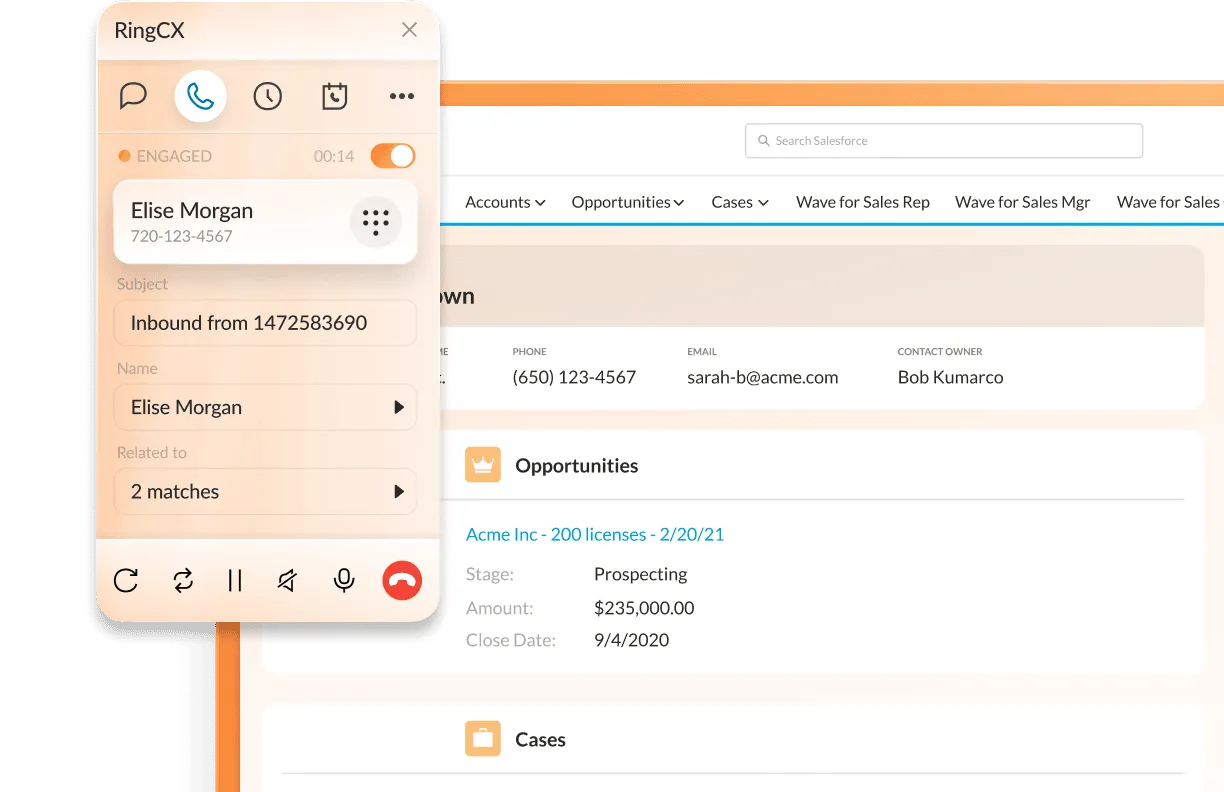
Because the routing logic and the channels live in the same place, a call and a chat follow the same rules, so the inconsistent experiences that come from stitching tools together stop at the source. For a contact center leader, that’s routing you tune from one workspace instead of across a stack of separate tools.
Make routing a system, then measure it
Intelligent call routing pays off when it’s designed around the outcomes that matter most to your operation and tuned against real performance. Set it up to match callers to the resource most likely to resolve them, then hold it to the metrics that matter, such as first-contact resolution and handle time, to determine whether it’s working.
The next step is to see how intelligent routing, like what you’ll find in RingCX, works in a single platform across every channel.
Intelligent call routing FAQs
What is intelligent routing?
Intelligent routing is the practice of directing a customer contact to the best-fit resource using data, intent, and agent skills rather than fixed rules. It applies to calls, chats, emails, and messages, matching each one to the person or system most likely to resolve it.
The goal is to raise resolution rates and cut wait times by making a smarter match than “next available agent.”
What is automated call routing?
Automated call routing is any system that directs incoming calls without a live operator, from a basic menu to intelligent, data-driven matching.
Simple versions route on the option a caller presses or a round-robin across agents. More advanced versions use caller data, skills, and intent to choose the destination. Intelligent call routing is the advanced end of that spectrum, where context, not just a fixed rule, decides where the call goes.
What is call routing and how does it work?
Call routing is the process of directing an incoming call to the right destination, such as an agent, queue, or department.
It works by applying rules or logic to each call: a basic system routes on the number dialed or a menu choice, while an intelligent system weighs caller data, intent, and agent skills in real time. The system evaluates the available options and connects the call to the best match, often in the moment between the call arriving and an agent picking up.
Originally published Oct 15, 2026