AI Communications







In a competitive landscape where customers have plenty of choice, customer engagement strategies are vital for encouraging them to choose you—and to stay loyal. With high volumes of interactions and the demand for personalization, though, this can be difficult to achieve.
AI customer engagement is the key to creating an authentic connection with customers at scale, as it delivers deep insights and enhanced efficiency. 79% of customer service agents believe that having AI as a co-pilot supercharges their abilities. But what exactly does it do?
Let’s explore the impact of AI on customer engagement by diving into the benefits and challenges, and sharing some best practices to help you keep customers engaged.
Integrating AI with customer engagement: Key takeaways
The role of AI in customer engagement includes hyper-personalization, sentiment analysis, automation, and predictive analytics. With AI customer engagement tools, businesses can tailor their communications and support to individual customers and manage a growing volume of interactions across all channels. As AI continues to evolve, it offers greater efficiency and an improved customer experience. This brings enhanced engagement levels and long-term loyalty.
What is customer engagement?
Customer engagement is the process of connecting with your customers through two-way interactions. It takes place across all touchpoints before, during, and after conversion, with the aim of building lasting relationships. Digital customer engagement refers to engagement via digital channels.
AI in customer engagement involves using advanced algorithms to deepen your understanding of what keeps people engaged. It helps you provide highly-personalized experiences and a seamless customer journey, using tools like smart chatbots, virtual assistants, and sentiment analysis.
How AI technology transforms customer engagement
AI has the power to make significant improvements to customer engagement—here’s how businesses are implementing the tech:
Hyper-personalization via IVAs and AI chatbots for customer engagement
78% of reps agree that customers expect more personalized experiences than ever before. Trying to deliver tailored interactions at scale can be time-consuming and resource-intensive. That’s where conversational AI comes in, automating interactions without losing the personal touch.
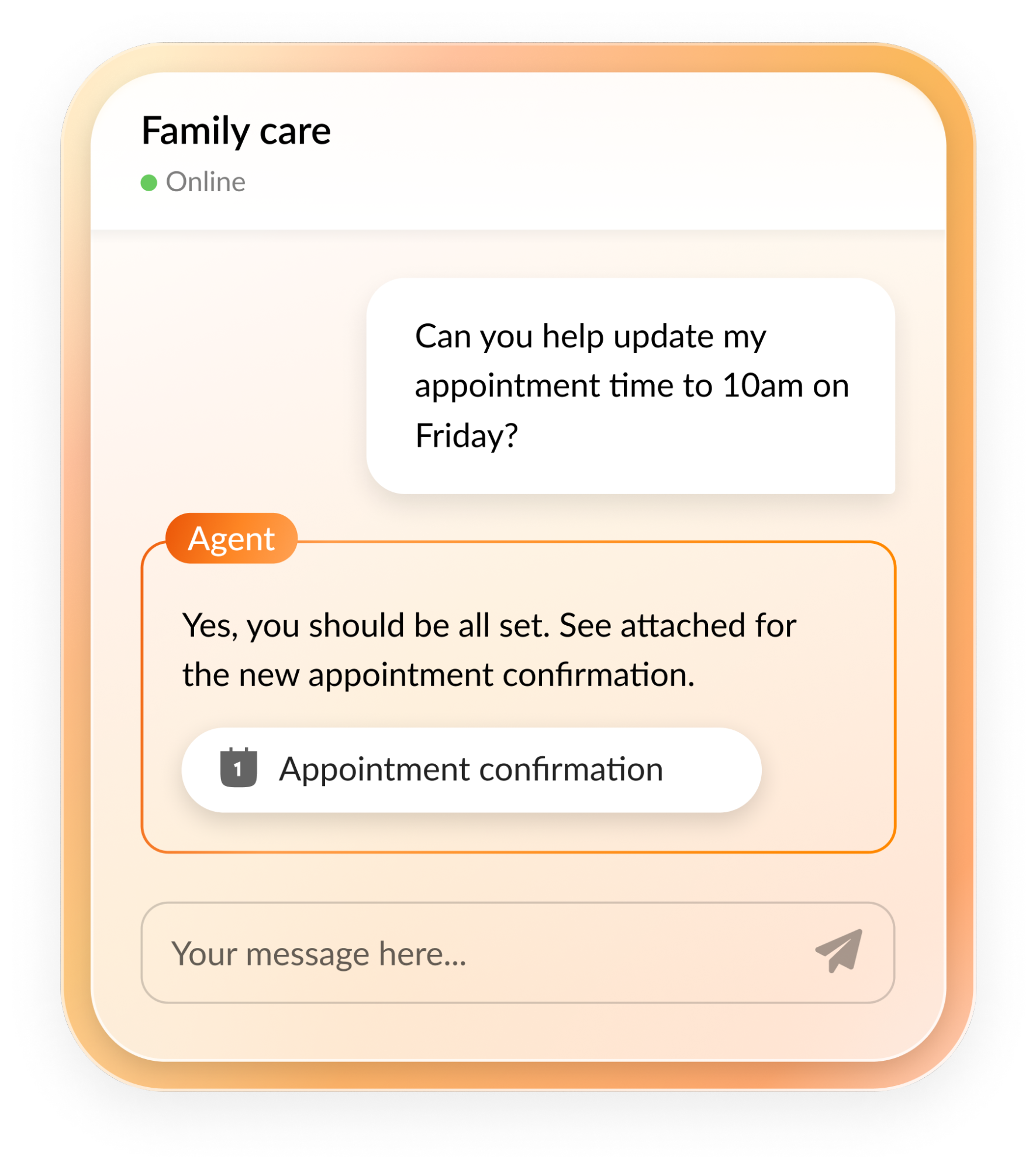
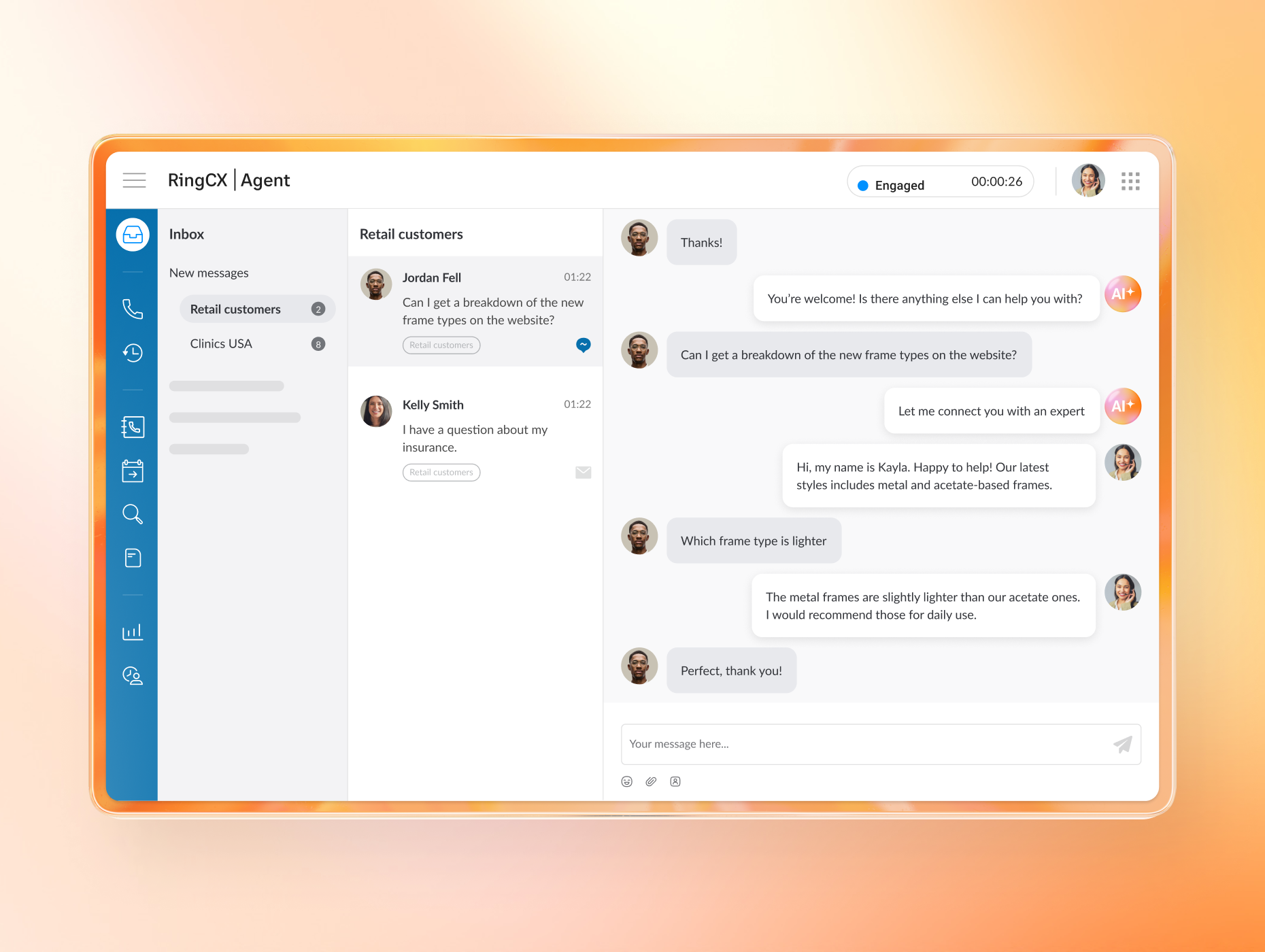
Conversational AI involves using solutions like intelligent virtual agents (IVAs) or AI chatbots for customer engagement. These solutions are no longer restricted to giving basic canned responses—they’re able to deliver hyper-personalized answers for each customer and situation.
Smart chatbots and IVAs are programmed to have a high degree of comprehension. They can interpret human emotions and make decisions in real time. Thanks to natural language processing (NLP), they can converse almost like humans, learning more conversational nuances over time.
Plus, they sync with your CRM and other systems to pull in data on customer behavior, preferences, and needs. For example, they might use purchase history to recommend certain products or send a follow-up message with a discount on a relevant item.
Sentiment analysis and other real-time guidance
Apart from deploying customer engagement AI chatbots for interactions, businesses can use AI tools to extract and analyze valuable data from the conversations. Sentiment analysis is a type of conversation intelligence that detects how customers are feeling about the brand or the interaction.
It does this by analyzing elements like keywords, tone, and context, revealing whether the overall sentiment is positive, negative, or neutral. Because this happens in real-time, agents have the chance to adapt the conversation and make sure the customer remains engaged.
AI can also provide other real-time assistance to human agents to improve customer experience and engagement. For instance, it can deliver live coaching during interactions, giving agents relevant information based on context or the customer’s known preferences. It can identify high-potential leads and recommend the best approach.
Generative AI tools can create faster responses to customers, adjusting the tone to be more friendly or more formal depending on the situation. When a human agent types just a few words, it can expand the content into a full reply, saving time.
AI customer engagement automation behind the scenes
In direct interactions, then, AI is ideal for automating responses to common customer service inquiries. It can also automate the workflows that happen backstage, which are also crucial for maximizing efficiency and customer engagement.
AI tools may, for instance, automatically update your CRM after each interaction, eliminating manual data entry. As we mentioned, they’ll also pull in relevant CRM data during conversations—either to create automated responses or to help human agents out.
You can also use AI for audience research and segmentation, and for lead qualification. Customer engagement automation enables consistent email messages, social media posts, and retargeting ads that reach the right people at the right times, while generative AI can create the content.
In a contact center setting, automated triage and intelligent routing make sure every inquiry goes to the agent who is best suited to engaging with that customer. Coupled with AI-powered self-service, this reduces agents’ workload and frees them up for high-value tasks.
Predictive analytics to help improve customer engagement proactively
AI tools are capable of analyzing huge volumes of data from customer interactions and feedback, which not only saves time but also identifies patterns that humans might miss. That can reveal opportunities for your business to be proactive when it comes to customer engagement.
Using predictive analytics and NLP, the algorithms can pick up on important keywords in real-time and historic data. This enables them to accurately predict how customers are going to behave and what they will need—sometimes before they know it themselves.
For example, the AI might recognize that a certain product or service will interest the customer. This brings increased cross-selling and upselling opportunities. As well as recommending complementary products, you could suggest replacement items before the customer runs low or the product expires.
Predictive analytics is useful for intent recognition and conversion predictions, but also for spotting signs that a customer is disengaged and might be about to churn. This gives you a chance to reach out and ramp up your strategies to keep them in the fold.
Benefits of AI customer engagement
We’ve looked at some use cases for implementing AI in customer engagement, but let’s take a closer look at the key benefits of doing so.
24/7 Availability
Customers expect businesses to answer their questions and resolve their issues around the clock. That’s where AI has the advantage, because it’s always working and never needs a break.
AI chatbots and intelligent virtual agents can manage multiple customer inquiries simultaneously. They also deliver consistent service for a reliable brand experience.
Reduced customer effort
As well as round-the-clock availability, AI tools make life easier for customers by responding quickly and accurately to inquiries. They don’t need to wait in a call queue—they can have a chat window open while they get on with their day. The AI knows their needs, delivering relevant recommendations or content without them having to search online.
Improved efficiency
AI handles simple inquiries across channels and manages a high volume of interactions, as well as automating workflows behind the scenes. This reduces the burden on human agents and helps them to deliver better service.
Deeper insights
71% of respondents to a Gartner survey said that AI adoption brought better data-driven customer insights.
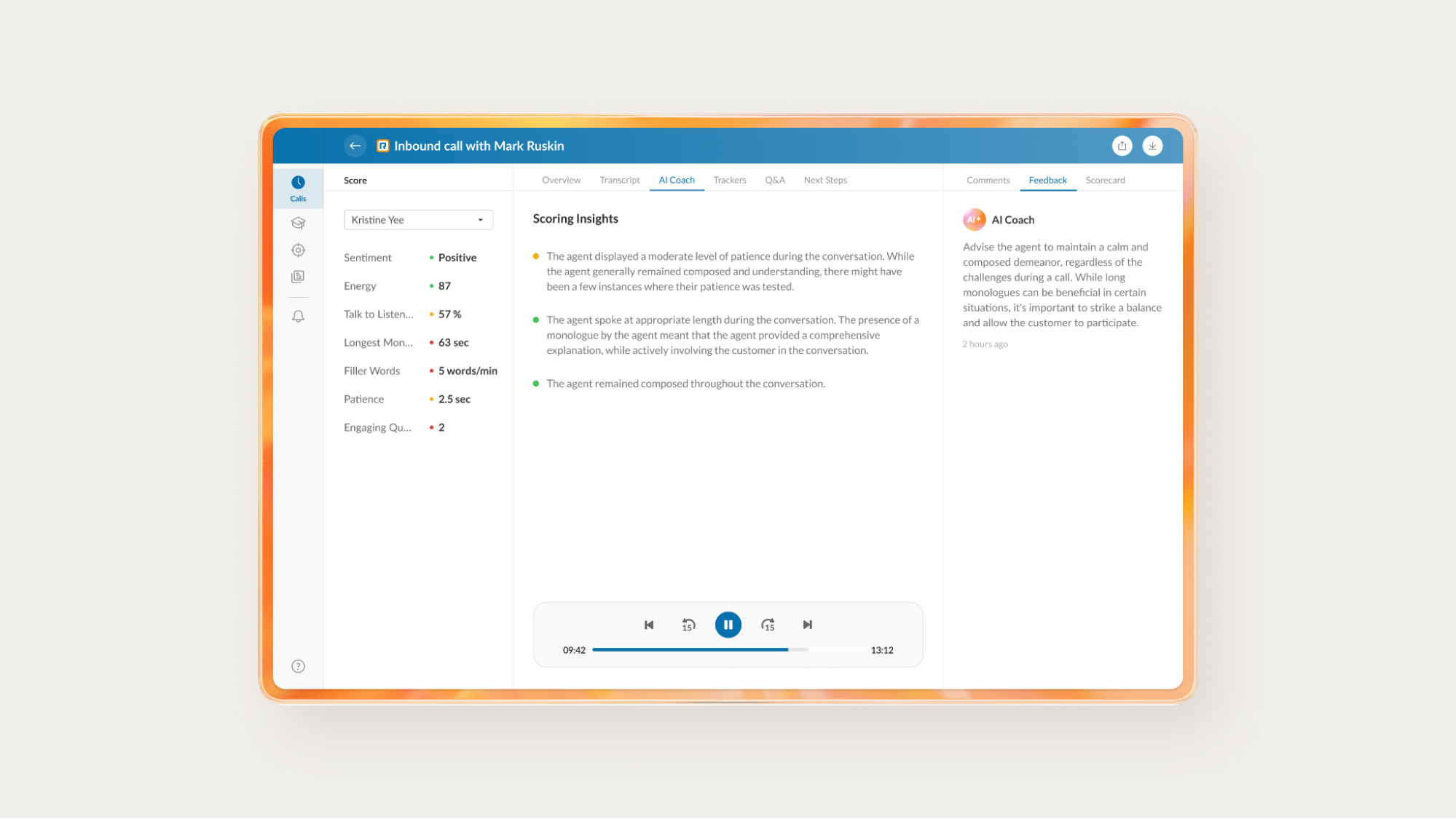
With AI analysis and reporting, you can learn more about the best ways to engage different types of customers at different stages of the journey, and ensure that you deliver the appropriate content, messaging, and support.
Lower costs
AI customer engagement tools also help you to reduce operational costs by automating repetitive tasks. Their scalability allows you to handle growing volumes of interactions without expanding your human team. The increase in customer retention also lowers costs, while improved customer loyalty leads to higher revenue.
Competitive edge
Customers have high expectations for businesses to provide personalized experiences and fast response times—and delivering on that is a good way to differentiate your brand. Plus, the insights you get from AI analysis can drive innovation and help you tap into emerging trends.
Challenges and considerations when implementing AI for customer engagement
When you’re introducing AI for customer engagement, it’s best to be aware of the challenges and take the following into consideration:
Staff and customer reticence
AI is still an emerging technology, and you’ll probably find that some employees and customers have a few concerns about using it. These may include things like the accuracy of responses from generative AI or the potential for cyberattacks. Human agents may fear that AI will take their jobs.
How to overcome it:
We’ll touch on this in the next section, but it’s important to reassure staff and customers that you’re using AI responsibly, and explain the benefits that AI brings to them all.
Data privacy and security
The security and privacy of customer and company data is a major consideration when using AI customer engagement software. Companies have to recognize and prevent an increasing number of cyber threats, while adhering to privacy regulations like CCPA or HIPAA to avoid penalties and reputational damage.
How to overcome it:
Set clear protocols for AI data use, and implement robust measures like encryption, multi-factor authentication, and data anonymization.
Integration
AI tools can’t work effectively if they’re not synced with your existing business systems. Integrating tools, platforms, and data sources can be tricky, especially if you’re pairing new technology with legacy systems. In fact, the challenge of tech stack implementation was named as a barrier to AI adoption by 55% of respondents in a Gartner survey.
How to overcome it:
You may find it easier to implement AI in stages, starting with something simple like a chatbot, so that you can ensure your systems are integrated properly before moving on.
AI customer engagement best practices
Follow these top tips for overcoming the challenges and harnessing the benefits of AI-powered customer engagement:
Retain the human element
While AI brings a raft of benefits, the human element is still crucial in customer engagement. There will always be customers who prefer to speak to a real person, and inquiries or problems that demand human input. A contact center staffed entirely by robots would appear soulless.
Plus, AI may be super-smart, but it needs time to learn. It can’t necessarily predict all questions, decipher queries containing slang or poor grammar, or demonstrate the required level of empathy. Humans are also required to train the AI models on accurate data, and to check the outputs.
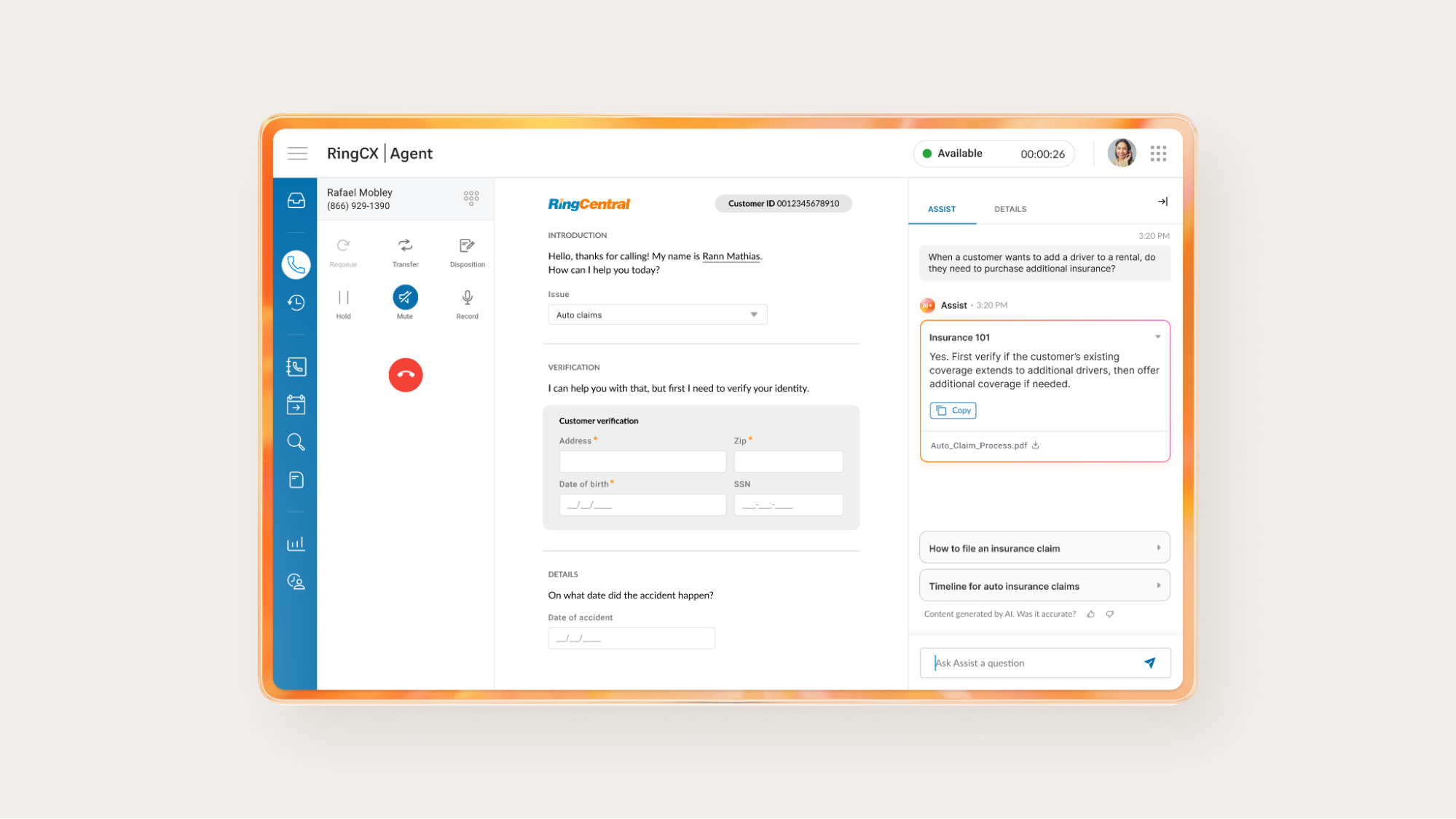
Finding a balance is the key here. Use AI customer engagement solutions for handling simple interactions and for assisting real agents in real time, and deploy your human staff when customers need a little extra nurturing to keep them engaged.
Prioritize the correct areas for AI and automation
As AI and automation continue to evolve and more use cases emerge, it may be tempting to want to apply it in every area of customer engagement. To get the best results, though, take a step back, and think carefully about where AI would work well and where it wouldn’t.
Think about your existing customer engagement strategies and every touchpoint in the customer journey, and look back at previous customer interactions. Are there any obvious inefficiencies or bottlenecks that could be improved with AI? What are the priorities and goals in terms of customer engagement?
Remember, it’s not just about efficiency—the customer experience has to come first. You should only use AI-driven customer engagement where it will bring true value to customers. As we mentioned, it’s also vital to integrate AI tools with your other systems—so check that this is possible.
Get early buy-in from your teams
You’ll need full buy-in if your AI customer engagement strategy is going to be successful. Before you sign up for any new solutions, discuss AI with your team and address any concerns. Ask for their input. Do they have any suggestions? What particular tools would make their jobs simpler?
Above all, reassure them that you’re not planning to replace them with machines. Explain how you intend for AI tools to work alongside humans, and why this is beneficial. Let them try out new tools during a free trial, and provide full training once the AI solutions are in place.
Buy-in from customers is crucial, too. 61% of them believe AI advancements make it even more important for companies to be trustworthy, so show them that you’re committed to using AI ethically and be transparent about how you’ll use their data.
Continually monitor and iterate
Once you’ve implemented AI solutions, you can measure the expected uptick in engagement levels with customer engagement metrics like customer satisfaction scores (CSAT) and retention rates. But you should also track AI-driven interactions to discover how they’re received by customers.
You can use sentiment analysis to find out if people are happy with the responses they receive from AI chatbots or virtual agents, and track the tools’ performance against your targets for average response time or first-contact resolution.
If something isn’t working as it should, or if engagement levels are low, find out why and look for ways to improve.
How adopting an AI customer engagement platform is already benefiting businesses
To better understand the benefits of an AI customer engagement platform, let’s look at some real-life examples. These companies have experienced benefits by using the AI-driven customer engagement solutions built into RingCentral RingCX.
Aurora Construction Materials
This Australian firm was keen to ensure a positive customer experience at all times, despite the challenges of managing high call volumes with a small customer service team. RingCentral RingCX provided advanced contact center features including advanced analytics.
The team used the results to optimize the customer experience, including giving customers a callback option instead of waiting on hold. They also discovered valuable insights into customer behavior, trends, and outcomes.
“It’s a good way for us to understand our repeat customers and build on those relationships. If we identify a pattern of behavior, it’s something we can go back to our sales team to act on using quantifiable data.”
– Chris Cartwright, Customer Service Manager
The Office Gurus
This business process outsourcing company was already using RingCentral for communications, but saw an opportunity to enhance its contact center operations with generative AI via RingCX and its intelligent omnichannel capabilities.
“What’s great about RingCX is that we can efficiently manage any digital channel that a given client needs [. . .] and we’re centralizing all those customer contacts in one place. That means our clients’ customers reliably receive quick responses, from the right people, no matter how they make contact.”
– Jaimie Bell, VP of Client Solutions
Integral Recruiting Services
This full-service recruiting firm has seen a boost to operational efficiency and customer engagement thanks to RingCentral’s AI tools. The AI Receptionist enables 50% quicker transfer times for a better client experience, using keywords to quickly connect callers to the right person.
The virtual receptionist saves time (and money) for the team, alongside the automated note-taking and call-summarizing features which free them up for high-value tasks.
“AI Receptionist now handles 93% of our incoming calls, which saves our team about 12 hours each month—translating to $900 in cost savings. I’m also personally saving an hour and a half every day thanks to the incredible note-taking ability of the RingCentral AI Assistant. It’s amazing how much efficiency these tools are creating.”
– Gina Van Opens, President
InsuranceHub Leavitt Agency
This established insurance provider has seen multiple benefits from RingSense, the conversation intelligence tool built into RingCentral’s communications platform. The tool captures the critical endpoints of customer conversations, helping the agency to track, learn, and improve its service with each call.
“Having conversation intelligence natively integrated into our existing phone system provides heightened security and ease of use and connectivity. We’re thrilled with this development and eagerly anticipate more innovation from the RingSense conversation intelligence team.”
– Lee LeBaigue, Senior Vice President
All Things CX
This global customer experience consultancy has gained valuable insights into their customer interactions through RingCX. The platform’s AI-generated transcripts, summaries, scorecards, and sentiment analysis all help the team to spot areas for improvement. And the AI Quality Management feature has even led to a 25% reduction in handle time.
“The ability to quickly identify trends and patterns in customer interactions has been invaluable for our clients. It allows them to proactively address areas for improvement and tailor their services to better meet customer needs.”
– Daryn Robinson, Founder and CEO
Join the customer engagement AI revolution
Customer engagement is critical for building strong relationships, which lead to lasting loyalty and boost your customer lifetime value. AI gives you advanced tools for maximizing engagement, from hyper-personalized messaging to fast responses and resolutions.
With an AI-powered customer engagement tool like those from RingCentral, you can create meaningful connections at every stage of the customer journey. You can gather valuable insights, provide relevant content, and automate back-office workflows for efficient interactions.
However, AI isn’t a replacement for real agents, who still have a vital role to play in customer engagement. AI works best alongside—not instead of—humans.
AI customer engagement FAQs
How can AI improve customer engagement?
AI can enhance customer engagement by delivering deeper insights into customer needs and preferences. This enables businesses to provide hyper-personalized experiences—including AI-generated content and messaging.
AI can also reveal customer sentiment in interactions and predict future needs, helping companies to be proactive. AI tools are available 24/7. They will automate workflows for efficiency and generate fast, accurate responses to queries, increasing customer satisfaction.
Which AI technologies play a key role in customer engagement?
Intelligent virtual agents and chatbots play a big part in customer engagement, handling multiple inquiries simultaneously and gathering valuable data. They deliver fast, personalized responses.
Human agents can use generative AI to quickly create messages or content, and tailor it to a particular customer or situation by automatically adapting the tone.
Conversational AI also includes sentiment analysis, which reveals whether an interaction is positive, negative, or neutral. This enables agents to respond in real time, taking swift action if a customer is frustrated or disengaged.
Meanwhile, predictive analytics forecasts a customer’s next move and their future needs. These advanced technologies are based on natural language processing (NLP) and machine learning (ML).
How might AI further transform customer engagement in the future?
The future is bright for AI and customer engagement, with increasingly advanced solutions enabling an even more customer-centric approach. This includes higher levels of personalization and more accurate predictions about customer behaviors and needs.
AI tools get smarter over time as they learn from each interaction, and they’re likely to get better at recognizing human emotions. They’ll be able to sound more human-like in their responses and even demonstrate empathy.
Updated Feb 04, 2026