AI Communications









Compare leading contact center platforms on their enterprise-grade reliability, AI-powered insights, and seamless scalability.
Whether you’re seeking more advanced AI capabilities, deeper enterprise integrations, or a more cohesive platform architecture, the challenge is finding a Nextiva alternative that eliminates the fragmented systems slowing your team down, consolidates the vendor relationships draining your IT resources, and delivers the measurable gains your executive team expects.
The right solution unifies voice, digital channels, workforce management, and AI-powered automation into one reliable ecosystem, transforming previously disconnected tools into a competitive advantage that drives both customer satisfaction and bottom-line results.
This guide evaluates five leading Nextiva alternatives built for enterprise scale, comparing their AI capabilities, integration depth, and deployment complexity to help you identify the platform that best aligns with your business needs, operational requirements, and strategic goals.
Key takeaways
- Leading Nextiva alternatives offer varying levels of integration depth, scalability, and analytics
- Modern platforms combine voice, digital channels, workforce management, and AI-powered automation to reduce vendor sprawl
- Evaluation criteria include platform unification, deployment speed, and long-term ROI potential
- RingCX delivers unified contact center capabilities with AI-first architecture and 99.999% uptime reliability
Top 5 Nextiva alternatives for enterprise contact centers
While traditional contact center as a service (CCaaS) providers often layer AI onto legacy systems as an afterthought, modern platforms like those below build AI capabilities directly into their architecture. This AI-first contact center approach delivers more reliable automation, deeper conversation intelligence, and faster deployment, which are critical factors when you’re managing high-volume customer interactions across distributed teams.
1. RingCentral RingCX
RingCentral RingCX is an AI-powered cloud contact center solution that unifies voice, digital channels, workforce engagement, and customer interaction analytics into a single, scalable ecosystem. Built on 99.999% uptime reliability, it eliminates the complexity of managing multiple vendors while delivering the advanced features and capabilities required by enterprise service teams.
AI-first contact center platform
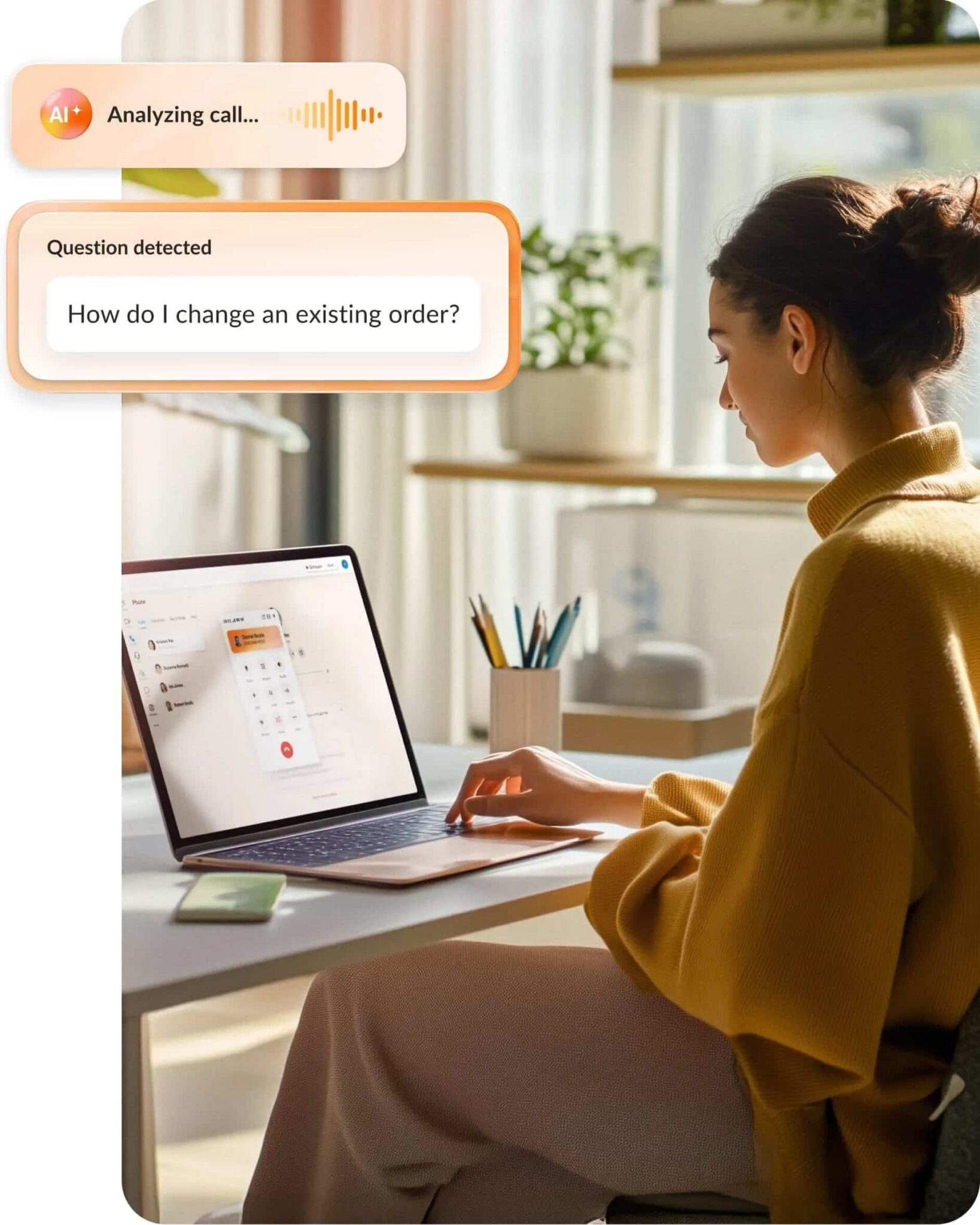
To keep your contact center operational during peak demand, RingCX embeds AI-powered routing, automation, and analytics directly into its infrastructure.
Intelligent routing connects customers to the right agent based on skill, availability, and interaction history, reducing wait times, optimizing call queues, and improving first-contact resolution. Built-in automation handles routine inquiries without agent intervention, while real-time analytics surface actionable insights to help refine staffing, enhance operational efficiency, and improve customer satisfaction.
Agentic voice AI capabilities
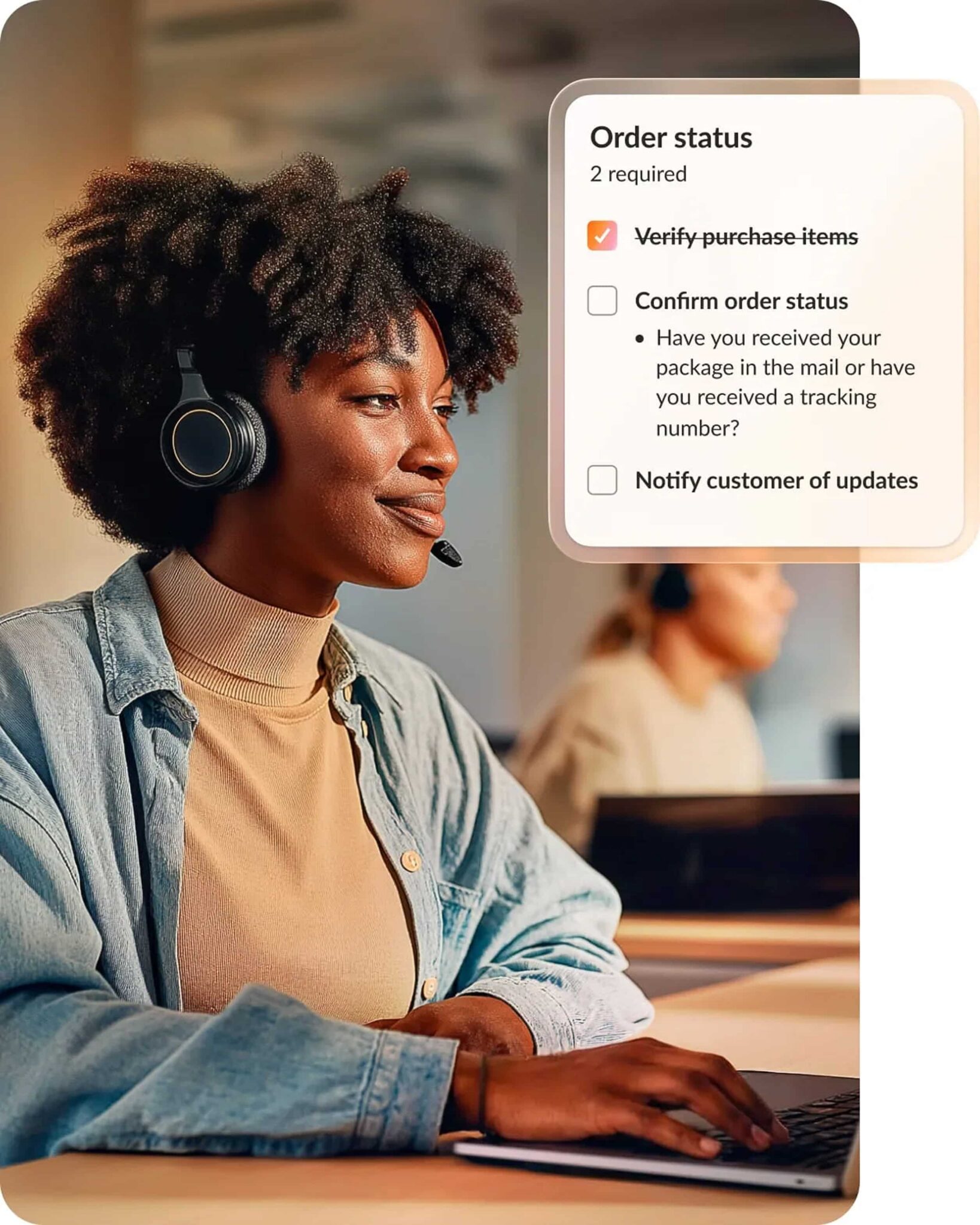
RingCX applies AI across the full interaction lifecycle to deliver measurable improvements in efficiency and customer satisfaction:
- AI Receptionist (AIR) answers inbound calls, handling FAQs, capturing leads, scheduling appointments, and routing calls based on customer intent, so customers reach the right resource on the first attempt.
- AI Virtual Assistant (AVA) empowers agents with automated note-taking and real-time customer context through AVA Agent Assist, while AVA Supervisor Assist provides managers with live interaction visibility and coaching opportunities.
- AI Conversation Expert (ACE) analyzes 100% of conversations to identify training needs, surface compliance risks, and extract actionable insights.
Enterprise-grade connectivity
RingCX features 500+ APIs and 120+ integrations, including Salesforce and Microsoft Teams. Your agents work within the tools they already know, accessing complete customer context like interaction history, purchase data, and support tickets in real time.
Advanced conversation intelligence
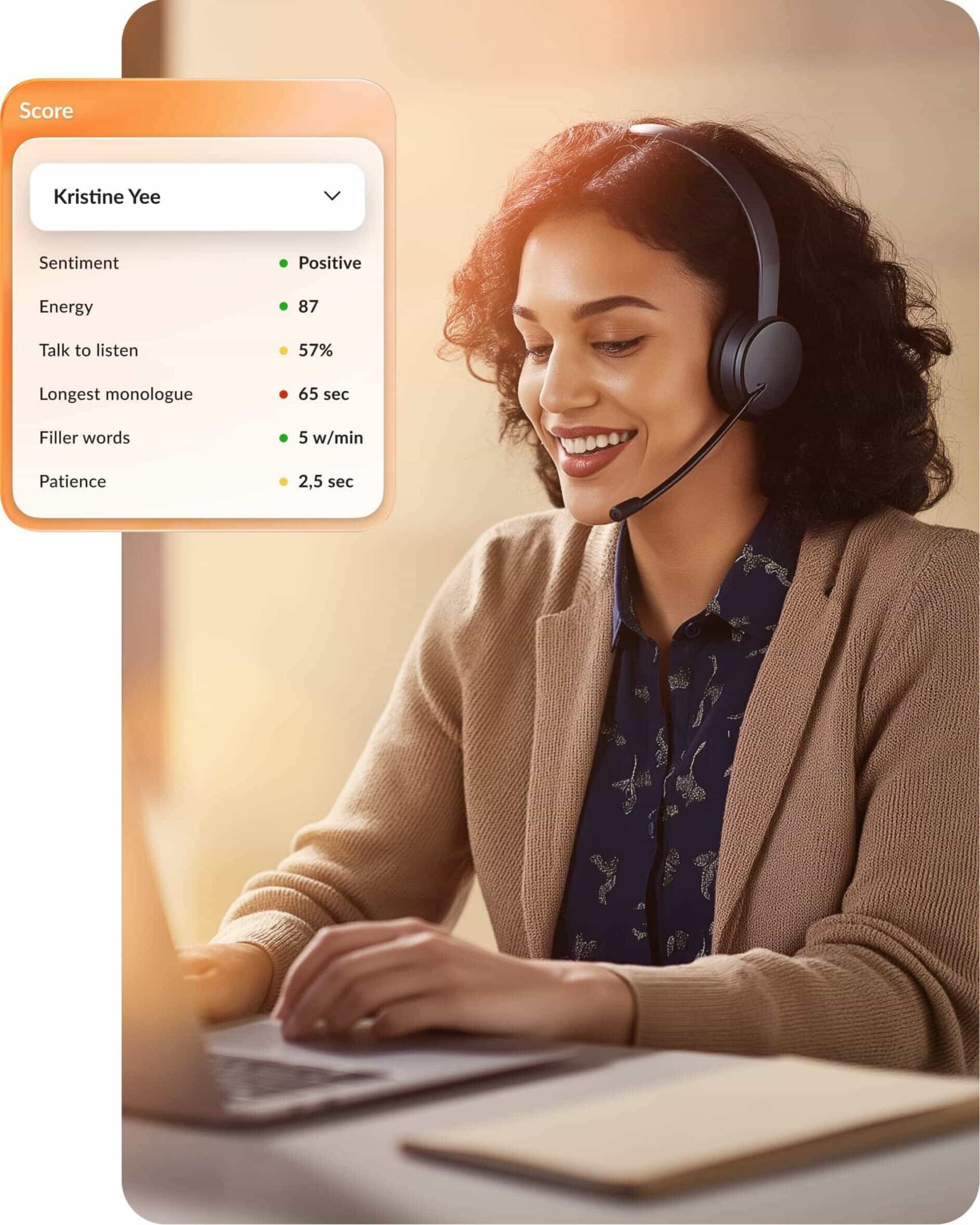
The platform analyzes every customer interaction across voice, chat, email, and SMS. You get access to real-time dashboards highlighting customer satisfaction (CSAT) scores, sentiment trends, and friction points to help you identify coaching opportunities, surface compliance risks, and uncover systemic issues.
Rapid deployment and migration
RingCX’s unified architecture simplifies onboarding and lets you deploy in days instead of weeks or months. This accelerated timeline reduces implementation risk, minimizes business disruption, and delivers faster time-to-value. You’ll use fewer IT resources, spend less on consulting, and demonstrate ROI within your first quarter.
Compare RingCentral and Nextiva in our head-to-head feature analysis.
2. Microsoft Teams
Microsoft Teams extends its collaboration platform into contact center territory through Teams Phone and Operator Connect, making it a natural fit for enterprises already invested in the Microsoft 365 ecosystem. To reduce tool fragmentation, the platform combines voice, video, messaging, and contact center features into a single interface.
Teams enables rapid scaling for mid-sized businesses using existing infrastructure and provides native connectivity with Outlook, SharePoint, and Dynamics 365. AI-powered Copilot features offer real-time call summaries, sentiment analysis, and suggested responses to improve first-contact resolution rates.
While Teams excels at combining internal collaboration tools with customer interaction features, full contact and call center capabilities require higher tiers and add-ons like Teams Phone Standard and Operator Connect for public switched telephone network (PSTN) calling.
3. Zoom Contact Center
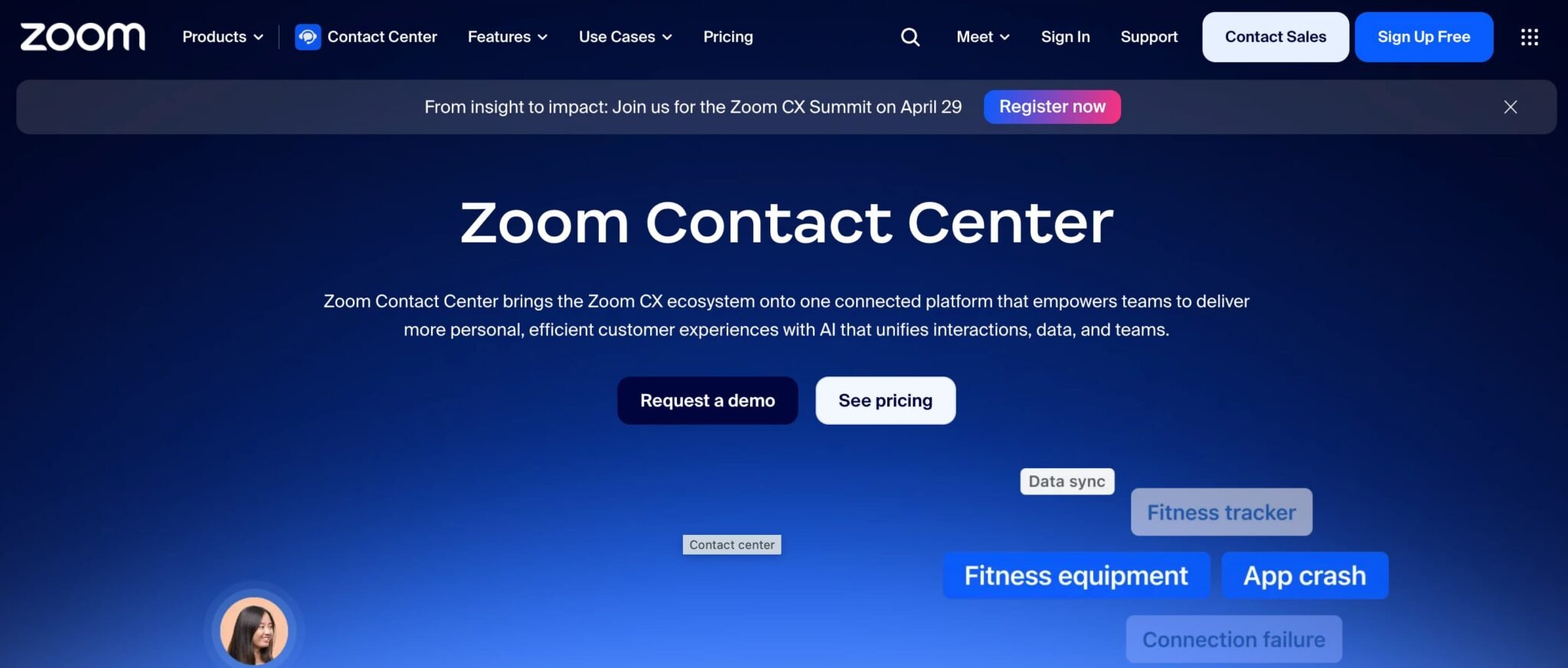
Zoom Contact Center extends the company’s video conferencing legacy into customer engagement, merging voice, video, chat, and messaging for organizations already using Zoom for team collaboration. Its user-friendly design minimizes training time while enabling digital customer support interactions that improve resolution rates of complex inquiries.
Zoom’s primary advantage is ease of use. Its familiar interface and powerful mobile app reduce the learning curve for agents and IT support teams. Video meeting integration allows for live visual guidance directly within the service workflow, speeding resolution for technical interactions that might stall on a standard voice line.
While Zoom provides real-time analytics for call volume and customer sentiment, its AI capabilities are still maturing relative to long-standing enterprise CCaaS providers. Also, the platform’s usage-based voice charges may make it less cost-effective for high-volume operations. Enterprises requiring advanced workforce management or sophisticated automation should carefully evaluate Zoom’s capabilities against specialized contact center platforms.
4. Cisco Webex
Cisco Webex is an enterprise-grade business communications platform that combines voice, video, messaging, and contact center capabilities into a single ecosystem. Backed by decades of hardware experience, Webex appeals to organizations already using Cisco networking and Voice over Internet Protocol (VoIP) tools, offering native integration with existing business phone systems and on-site infrastructure.
The platform consolidates call management, video, team messaging, and contact center features into one suite, reducing tool fragmentation. For enterprises with an established Cisco relationship and complex implementation requirements, Webex provides substantial professional services resources and technical deployment experience.
Organizations prioritizing sophisticated AI automation, advanced call routing, or rapid deployment should carefully evaluate Webex’s feature parity against specialized cloud-native competitors.
5. 8×8
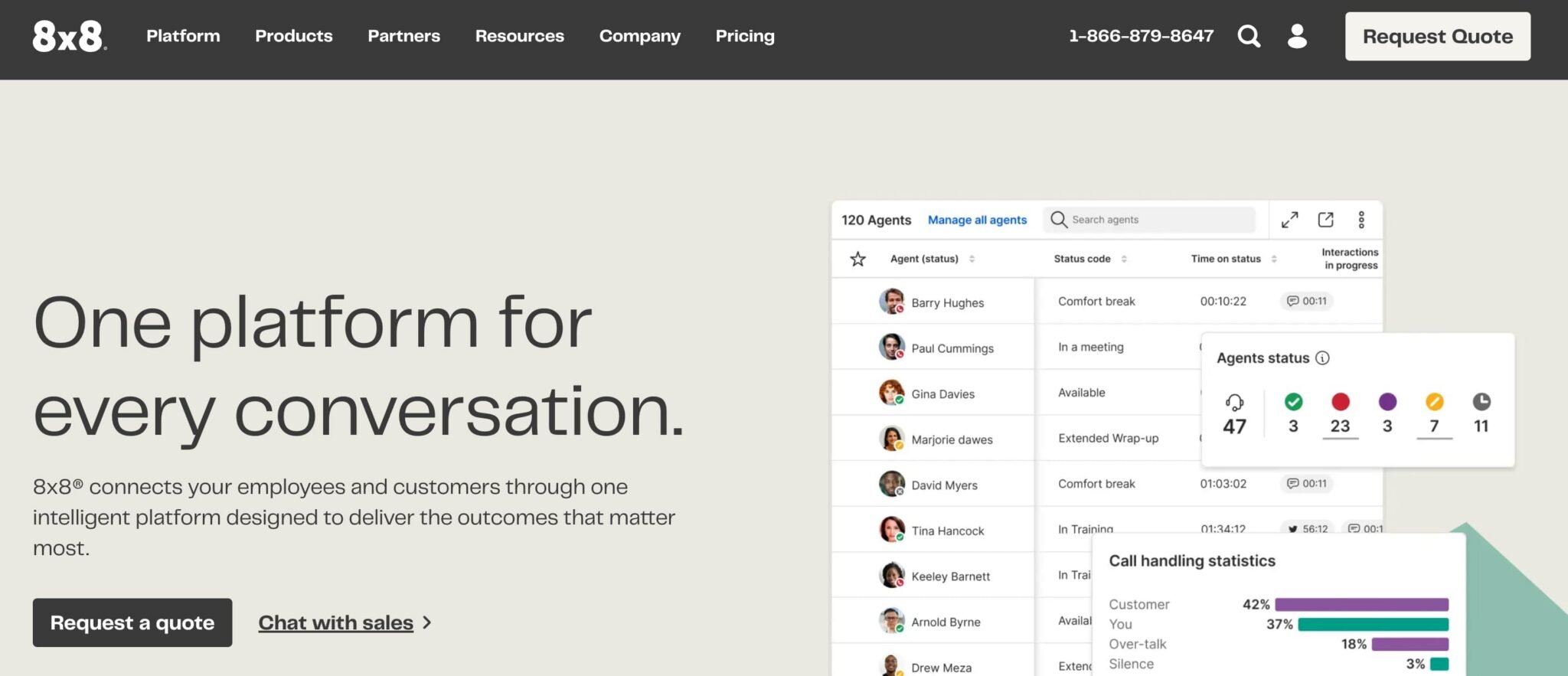
8×8 delivers a comprehensive unified communications as a service (UCaaS) and CCaaS platform for enterprises managing high-volume customer interactions across global operations. With over 20 years in the market, 8×8 combines voice, video, messaging, and contact center capabilities into a single cloud-based solution for organizations consolidating vendor relationships while scaling internationally.
The platform’s standout feature is its extensive global reach, which supports unlimited international calling to numerous countries and eliminates per-minute fees for remote teams. The omnichannel contact center routes voice, chat, email, and SMS interactions with comprehensive contact and call analytics, AI-driven workforce optimization, and open APIs for deep workflow customization.
While 8×8 offers competitive enterprise pricing, deployment complexity may require more setup time than simpler Nextiva competitors.
How to choose the right Nextiva alternative
The right communications solution should eliminate vendor complexity, unify customer interactions across channels, and deliver measurable ROI through improved efficiency and customer satisfaction. Here’s what to look for as you evaluate your options.
Platform unification and vendor consolidation
Many enterprises operate separate systems for telephony, digital channels, workforce management, and analytics, creating data silos that obscure the full customer journey. In fact, recent research from Puzzel shows that the average organization now manages 3.9 different contact center technologies, with only 3% having moved to a single platform.
Enterprises that act now gain a distinct competitive advantage. Bringing call management and customer engagement capabilities into an all-in-one architecture eliminates vendor divides that stall operations and slow growth.
AI capabilities and conversation intelligence
AI implementations vary significantly across platforms. Those that bolt AI features onto legacy architectures as an afterthought create performance bottlenecks and limit functionality.
Modern platforms build AI directly into their core architecture. For example, RingCX’s AI-first design delivers intelligence across the complete interaction lifecycle, eliminating blind spots and enabling seamless automation that performs reliably under peak demand.
Calculate the ROI of RingCX AI capabilities
Discover where AI reduces costs, improves agent performance, and drives better customer outcomes for your contact center.
Enterprise scalability and reliability
Contact centers handling thousands of daily interactions require platforms that maintain consistent call quality under load and support rapid scaling during peak periods.
Look for providers offering 99.999% uptime service level agreements (SLAs) backed by redundant infrastructure and proven disaster recovery capabilities, plus simplified phone number porting to ensure you can migrate existing lines without business disruption.
Integration depth and deployment complexity
Integration depth and your specific use cases determine how quickly you can deploy and how well the platform fits into your existing technology ecosystem. Platforms that offer native integrations for the software your team already uses help you eliminate custom development work and accelerate time-to-value.
These deep integrations ensure data flows between systems, providing agents with complete customer context and enabling accurate reporting across your entire operation.
Find the right enterprise contact center platform
The best Nextiva alternatives combine voice, digital channels, workforce management, and AI-powered automation into a single, reliable infrastructure. This unified approach eliminates the complexity and hidden costs of managing multiple vendors while providing the visibility you need to optimize every customer interaction.
RingCentral RingCX delivers this through an AI-first architecture that integrates customer engagement capabilities natively rather than layering them onto legacy systems. With 99.999% uptime reliability, 500+ native integrations, and Agentic Voice AI that applies intelligence before, during, and after every interaction, RingCX transforms your contact center from a collection of fragmented tools into a strategic asset that drives customer loyalty and operational efficiency.
Updated May 06, 2026