AI Communications




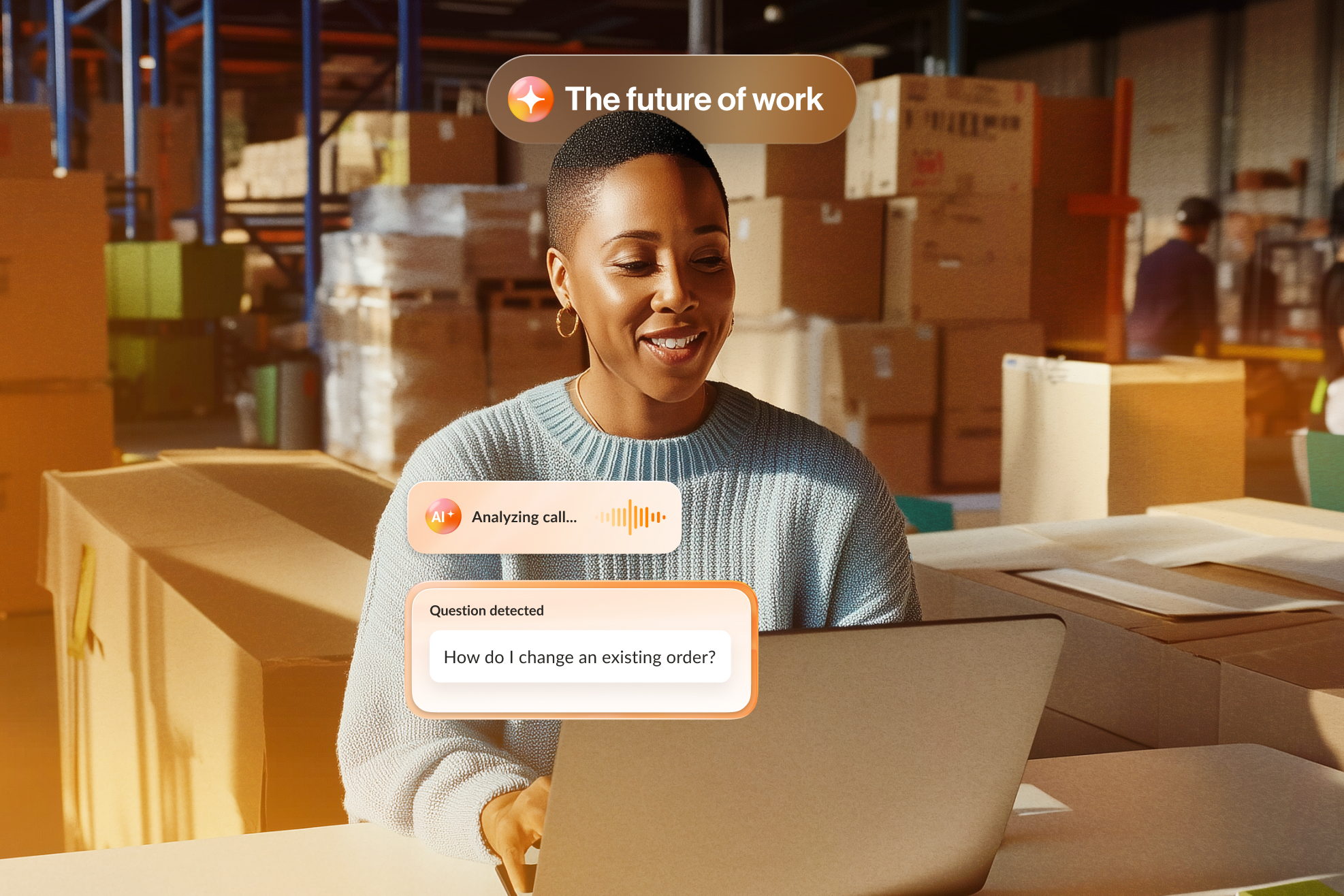

The rise of AI has sparked a fear-based narrative: that intelligent systems will ultimately replace human workers. In reality, the most forward-thinking businesses are embracing AI not to eliminate roles, but to evolve them. From frontline support to strategic operations, the objective shouldn’t be to cut human involvement, but to elevate its impact.
Agentic AI is the engine behind this shift toward intelligent collaboration. Systems that understand nuance, take initiative, and make work more efficient without replacing the empathy, creativity, and judgment only people can bring.
Busting the myth: AI isn’t here to replace us
Despite sensational headlines, the reality of AI in the workplace is far more nuanced.
Take Klarna’s recent experiment to fully automate customer support. While the move initially showcased AI’s potential, the company soon had to rehire hundreds of agents. Here’s why: AI alone couldn’t handle the emotional nuance, complex problem-solving, or contextual judgment that great support requires.
This isn’t an isolated case. Gartner predicts that by 2027, half of all organizations will walk back plans to cut headcount, realizing AI alone can’t deliver the consistency or care customers expect.
Even AI pioneers like Databricks CEO Ali Ghodsi are waving caution flags. He’s warned that automating complex workflows is significantly harder than most assume, underscoring the enduring value of human judgment.
The takeaway: AI is not a shortcut to fewer employees. It’s a catalyst for better, more empowered ones.
Agentic AI: Designed for collaboration, not control
Agentic AI goes beyond rules and reactive scripts and creates systems that:
- Understand urgency and tone (especially via voice)
- Autonomously initiate and complete structured tasks
- Proactively support humans by surfacing insights, suggesting next steps, and triggering actions
In this model, AI becomes a true teammate, filling in gaps, handling the repetitive, and surfacing the meaningful. Human and machine workers aren’t in conflict; they’re in partnership.
This partnership creates a different kind of workday. One that’s more focused, less reactive, and better equipped to deliver value at scale.
A new kind of workday: How RingCentral AI supports modern teams
Whether you’re in customer support, sales, HR, or operations, RingCentral’s suite of AI tools is designed to reduce friction, unlock insights, and empower employees to focus on what matters most.
Before the interaction: Answer and route smarter
AI Receptionist (AIR) uses conversational AI to field incoming requests, resolve routine issues, and route conversations based on real intent, not rigid phone trees. This leads to up to 50% fewer inbound distractions and more time for work that demands a human brain.
During the interaction: Enhance performance in real-time
AI Assist supports agents and knowledge workers by recommending next steps, surfacing documentation, and even acting autonomously to trigger workflows—no more tab-hopping or context-switching. The correct information shows up, right on time.
After the interaction: Automate and accelerate improvement
RingCentral AI Assistant handles wrap-ups, follow-ups, and summaries—turning every interaction into usable documentation. Meanwhile, RingSense evaluates conversations at scale to spot patterns, highlight coaching opportunities, and uncover actionable trends.
For example, Truck Site, a global dealer of refurbished commercial vehicles, saw a 3x boost in productivity and a 100% lift in customer satisfaction after deploying RingCentral AI. Their reps now switch devices mid-call, share real-time inventory details, and lean on AI-generated insights to move faster and serve better. As their Director of Finance put it, “We’ve definitely found the communications platform to help Truck Site deliver an outstanding experience for our customers around the world.”
And, MedCare, a leading medical equipment provider, also transformed its operations with RingCentral. After integrating RingSense, the company reduced agent coaching time by 92% and cut call wait times by 40%. AI is helping the team surface not just efficiency opportunities but also moments when agents may need support or training.
A better workforce experience, built together
AI is reshaping work, but it’s doing so by elevating human potential, not erasing it. Our research found that 76% of agents say AI has helped reduce burnout. Nearly 70% say they’re able to do more rewarding work, and most report higher job satisfaction as a result.
This is the future RingCentral is building: AI that enhances what people do best. A workplace where agents, employees, and teams aren’t bogged down by busywork, but supported by technology that helps them move smarter, faster, and more meaningfully.
Because when we design AI to empower—not replace—the result isn’t just better work. It’s a better way to work.
Originally published Jul 07, 2025