AI Communications









As customers continue to gravitate toward brands based on experiences, the service and support your call center team provides is a crucial differentiating factor. A poorly performing call center leads to unhappy customers, lower lifetime value, and higher customer churn.
Focusing on call center productivity is important to ensure optimal performance in call or contact center operations. Evaluating productivity and implementing improvements can greatly benefit your business.
Call center productivity: Key takeaways
- Call center productivity measures how efficiently and effectively your operation handles customer interactions, balancing speed with quality to improve customer satisfaction while controlling costs.
- You can track productivity using multiple metrics, such as call resolution rate, first-call resolution, average handling time, agent utilization, customer satisfaction, and cost per call.
- There are two key calculation methods for a basic productivity snapshot: Simple call resolution rate (resolved calls ÷ total calls × 100%) and output to input ratio (productive time ÷ total scheduled time × 100%).
- Common productivity challenges include inadequate training, agent burnout, high turnover rates, poor workforce management, outdated technology, compliance constraints, and failure to meet evolving customer expectations.
- Some productivity improvement strategies include comprehensive training programs, optimal staffing levels, streamlined workflows, modern technology tools, employee engagement initiatives, and continuous performance monitoring.
- Platforms like RingCentral RingCX help boost call center agent productivity with omnichannel capabilities, real-time analytics, and AI features like Agent Assist and intelligent virtual agents (IVAs).
What is call center productivity?
Call center productivity is a measure of how efficiently and effectively your operation handles customer calls and other interactions. This includes the proportion of time your agents spend on the clock vs how much time they spend doing work.
However, the devil is in the details.
What makes a call center “productive” isn’t necessarily the same in every circumstance. In some cases it may mean answering and resolving calls quickly, in others, improving customer satisfaction and increasing lifetime value. Placed under the microscope, productivity encompasses many call center KPIs tailored to the needs of each business.
For that reason, it’s important to understand the different ways to calculate call center productivity, in order to find what best suits you.
How to calculate agent productivity in a call center
While it’s true that call or contact center productivity requires many metrics to evaluate and assess properly, there are a couple of principle methods businesses use to keep their finger on the pulse of overall agent productivity.
Call center productivity formula 1: Simple call resolution rate
A simple approach to measuring call center productivity and efficiency is to track your call resolution rate.
Prioritizing this metric is based on the simple concept that the higher proportion of calls your team resolves, the greater the productivity. This is not to be confused with FCR; any call that is successfully closed is considered to be “resolved.”
Simple call resolution rate = (Total number of resolved calls / Total number of handled calls) * 100%
Call center productivity formula 2: Output to input ratio
Another logical way to measure call center and agent productivity is by monitoring what’s known as the output to input ratio. The idea is that productive agents spend higher amounts of their time on work-related activities.
- Output – The time agents spend talking with customers, doing post-call work, and other work-related activities.
- Input – The total duration agents are scheduled to work, including breaks, training, and other non-call-related activities.
Output to input ratio = (Total output time/ total input time) * 100%
Other call center productivity metrics
Call resolution rate and output to input ratio are great ways to get a productivity snapshot. You’ll likely, however, want a more granular view of call center productivity, agent efficiency, and the overall customer experience.
The following are some call center metrics you can use to further track and improve agent productivity:
First call resolution (FCR)
Also known as first contact resolution, a high FCR indicates your call center team is productive. Resolving calls on the first try prevents repeat calls that use up more of your agents’ time for the same issue. It also helps prevent customer frustration from a prolonged process, boosting satisfaction and loyalty.
FCR = (Number of calls resolved on first contact / total number of calls) * 100%
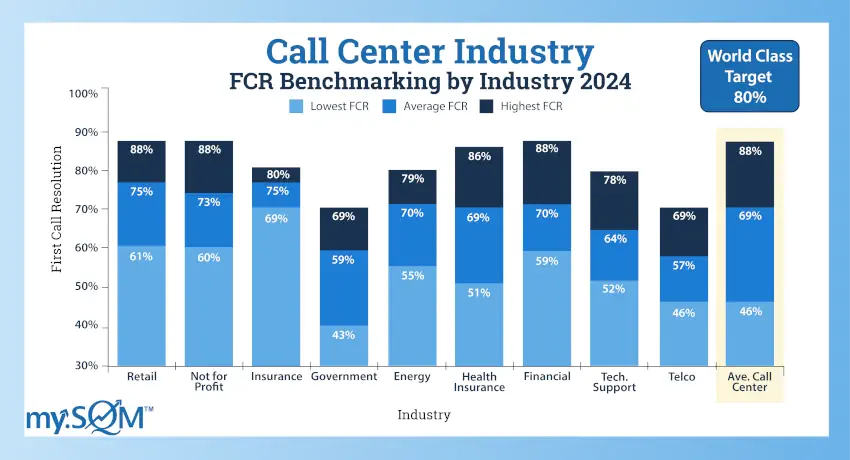
Like all of the following metrics, you’ll want industry benchmarks to establish your current baseline for context. For example, the SQM Group reports that the average FCR across all industries is 69%:
Average speed to answer
Average speed to answer measures how long it takes your agents to answer an incoming customer call. This includes time spent ringing and queuing before interacting with a member of your team. Long ASA times may indicate inadequate staffing levels or poorly implemented auto-attendants and call routing.
ASA = Total wait time for all answered calls / total number of answered calls
Blocked call rate
A blocked call occurs anytime a customer is unable to connect to your call center. This is usually due to a lack of capacity, but may also include callers interacting with your interactive voice response (IVR) menus and being prompted to call back later. The blocked call rate lets you know how well your system and/or staffing levels can handle peak demand.
Blocked call rate = (Number of blocked calls / total number of call attempts) * 100%
Call abandonment rate
Call abandonment rate measures how often customers hang up before reaching someone from your team. A high abandonment rate may indicate long wait times, insufficient agent levels, or ineffective call routing systems. It also likely means that your team will be dealing with more angry or frustrated customers when they call back to try again.
Call abandonment rate = (Number of calls abandoned / total number of calls received) * 100%
Average handling time
Average handling time, or AHT, is how long an agent spends talking or interacting with each customer. It’s a call center agent performance metric that directly affects productivity. Lower AHT means agents can handle more calls per shift. Shorter times also likely signal that your team is efficient at finding resolutions, while longer times indicate the opposite.
AHT = (Total talk time + Total hold time + total after-call work time) / total number of calls handled
Average time in queue
The average time in queue metric focuses purely on the time customers spend waiting to talk to an agent. Besides waiting times, long call queues can contribute to higher AHT and call abandonment rates.
Average time in queue = Total queue time for all calls / total number of calls that entered the queue
Customer satisfaction
Long queues and slow answer times don’t exactly demonstrate productivity. If your customers walk away from interactions feeling satisfied, however, then it means your team is delivering high-quality service and solutions.
The CSAT metric is typically scored from one to five, with scores of four and above interpreted as satisfied customers. Other related metrics include net promoter score (NPS) and customer effort score (CES). The benchmark for call center CSAT varies by industry and is typically between 75-84%.
CSAT = (Number of satisfied responses (4-5 rating) / Total number of survey responses) * 100%
Call transfer rate
Call transfer rate is a call center KPI that measures the percentage of calls that are transferred. This can be directing a caller to another agent or a completely different department. A high call transfer rate can be the result of poorly trained and inexperienced agents needing to escalate to more senior team members. It can also be due to an ineffective auto-attendant, IVR, or call routing system.
Call transfer rate = (Number of transferred calls / total number of calls handled) * 100%
Occupancy rate
Occupancy rate is the percentage of an agent’s time spent handling customer calls during a shift. This includes talk time, hold time, and post-call work, but not breaks, lunches, meetings, training, mentoring, or coaching.
Unlike many call center metrics, higher isn’t necessarily better with occupancy rate. The optimal percentage is typically between 75-90%. This allows for necessary activities like training and breaks that help improve agent performance, prevent burnout, and reduce employee churn.
Occupancy rate = (Total handle time / total logged-in time) * 100%
Agent utilization
Agent utilization gives a slightly different view than occupancy by focusing on all activities that are deemed “productive.” This means non-call tasks like meetings, training, email, and administration are viewed as using agent time efficiently. For example, training agents how to use new inbound call center software will ultimately boost productivity and should not be viewed as lost time.
Agent utilization = (Total productive time / total available time) * 100%
Agent turnover rate
Agent turnover rate is the percentage of your agents who leave the company during a set period. This impacts contact center productivity in a couple of ways. The more agents that leave, the more you lose institutional knowledge. Equally as important, you’ll spend more money on overhead to recruit, hire, and train new agents.
From a productivity perspective, the lower your turnover rate, the better.
Agent turnover rate = (Number of agents who left during period / average number of agents during period) * 100%
Cost per call
Cost per call is how much you spend per inbound customer call or interaction. Call center operating expenses include labor, technology, overhead, recruitment, and training costs. Increasing spending in any of these areas without handling more customer calls stifles efficiency and lowers your ROI.
Cost per call = Total call center operating costs / total number of calls handled
Why might your call center productivity be lower than you want?
Running a call center requires a huge investment of resources to train your agents and set up an organized system. Increasing and maintaining call center efficiency and productivity requires overcoming some unique challenges.
Inadequate training and skill gaps
Constantly having to train large swathes of incoming hires is a serious issue for contact and call centers. Even when initial training is complete, it will likely take time until each agent is equipped to deliver the performance you expect.
When agents lack the knowledge and skills needed to handle customer inquiries effectively, it creates a cascade of productivity problems.
Poorly trained agents take longer to resolve customer issues, leading to higher average handling times and lower first call resolution rates. They’re more likely to transfer calls unnecessarily or escalate issues that experienced agents could handle independently.
Agent burnout and low morale
Call center work is inherently demanding, with agents handling high call volumes, difficult customers, and repetitive tasks throughout their shifts.
Burned-out agents are more likely to take longer on calls, make mistakes, and provide subpar or even less than friendly customer service. They may also take more sick days or mental health breaks, creating staffing gaps that hurt efficiency and affect team morale.
Signs of burnout include decreased first call resolution rates, longer average handling times, and declining customer satisfaction scores. This is where it’s important to find an optimal occupancy rate that allows agents to decompress with a break and receive the feedback and training support they need.
High agent turnover rates
Staff turnover in call and contact centers is relatively high compared to most industries. Ineffective recruiting, inadequate training, skill gaps, burnout, and low morale are all contributors to the high attrition rates.
With high turnover, you’re having to let go of poorly performing employees and start all over again with a fresh batch of recruits. Or possibly worse, you’re waving goodbye to stressed-out but productive team members, taking valuable product knowledge and problem-solving skills with them.
Losing high-performers and having to constantly train new hires both negatively impact productivity in your call centers. The key is to create a work environment that eases stress, develops employees, and increases loyalty.
Poor workforce management and planning
Call center productivity relies heavily on effective workforce management. Misalignment between shift patterns and demand can quickly lead to long handling times, increased wait times, and poor resolution rates.
Accurate call volume forecasting can help improve efficiency. However, if you have too many lower-skilled agents, productivity will still dip due to more escalated calls and also repeat calls for the same problem. This is where it’s important to keep an eye on call center analytics to ensure staffing balances service quality with productivity.
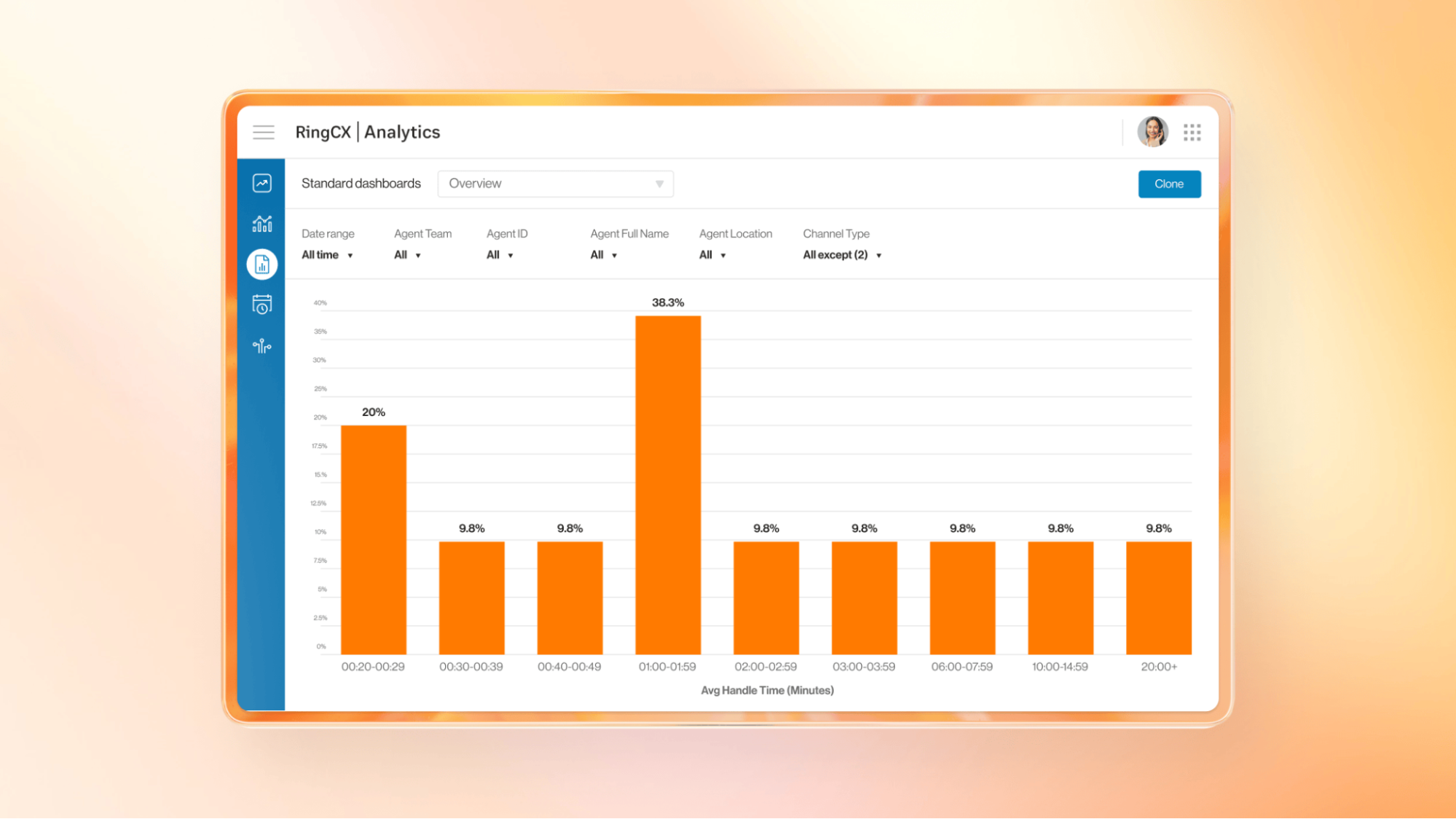
At the opposite end of the spectrum, overstaffing increases idle agent time and lowers the ROI of your operating costs. A workforce management and agent performance monitoring strategy helps ensure you have the right levels and balance of staff for every shift.
Outdated or inefficient technology
Legacy business phone systems, slow computers, and clunky CRM platforms create friction in every customer interaction. When agents wait for systems to load or struggle with unintuitive interfaces, these delays compound across hundreds of daily calls.
Poor integration between platforms forces agents to manually enter data multiple times or switch between applications to complete simple tasks. A system taking 10-20 seconds extra to process and route a call can add up to significant losses of agent time. On top of that, poorly designed IVR menus mean callers often end up in the wrong place.
Data security and compliance constraints
Your call centers handle sensitive customer information with every interaction. While speedy service is important, your team also needs to ensure it’s managing data according to regulations such as HIPAA or the GDPR.
Meeting these and other compliance requirements can create friction with extra authentication and transparency steps. These add time to every call.
Added security measures like frequent password changes and multi-factor authentication interrupt your team’s workflows, too. Call center management must use the right tools and techniques to create seamless compliance that minimizes the impact on agent productivity.
Struggling to meet evolving customer expectations
Today’s customers expect immediate service, personalized support across all channels, and quick resolutions. What they expect right now will also elevate in the future. In 2024, 87% of support teams saw an increase in customer expectations from the previous year.
Many inefficient processes can lead you to fail to meet customer expectations. Some of these include:
Many inefficient processes can lead you to fail to meet customer expectations. Some of these include:
- Lack of system integrations
- Underprepared agents
- Not enough staff
- Minimal self-service options
- Not using the right contact center tools.
How to improve agent productivity in a call center
Understanding the challenges at hand is the first step for you to improve agent productivity. Following these best practices will then help navigate each pitfall and improve call center productivity:
Design comprehensive and continuous learning programs
Your team can only give consistent quality service if you properly train them. Even experienced hires won’t have full product knowledge or understand the nuances of your brand or your customer base.
Create a comprehensive learning program from onboarding to refresher training, skills development, and career progression. Divide training into sections such as:
- Customer service etiquette
- Product and company knowledge
- Roleplays and simulated scenarios
- Nesting, coaching, and mentorship programs
- Safe data handling and compliance
- Call center software and technology
- Soft skills training.
Ensure optimal staffing levels
Maintaining optimal staffing levels will go a long way toward improving productivity in your call and contact centers.
Use predictive analytics tools to assess historical data and forecast call volumes with high accuracy. This will help you minimize the risk of overworking and burning out your team. You’ll also ensure you’re not overstaffed, keeping agents busy with steady work, increasing your occupancy rate, and reducing overhead costs.
Streamline call center workflows
Map out and audit your current call handling processes to identify bottlenecks and redundancies. Every unnecessary step adds time, increases customer frustration, and hinders productivity. These include tasks such as repetitive data entry, app switching, multiple logins, and convoluted escalation procedures.
Meet with your support team leaders to design standardized workflows for common scenarios while maintaining flexibility. Document best practices and make them accessible in your knowledge base or company portal. Simplify escalation procedures with clear guidelines on when and how to escalate calls to prevent excessive time on complex issues. Eliminate the use of unnecessary apps and additional post-call work by integrating your tech stack.
Empower your team with the right call center productivity tools
Your team can only perform well if you give them the right tools. Modern call center platforms help your team work smarter and spend more time serving customers, thus improving contact center agent productivity. Cloud-based solutions like RingCentral RingCX enable your modern contact centers to integrate voice, chat, video, and email into one central app.
Call center productivity features to look for include:
- Automatic call distribution (ACD) – Distributes inbound calls to agents based on preconfigured rules such as next-available agent or skills-based routing.
- Interactive voice response (IVR) – Automated menu trees that help callers get to the right place as quickly as possible.
- Call management – Include caller queues, hold, forwarding, and transfers that ensure customers get immediate assistance from the best agents for their problem.
- Omnichannel capabilities – Ability to manage all of your support channels from one central platform.
- Call center analytics – To monitor your operational process, call quality, productivity, and agent performance with custom report generation and real-time dashboards.
- Integrations – Pre-built connections with your CRM and other tools in your tech stack.
Use contact center AI
As well as the essentials for monitoring and improving agent productivity, modern cloud-based solutions like RingCX also help you leverage AI for greater operational flexibility and scalability.
Our AI-powered contact center platform also includes advanced capabilities to enhance your customer service and support, such as:
- AI Agent Assist – Live coaching and guidance for your agents during every conversation, such as surfacing answers from FAQ guides and web pages.
- Intelligent virtual agents (IVAs) – Self-service capabilities powered by conversational AI. These agents provide immediate 24/7 customer service and support on any channel while deflecting lower-tier questions and concerns from your human teams.
- AI quality management – Automatically score every conversation. Customer support leaders and call center managers view overall performance or dig into individual interactions for insights.
- AI Supervisor Assist – Live AI monitoring alerts supervisors and team leaders when a call is going downhill so that they can step in to reach a resolution, turning a potential negative experience into a positive one.
Focus on employee engagement and retention
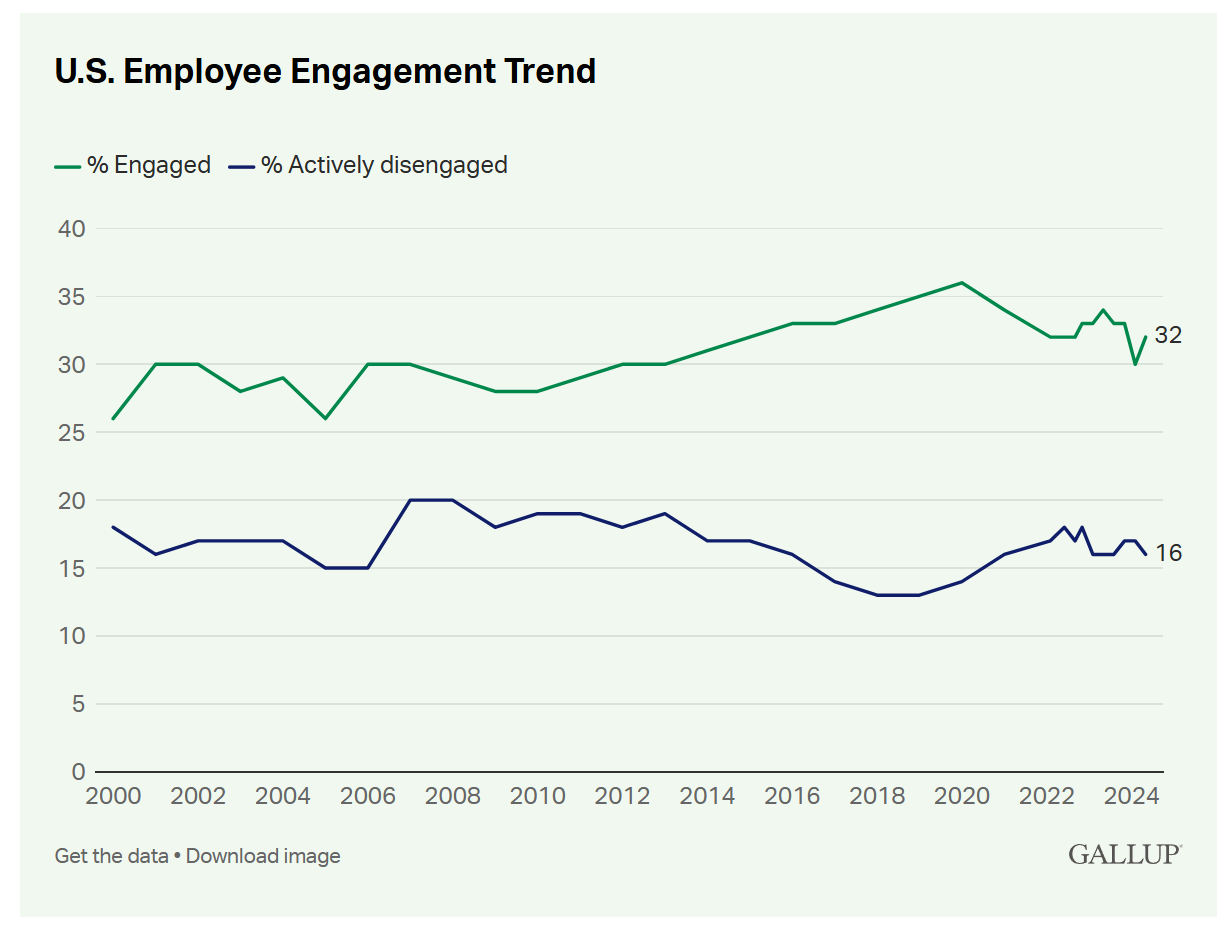
It’s no secret that engaged agents will outperform less engaged or disengaged team members. In a 2024 Gallup poll, only 32% of US employees stated they were actively engaged at work, while 16% said they were actively disengaged—these numbers can often be worse in call centers:
To increase employee engagement, you need to create a positive work environment through competitive compensation packages, recognition programs, and clear career advancement paths. Schedule regular one-on-one meetings and encourage two-way communication to identify small issues before they develop into serious problems.
Implement both individual and team recognition programs. This could include performance bonuses, employee of the month awards, or public acknowledgment of positive customer feedback. Even something as simple as creating a team messaging channel for shout-outs and peer recognition goes a long way to keep your team switched on.
Address burnout proactively by monitoring workload, ensuring adequate break times, and providing mental health resources. Collect agent feedback to assess the overall morale of your team and make adjustments to working conditions as needed.
Create an agent-friendly knowledge management system
Your team needs access to a comprehensive level of information about your products, policies, and operations. It can be easy for company knowledge to become locked away in silos. This becomes an even greater challenge when working with remote teams.
Use a knowledge management system (KMS) to centralize all important information that could help answer customer questions and solve problems. That means designing company wikis, forums, training modules, and knowledge bases that are all available online and easy for any team member to navigate.
If you have AI virtual agents, they can also scrape this data and use it to offer self-service to your customers.
Track agent performance, give coaching and feedback
Call center productivity hinges on many factors, but your team is what drives the customer support train.
Continuous performance monitoring identifies both struggling agents who need support and high performers who you can set up as mentors. Use call center metrics like FCR and CSAT to track progress. However, focus on coaching and refresher training rather than discipline when addressing performance gaps.
Schedule regular feedback sessions that review specific interactions, celebrate successes, and identify improvement opportunities. Use call recordings and call center QA review sessions to help agents understand customer pain points and perspectives, as well as how to better navigate sticky situations.
Create individual development plans based on each agent’s strengths and areas for improvement. You can use skill assessment tools and AI scorecards to streamline development plan design. By personalizing feedback and learning, you’ll get the most out of every individual on your team.
Measure and improve call center productivity with RingCentral RingCX
In a world where customer expectations continue to increase and evolve, call center productivity will be at the forefront of business growth. Higher-performing call centers will serve more customers quickly and solve their problems during the first interaction. That means more satisfied and loyal customers who will spend more on your products and services.
RingCentral RingCX can help you get there with real-time AI monitoring of call center productivity metrics. Not only that, our platform enhances the way you work, boosting agent performance, supporting supervisors, and increasing efficiency with advanced AI capabilities.
Contact our sales team today to find out more about improving your productivity with RingCentral.
Call center productivity FAQs
What is productivity in a call center?
Call center productivity measures how efficiently agents handle customer interactions while maintaining quality standards. It includes metrics like first-call resolution rates, average handling time, and customer satisfaction scores.
How do you calculate productive hours in a call center?
You can calculate productive hours in a call center by dividing the total amount of time agents spend on calls and call-related activities by the total scheduled hours for the period. Multiply this by 100 to get a percentage.
It’s important to note this metric on its own doesn’t necessarily define or reflect “productivity” as it doesn’t include context such as customer satisfaction, cost per call, or call resolution rate.
How else can you measure productivity in a call center?
Beyond time-based and resolution-based metrics, you can measure productivity through customer satisfaction scores, cost per call, agent turnover rates, call transfer rates, and revenue per agent. Use multiple metrics together for a more comprehensive and reliable measure of productivity.
Why is productivity important in a call center?
Higher productivity reduces operational costs while improving customer experiences through shorter wait times and faster resolutions. This leads to increased customer retention, positive CSAT scores, and higher lifetime value.
How can you motivate call center agents to be more productive?
To motivate agents to be more productive, provide clear expectations and give regular feedback. Use recognition programs, create career development opportunities, and design effective and comprehensive training programs.
You can also motivate your team by offering competitive compensation, flexible scheduling, and promoting a positive work environment that supports agent success by giving them the right tools and knowledge.
Updated Aug 13, 2025