AI Communications








Call center outsourcing may be the right option for your needs.you’re looking to scale your customer service, fill skills gaps, and potentially save money, then outsourcing might look pretty appealing at first glance. Dive deeper, and this hands-off approach to customer service has some critical downsides.
We’re going to cover everything you need to know about call and contact center outsourcing, from what it is and what functions you can outsource, to the pros, cons, and hidden costs.
Call center outsourcing services: Key takeaways
- Call center outsourcing is when you hire an external call center agency to receive inbound customer calls and/or make outbound customer calls on your behalf.
- Outsourcing a call center can deliver benefits like potential cost savings, immediate access to expertise, hands-off simplicity, and increased customer service accessibility.
- There are significant downsides to outsourcing a call center, such as a lack of control, less specialized knowledge, security concerns, poor adaptability, and language barriers.
- Call center outsourcing costs depend on multiple factors that can diminish its cost-saving benefits.
- Ultimately, it may be better to use a contact center platform than commit to call center outsourcing.
What is contact or call center outsourcing?
Call center outsourcing involves contracting a third-party company to handle your customer support, service, and/or sales calls. Contact center outsourcing is similar, except here, services also encompass communication channels like email, live chat, and video chat.
Outsourcing call center and contact center operations is a popular form of business process outsourcing (BPO). It essentially hands over call center responsibilities to a team of external agents. For example, a company might enlist a BPO call center to answer its inbound customer calls, provide technical support, or conduct market research.
Businesses choose to outsource for lots of different reasons. Often, they feel as though they lack the budget, time, resources, or expertise to manage an in-house call center. Although, with the rise of advanced contact center platforms, this is now rarely the case.
Which functions can call center outsourcing companies handle for you?
Generally speaking, outsourced call center companies deliver two types of services: Inbound call outsourcing and outbound call outsourcing.
Whether you decide to outsource inbound calls or outbound calls (or both) will depend on your business’s needs, goals, and priorities.
Inbound call center outsourcing
An inbound call center handles calls coming into your business. These are primarily customer service and support requests initiated by potential and existing customers.
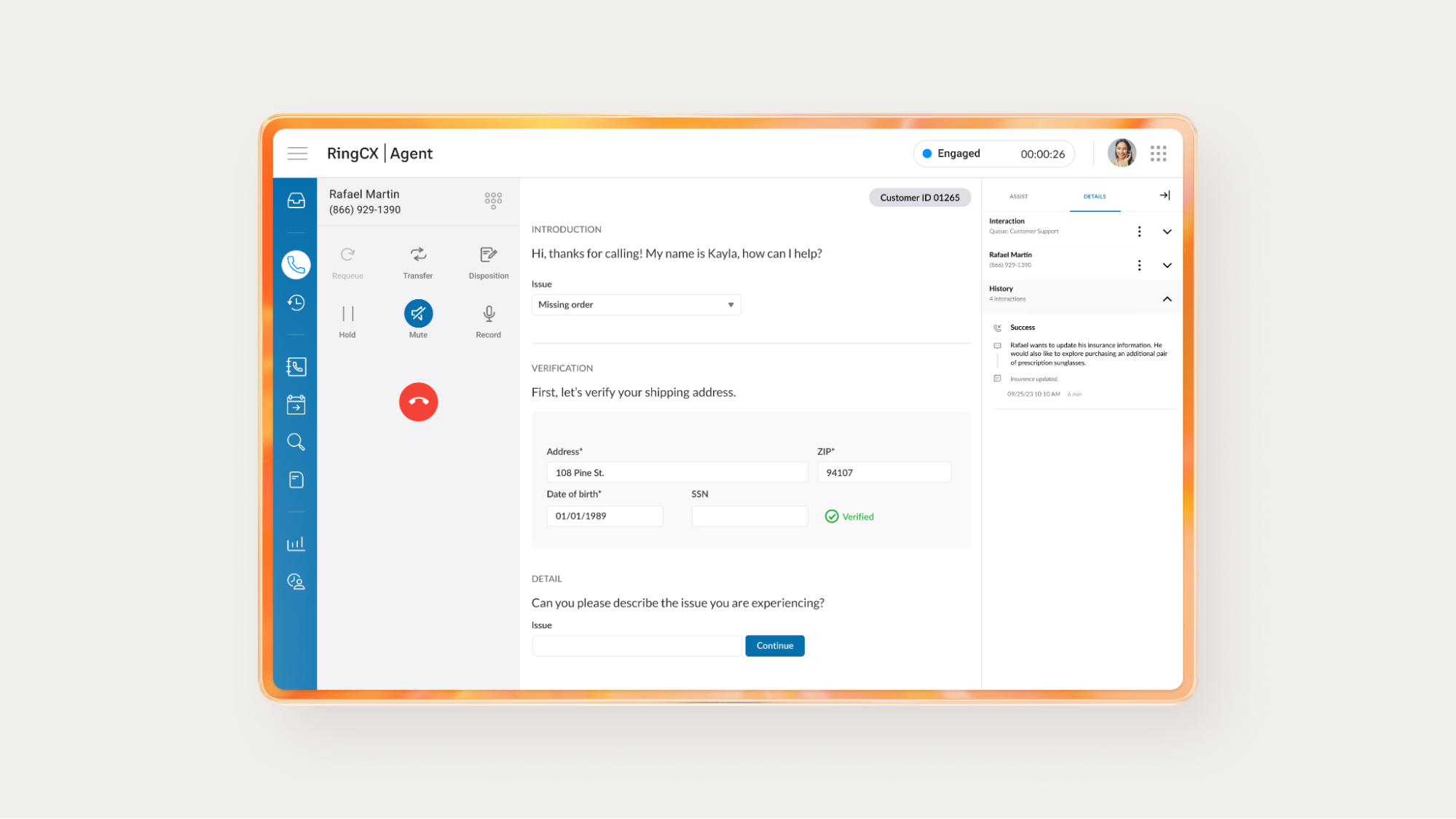
An inbound call center outsourcing company negates the need for an internal customer service department. Instead, you enlist a team of external experts to manage a variety of inbound communication tasks, including things like:
- Answering customers’ questions about your products and services
- Delivering technical support and helpdesk services
- Scheduling appointments
- Handling customer complaints
- Processing payments and orders
- Handling subscription renewals or upgrades.
Inbound contact center outsourcing companies can deliver these services via a range of communication channels, not just the telephone. For example, you might enlist a BPO call center to offer customer support via video chat or resolve complaints over email.
Outbound call center outsourcing
An outbound call center is a department that focuses on making outgoing calls to customers or prospects. So, instead of receiving calls from customers, agents and reps reach out to customers directly, often (but not always) via “cold calling”.
Outsourcing outbound calls to a third-party company helps you reap the benefits of outbound calling with less strain on your time and resources. Call center outsource companies can perform various functions, including:
- Telemarketing and sales
- Lead generation
- Market research
- Customer surveys and feedback
- Proactive customer support
- Appointment scheduling and reminders
- Follow-up communications.
Call center outsourcing providers are often capable of handling both inbound and outbound calls. This means you can decide exactly what type of calls to outsource, and which calls are best left to your in-house teams.
For example, if you’re a global business aiming to enhance customer service accessibility and experiences, your priority might be to outsource inbound calls to a multilingual BPO call center.
If your main goal is to scale your business, you might focus on outsourcing outbound calls to a BPO call center that specializes in lead generation and market research.
Benefits of call center outsourcing solutions
Call center outsourcing has stood the test of time as a viable solution for businesses who can’t—or simply don’t want—to manage an in-house call center.
That’s primarily because there are a range of benefits:
Potential cost savings
Outsourcing may come with a price tag, but it can sometimes be more affordable than setting up and maintaining an in-house call center.
For one, you eliminate hiring, onboarding, and training costs. You also have to consider ongoing salaries, benefits packages, continuous upskilling, and other hidden labor costs.
Outsourced call centers share labor costs between clients. So, you pay a much lower fee per call center agent or rep. You also don’t need to purchase office spaces, business phone systems, software licenses, call center technologies, and so on.
This has the potential to reap operational cost savings and can free your resources for other business needs.
If you want to reduce costs even further, you could even opt for call center offshore outsourcing. This is just a fancy way of describing international call center outsourcing. Essentially, you work with a BPO call center that’s located in another country, which can come at a much lower cost depending on the location—due, in part, to differences in wage expectations in different parts of the world.
24/7 or multilingual support
For in-house teams, providing 24/7 customer support and/or multilingual service is difficult if you don’t have the budget, workforce, or tech to make it viable.
BPO call centers have the capacity to staff round-the-clock agents. This allows customers to access support whenever they need it, regardless of the time zone, hour, or day of the week.
By outsourcing to a multilingual call center, you can assist customers around the world in the languages they speak. With access to the company’s multilingual talent pool, you can converse with customers in their native language to improve accessibility, satisfaction, and experiences.
This was once a smaller company’s only chance at delivering such support. An alternative today, however, is to use a contact center platform like RingCX. It can deliver AI-powered customer service around the clock, along with live translations for personalized multilingual service.
Access to expertise
If you’re setting up an in-house call center, you have to source high-quality agents, verify their skills, onboard them into your company, and train them to meet your standards. It’s an expensive process that can take weeks or even months to complete, which isn’t always ideal for startups and small businesses.
When you outsource, you’re provided with a ready-made team of qualified, highly-experienced agents and reps. You gain rapid access to skills like CX, upselling, technical proficiency, data analytics, and more.
Faster access to expertise is one of the main reasons why small business call center outsourcing is so popular. It empowers companies to get their business off the ground and deliver exceptional customer service at lower costs. Plus, they can scale more cost-effectively without the stresses and setbacks of in-house hiring.
Hands-off simplicity
When you outsource call center support services, you negate the need to run a call center yourself. In turn, you’re freed of all of the management responsibilities that come with it.
Call center management encompasses a range of responsibilities that are key to optimizing call center operations. If you don’t have the time, resources, or expertise to handle these duties in-house, you could outsource your call center to meet customer support needs without the complexities.
A call center outsourcing solution can handle all of your call center management responsibilities, including:
- Hiring and training employees
- Workforce scheduling
- Task delegation
- Agent performance management
- Data reporting and analysis
- Regulatory compliance and security.
With responsibilities of call center management unburdened from your internal team, they can spend more time on core, strategic business initiatives like product development, lead generation, marketing/sales strategies, and innovative endeavors.
Drawbacks and challenges of call center outsourcing
Outsourcing contact centers and call centers isn’t the right move for every business. It can hurt your CX, negatively impact your bottom line, and present additional challenges that have widespread business repercussions.
Here are some of the main drawbacks and challenges of call center outsourcing:
Loss of control
When you decide to outsource, you essentially relinquish control of your call center operations.
The call center management responsibilities we discussed earlier include hiring and training, task delegation, scheduling, and performance management. These are core elements of your customer experience that, when you outsource, you place directly in the hands of a third-party.
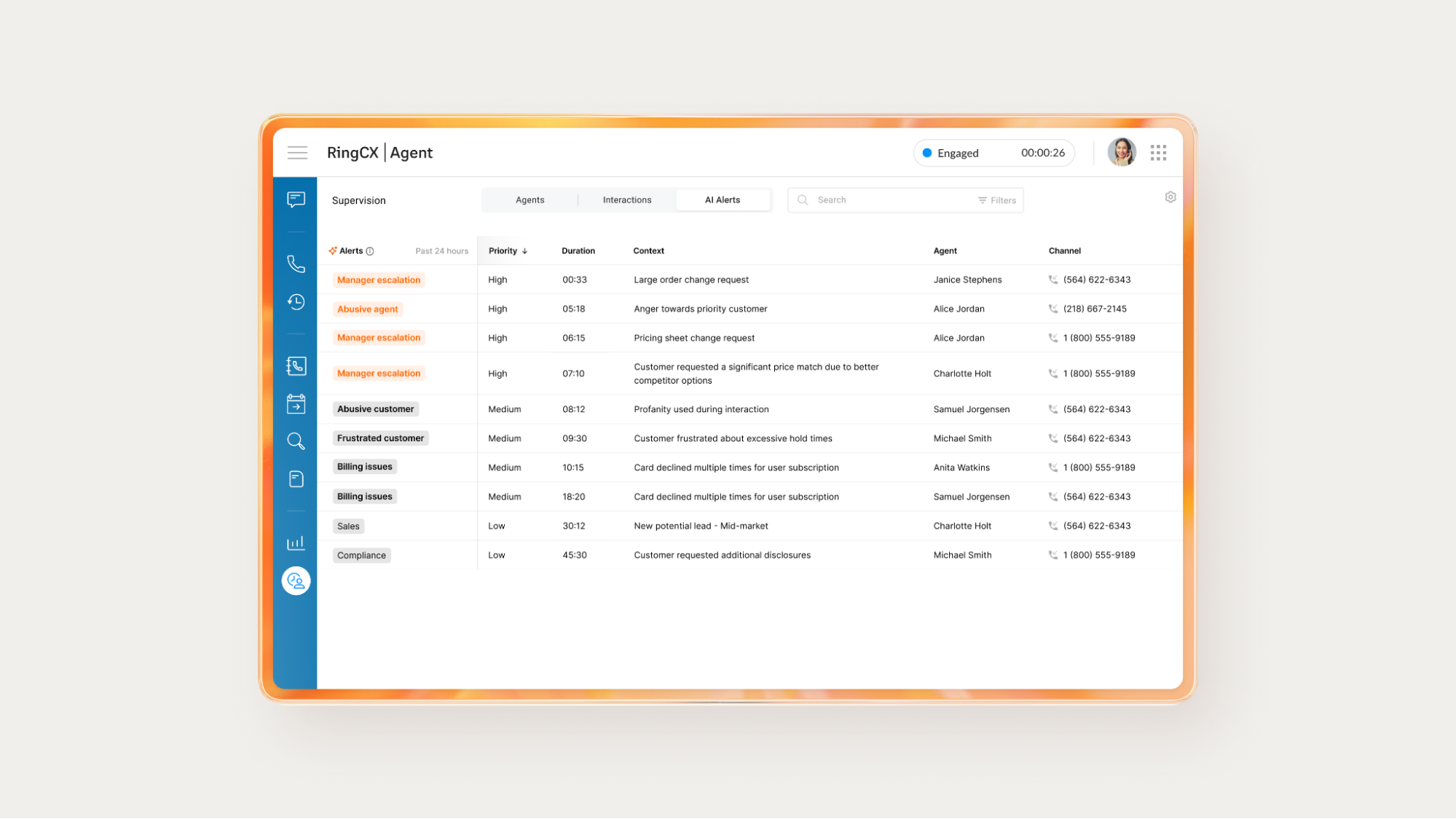
This means you have no control over who gets hired to service your customers, nor do you have visibility into the quality of service they provide.
Even with meticulous screening and briefing, you run the risk of your CX being handled by agents who aren’t a good cultural fit for your company. And, they may not be committed to delivering the levels of service that you expect.
This can have a catastrophic impact on your brand’s image. It can lead to inefficient, disjointed experiences that are misaligned with your business, causing customer frustration, dissatisfaction, lost revenue, and other issues.
Less specialized knowledge
Outsourced call center agents aren’t dedicated, full-time employees. They handle calls for various clients across different industries, which often means they’ll only acquire a surface-level knowledge of your company’s products, services, and policies.
If you work in a highly specialized field, such as science, technology, or engineering, finding a BPO call center with deep expertise in your industry is even harder.
When call center agents lack specialized expertise, the quality of service they offer to customers can suffer. This is especially true in inbound call center outsourcing. Outsourced agents who answer calls may lack the in-depth company knowledge needed to respond swiftly to complex queries and provide personalized support.
This is in stark contrast to in-house agents. Internal staff are hired and trained by you, allowing them to acquire deep, specialized knowledge of your company and industry. In turn, they can deliver faster, more relevant, and more on-brand customer service.
Security and privacy concerns
When you outsource your call center, you place sensitive customer data into the hands of a third-party company. If the company’s security measures or regulatory compliance are lacking, you risk being the victim of a data breach.
A data breach can destroy your company’s reputation and have severe legal and financial repercussions. The global average cost of a data breach currently stands at $4.9M according to IBM’s latest report. This accounts for lost customers and revenue as well as direct financial losses.
Of course, reputable BPO call centers will have stringent security measures in place (data encryption, access controls, regulatory compliance with HIPAA, GDPR, etc). However, unlike an in-house call center, you don’t have full control or visibility into daily security operations.
For example, it’s harder to verify cybersecurity culture and awareness. You can never be truly sure how knowledgeable external agents are about security practices like password hygiene and phishing identification, nor how meticulously they follow them.
Language barriers
Many BPO call centers are located in offshore countries, such as the Philippines, India, and Eastern Europe. While this allows you to offer multilingual support to customers in different time zones, it can also cause language barriers that negatively affect customer experiences.
Offshore agents may have strong local accents that are difficult for customers to understand. Or, some agents may have varying degrees of language fluency. This can lead to miscommunications and misunderstandings that slow down resolutions and frustrate customers.
It can even cause collaboration and communication issues between your internal teams and external agents.
Exceptional communication relies on both parties’ ability to clearly understand each other. Without it, efficiency decelerates and customer relationships suffer. So, if you do decide to outsource, verify that external agents can communicate fluently and clearly in the languages used by you and your customers.
Difficulties in adapting quickly
In an in-house call center, operational issues are easy to spot and can be rectified straight away. Similarly, you can quickly identify and adapt to evolving needs, as you have full insight into—and control over—every aspect of your operations.
Outsourcing doesn’t offer the same rapid adaptability. For example, if you want to offer new products, scale up or down, or introduce new channels or technologies, you have to communicate and collaborate with the outsourced call center.
It may even require a degree of negotiation, as your priorities might not be the same as theirs.
The separation and disunity of your call center from your business can cause significant efficiency challenges. It slows down your ability to swiftly adapt to new opportunities or respond to unforeseen issues.
Understanding call center outsourcing costs
Despite the disadvantages of outsourcing, many businesses are still swayed by one alluring potential benefit; the cost savings. However, call center outsourcing costs aren’t as straightforward as they might first appear.
From the cost of sharing workforces to locational, call volume, and SLA considerations, here are some key things that influence call center outsourcing costs:
Sharing the workforce with other companies
Outsourced agents work for multiple clients. So, while you might be paying a fraction of the labor costs, you’re also getting just a fraction of every agent’s time and attention.
In-house labor costs might be higher, but having your employees’ undivided attention and engagement will typically produce a better ROI.
If you want the same exclusivity with your outsourcing company, you’re going to have to pay a much higher price. Bear in mind that you’ll still be waiving the control and specialized expertise that you’d get with an in-house department.
Call volumes and pricing models
Outsourced call centers use various pricing models that determine how much you pay. Popular examples include per-minute pricing, per-agent pricing, per-call pricing, and flat monthly fees.
It isn’t always clear which outsourced call center pricing model is the right fit for your unique business needs. Generally, the higher your inbound/outbound call volumes, the higher the cost. If your call volumes fluctuate or are particularly low or high, you may not get the best deal, which can decrease cost-efficiency.
Service-level agreements (SLAs)
SLAs are a contractual agreement between your company and the BPO. It defines the level of efficiency, availability, and performance that outsourced companies will strive to provide to customers.
For example, your outsourced provider’s SLA might promise to “answer 80% of calls within 30 seconds”. Or, it might promise to “have an average handling time of six minutes”. Other SLA metrics include first-call resolution (FCR), customer satisfaction (CSAT), and service availability.
Because outsourced agents typically share calls between clients, SLAs might leave a lot to be desired. If you want a higher SLA to reliably meet customer expectations (such as faster response times and 24/7 availability), you’re looking at much higher costs.
Range of services provided
The more services you need, the higher the price of your outsourcing bill. For things like omnichannel support, business consultation, or video chat, you may have to upgrade to a premium package or purchase the services as add-ons, which can get expensive.
Opting for a premium package can even leave you paying for a bunch of services that you don’t need or use.
Whether you require specialized expertise will also affect outsourcing costs. For example, if you need agents to perform complex technical support or targeted outbound lead generation, you’ll pay much more than if you only require basic inbound call handling for general FAQs.
So, it’s crucial to consider what you actually get for your money versus what you need, all in alignment with your budget.
Location
When people talk about the cost-saving benefits of call center outsourcing, they’re often referring to offshore outsourcing. Depending on the country, it can be considerably cheaper to outsource to an international company, rather than a U.S.-based company.
For example, outsourcing to an offshore inbound call center in the Philippines or India may cost around $8 – $14 per hour. For an onshore (U.S.-based) inbound call center, you might expect to pay between $26-$50 or more.
That said, while offshore call centers are cheaper, they often present language barriers and specialist expertise challenges. This can hurt customer experiences, your bottom line, and your ROI.
If offshore outsourcing is not a viable option, one alternative is to choose an onshore call center outsourcing service, although this typically comes at a much higher cost. Another option is to establish an in-house call center, supported by powerful contact center technologies, to maximize the value of your investment .
RingCentral RingCX: A better alternative to call center outsourcing?
Traditionally, in-house call and contact centers were only viable for massive enterprises. With large budgets to spend on office spaces, advanced technologies, and other overheads, they could reap the lucrative benefits of having an in-house team.
For smaller businesses, call center outsourcing provided cost savings, simplicity, and immediate access to expertise. In some ways, it still does. With the rise of cloud-based contact center solutions, though, any business can set up an in-house contact center to deliver exceptional, expert customer service—all without breaking the bank.
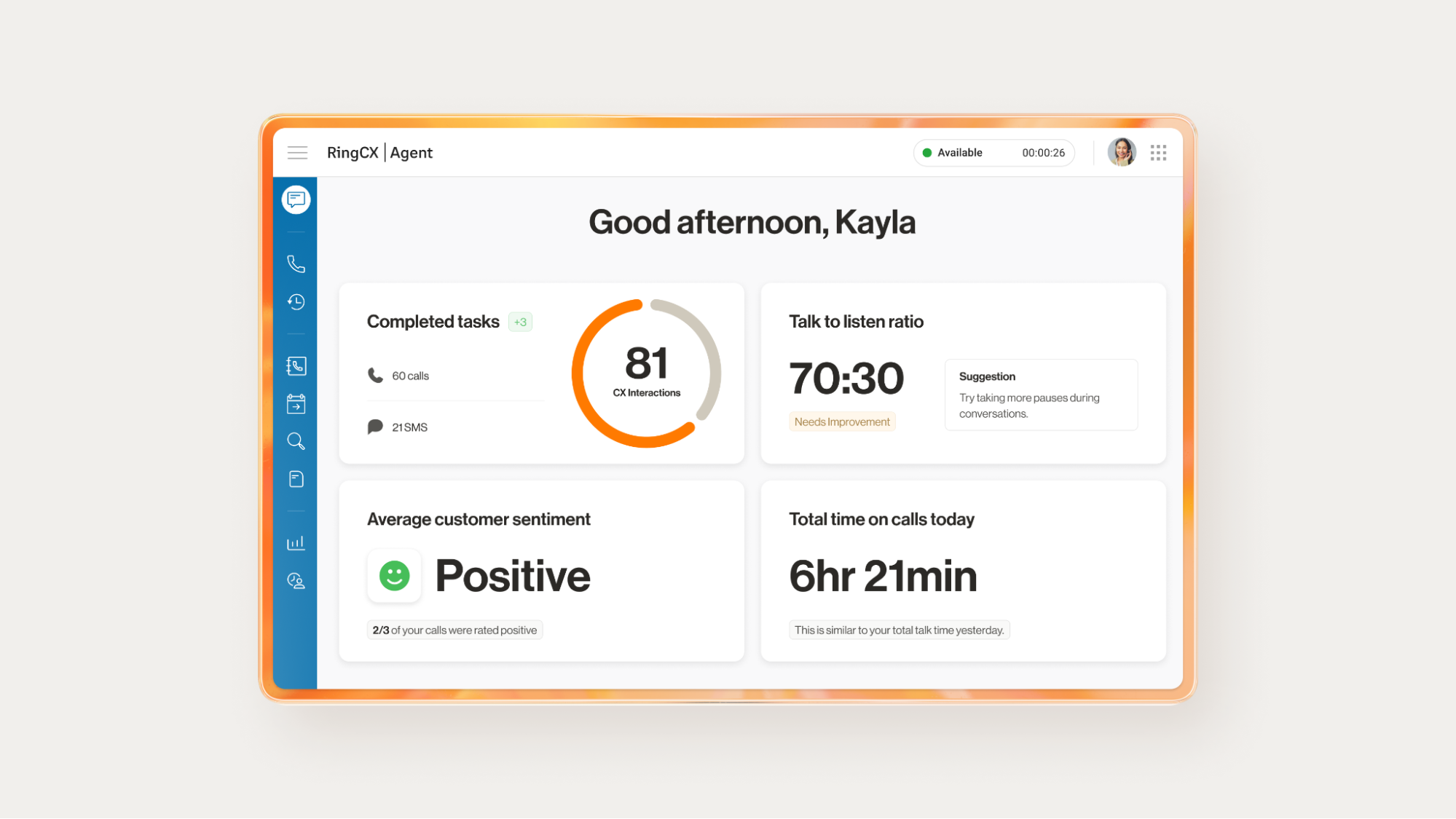
RingCentral RingCX is an AI-powered contact center platform that’s an accessible, cost-effective alternative to outsourcing. Designed for small and large businesses alike, it’s easy to set up, intuitive to use, and is rich with customizable features to suit unique business needs.
With RingCX, you get:
Rapid deployment:
Designed for simplicity, RingCX comes with pre-packaged implementation services, intuitive admin tools, and pre-built integrations to get your contact center set up in a matter of days.
Simplified call center management:
Manage your call center within one unified platform. Track performance metrics in real-time, monitor live calls, route calls based on agent skills, and use interactive voice response to optimize efficiency.
Natively integrated omnichannel:
Unify over 20 digital channels, including phone, email, SMS, live chat, and instant message, to deliver seamless, on-brand inbound and outbound communications, all from a single platform.
AI-powered capabilities:
From AI-generated transcriptions and summaries to intelligent virtual agents that enable you to deliver 24/7 customer support, unlock the cutting-edge capabilities of AI to empower agents and meet customer needs.
And that’s just the beginning. To discover all the reasons why RingCX could be a better alternative to call center outsourcing, contact our sales team today.
Call center outsourcing FAQs
What is call center outsourcing?
Call center outsourcing is when a business enlists a third-party company—specifically a business process outsourcing (BPO) call center—to carry out customer communications on its behalf.
How does call center outsourcing work?
When you outsource a call center, you provide the third-party provider with the information, resources, and customer data they need to make/answer customer calls. A team of external agents will then handle your calls for you according to your contract.
How do I start to outsource call center operations?
Start by choosing a provider that offers the services that you need, whether it’s inbound or outbound call handling services. From there, brief your provider on your company policies, products, services, FAQs, brand voice, and other relevant information so that the external agents can begin handling your customer calls.
How can I choose the right outsourced call center provider?
Choosing the right outsourced call center provider involves vetting companies against your business needs. Along with considering the company’s pricing model, range of services, security, and specialized expertise, it’s crucial to take into account the provider’s values and whether they align with your brand.
What industries benefit the most from call center outsourcing?
Industries like retail, ecommerce, healthcare, and telecommunications tend to benefit the most from call center outsourcing. They often have large or global customer bases and high demands for accessible, high-quality service. It empowers them to deliver multilingual, 24/7 service at scale on a lower budget.
Originally published Aug 12, 2025