AI Communications








Compare leading contact center platforms that deliver unified communications, AI-powered insights, and enterprise-grade reliability.
Modern contact centers are under pressure.
IT leaders and CX executives are expected to deliver seamless, omnichannel customer experiences while reducing operational complexity, improving reliability, and controlling costs. At the same time, many organizations are dealing with fragmented systems, including separate vendors for telephony, messaging, analytics, and workforce management, that create integration gaps and limit visibility.
This is where evaluating Talkdesk alternatives becomes critical.
The right platform should do more than replicate features. It should simplify your architecture, unify communications and contact center capabilities, and deliver AI-powered insights across every interaction.
We’ll introduce you to the top Talkdesk alternatives based on what your team needs most, whether that’s unified architecture to reduce vendor sprawl, native AI that provides insights from every interaction, or enterprise-grade reliability for your mission-critical operations.
Key takeaways
- Unified platforms that combine contact center and unified communications capabilities eliminate the need to manage separate providers
- AI-first architecture delivers more complete insights by analyzing 100% of interactions rather than retrofitted solutions that rely on statistical sampling
- Enterprise-grade reliability with 99.999% uptime, combined with security and compliance certifications, is a non-negotiable requirement
- Integration depth through pre-built connectors to core tools, plus flexible REST APIs for custom workflows, directly determines long-term operational efficiency
Top 5 Talkdesk alternatives for enterprise teams
Below are five Talkdesk alternatives that address enterprise challenges like fragmented tools, limited visibility, and scaling complexity, while delivering the AI capabilities and reliability modern organizations require.
1. RingCentral RingCX
RingCentral combines RingCX contact center capabilities with RingEX unified communications in a single platform serving over 500,000 customers globally. With more than 20 years in cloud communications, it has built contact center functionality on proven infrastructure rather than bolting it on afterward. Agents work from one interface. IT manages one vendor. Customer data flows across every touchpoint without custom middleware.
- Unified platform architecture: Combines contact center as a service (CCaaS), unified communications as a service (UCaaS), and conversation intelligence in one secure platform. This eliminates the overhead of managing separate CCaaS and UCaaS providers.
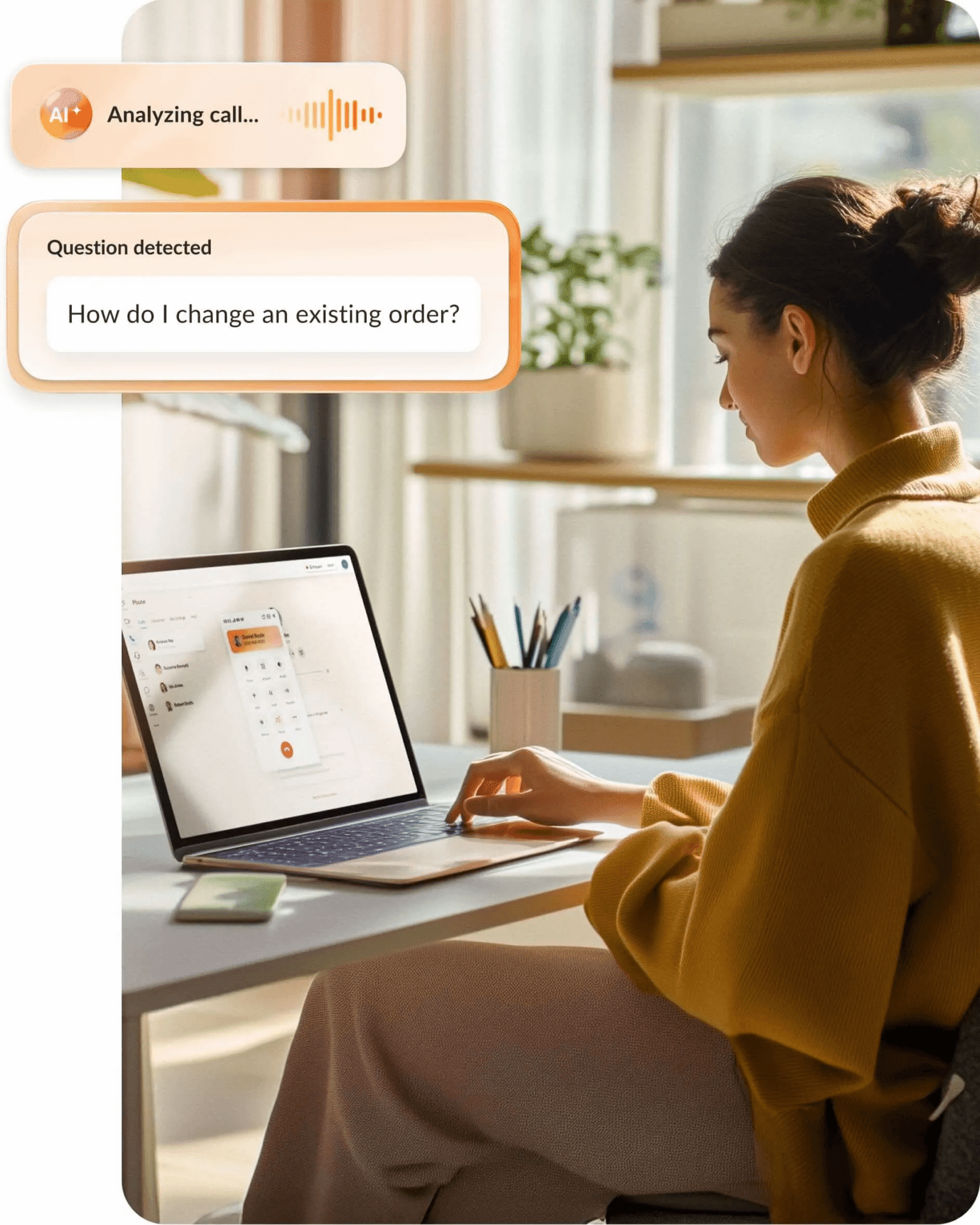
- AI-powered insights across 100% of interactions: AI Quality Management, AI Interaction Analytics, and AI Workforce Management work together to analyze every voice, chat, email, and SMS interaction, surfacing coaching opportunities, sentiment trends, and workforce performance data without sampling limitations.
- Real-time AI assistance for every agent and supervisor: AVA Agent Assist provides in-the-moment guidance and suggested responses during live interactions, while AVA Supervisor Assist gives supervisors live monitoring and alerting so they can intervene and support agents when it matters most.

- Omnichannel engagement capabilities: RingCX unifies voice, chat, email, SMS, and social channels in a single agent workspace. Customers switch seamlessly between channels without repeating information, while agents maintain complete context across every touchpoint.
- Enterprise-grade reliability: Delivers 99.999% uptime. Geo-redundant data centers and automatic failover back this reliability, designed specifically for mission-critical operations.
- Rapid deployment and migration support: Pre-built integrations with Salesforce, Microsoft Teams, and 100+ business applications accelerate implementation. Dedicated migration teams minimize disruption during transition.
Get the ROI breakdown for RingCentral AI
Get a personalized estimate of what AI delivers across customer engagement, conversation insights, and internal team productivity.
2. Genesys Cloud CX
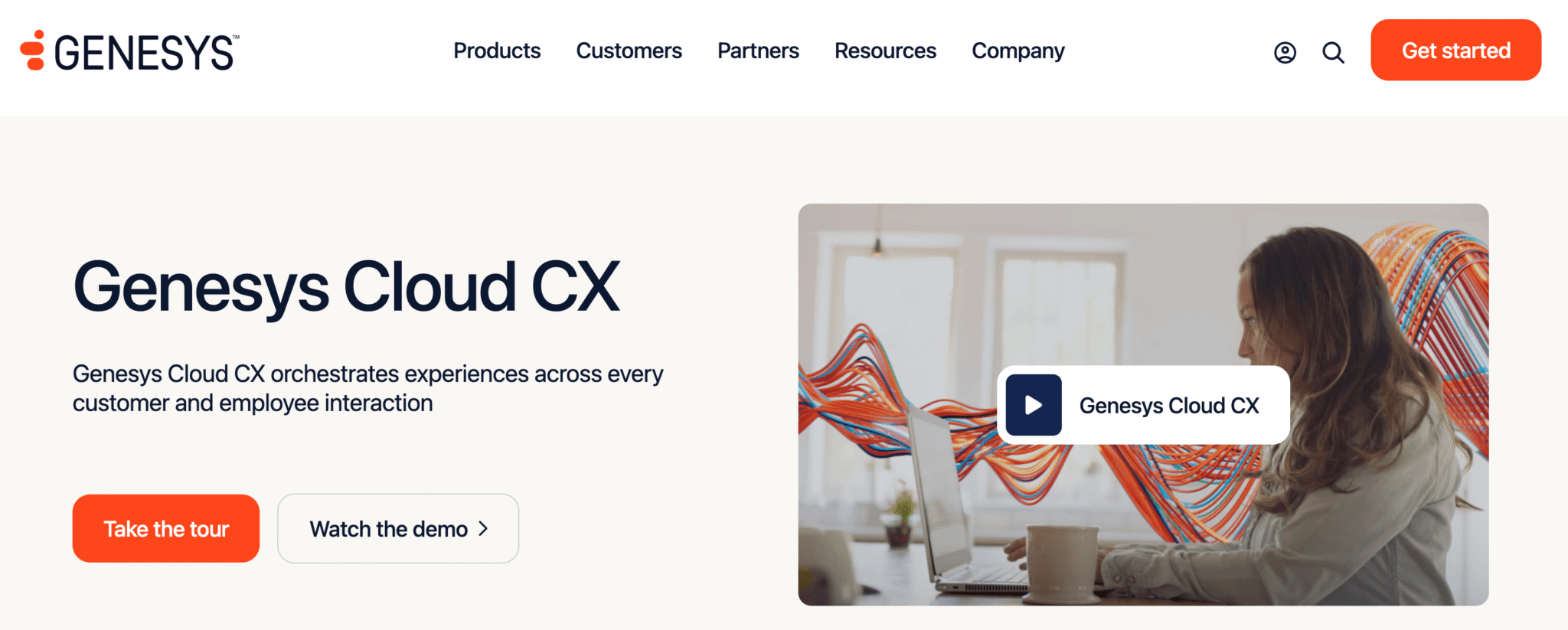
Genesys Cloud CX is a cloud-native platform with scalable omnichannel capabilities and AI-driven journey orchestration. Its features are ideal for regulated industries, including finance, healthcare, and telecommunications, where compliance requirements demand granular control and flexible deployment options.
The platform’s microservices architecture supports 99.999% uptime. Modular scaling comes standard.
The trade-off? Genesys Cloud CX requires integration with external UC platforms for full communications capabilities. Implementation and onboarding can be complex, and pricing can increase significantly with add-ons and higher tiers.
Genesys is a strong option for enterprises that prioritize deep contact center functionality, but it may introduce complexity when integrating with broader communications systems.
3. Five9
Five9 delivers a cloud-native contact center platform purpose-built for enterprise-scale operations. Its Intelligent CX Platform integrates advanced AI, including real-time agent assist, predictive routing, and intelligent virtual agents, with deep CRM connections to Salesforce and Microsoft Dynamics.
The comprehensive feature set and built-in workforce engagement management (WEM) tools deliver a strong return on investment for organizations that fully use the platform. However, Five9 focuses exclusively on contact center functionality, so if you also need unified communications, you’ll need to maintain a separate vendor relationship.
4. Amazon Connect
Amazon Connect is AWS’s cloud-native contact center service. Its serverless architecture scales instantly without hardware investment. Consumption-based pricing makes it attractive for organizations with variable call volumes.
The platform integrates natively with AWS services, including Lambda, Lex, and SageMaker, enabling custom AI workflows without separate vendor relationships. Organizations without dedicated AWS expertise, however, may find initial setup more demanding than turnkey alternatives.
5. Webex Contact Center
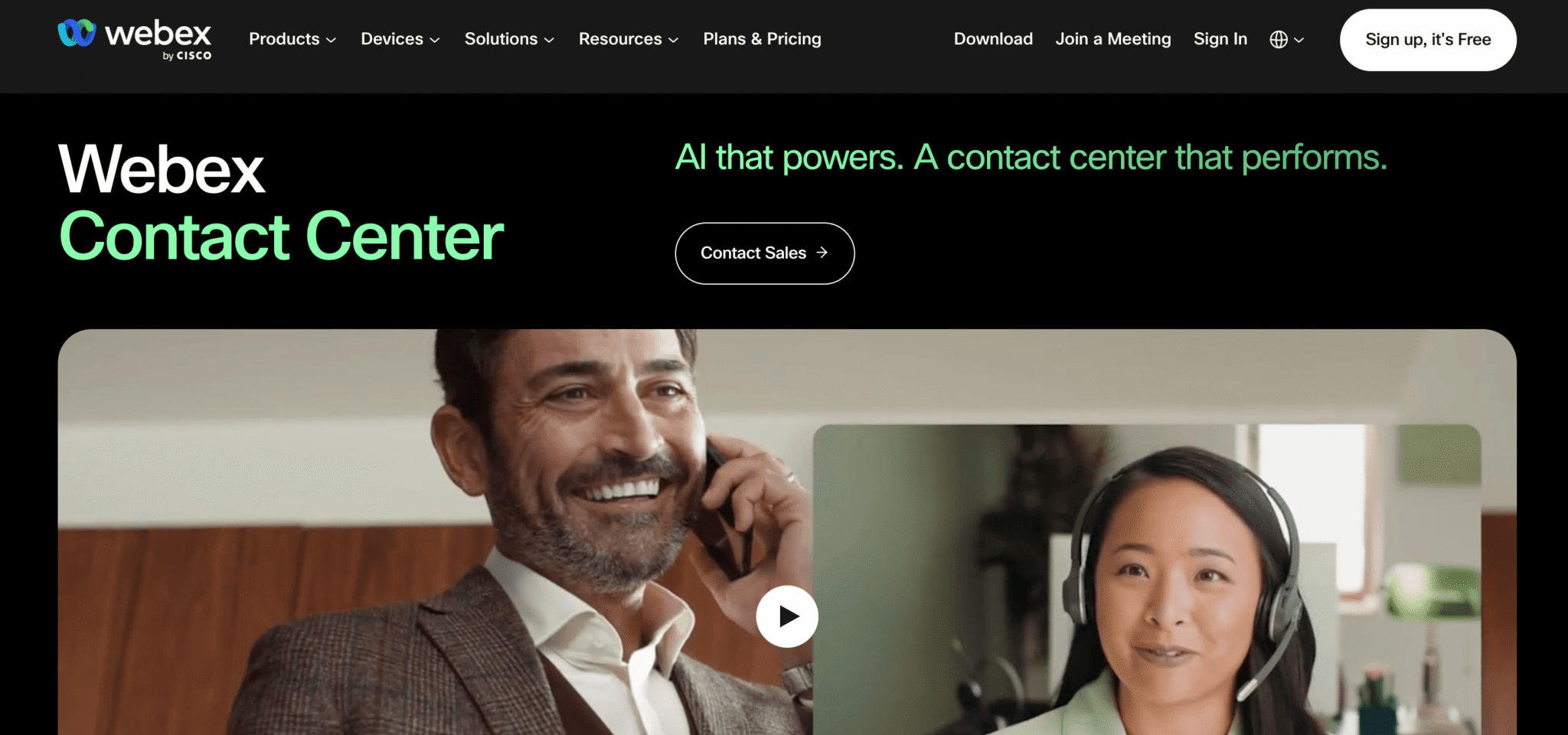
Cisco Webex Contact Center is a cloud-native CCaaS platform with 99.999% uptime, hybrid deployment support, and an agent workspace that unifies voice, chat, email, SMS, and social channels alongside Webex meetings and messaging, all from one interface.
The platform’s strength? Deep integration with the broader Cisco collaboration ecosystem. But enterprises should evaluate whether that tight coupling aligns with their long-term technology strategy. It can limit flexibility compared to more vendor-agnostic alternatives.
How to choose the right Talkdesk alternative
The wrong evaluation framework solves today’s pain points while creating tomorrow’s complexity. Start with three non-negotiable enterprise requirements: a unified architecture that eliminates vendor sprawl, AI capabilities built natively into the platform rather than bolted on afterward, and proven reliability that protects mission-critical operations.
These criteria directly address what likely drove you to explore Talkdesk alternatives in the first place.
Integration capabilities and API flexibility
When integration depth falls short, agents toggle between systems, which inflates handle times and creates data silos that obscure the complete customer picture.
Look for:
- Native CRM integrations (Salesforce, HubSpot, Zendesk, etc.)
- Open APIs for custom workflows and automation
- Seamless data flow across communication channels
Platforms built on unified architecture, like RingCentral, reduce the need for complex integrations altogether.
Scalability and performance requirements
Your platform needs to handle volume spikes without degradation and support geographic expansion without infrastructure overhauls. Evaluate how each platform manages concurrent interactions, what infrastructure underpins global deployments, and whether the architecture accommodates future growth without forcing a costly tier migration.
For enterprise contact centers, 99.999% uptime through globally distributed infrastructure is the baseline, not a premium feature.
Total cost of ownership and pricing models
Per-seat licensing is just the starting point. Factor in implementation costs, training requirements, integration fees, and migration expenses when comparing platforms. Unified architectures reduce total cost of ownership by eliminating redundant vendor contracts, separate support relationships, and the ongoing maintenance burden of keeping disparate systems connected.
Security and compliance features
Healthcare organizations need Health Insurance Portability and Accountability Act (HIPAA) compliance. Financial services require Payment Card Industry Data Security Standards (PCI DSS) certification. Global enterprises need Global Data Protection Regulation (GDPR) coverage for European customer data.
Verify that any platform you evaluate maintains current certifications for the regulations governing your business, backed by regular third-party audits that confirm ongoing compliance rather than point-in-time achievements.
Planning your contact center migration strategy
Migration from Talkdesk, or any legacy platform, requires a transformation of how your organization handles every customer interaction. And it needs to happen without disrupting the service levels your customers expect.
A well-structured approach addresses three critical areas:
Data migration and system integration planning
Start with a comprehensive audit of your current contact center data, from call recordings, interaction history, agent performance metrics, and CRM configurations. Most enterprises maintain 12 to 24 months of interaction history for compliance and analytics purposes. Identify which data sets are critical for day-one operations versus what can migrate in phases.
Next, prioritize real-time data synchronization over batch updates. Delayed transfers create visibility gaps that inflate handle times and erode customer satisfaction. RingCentral’s unified architecture eliminates the middleware layers that create failure points in fragmented systems.
Pre-built integrations with Salesforce, Microsoft Dynamics, and ServiceNow accelerate deployment for most enterprise environments. For call recording solutions and specialized workflows, RingCentral’s API flexibility supports custom connections to proprietary systems.
Training and change management requirements
Agent adoption determines whether your migration delivers its projected value. Build a training program that addresses agents, supervisors, and IT administrators. Each group has different needs:
- Agents need hands-on practice with the new interface and AI-assisted tools.
- Supervisors need fluency with analytics dashboards and workforce optimization features.
- IT teams need depth in system administration and integration management.
Identify change champions within each team early in the process. Their peer support during the transition reduces resistance and accelerates proficiency across the organization. RingCentral’s migration methodology includes pre-built training modules and dedicated change management support that help enterprises reach full productivity faster.
Timeline and resource allocation
Most enterprise contact center migrations run three to six months from initial planning to full deployment. The process typically breaks into three phases:
- Pre-migration planning
- Technical implementation
- Post-migration optimization
Plan for about a quarter of your IT team’s capacity during peak migration periods.
Vendor implementation support reduces the internal burden on tactical tasks. For example, RingCentral’s dedicated migration teams provide pre-built integration templates and structured deployment frameworks that compress timelines without sacrificing quality.
Your team stays focused on strategic configuration rather than migration mechanics, so you can start realizing value from enterprise cloud contact center capabilities faster.
Choose a contact center platform that scales with your business
Customers expect faster responses, personalized interactions, and seamless experiences across channels. At the same time, organizations need to reduce complexity. This is why platform architecture matters.
Unified, AI-first platforms eliminate the trade-offs between functionality and simplicity. They connect communications, customer engagement, and analytics into a single system, making it easier to scale, optimize, and deliver better outcomes.
RingCentral stands out by bringing these capabilities together:
- Unified communications and contact center in one platform
- AI-powered insights across every interaction
- Enterprise-grade reliability and global scalability
RingCX analyzes 100% of interactions, giving you complete visibility into customer sentiment, agent performance, and operational trends. The platform’s global infrastructure supports rapid market expansion without infrastructure overhauls, while dedicated migration teams protect revenue continuity during your transition.
Ready to evaluate whether RingCentral fits your enterprise requirements? Explore RingCentral’s cloud contact center to see how unified architecture, native AI, and enterprise-grade reliability can transform your customer interactions while simplifying operations.
Updated May 06, 2026