AI Communications





Build a retail engagement strategy that reduces churn, increases repeat purchases, and keeps customers connected across every channel.
Retail teams lose customers not because competitors have better products, but because communication breaks down between channels. A customer texts a question and waits two days. They call and hang up after a few minutes in queue. They buy once, never hear follow-up, and shop elsewhere next time.
With so much noise competing for your customers’ attention, the best retail customer engagement strategies plot more than one touchpoint in the customer journey. They also rely on a unified communications infrastructure to ensure vital customer context is passed along regardless of what channel you engage on. Here’s how to effectively engage and delight your retail customers.
Key takeaways
- Real-time behavioral triggers and personalization convert high-intent moments into completed purchases and repeat visits
- Net Promoter Score, customer satisfaction, and repeat purchase rate reveal where engagement breaks down
- Unified voice and SMS infrastructure closes the gap between engagement strategy and actual execution
- Post-purchase engagement is the highest-leverage stage for building loyalty and reducing churn
What is retail customer engagement?
Retail customer engagement is the sum of all interactions between a brand and its customers across physical and digital channels. It’s a continuous, full-funnel discipline that spans the entire customer relationship, designed to build loyalty, increase repeat purchases, and deliver consistent experiences.
Most retail teams have a clear definition of customer service. Fewer have a clear definition of engagement, and that gap costs them repeat business.
Engagement is the cumulative effect of every message sent, every call handled, every follow-up made or missed. Teams that treat engagement as an operational commitment outperform those that treat it as a marketing initiative.
Knowing what engagement is helps. So does knowing what it isn’t, because conflating it with service or CX leads to predictable gaps.
Customer engagement vs. customer service vs. CX
These three terms describe related but distinct disciplines; mixing them up leads to predictable gaps in strategy.
- Customer engagement is proactive and ongoing. It spans the entire customer relationship, from first discovery through post-purchase loyalty, and it’s designed to deepen connection over time.
- Customer service is reactive and transactional. It activates when something goes wrong or when a customer needs help completing a task. It’s essential, but it’s a subset of engagement, not a substitute.
- Customer experience (CX) is the cumulative perception a customer forms across every interaction with a brand. It’s the outcome that engagement and service together produce.
Teams that conflate these terms tend to over-invest in service recovery and under-invest in the proactive engagement that prevents problems in the first place. Keeping the definitions distinct is the first step toward building a strategy that addresses all three.
Why retail customer engagement drives business outcomes
Retail customer engagement drives business outcomes by keeping customers coming back. Disengaged customers don’t usually complain. They leave. And that costs your business valuable time, not to mention money. The business case for engagement extends across five measurable outcomes:
- Increased repeat purchase rate: Customers who feel recognized and valued return more often and buy more per visit.
- Higher customer lifetime value (CLV): CLV is the metric that connects engagement investment to business outcomes. Engagement frequency and personalization compound over time, growing the total revenue a customer generates across their relationship with a brand.
- Reduced customer acquisition cost (CAC): Retaining engaged customers costs a fraction of acquiring new ones, improving overall unit economics. Recent Yotpo research shows that ecommerce customer acquisition costs spiked by nearly 40% in 2026.
- Stronger brand advocacy: Engaged customers refer others, reducing paid acquisition dependency and increasing organic growth.
- Improved conversion: Consistent engagement across channels reduces friction at the point of purchase, both in-store and online.
The link between engagement and customer lifetime value
Engagement frequency and personalized experiences directly drive CLV. The more consistently you engage customers with relevant, personalized interactions, the more they’re worth to your business over time.
CLV is the metric that justifies investment in engagement infrastructure, not just marketing spend. Brands that measure satisfaction but ignore engagement frequency are optimizing for the wrong variable.
The key is engaging with customers on an emotional level. From fear of missing out (FOMO) driving 60% of impulse purchases to a majority (83%) of consumers seeking emotional validation before making a purchase, emotional connections play a vital role in the retail customer journey.
The five stages of the retail customer journey
A customer who discovers a brand through a well-targeted ad but then waits days for a response to their first inquiry is already less likely to convert. A customer who converts but never hears from the brand again is a one-time buyer. The journey has five stages, and each one requires a deliberate engagement tactic.
- Awareness: The customer discovers the brand through search, social media, word of mouth, or advertising. Engagement is about first impression management: consistent brand messaging, fast response to initial inquiries, and a frictionless entry point.
- Interest: The customer researches the brand, compares options, and evaluates fit. Engagement means content and responsiveness: product information that answers real questions, live chat availability, and SMS or email follow-up that meets customers where they are.
- Consideration: The customer is close to a decision and looking for confirmation. Engagement means social proof and personalized outreach: reviews, testimonials, and direct communication that addresses hesitations before they become objections.
- Conversion: The customer completes a purchase. Engagement means a seamless transaction experience: queue management that reduces wait times, SMS order confirmation, and clear post-purchase communication that sets expectations.
- Loyalty: The customer has purchased and is now a candidate for retention. Engagement means post-purchase follow-up: review requests, loyalty rewards, service recovery when needed, and re-engagement sequences.
Each stage is a point where engagement either deepens the relationship or lets it erode. Teams that map their communication touchpoints to each stage see measurable improvements in conversion rates and customer lifetime value.
7 core retail customer engagement strategies
Generic messaging and batch campaigns produce diminishing returns. Customers expect brands to know who they are, what they’ve bought, and what they’re likely to need next.
Real-time, personalized engagement across channels is what drives measurable lift and requires a deliberate strategy at every stage.
Strategy 1: Personalize every interaction
Personalization built on customer data and purchase history outperforms name-based email greetings by a wide margin. Mailforge found personalized emails had 29% higher open rates and 41% higher click-through rates. When a brand recommends the right product at the right moment because it knows what a customer has browsed and bought, customers feel recognized.
Personalization reduces churn by making customers feel seen and increases average order value by surfacing relevant products at high-intent moments.
Strategy 2: Deliver omnichannel consistency
Omnichannel means a consistent experience across in-store, web, mobile, social, SMS, and voice. A customer who gets one answer via SMS and a different answer over the phone experiences confusion, not a unified brand.
Optimove found that customers engage 3x more when their experience is consistent across channels. Omnichannel consistency reduces abandonment and increases repeat visits by removing the friction that comes from disconnected channel experiences.
Strategy 3: Use real-time behavioral triggers
Cart abandonment SMS, location-based alerts, and browse-triggered outreach all share one characteristic: they reach customers at the moment of highest intent, not hours or days later when that intent has faded.
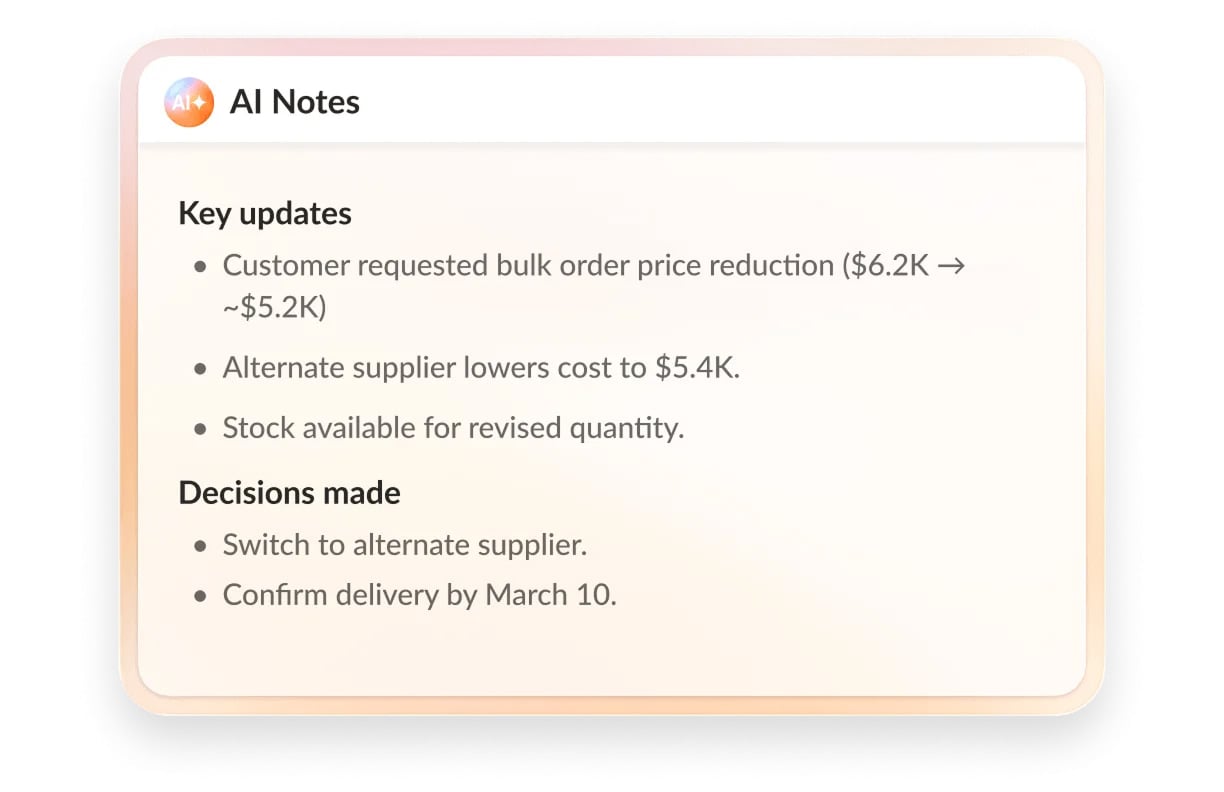
Optimove also found that real-time messaging increases customer engagement by 40%. Behavioral triggers convert high-intent moments into completed purchases by meeting customers with the right message at exactly the right time.
Strategy 4: Build loyalty programs with tiers and rewards
Loyalty programs function as engagement infrastructure when they’re designed around behavior, not just discounts.
Tiered programs that reward purchase frequency, referrals, and engagement actions create a feedback loop that augments your customer retention strategies. Tiers also increase purchase frequency and brand advocacy by giving customers a reason to return that goes beyond price.
Strategy 5: Optimize post-purchase engagement
The purchase confirmation is where loyalty begins. Order confirmation SMS, follow-up review requests, return support, and re-engagement sequences determine whether a first-time buyer becomes a repeat customer.
Your current customers are your most valuable, and optimizing your post-purchase engagement directly impacts retention. Yotpo’s research found that businesses have a 60% to 70% chance to sell to existing customers—compared to a 5% to 20% chance to sell to new prospects.
Strategy 6: Implement service recovery loops
Service recovery is the process of turning a complaint or failure into a loyalty-building moment. How a brand handles a problem often matters more to retention than whether the problem occurred in the first place.
A customer whose issue gets resolved quickly and with genuine care is frequently more loyal than one who never had a problem at all. Effective service recovery reduces churn and generates positive word-of-mouth by demonstrating that the brand values the relationship more than the transaction.
Strategy 7: Unify voice and SMS as engagement channels
Most engagement strategies treat voice and SMS as support channels, not engagement channels. That misses where retention actually happens.
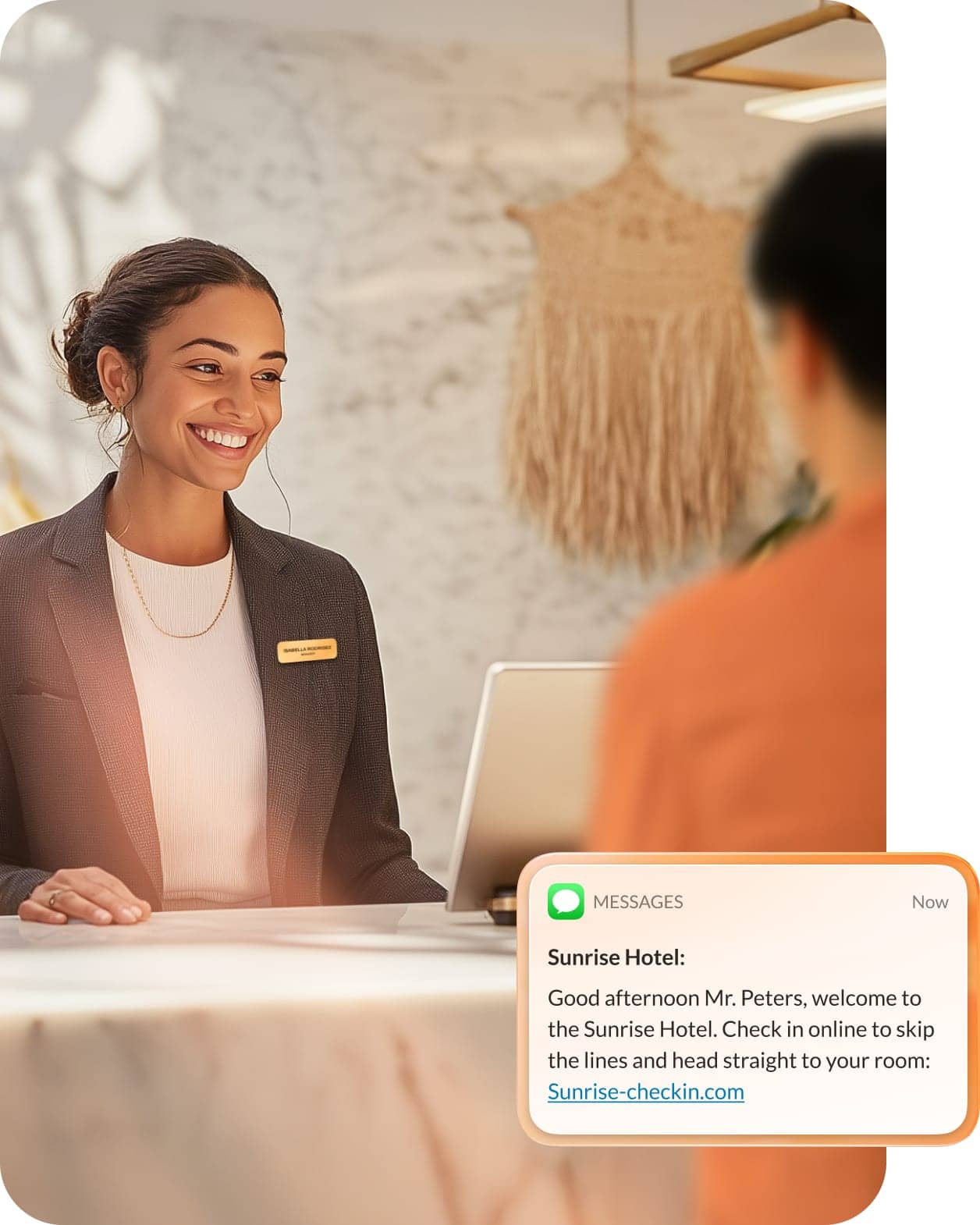
Voice and SMS remain the primary channels for retail customer support; teams that manage them in separate systems create exactly the kind of fragmented experience that drives customers away.
When support teams handle calls through one system and texts through another, messages get missed, response times suffer, and supervisors have no real-time view of what’s happening across either channel. Unified voice and SMS reduces missed conversations and improves response consistency across every customer touchpoint.
How to measure retail customer engagement
Teams that can’t measure engagement can’t improve it. Most retailers track sales metrics well, but lack visibility into the interaction-level data that predicts churn and repeat purchase behavior before those trends show up in revenue reports.
Five metrics give a complete picture of engagement health:
- Net Promoter Score (NPS): Measures how likely customers are to recommend the brand. NPS tracks emotional loyalty, not just satisfaction, and it’s a leading indicator of churn and advocacy.
- Customer satisfaction (CSAT): Captures point-in-time satisfaction after a specific interaction. CSAT is most useful when tracked by channel and agent, not just as an aggregate.
- Repeat purchase rate: The percentage of customers who buy more than once. This is the clearest signal of whether engagement strategy is working at the loyalty stage.
- Churn rate: The percentage of customers who stop buying within a defined period. Rising churn is the downstream result of engagement failures that happened weeks or months earlier.
- CLV: The total revenue a customer generates across their relationship with the brand.
Engagement metrics by channel
Each channel produces its own performance signals. Tracking them separately reveals gaps that aggregate metrics hide.
- SMS: Click-through rate on outbound messages and response rate on inbound conversations.
- Voice: Call abandonment rate and average wait time, which directly reflect queue management effectiveness.
- Email: Open rate and click-through rate, segmented by campaign type and customer segment.
- Queue: Wait time and abandonment rate by time of day, which show when staffing and routing decisions are failing customers.
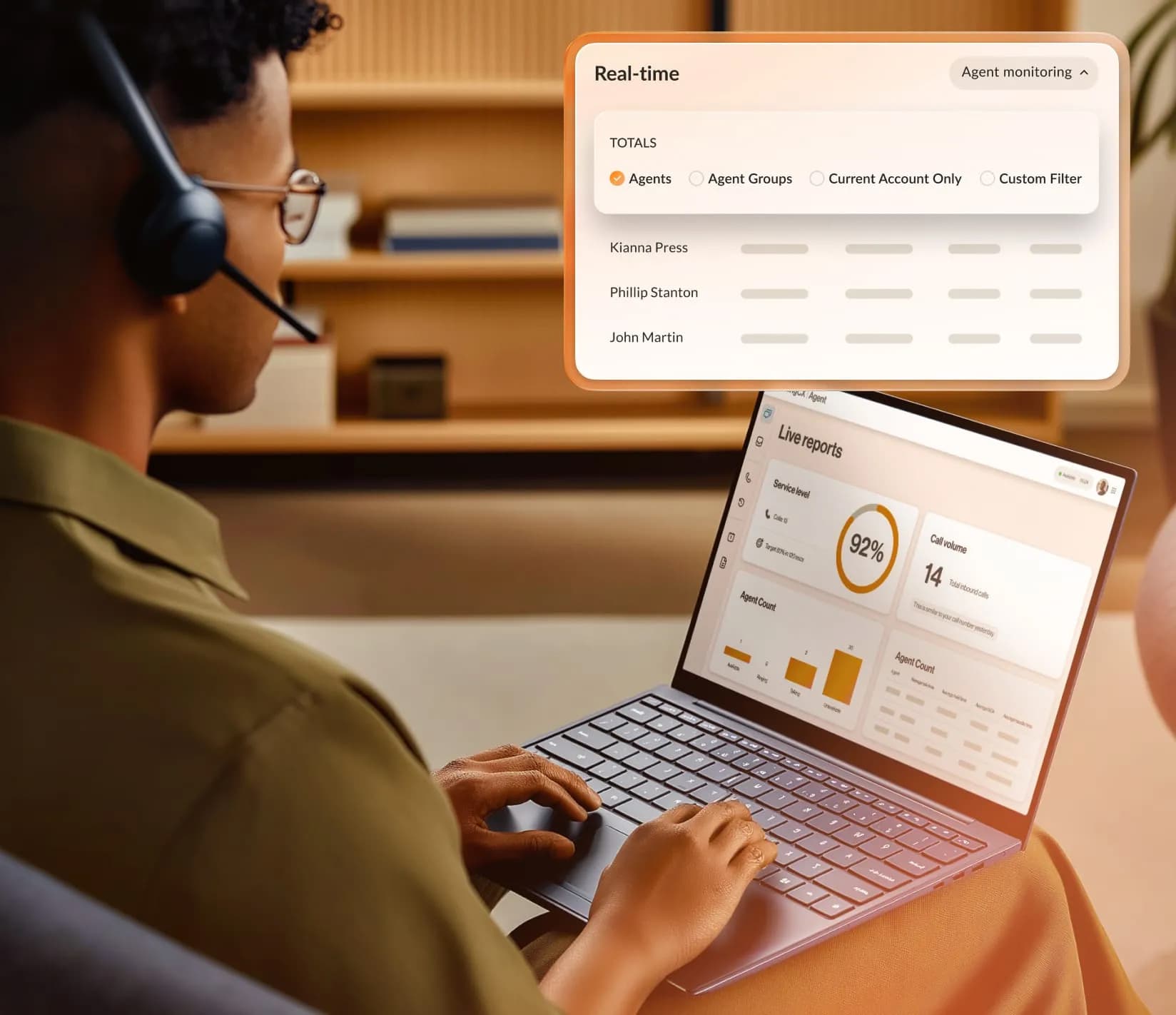
When supervisors lack real-time queue visibility, they can’t intervene before abandonment happens. RingCentral’s Customer Engagement Bundle includes Live Reports that show supervisors queue activity and agent performance in real time, so they can catch backlogs before they affect service levels.
The technology stack that enables retail engagement
Modern retail experiences often blend physical store and online channels, requiring technology that supports both seamlessly. Meanwhile, fragmented customer experience tools create fragmented experiences. A fast SMS response followed by an eight-minute phone queue wait signals disconnection, not unity.
Different technology layers make retail engagement strategy executable:
- Customer relationship management (CRM): A unified customer profile that captures purchase history, interaction history, and preferences across channels. Without it, personalization is guesswork.
- Marketing automation: Personalized journey orchestration that triggers the right message at the right moment based on customer behavior, not batch schedules.
- Unified communications platform: The voice and SMS layer that connects customers to support teams and gives supervisors visibility into every conversation. This is the layer most engagement strategies leave unaddressed.
- Analytics dashboards: Real-time and historical performance data that connects interaction quality to business outcomes.
Common retail customer engagement mistakes to avoid
Even well-resourced retail teams repeat the same engagement mistakes, and each one costs you in churn, missed revenue, and customer trust.
- Siloed channels with no unified customer view: When voice, SMS, email, and in-store live in separate systems, personalization fails and customers repeat themselves every time they switch channels.
- Batch campaigns with no behavioral triggers: Sending the same message on the same schedule ignores intent signals that are available in real time. Customers who browse or abandon carts are telling you what they need. Scheduled sends that miss that data leave money on the table.
- Ignoring post-purchase engagement: Communication stops after the transaction closes. That silence drives one-time buyers away. Post-purchase is where loyalty is built.
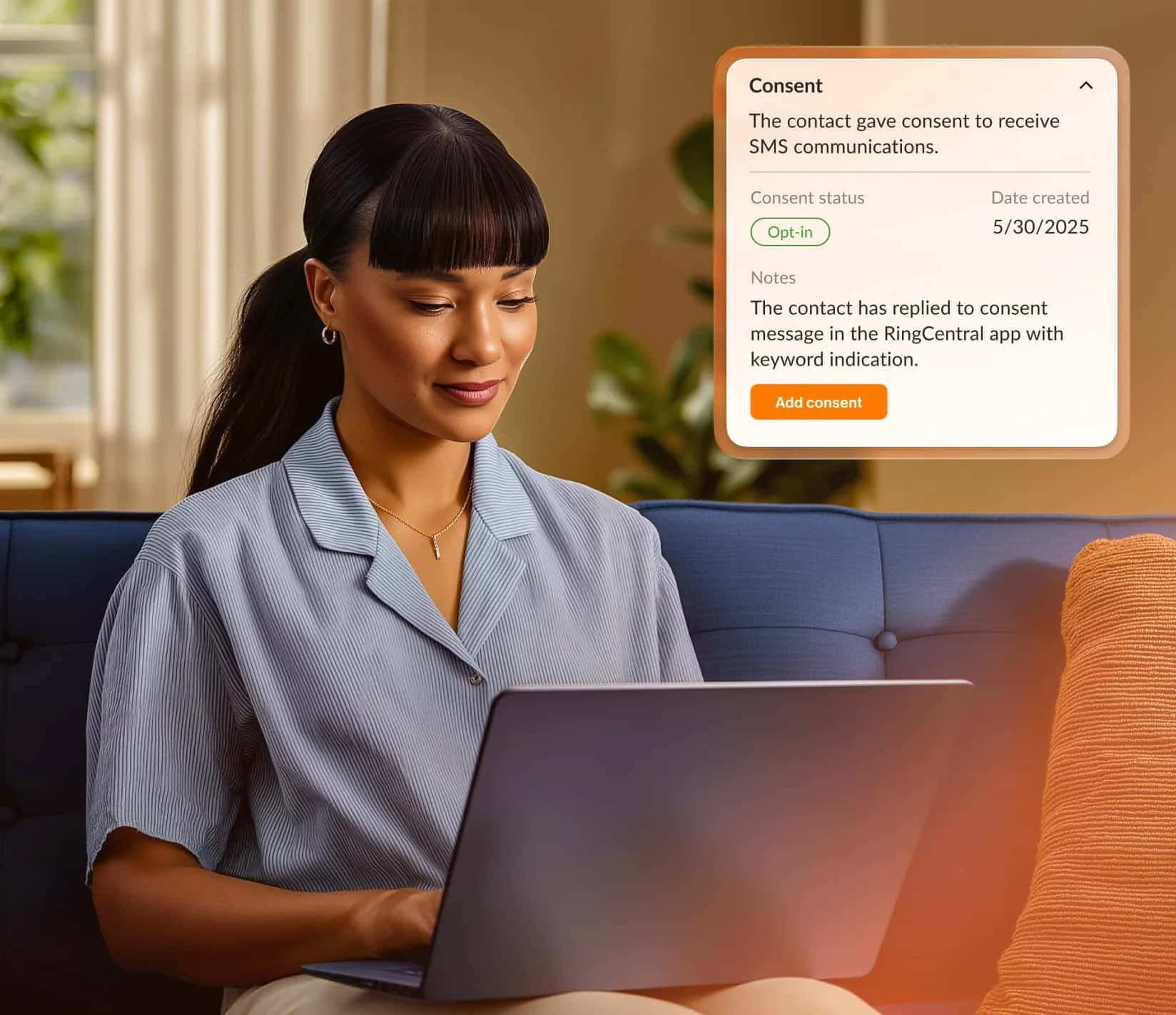
- Treating voice and SMS as separate systems: Managing queues in one tool and texts in another creates blind spots for supervisors. When a customer texts and calls about the same issue, they have to start over.
Build your retail engagement strategy on the right foundation
Retail customer engagement is a full-funnel discipline that requires consistent communication across every channel, from first discovery through post-purchase loyalty. Strategy without infrastructure produces inconsistent results.
The teams that execute engagement well aren’t necessarily the ones with the biggest budgets. They’re the ones with unified visibility across voice, SMS, and digital channels, real-time data that surfaces problems before they become churn, and the operational infrastructure to respond consistently at every stage.
For teams ready to close the gap between engagement strategy and execution, RingCentral for Retail pairs AI with unified contact center capabilities to help you engage customers at every funnel stage.
For businesses looking for a lightweight solution, RingCentral’s Customer Engagement Bundle delivers the voice and SMS infrastructure you need.
Retail customer engagement FAQs
What is retail customer engagement?
Retail customer engagement is the sum of all interactions between a brand and its customers across physical and digital channels, designed to build loyalty, increase repeat purchases, and deliver consistent experiences. It spans the entire customer relationship from discovery through post-purchase loyalty.
How is customer engagement different from customer service?
Customer engagement is proactive and ongoing across the full customer journey. Customer service is reactive and focused on resolving specific issues. Engagement builds the relationship before problems occur, while service activates in response to them.
How do you measure retail customer engagement?
The five core metrics are NPS, CSAT, repeat purchase rate, churn rate, and CLV. Each captures a different dimension of engagement health. Channel-specific metrics like SMS click-through rate and call abandonment rate reveal where engagement breaks down at the interaction level.
What role does omnichannel play in retail customer engagement?
Omnichannel means consistent experience across in-store, mobile, voice, SMS, and other digital channels. Delivering that consistency requires unified communications infrastructure that gives every team member a single view of every customer conversation.
How can retailers improve customer engagement without a full contact center?
Start with three capabilities: a shared inbox for SMS so every team member sees every message, call queue management with automated callbacks and wait time announcements, and real-time reporting that gives supervisors live visibility into queue activity.
Originally published May 28, 2026