AI Communications









Learn how to unify your channels, deploy voice-first AI, and turn every customer interaction into a revenue opportunity.
Modern customers jump from TikTok and mobile apps to store associates and website chats and expect retail brands to keep up. But when you run your phone system, ecommerce platform, and store operations on separate islands, you strain your teams, inflate costs, and lose revenue.
A modern retail contact center fixes this by connecting your channels, teams, and data into a single view—turning every interaction into an opportunity to protect margin, increase basket size, and grow loyalty. The question isn’t whether you need a contact center, but how to design one that fits your operating model, tech stack, and risk profile.
This article explains how a retail contact center should work in 2026, which capabilities matter most, and how to evaluate vendors like RingCentral when you’re ready to act.
Key takeaways
- Modern retail contact centers unify voice, chat, SMS, and social channels with CRM and inventory systems to eliminate friction
- Voice-first AI automates routine requests like order status and store hours, freeing agents for high-value conversations
- Intelligent routing, real-time context, and AI assistance turn interactions into opportunities for upselling and retention
- Strategic data insights from customer conversations help optimize merchandising, marketing, and store operations
What is a retail contact center?
A retail contact center is a unified platform that orchestrates customer interactions across every touchpoint, from digital channels to physical stores. It serves as a core piece of retail infrastructure that integrates with your point of sale (POS), inventory, and ecommerce systems to manage the entire customer journey in real time.
Practically, a retail contact center facilitates customer support across three key stages:
- Pre-purchase: Product questions, size and fit guidance, stock checks, promotions, and store location info
- Purchase: Order assistance, payment issues, checkout troubleshooting, buy-online-pickup-in-store (BOPIS) coordination
- Post-purchase: Order tracking, returns and exchanges, warranty support, loyalty inquiries, and subscription changes
Why does it matter for modern retail operations?
The 2025 CX Global Insights report from Ipsos found that 70% of customers choose a brand based on whether they think it will provide a good experience—not its products. Your contact center is where you test that experience every day, especially when something goes wrong.
Effective contact centers plug into operational systems like ecommerce platforms and customer relationship management (CRM) systems so agents and AI can see exactly what’s happening. Without that integration, teams waste time toggling between screens and asking customers to repeat information, which hurts both satisfaction and efficiency.
Beyond operational savings, this connectivity allows modern retail contact centers to act as revenue drivers. By providing context like purchase history, current promotions, and live inventory, they help agents and AI tools:
- Recommend relevant add-ons or alternative products when items are out of stock
- Offer tailored resolutions to at-risk customers during returns or complaint calls
- Reach out about fulfillment delays, replenishment reminders, or loyalty milestones
For mid-market and enterprise retailers, the shift from reactive support to proactive revenue generation directly impacts the bottom line. You aren’t just handling interactions faster—you’re helping protect customer lifetime value, limit churn, and increase the likelihood that conversations lead to repeat purchases or larger baskets.
The strategic value of retail contact centers
According to Forrester’s 2024 US CX Index, “customer-obsessed” companies (those that prioritize customers’ needs and satisfaction in their decision-making and actions) see 41% faster revenue growth and 51% better customer retention—yet only 3% of companies achieve that level of customer-centricity.
The question is: Where does your retail contact center fit into closing that gap? When you treat it as an engine for revenue, loyalty, and insight instead of another cost line in the budget, you help turn every customer interaction into a step toward that 3% standard.
A modern platform supports this shift in three core ways:
1. Turning every interaction into a revenue opportunity
Intelligent routing lets you prioritize high-value callers, match customer inquiries to specialized teams (such as luxury or B2B), and connect complex, high-intent contacts to your best agents. With AI assistance and full context, your agents can:
- Offer relevant alternatives when items are out of stock or discontinued
- Propose bundles or add-ons that fit the customer’s past behavior
- Save potential cancellations or returns by offering exchanges, store credit, or tailored solutions
Instead of measuring success purely by average handle time, you can align KPIs to revenue contribution, such as conversion rates from assisted interactions, incremental revenue from recommendations, and retention of at-risk segments.
2. Delivering consistent, personalized experiences at scale
Customers expect brands to recognize them and respect their time, whether they’re calling from the parking lot or chatting from their couch. A unified retail contact center integrated with your CRM and digital channels allows you to:
- Maintain a single, up-to-date profile across channels and brands
- Use artificial intelligence to personalize scripts, offers, and resolutions to the individual, not just the issue type
- Enforce brand standards and policies consistently across stores, online, and contact center operations
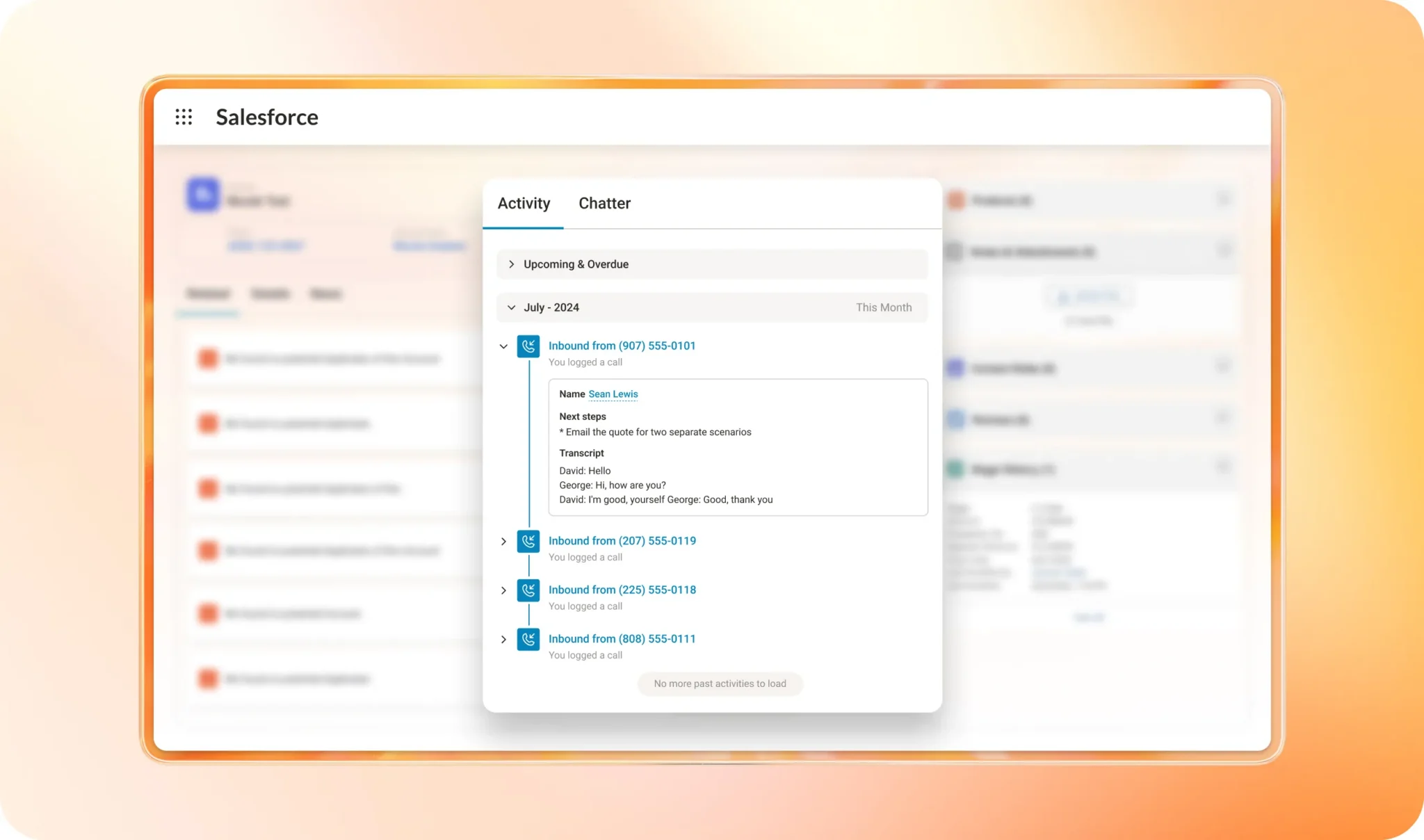
When agents and AI-powered assistants treat each customer as a known individual, you build loyalty that’s hard for competitors to displace—even in highly promotional categories.
3. Turning operational data into actionable insight
Your retail contact center generates some of your company’s richest operational data: why customers call, what confuses them, which promotions drive inquiries, and where friction appears in buyer journeys. With integrated analytics, you can transform this raw data into strategic decisions.
The right insights do more than improve your contact center—they help create a feedback loop that connects customer conversations to merchandising, marketing, and store operations.
How can retail contact centers be optimized for customer experience and operational efficiency?
Retail operations leaders must constantly balance two competing pressures: keeping service levels high while keeping costs in check. A well-architected retail contact center helps you do both, but only if you’re deliberate about workforce management, coaching, and systems integration.
When your platform, processes, and people are aligned, you can improve customer satisfaction (CSAT), reduce wait times, and increase agent productivity without simply adding headcount. An integrated approach combining unified communications as a service (UCaaS), contact center as a service (CCaaS), and AI reduces the friction and switching costs caused by using separate tools for internal collaboration and customer engagement.
Workforce management and training strategies
Retail demand isn’t linear—it swings with seasons, product drops, promotions, and unexpected events. Because of this, your retail contact center strategy must include modern workforce management (WFM) and coaching capabilities tuned to retail patterns rather than generic averages.
Key elements to consider include:
- Advanced forecasting: Use historical interaction data, seasonal trends, marketing calendars, and store event schedules to predict volume across channels. Forecasting helps you staff for Black Friday, new collection launches, or same-day delivery pushes without overspending on quiet days.
- Flexible scheduling: Support part-time, gig, and remote agents to extend coverage into evenings and weekends.
- Real-time adherence and intraday management: Monitor schedule adherence and queue health so supervisors can quickly add coverage, reassign agents, or adjust priorities when demand spikes.
- Continuous coaching and quality management: Use call and interaction recordings, AI-powered summaries, and scorecards to coach agents on brand tone, upsell opportunities, and conflict resolution.
The goal is to ensure your contact center team feels supported and prepared, not just scheduled. When agents have clear expectations, real-time guidance, and access to product and policy knowledge, they’re far more likely to deliver consistent, brand-aligned experiences—even during your busiest days.
Integrating with CRM and backend systems
Even the best-trained agents struggle if they have to dig through multiple systems to answer simple questions. For a retail contact center, deep integration with your company’s CRM, ecommerce, and inventory stack is non-negotiable.
At a minimum, you’ll want to connect your contact center to:
- CRM platforms like Salesforce or HubSpot for unified customer profiles, segmentation, and journey data
- Ecommerce platforms for order histories, cart data, and subscription or membership management
- Order management and inventory systems for stock availability by store or warehouse, expected replenishment dates, and shipment tracking
- Marketing automation tools so agents can see which campaigns a customer has engaged with and avoid misaligned offers
This level of integration does more than save time. It creates consistent policies and experiences across every channel: a return started online can be completed in-store, and a loyalty issue raised via chat gets reflected in your CRM immediately. That consistency builds trust and reduces the friction that often pushes customers to competitors.
What are the essential features and technologies of a retail contact center?
Effective retail contact center platforms go beyond generic call center capabilities by offering tools tuned to the realities of retail: high seasonality, rapid promotion cycles, omnichannel journeys, and tight margins. To choose the right one for your organization, focus on features that directly affect revenue, efficiency, and customer satisfaction while reducing technology complexity.
When these features exist on a single cloud platform, they provide a foundation that supports voice, messaging, and collaboration across your stores and HQ. Layering on advanced customer engagement tools and voice-first AI helps you avoid stitching together multiple point solutions.
Omnichannel communication platforms
Customers don’t care how your tech stack is organized. They just care that they don’t have to repeat themselves. A modern omnichannel contact center retains the context of interactions across channels so teams can pick up exactly where the customer left off.
For retail, this might mean:
- A customer starts a web chat about a jacket size then calls while driving to a store. Your agent sees the full chat transcript and recommended size on screen before they even say hello.
- A curbside pickup customer texts that they’ve arrived. Your system matches their phone number to their order and alerts store staff without manual lookup.
- A social media message about a damaged delivery turns into a phone call. Your agent sees the original post, photos, and order details in a single view.
To deliver these kinds of experiences, you need a unified agent desktop that consolidates:
- Customer history: Previous purchases, interactions, preferences, and loyalty status
- Real-time inventory: SKU availability across locations, substitutions, and ship-from-store options
- Order status: Fulfillment, shipping details, and returns in progress
- Contextual data: Marketing campaigns the customer engaged with, service-level expectations, and priority tiers
AI and automation capabilities
Voice-first AI is rapidly becoming a critical component of retail contact centers. The goal isn’t to replace human agents—it’s to automatically handle predictable, repeatable requests so skilled teams can focus on complex, high-value conversations.
In practice, you can use AI across three layers of your retail contact center:
- Front door automation: Handling first contact and routing
- Self-service for routine tasks: Order and account support without an agent
- Agent assistance: Helping live agents work smarter and faster
RingCentral’s agentic voice AI suite gives you building blocks for each layer:
- AI Receptionist (AIR): Answers and routes inbound calls using natural language. Instead of rigid “Press 1 for…” menus, customers can say “I’m calling about my delivery,” and the system directs them to the right queue, store, or self-service flow. In retail, this unclogs main lines during promotions or holiday peaks and ensures VIP or high-value customers receive priority routing.
- AI Virtual Assistant (AVA): Supports employees by surfacing relevant context, knowledge, and insights. AVA automatically generates transcripts, summaries, and follow-up actions to reduce admin tasks and reduce context switching.
- AI Conversation Expert (ACE): Analyzes interactions to uncover insights that improve quality, compliance, and performance over time. ACE automatically summarizes conversations, extracts customer sentiment and intent, flags potential risks, and identifies trends across all your voice and digital interactions.
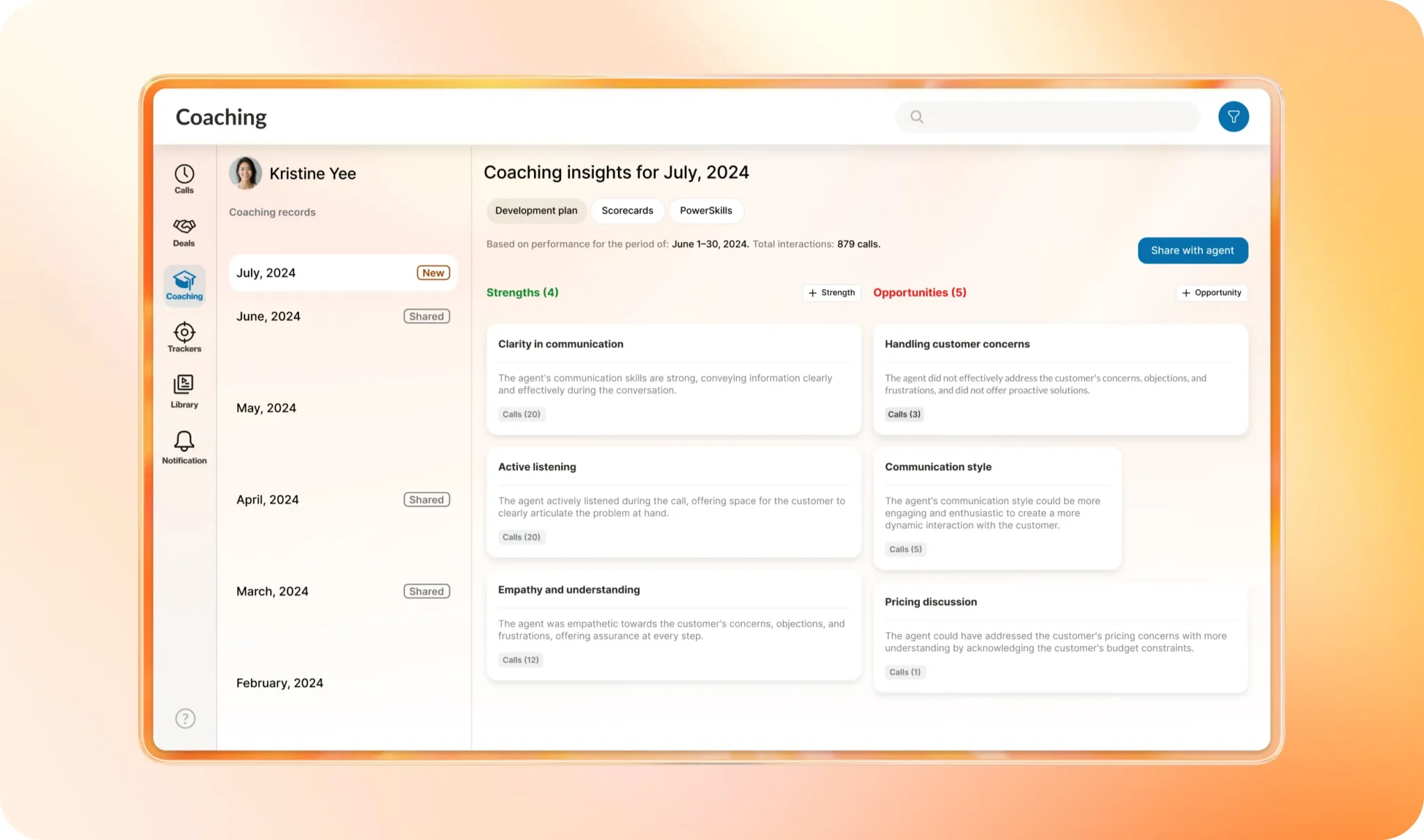
The impact shows up in faster resolution for routine requests, less pressure on your teams during spikes, and better consistency across channels and locations. By freeing agents from repetitive work, you create space for proactive outreach and higher-quality conversations that protect revenue and brand reputation.
How to choose the right retail contact center solution for mid-market and enterprise retailers
By the time you’re evaluating platforms, you’re usually weighing more than just feature checklists. You’re balancing migration risk, integration complexity, security requirements, and the expectations of multiple stakeholders—from store operations to digital teams and finance.
To make a confident decision, use a structured evaluation framework that covers four main areas: scalability, security and compliance, integration, and ROI/switching risk.
Scalability and performance
Your retail contact center must handle peak loads without degrading experience. When you evaluate vendors, ask:
- What are the documented uptime and service level agreements (SLA) commitments for both unified communications (UC) and contact center (CC) components?
- How does the platform maintain voice quality during high volume or network congestion?
- Can we quickly spin up new queues, brands, or geographies without major reconfiguration?
- How do you support global operations—local numbers, language support, and regional data centers?
Security, privacy, and compliance
Since retailers handle payment data, personal information, and increasingly detailed behavioral data, your contact center vendor must align with your risk posture and regulatory obligations. Key questions to ask include:
- Which security certifications does the platform maintain (for example, SOC 2, ISO 27001)?
- How do you encrypt data in transit and at rest across UC and CC components?
- What controls are in place for recording, redaction, and access management, especially for payment or sensitive conversations?
- How do you manage data residency and retention for different regions?
Integration and architecture fit
Retail contact centers don’t live in isolation—they must mesh cleanly with existing architecture. As you assess options, go deeper than “does it integrate with Salesforce?” by posing questions like:
- How are integrations delivered (through native connectors, APIs, or third-party middleware)?
- What’s the typical implementation timeline for connecting to our company’s specific CRM, ecommerce, and inventory tools?
- Can our internal teams extend or customize workflows using APIs and low-code tools, or are we reliant on you or other partners?
- How does the platform handle identity and single sign-on (SSO) so our agents can move between tools without friction?
ROI, total cost of ownership, and switching risk
Finally, you’ll need a clear view of both the financial impact and operational risk of moving to a new retail contact center platform. Before committing, define your requirements for:
- Total cost of ownership (TCO): Calculate the full cost of licenses, telecom, and infrastructure, including the internal overhead of managing multiple vendors if your UC and CC stacks are separate.
- Operational efficiency gains: Set specific goals for improvements in handle time, first contact resolution, and self-service containment using AI and unified tooling.
- Revenue impact: Identify potential lift from increased upsell/cross-sell, reduced churn, and improved recovery of at-risk customers.
- Migration plan: Outline your expectations for a phased cutover, data migration, and agent training to limit disruption.
Turn your retail contact center into a revenue engine
Your retail contact center directly impacts margin, loyalty, and competitive position.
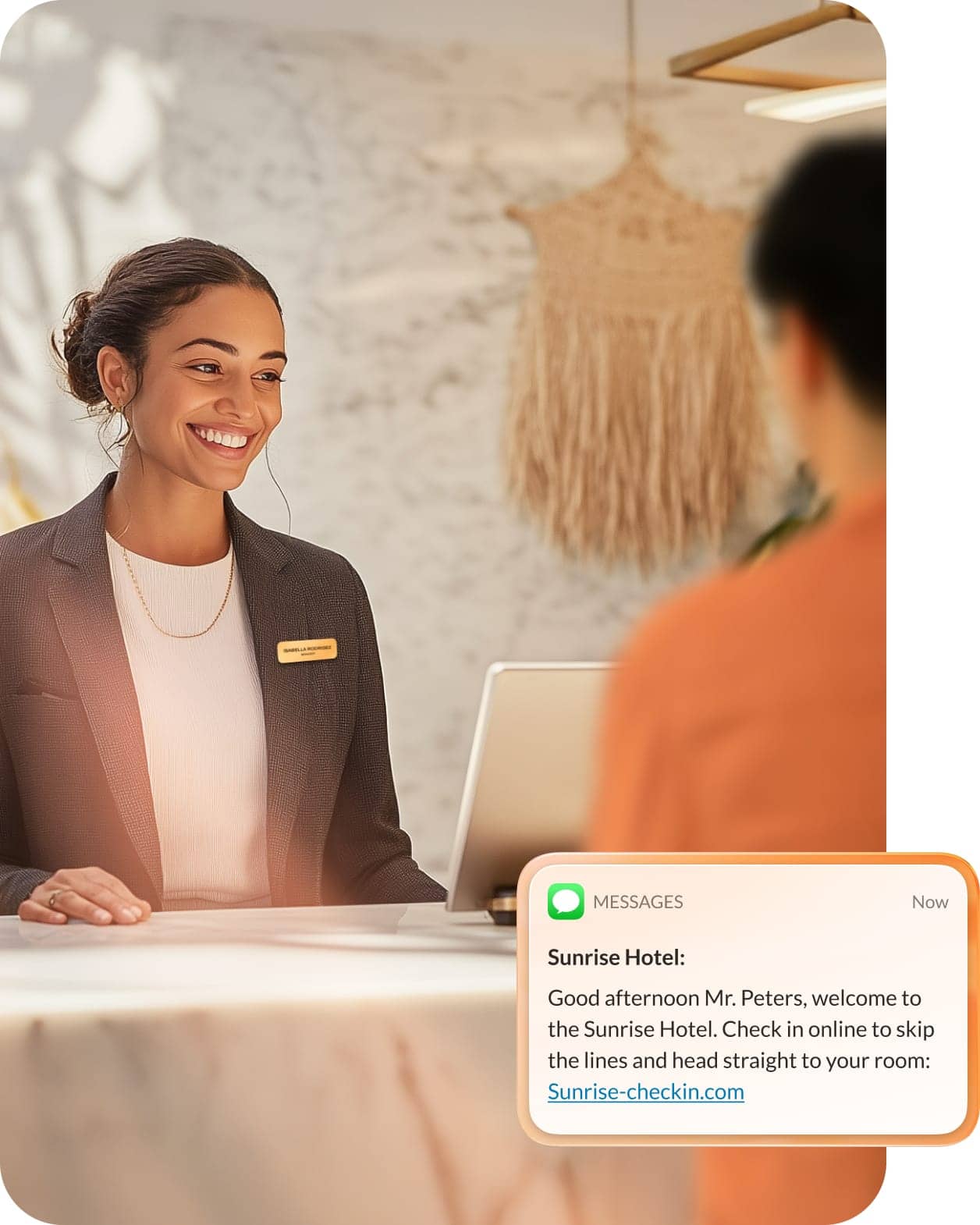
Here’s what to prioritize in the next 12–24 months:
- Unify your channels: Connect voice, chat, SMS, and social with your CRM and inventory systems so customers never repeat themselves and agents always have context.
- Deploy AI where it adds value: Use voice-first AI to automate order status, store hours, and routing, freeing your best agents to focus on high-value conversations that protect revenue.
- Integrate deeply: Ensure your contact center plugs directly into your ecommerce, order management, and marketing tools so every interaction becomes an opportunity to upsell, retain, or learn.
- Measure what matters: Shift from pure efficiency metrics to revenue contribution, tracking conversion rates from assisted interactions, incremental basket size, and retention of at-risk customers.
RingCentral brings voice, messaging, contact center, and AI together on a single cloud platform built for retail operations. You get the integration, scalability, and intelligence you need to turn every customer interaction into a growth opportunity.
Explore how RingCentral’s solutions for retail businesses fit your architecture and operating model—and start transforming your contact center from a cost center into a competitive advantage.
Originally published Mar 02, 2026