AI Communications






Most businesses run two separate systems: one for employees to talk to each other, and one for talking to customers. Unified communications tools handled voice, video, and messaging between coworkers. Contact center systems handled customer calls and chats. A new report from Aragon Research says these two systems are merging into one category: Intelligent Communications Experience, or ICX. And companies uniting communications are already cutting handle time by up to 40%.
Key takeaways
- Aragon Research has named a new market category called ICX, which combines unified communications and contact center tools into one platform.
- The ICX market is expected to grow from $152.13 billion in 2025 to $251.83 billion in 2031, a 10% annual growth rate.
- Up to 40% of that growth will come from businesses replacing older, separate systems.
- RingCentral’s product lineup, including RingEX, RingCX, and its AI tools, already covers most of what Aragon defines as core to ICX.
What is ICX?
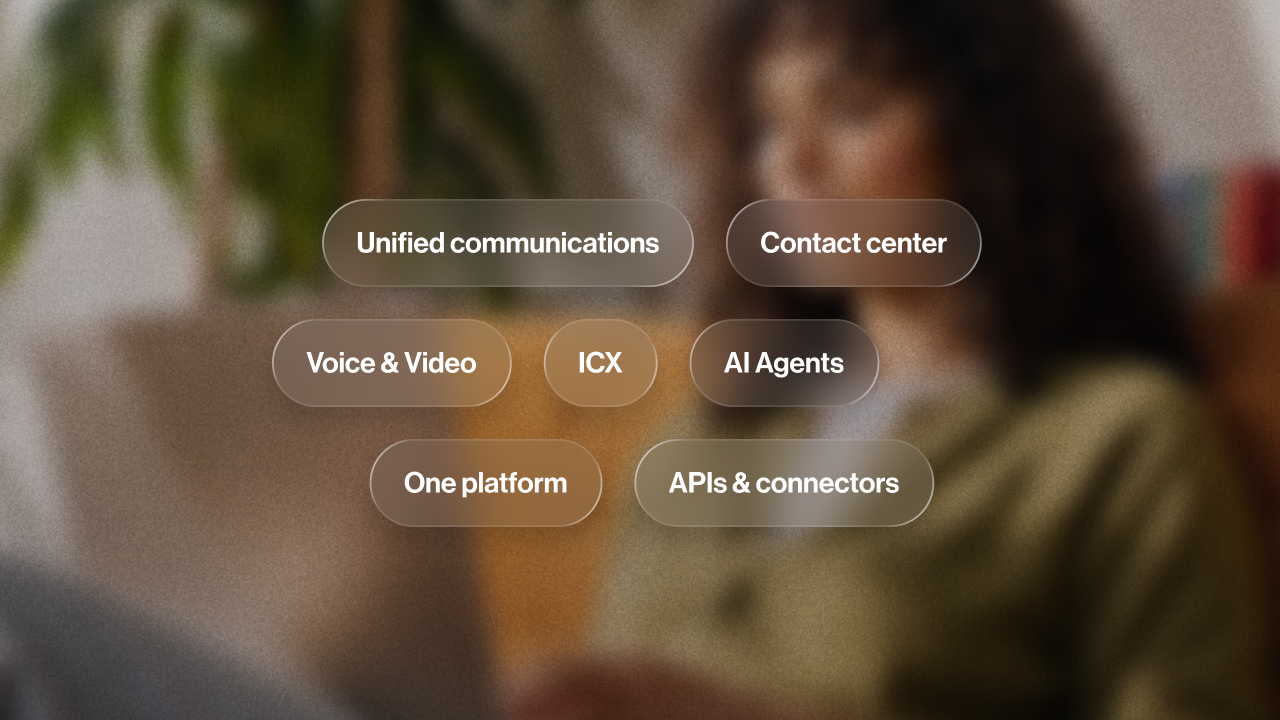
ICX brings calling, messaging, video meetings, communications APIs, and contact center tools onto one platform, with AI built in across all of them. AI agents are starting to take part in these systems directly, not just as add-on features. They can join calls, answer customer questions, and hand off tasks to people when needed.
According to Aragon Research, the market for these platforms will grow from $152.13 billion in 2025 to $251.83 billion in 2031. That’s a 10% annual growth rate. Aragon says up to 40% of that growth will come from businesses replacing their current, separate systems as they consolidate and prepare to spend more on AI agents.
Why consolidate communications now
Running separate tools creates problems. Information gets stuck in one system and can’t reach the other. Connecting each tool to every other tool costs money and time. Each new tool adds another security gap. And AI can’t do useful work if it can’t see the full picture of a customer or an employee’s history.
A unified platform keeps that information together. When a conversation moves from an AI agent to a contact center rep to someone in another department, the full history moves with it. Communications also gets built directly into daily work. AI agents can start calls, join meetings, qualify leads, answer routine questions, and manage a task from start to finish.
Where RingCentral fits
RingCentral fits closely with Aragon’s definition of ICX by bringing together the category’s core elements on an integrated platform:
- Voice, video, messaging and collaboration through RingEX
- Customer-engagement orchestration through RingCX
- APIs and integrations for communications automation
- AI helps preserve conversational context across internal and external interactions while enabling human employees and AI agents to collaborate, route work, and complete customer-facing workflows
RingCentral’s convergence of UCaaS, CCaaS, CPaaS and agentic AI therefore positions it as a strong example of Aragon’s shift from siloed communications tools toward a unified, intelligent platform supporting both human and digital labor.
What this means going forward
Aragon recommends three steps. First, combine your communications and contact center platforms so they run on one system. Second, add AI tools that give employees insights and coaching as they work. Third, bring in AI agents that can act on their own, with the right identity checks, security, and human oversight in place. This order lets a business get quick wins first, while it builds the trust and controls it needs before handing more work to AI agents.
Communications used to be one channel among many, or the last step in a workflow. Under ICX, it becomes the layer that connects people, AI agents, data, and every business process. For businesses that want better customer experiences, more productive employees, and AI that actually works at scale, a unified platform is becoming the starting point.
FAQ
What does ICX stand for?
Intelligent Communications Experience. It’s a term Aragon Research uses for platforms that combine calling, messaging, video, contact center tools, and AI in one place.
How is ICX different from unified communications?
Unified communications platforms connect employees. ICX adds contact center and AI agent capabilities to that same platform, so employee and customer interactions run on one system instead of two.
Why is this happening now?
Aragon points to AI agents needing shared context to do real work, along with the cost and security problems that come from running separate systems.
How should a business start adopting ICX?
Aragon recommends three steps: combine communications and contact center platforms first, add AI-powered coaching and insights for employees next, then introduce autonomous AI agents with proper oversight.
Originally published Oct 14, 2026