AI Communications



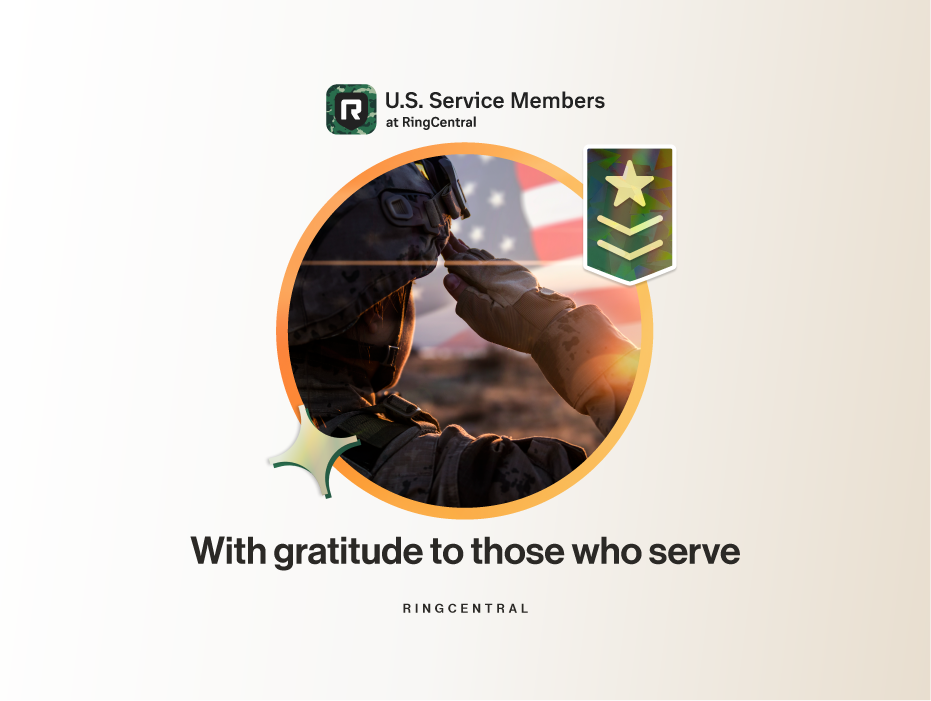
We spoke with members of our Veteran Employee Resource Group to understand what Veterans Day means to them — and what they hope others take away from their stories.
Meet our veterans
Alex Taus, Manager-Hypercare, served in the Army as an Infantryman from 2007 to 2012, deploying to Iraq in support of Operation Iraqi Freedom. Coming from a family with a strong military legacy, he was driven by both patriotism and personal purpose after high school.
David Hughes, SRE Tools Manager, enlisted in the U.S. Navy as a Fire Controlman, serving during the first Persian Gulf War. As a fourth-generation military family member and third-generation sailor, his service combined a love for computers and mechanics with a desire to continue his family’s tradition.
Eric Silver, Head of Strategic Sourcing & Operations, graduated from West Point and served as Captain in the Field Artillery at Fort Sill and Fort Hood. Inspired by mentors and family who served, he was drawn to the Academy’s legacy of leadership and service.
Tony Corwin, PS Project Manager 3, served in the Air Force as a telecommunications specialist across multiple bases, including the UK, South Korea, Germany, and Hungary. He joined to learn a practical trade while serving his country, building skills that shaped his post-service career.
What Veterans wish others understood
Military service is often misunderstood, shaped by assumptions about motivation or politics. As Alex explains, “Military service was chosen by most for reasons that transcend politics, personal beliefs, or what may be the norm. We swore an oath to defend the Constitution against all enemies, foreign and domestic. That was our job.”
Veterans come from diverse backgrounds with different reasons for joining — from educational goals to family legacies to a simple call to serve. Not all roles involve combat; most are technical, medical, logistical, or administrative. Tony notes that his telecommunications work directly prepared him for his civilian career, showing how service skills transfer across industries.
Above all, veterans are people first. They made a choice to serve, faced challenges few civilians encounter, and returned home with experiences that shaped who they are today. “The military is a very tough life — long hours, long deployments. It’s tough on families too,” Eric shares. David adds: “Veterans sacrifice a lot to serve our country — from the little pay we receive to the mental and emotional impacts of service. When you see veterans from World War II, the Korean War, or Vietnam, thank them. Many never received the recognition they deserved.”
If you or someone you know needs support, the Veterans Crisis Line is available 24/7 at 988, then press 1. Additional resources are available at: VA.gov/resources.
Transition to civilian life
Leaving the military means adjusting to an entirely new way of working and thinking. “Not every problem is a life-and-death situation,” Alex reflects. In service, decisions often carry life-altering weight. In civilian life, veterans must recalibrate that sense of urgency and perspective.
The skills gained through service — teamwork, discipline, problem-solving — remain invaluable. David notes that lessons learned 35 years ago still guide his work today. Yet, translating military experience into civilian terms can be challenging. Veterans often need to move away from acronyms and military-specific language to connect with new peers and leaders.
Alex’s advice is simple: “Trust yourself. The military, regardless of your job, taught you how to adapt, overcome, and find solutions to drive mission success.” That adaptability continues to serve veterans across industries, from tech to business leadership.
Reflecting on Veterans Day
For many, Veterans Day is deeply personal — a moment to honor bonds and sacrifices that last a lifetime. “One of the biggest things the military teaches us is ‘I’ve got your back,’” says David. “We call each other brothers and sisters. It’s a family. So Veterans Day is a celebration of my family.”
Eric shares a similar sentiment: “I was 18 when I showed up at the Academy, and I’m still closer with my classmates than anyone else in my life.”
But honoring veterans goes beyond one day of recognition. Alex encourages everyone to “take the time to learn and understand the human behind the uniform.” Whether through volunteering, engaging with veteran organizations, or simply asking questions, meaningful support is built on understanding.

Tony Corwin (left) and Alex Taus (right)
Building community through shared experiences
At RingCentral, the Veterans Employee Resource Group (ERG) offers a space for connection and belonging — a community built on shared experience. Its mission centers on camaraderie, mentorship, and support.
For Alex, finding that community made a tangible difference. “Coming to RingCentral was a scary time for me. Everything I knew was military and public service,” he says. “Finding the ERG helped validate my decision to enter an entirely new field and reassured me that I wasn’t alone.”
He encourages others to engage with veterans, especially older generations whose service often went unrecognized. “Walk a mile in their shoes,” he advises, “understand what miles those shoes walked before you pass judgment.”
Veterans bring resilience, leadership, and perspective that strengthen every organization. When companies create environments where veterans feel valued and supported, everyone benefits.
Thank you Veterans – Now and always
Recognition matters. Understanding matters more. Veterans carry their experiences with them always — shaped by service but not defined solely by it.
Tony, Alex, Eric, David, and all veterans at RingCentral and beyond, thank you. Thank you for your courage, sacrifice, the challenges you’ve overcome, and the ways you support one another and those around you. Your commitment to something larger than yourselves inspires us all.
Updated Feb 27, 2026