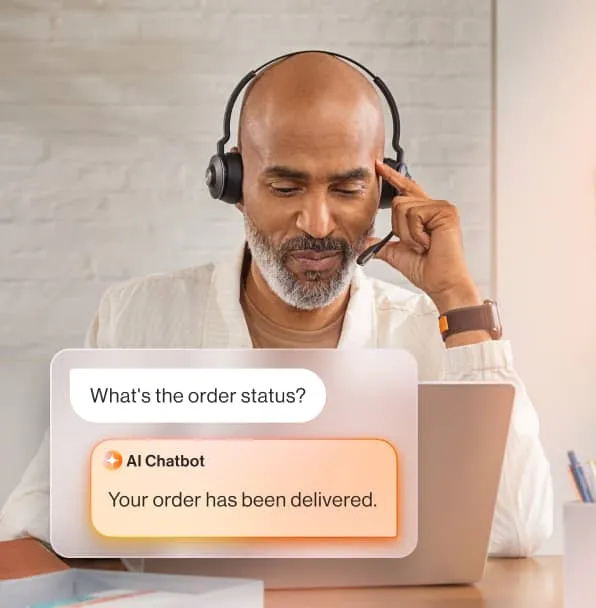
AI Communications









Learn how to implement AI customer service across voice, digital channels, and the full conversation lifecycle.
The use of AI in customer service has shifted from experimentation to core strategy. Most organizations are no longer wondering if they should use it, but rather deciding where it fits, how fast to roll it out, and how to balance risk and reward across the operation.
If you’re responsible for customer experience (CX), IT, or contact center performance, this guide is for you. It moves beyond buzzwords to explain what AI customer service actually is, where it delivers the most value, what it really takes to implement at scale—including a look at the next wave of conversational and agentic AI.
Key takeaways
- AI is core to operations: Organizations use AI for intelligent routing, virtual agents, real-time agent assist, analytics, and compliance
- Voice-first AI is a major differentiator: Even as digital channels grow, voice remains home for high-stakes interactions and service quality
- Unified platforms reduce risk: Consolidating telephony and AI simplifies security, compliance, and ongoing optimization
What is AI customer service and how does it work?
AI customer service is the use of artificial intelligence to understand, route, resolve, and analyze customer interactions across voice and digital channels. It augments your agents, powers self-service, and turns every conversation into actionable data.
To deliver enterprise-level reliability, it uses several technologies in concert:
- Automatic speech recognition (ASR): Converts live voice into real-time text so systems can “read” what customers say. For voice-first use cases, high-quality ASR is essential to ensure accuracy, especially across diverse accents and noisy environments.
- Natural language processing (NLP) and natural language understanding (NLU): Interpret text from voice or chat to detect intent, entities (like order numbers or dates), and customer sentiment. This is how AI determines whether someone is requesting a password reset or disputing a charge.
- Machine learning (ML): Learns from historical data and ongoing interactions to improve predictions, such as which queue to route to, which answer is likely to resolve an issue, or which customers are at risk of churn.
- Generative AI: Produces natural-sounding content, including responses, call summaries, and coaching scripts. It’s the engine beyond AI-powered chatbots and sophisticated virtual agents.
- Orchestration and integrations: Connects AI tools to your telephony, contact center, CRM, ticketing, and identity systems. This ensures AI can access customer history and update records while respecting your routing and security rules.
Here’s how modern AI customer service typically manages a voice-first interaction:
1. A customer calls your support line
When a customer calls, the AI answers immediately, using ASR and NLP to transcribe speech and understand the reason for the call. Simultaneously, the system checks for context like caller ID, CRM data, recent orders, and prior customer queries.
2. The AI agent offers self-service options or transfers the call to a human agent
If the virtual agent can resolve the issue, it walks the customer through the necessary steps and updates back-end systems via APIs. If the request is complex, the system uses intelligent routing to send the customer to the best-skilled agent, along with a full transcript, summarized intent, and customer sentiment analysis.
3. AI shares available context with the support agent
By sharing this context, AI ensures the human agent has a thorough understanding of the customer’s issues. This reduces frustration by preventing them from having to repeat themselves, experiencing generic interactions, or getting stuck in a loop trying to reach a human.
This level of context is critical for serving customers with genuine care—and customers are taking note of which brands deliver. A global survey found that 79% of respondents look for brands that demonstrate empathy when choosing where to shop.
4. Real-time AI analysis surfaces knowledge, next steps, and compliance concerns
While the agent speaks with the customer, real-time AI assist analyzes the conversation to surface knowledge base articles, suggest next steps, and ensure mandatory compliance prompts aren’t missed.
After the call, AI generates a concise summary and logs action items in your CRM or ticketing system. This automation allows you to spot trends and identify coaching needs or potential risks across thousands or millions of customer conversations instantly.
Top use cases for AI customer service
There are countless AI technologies on the market, but most of the value clusters into a few strategic categories. Focusing on these real-world applications can help you choose the right AI customer service solution and implement it effectively.
Conversational AI agents and self-service
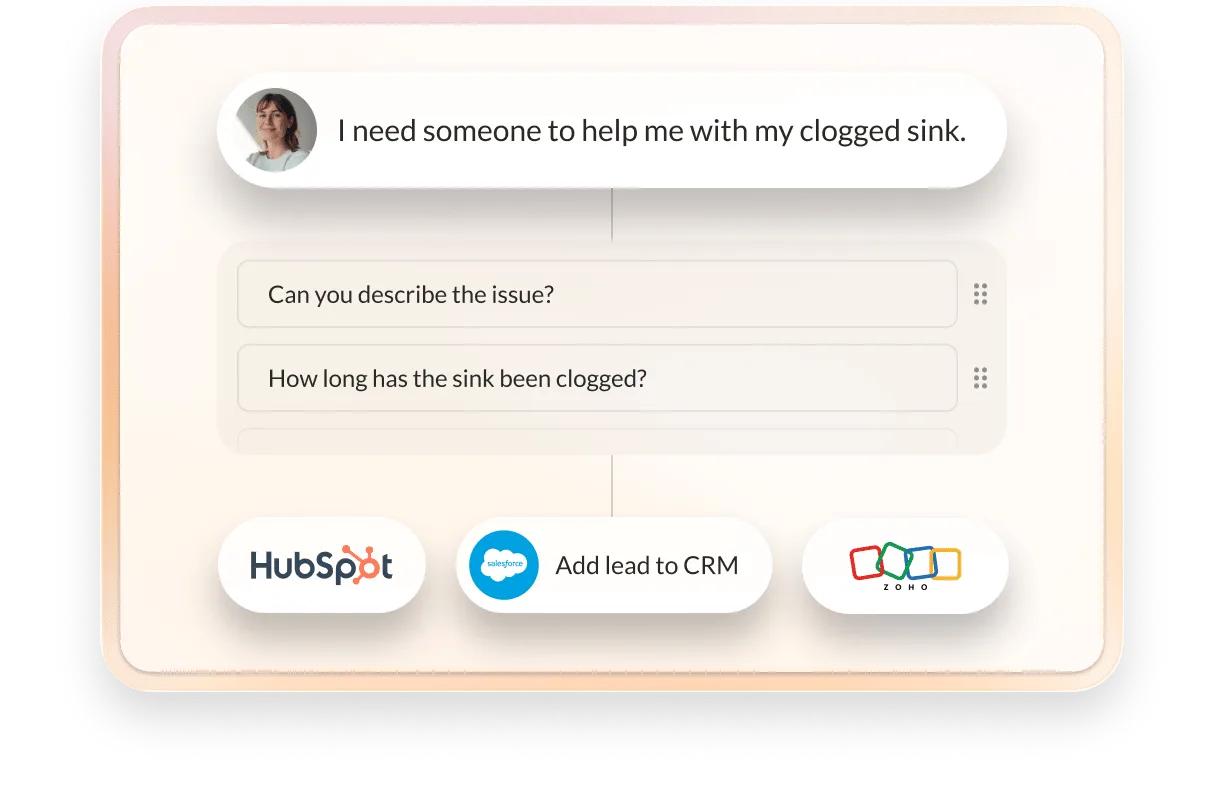
Conversational AI agents across voice and chat sit on the front line of customer experience. They handle routine tasks, guide customers through processes, and understand natural language instead of forcing users through rigid menus.
Typical applications include:
- Handling common, high-volume requests like password resets, billing inquiries, and appointment scheduling
- Guiding customers through complex issues without human intervention
- Providing 24/7 global support without staffing overnight or regional micro-teams
Business impact: When designed well, conversational AI reduces inbound volume to human agents, shortens wait times, and improves consistency while maintaining a natural, branded customer service experience.
Intelligent routing and triage
Intelligent routing uses AI to determine where a customer should go and what context should travel with them. Instead of relying on simple Interactive Voice Response (IVR) trees or basic keyword rules, AI-based routing considers real-time customer sentiment and intent.
This can look like:
- Reducing blind transfers by aligning customer needs with agent skills, language proficiency, and availability
- Passing along a complete interaction history so customers never have to repeat themselves
- Prioritizing high-value customers or high-risk cases and routing them to specialized teams
Business impact: Better routing leads directly to higher first-contact resolution, lower average handle time, and improved customer satisfaction (CSAT). It also lets you segment customer service operations and treat different groups more strategically.
Real-time agent assistance and productivity
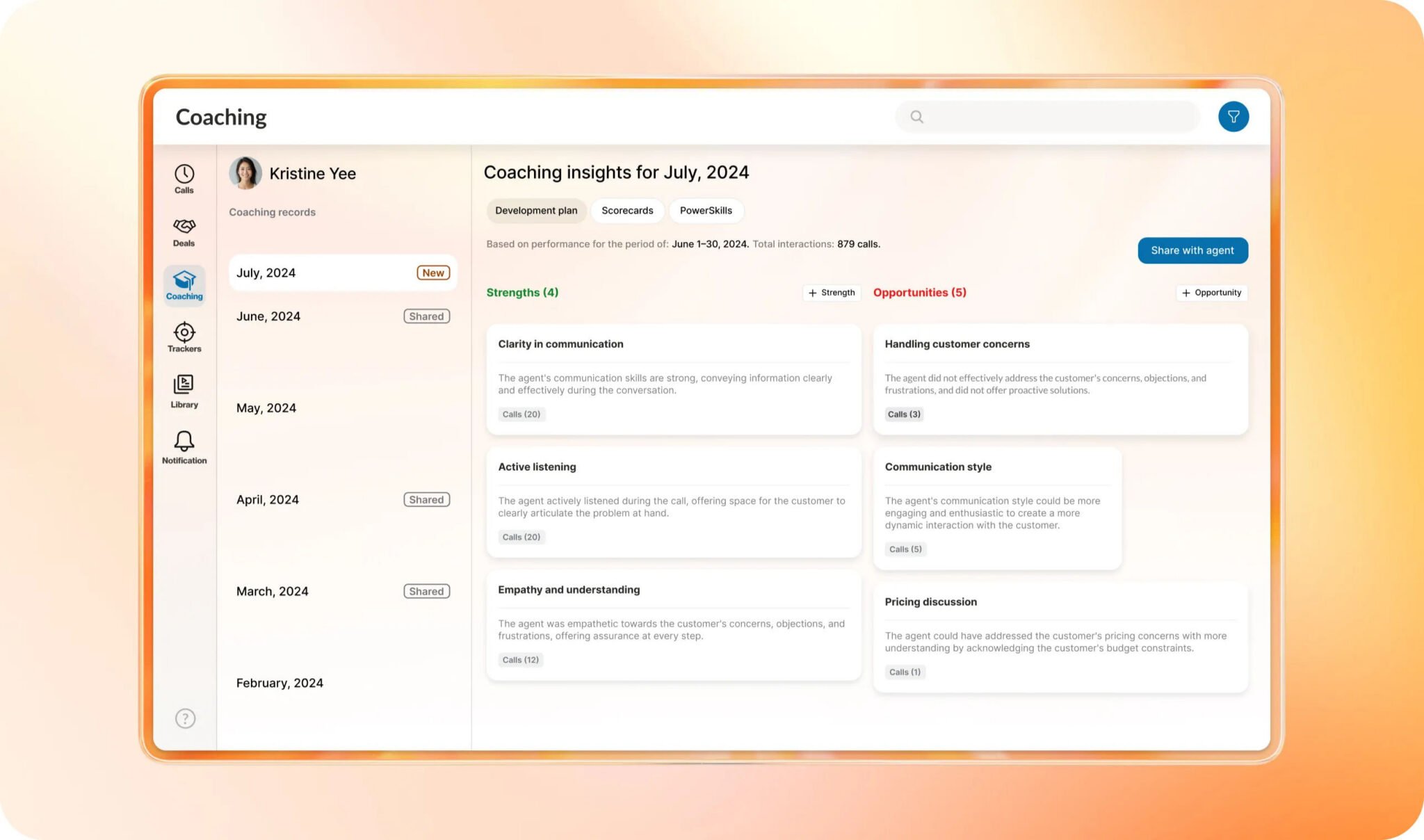
AI is just as powerful behind the scenes as it is in front of customers. Real-time agent assistance augments human agents during the interaction rather than after the call.
In practical terms, this can include:
- Real-time guidance with suggested responses, troubleshooting steps, and relevant knowledgebase articles
- Soft-skill coaching cues based on best practices and live sentiment analysis
- Automatic call summaries, dispositions, and action items that update CRM and ticketing systems without manual re-entry
Business impact: Real-time assist reduces after-call work, speeds up onboarding for new hires, and improves consistency across teams. It provides more capacity from the same headcount, reduces support agent burnout, and leads to more predictable service quality.
Predictive analytics and workforce optimization
Predictive AI analytics and workforce optimization tools help you make better decisions about staffing, training, and process design. Instead of looking in the rearview mirror, predictive systems anticipate customer needs and operational shifts before they happen.
Key use cases include:
- Forecasting contact volumes and channel mix to help right-size staffing and avoid over- or under-coverage
- Identifying common failure points in customer journeys (e.g., recurring reasons for repeat calls or escalations) so you can address root causes
- Using sentiment and interaction patterns to flag churn risk, upsell opportunities, or emerging product issues
Business impact: Predictive AI helps you deploy resources where they’ll have the greatest effect, reducing labor waste and improving both customer and employee experience. This allows you to move from reactive firefighting to proactive optimization.
Compliance automation and risk management

For regulated industries or any business operating at scale, compliance and quality are non-negotiable. AI can systematically monitor 100% of customer interactions to surface risks and patterns that manual spot-checks might miss.
Practical applications include:
- Real-time prompts for mandatory disclosures or script elements so agents don’t skip critical language
- Automatic redaction of sensitive data (like payment details or personally identifiable information) from recordings and transcripts
- Supervisor alerts when conversations show signs of regulatory, reputational, or escalation risk
Business impact: Automated oversight reduces the likelihood of regulatory breaches, fines, and legal exposure while building stronger, more auditable processes and higher-quality customer communications.
How to successfully implement AI in your customer service operations
The success of AI customer service depends on coordinated planning across strategy, technology, data, and teams. The following three-step framework can help you streamline implementation.
Step 1: Assess readiness and set objectives
Before choosing an AI customer support platform or launching a pilot, get clear on why you’re implementing AI and where it can have the most impact. Prioritize a specific set of objectives, such as lowering average handle time, improving first-contact resolution, increasing self-service containment, enhancing compliance coverage, or reducing agent turnover.
Next, map out your telephony and contact center platforms, digital channels, and integrations. Confirm where customer data lives, how clean it is, and how it’s accessed.
Finally, decide how you’ll measure success and establish boundaries—like determining which customer inquiries a human agent should always handle.
RingCentral tip: Map key customer journeys to identify the best AI candidates, looking for top interaction types by volume, cost, and impact. For example, if a high percentage of customer requests involve updating billing information, providing a self-service option could significantly speed up resolution time.
Step 2: Select the right AI tools and platforms
Once you know your goals, you can evaluate possible AI technologies more effectively.
For enterprise and mid-market environments, a few criteria matter most:
- Unified platforms: AI customer service software that combines telephony, contact center, and AI reduces integration complexity and prevents data silos. Consolidated tools also simplify vendor management and centralize governance, allowing your full channel mix to provide seamless support experiences across your existing tech stack.
- Data security and compliance: The most effective solutions offer robust certifications, enterprise-grade encryption standards, flexible data residency options, and support for your industry’s specific regulatory requirements.
- Admin and governance controls: High-value AI tools provide administrative interfaces that let you configure prompts, workflows, guardrails, and access controls without heavy developer lift.
- Time to value and scalability: Success at scale requires a solution you can trial on a few key use cases and then implement globally without re-architecture.
Step 3: Plan change management and staff training
Even the best technology requires a team that’s prepared to use it. Engaging agents, supervisors, and QA leaders early in design and pilot phases encourages ownership and allows their feedback to improve experiences.
Comprehensive training is also key. Agents should feel confident knowing when to trust AI suggestions, when to override them, and how to flag issues.
Finally, treat AI as an ongoing project, not a one-time deployment. Share early results, refine prompts and workflows, and keep lines of communication open.
5 benefits of AI in customer service
When you implement AI customer service strategically, the benefits extend across operations, customers, and the broader business.
1. Higher productivity and more efficient operations
AI automates routine tasks across the interaction lifecycle—capturing data, routing contacts, handling simple requests, and summarizing outcomes—to give agents more time for complex, value-added work.
Increasing productivity through more efficient operations reduces outsourcing dependence and smooths peaks and troughs in demand.
2. Improved customer experience and consistency
AI-powered self-service gives customers fast answers on their schedule, while intelligent routing and real-time assist improve experiences for those who need a human.
AI also enables consistent answers and service quality across channels, teams, and regions, as well as more personalized support.
3. Clearer insight into support operations
AI-based analytics and conversation intelligence let you see emerging issues, process breakdowns, and coaching needs far earlier than traditional reporting alone.
By drilling into topics, intents, and sentiment trends, you can see what’s driving contact volume and outcomes, then partner with product, marketing, and operations teams to address root causes.
4. Increased scalability and resilience
Virtual AI agents and intelligent routing make it easier to absorb rapid growth, seasonal spikes, or crisis-driven surges.
Additionally, because much of the AI customer service infrastructure is cloud-based, you can scale globally without building out physical sites in every region.
5. Better compliance, risk mitigation, and brand protection
AI-enhanced monitoring provides more consistent compliance coverage and earlier risk detection. Instead of sampling a small fraction of customer interactions, you can review patterns across the board and intervene before small issues turn into larger incidents.
Top challenges, risks, and future trends in AI customer service
While AI customer service offers significant upside, the transition isn’t without its challenges. Understanding these hurdles allows you to design a more resilient, scalable strategy.
Agent and customer trust
Agents may worry about job security or feel micromanaged by real-time monitoring. On the other side of the interaction, a majority (82%) of customers prefer human support to AI or chatbots, often when outcomes are identical.
How to mitigate: Communicate your goals clearly, reinforce that human agents remain a vital part of the loop, and provide easy, obvious ways for customers to reach a live agent.
Data quality, security, and governance
AI models are only as good as the data they’re trained and operated on, but the need for high-quality data often creates tension regarding privacy. While many customers worry about how developers handle their information, customer service teams aren’t far behind—44% point to data privacy as a top concern.
How to mitigate: Invest in role-based access controls, encryption, and ongoing monitoring, and establish human oversight to ensure accurate outcomes. Finally, conduct periodic reviews of vendors’ data usage policies and prioritize vendors that consistently test their AI features for bias.
Model accuracy, drift, and hallucinations
Generative AI can produce answers that sound confident but are factually incorrect. Over time, model accuracy can drift off course as customer behavior and language patterns change.
How to mitigate: Use approaches that require AI to reference your approved content or knowledge base, implement guardrails and human-in-the-loop workflows for sensitive scenarios, and regularly validate outputs against quality standards.
Future trends to plan for
Looking ahead, several trends are shaping the next phase of AI customer service, including:
- More “agentic” AI: AI will be able to take actions on behalf of customers. Surveys show that customers are open to this, with one noting that 75% of consumers would allow an AI agent to buy products on their behalf.
- Multimodal interactions: AI is increasingly able to gather context from and take action based on voice, text, and visual channels. This allows it to quickly process and resolve even complex customer requests, such as questions about pricing that require analyzing real-time data.
- Deeper personalization: AI’s analysis and context-gathering abilities can enhance customer engagement strategies for any business. And many customer support teams already rely on AI to deliver highly personalized interactions. About 66% of global customer service managers use generative AI to improve personalization.
- Tighter UCaaS and CCaaS integration: Boundaries between employee and customer communications will continue to blur. Platforms that bring meetings, messaging, and contact center operations together with shared AI will have a structural advantage.
How to maximize value from AI customer service initiatives
Delivering real value with AI in customer service requires a platform that can connect conversations, data, and teams end to end. That’s the model RingCentral is built around.
With RingCX, you get an AI-powered contact center designed for omnichannel engagement, workforce optimization, and interaction analytics. AI is embedded into routing, virtual agents, supervisor assist, and post-call analysis, rather than added on as an afterthought.
RingCentral AI Agents extend this with specialized, agentic voice AI capabilities:
- AI Receptionist answers calls, understands natural language requests, and routes callers to the right destination.
- AI Virtual Assistant acts as an internal aide that automates administrative task setups, generates meeting notes, writes call and chat summaries, and provides quick insights—among other things.
- AI Conversation Expert supports live agents with real-time transcription, guidance, and summarization, improving both experience and productivity on complex calls.
Reach out to our team to see how AI customer service performs in your environment.
Customer service AI FAQs
How is AI used in customer service?
AI supports the entire conversation lifecycle to create a frictionless experience:
Before a conversation begins, AI powers virtual agents, IVR, authentication, and intelligent routing so customers reach the right resource faster.
During interactions, AI assists agents with live transcription, suggested responses, real-time knowledge surfacing, sentiment detection, and compliance guidance.
After interactions, AI summarizes conversations, updates systems of record, evaluates quality, and feeds analytics and forecasting models to improve future performance.
Which industries and businesses benefit most from AI customer service?
While any organization that handles large volumes of customer interactions can benefit from AI customer service, industries like financial services, healthcare, retail, and ecommerce often see the most significant impact.
In these sectors, AI reduces manual effort and improves consistency while assisting agents with complex inquiries and strict regulatory requirements. Beyond day-to-day support, these organizations can also use AI to surface insights that are difficult to capture at scale using traditional methods.
Will AI replace customer service agents?
AI is more likely to change how agents work than replace them.
Virtual agents are well suited for repetitive tasks like appointment scheduling and basic troubleshooting.
Human agents continue to play a critical role in complex problem-solving, interactions that require emotional intelligence, and nuanced decision-making.
In successful deployments, AI allows agents to focus on higher-value interactions and specialized cases.
What is the best AI customer support tool?
There is no single best AI customer support tool for every organization. The right solution depends on factors such as supported channels, interaction volume, regulatory requirements, and the existing technology stack.
For many mid-market and enterprise organizations, platforms that unify business communications, contact center capabilities, and AI offer the strongest foundation.
How can you choose the best AI customer support tool for your organization?
Start by clearly defining your top priorities and the customer journeys you want to improve right away. From there, evaluate solutions based on criteria like voice and digital channel coverage, integrations, security, and total cost of ownership.
Ask vendors to demonstrate the platform using real-world scenarios, and involve stakeholders across multiple departments to ensure the solution works across teams.
How much does AI customer service cost?
The cost of AI customer service varies widely based on scope, deployment model, and implementation approach.
Building custom AI systems typically requires significant up-front investment and ongoing engineering resources. Using a cloud communications or contact center platform with integrated AI shifts costs to an operating expense model, with pricing usually based on seats, usage, or both.
Updated Mar 09, 2026