AI Communications








Why the time is now for agentic AI
AI continues to be the dominant trend in tech, especially for the contact center. Being a data-rich environment by nature, it’s a great use case for AI, especially considering the challenges for contact centers to modernize and improve CX. When AI is deployed effectively, contact centers are seeing tangible results, both for operations and improving customer service.
The latest variation of AI is agentic AI, and while things are evolving quickly, the promise is too compelling for CX leaders to stay on the sidelines. Agentic AI is different from ChatGPT and earlier AI variants, and CX leaders need to get up to speed about what it is and how it impacts the contact center, as well as the broader enterprise environment. There’s an urgency here for both CX leaders and IT leaders, as agentic AI can be used for every type of worker.
CCaaS vendors are well-aware of the opportunity with agentic AI, and to that end, RingCentral has produced their Agentic AI Trends 2026 report. The research covers a lot of ground, and I’m going to distill the findings here, grouped into three key trends. There is much more to digest, and you can do that by accessing the full report here.
Trend 1: Early AI success gives way to scaling challenges
The research data provides validation for what we think is happening, and it certainly supports the notion that “AI is everywhere”. Few technologies have gained so much traction in so little time, and 97% of the companies surveyed are using at least one form of AI. While the track record is short, 92% hold a positive view of AI. Not only is pro-AI sentiment strong, but 86% report having some degree of an AI strategy in place, indicating that companies are beyond just experimenting with AI.
These select data points show strong buy-in for the promise of AI, not just for CX, but for the business overall. Given that AI’s promise is about having a transformational impact, expectations are high, and so far, the results have not diminished that view. We are still in early days with all forms of AI, and there are enough positive indicators that AI’s promise can be realized so long as we keep moving forward with it.
That said, widespread adoption and high expectations are no guarantees for success, and the realities on the ground indicate this will not be a quick and easy path. CX deployments may get a lot of attention, but for most organizations, this is just one of many concurrent AI initiatives. At face value, having an AI strategy is encouraging, but deployments tend to be siloed, without an overarching plan to make an organization “AI-first”.
For AI to be transformative with CX, integration is needed with workflows and processes outside the contact center. Standalone deployments may yield localized successes, but they cannot achieve the scale needed for AI to have its full impact. Not only does this limit the benefits of AI in the contact center, but this fragmented approach slows down the overall plan for deploying at scale.
Trend 2: AI orchestration becomes the next maturity phase for CX
In most cases, the best way to start with AI for CX is with small-scale deployments for tasks that can be easily automated, and ideally not customer-facing. Given that AI is so new and poorly understood, mitigating risk is paramount, at least until AI performs as advertised and earns your trust. The good news is that many companies are now past that, and ready to deploy AI on a larger scale where it can have a transformative impact.
To a large extent, the research supports this in terms of how AI is being used. Overall, 77% reported using generative AI, 54% are using predictive analytics, 53% are using it for process automation, and 45% are using AI agents (also referred to as agentic AI). All of these applications are building the foundation for a more comprehensive approach to deploying AI.
That said, CX leaders still lag in their understanding of AI’s broader capabilities, not just because the technology is complex, but also because it’s evolving faster than their ability to adopt it. When driven by a bigger vision, AI can take CX from good to great, but that is challenging to do when deployments are at a small scale, and the organization is not agile enough for rapid adoption.
In the parlance of CCaaS vendors, this is about orchestration, where AI integrates deeply across the entire organization, pulling data from a myriad of sources and processing it for intelligent automation and personalized customer interactions. With this context in mind, CX leaders need to think beyond point solution approaches, where AI is only deployed for specific tasks.
Getting past that will take time, however, as more work is needed for AI to prove its value. The research shows a 40% incidence of either pausing or adjusting at least one AI initiative, with the leading reasons being unreliable or generic results, and overly complex integrations. These data points reflect that growing pains with AI are very real, but CX leaders should not lose sight for orchestration being
Trend 3: Conversational and agentic AI emerge as the primary value drivers
Automation and cost savings will always be the core drivers for adopting AI, but that does not tell the full story. More nuance is needed for the contact center, and there are two specific drivers CX leaders need to focus on.
Driver 1 – Agentic AI
This application of AI is gaining traction everywhere, and the research validates its importance in the contact center. Not only is familiarity with the concept high at 89%, but almost all respondents – 96% – feel it will be “essential to staying competitive”. Furthermore, 57% are either piloting or deploying agentic AI to some degree, so there is a readiness to move along this path with AI.
There are two use cases in particular which support the broader rationale for bringing more automation into the contact center. First would be customer-facing forms of self-service, where AI agents can manage inquiries end-to-end. Depending on complexity, this can be done with little or even no involvement from human agents, taking self-service well beyond what IVR can do today.
The second example would be operational, where AI agents are used to automate workflows, freeing up time for both agents and supervisors to do what they do best – interact with other humans. Both use cases can drive a better ROI for AI, but they should be viewed as more than efficiency-based automation. Equally important, these advanced forms of automation have a human impact in terms of empowering agents to have deeper customer engagement, and making their work feel more meaningful.
Driver 2 – Conversational data
Customers have never had so many channels available to reach the contact center, but telephony remains the dominant channel. Digital natives may have a preference for text-based channels, but in many situations, there is no substitute for human-to-human voice communication. Telephony is central to CX due to the richness of voice, yet so little of that communication has been effectively harnessed.
This is where the promise of AI should resonate loudly. No other technology has the ability to capture every aspect of every voice interaction, at scale, and in real-time. Speech recognition and transcription have been around for decades, but AI enables a higher-level of value with analytics that captures sentiment and non-verbal cues to provide a more complete picture of every conversation.
In essence, AI can process both the content of the conversation and the metadata around it, then integrate that with all the other data sources about the customer from across the entire organization. Legacy-based contact centers were never built for this, and only with conversational data can contact centers truly get a 360-degree view of the customer.
What to expect in 2026
AI is maturing quickly, and deployment plans need to shift from tactical to strategic. This means moving away from standalone line-of-business initiatives, especially those that are relevant for supporting CX. A holistic approach is needed to fully leverage disparate data sets, and this is where the orchestration concept comes into play.
The research provided encouraging signs with AI deployments; namely that 69% rolled out their first AI initiative within one year, and 77% reported an ROI within the first year. Overall, this translates into 92% saying they were very or somewhat satisfied with their AI initiatives.
However, the research also shows that businesses are still more in a tactical mode for deploying AI. As such, for 2026, you should expect to see businesses build on their initial successes and move to a more strategic approach based on orchestration across the organization in the service of improving CX.
The importance of voice for CX cannot be underestimated, and AI is making it more valuable than ever. For 2026, expect to see vendors making AI voice more central to their value proposition. Text-based communication is already in digital form, so most of that has already been captured with AI.
Those capabilities can now be extended to voice, which has distinct challenges for digitization, but these have been effectively addressed by AI. Given the inherent richness of voice, Agentic Voice AI is poised now to provide deeper customer insights and help workers make better decisions when collaborating.
Finally, all CCaaS vendors have an AI story, and for 2026, CX leaders should expect to hear lots of AI-centric messaging about modernizing the contact center and taking customer service to the next level. The themes in this article provide market-based touchpoints for evaluating the various offerings. RingCentral is to be commended for undertaking this research study, and the data points cited here provide just a glimpse of how the market is thinking about AI for CX.
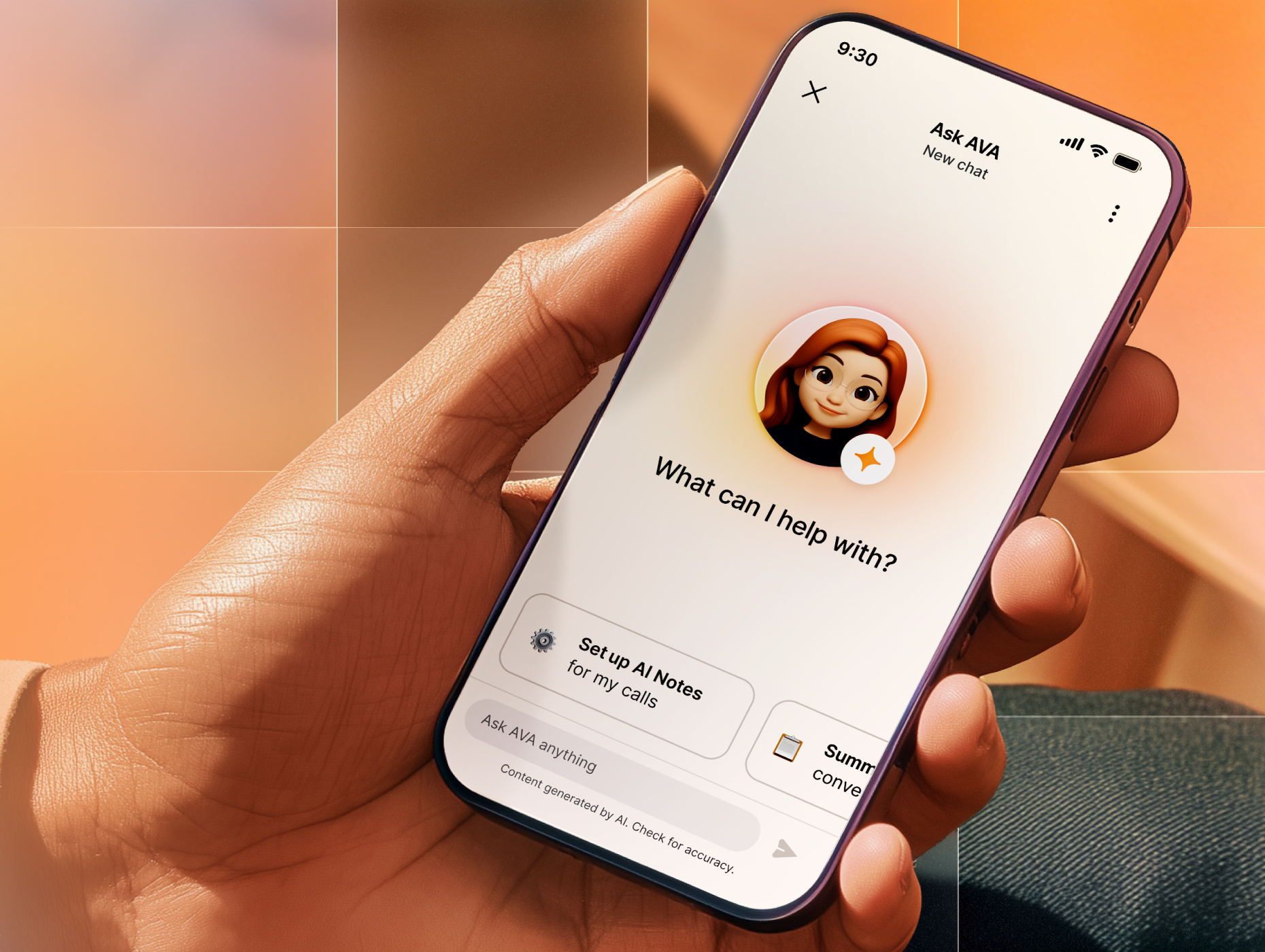
The research also informs RingCentral’s go-to-market offerings, which align well with the challenges CX leaders are trying to address. Of particular note is their agentic AI voice suite, which includes AVA voice assistant to support agents in real time, and ACE (formerly RingSense) – conversation expert – to support next-best actions for agents to enhance CX. There’s more to their story, but as you evaluate vendors, these are the kinds of capabilities you should be looking for.
Originally published Feb 09, 2026