AI Communications







When something matters, people call. They call when a situation is urgent, when the issue is too complex to type out, and when they need a resolution, not a chatbot response.
Voice continues to be the channel customers reach for when the stakes are real. Metrigy’s Customer Optimization research study reports that voice is involved in 82% of all customer interactions in 2025, either as a first touchpoint or an escalation—that figure rose from 77% in 2024.
Voice is not declining, but the systems businesses use to handle those calls are increasingly falling short. While interactive voice response (IVR) systems were sufficient in an earlier era, they do not hold up against what customers expect today.
The gap between what callers need and what legacy phone systems can deliver is widening, and it is costing businesses customers, revenue, and trust. AI-powered interactive voice response (AI IVR) systems address that gap directly by deploying voice AI agents that understand natural speech, detect intent in real time, and connect to the tools your business already runs on.
Key takeaways
-
- Voice remains the dominant customer interaction channel, yet most businesses still rely on IVR systems that route calls rather than resolve them, creating a costly gap between caller expectations and system capability.
- Voice AI agents and traditional IVR solve fundamentally different problems: IVR routes calls through a fixed menu structure, while voice AI agents understand natural speech, identify intent, and resolve requests end-to-end.
- Businesses deploying voice AI agents, such as RingCentral AI Receptionist (AIR), report measurable gains in productivity, resolution speed, and customer experience—outcomes that IVR, by design, cannot produce.
- Businesses that treat voice as a strategic channel rather than a legacy one are best positioned to improve customer experience and scale operations efficiently.
AI voice agent vs IVR—side-by-side comparison
The gap between traditional IVR and voice AI agents has a direct effect on customer experience, agent workload, and revenue.
| Feature | Traditional IVR | AI voice agent |
| Input method | Keypad (touch-tone) or limited voice command | Natural speech, any phrasing |
| Caller experience | Menu-driven, rigid | Conversational, adaptive |
| Task completion | Routes calls only | End-to-end request resolution |
| System integration | Minimal or none | Real-time deep integration |
| Language support | Limited; single-language menus | Multilingual |
| 24/7 availability | Yes, but limited to routing | Yes, resolves calls and inquiries around the clock |
| Data capture | Minimal; keypad inputs only | Structured data (including intent, sentiment, outcomes, notes) |
| Setup complexity | Low initial setup; hard to update | Guided setup; continuously refinable |
| Continuous learning | No | Improves over time using interaction data |
| Post-call intelligence | None | Transcripts, summaries, coaching insights |
Put simply: IVR routes calls. Voice AI agents resolve them. That single difference is what every row of this table reflects.
Why voice AI agents outperform traditional IVR
The business case for voice AI agents becomes concrete when you look at what delayed or failed resolution actually costs a business.
-
- Faster resolution, fewer transfers. AI agents identify intent early and guide customers toward resolution immediately, reducing handoffs.
- Lower agent workload. When AI handles routine inquiries autonomously (e.g., appointment scheduling, account lookups, FAQs), human agents are freed to focus on escalations that require judgment and empathy.
- Better personalization. Voice AI agents use caller history, CRM data, and real-time context to personalize every interaction. Callers don’t repeat themselves.
- Zero missed calls. Voice AI agents answer every call, 24/7—including after hours, on weekends, and during peak volume periods—turning what would have been a voicemail into a captured lead or resolved request.
- Continuous improvement. Every call generates data that improves how the AI agent handles the next one.
According to our RingCentral Agentic AI Trends 2026 report, organizations already deploying or testing AI agents report measurable operational gains:
-
- 61% increased productivity
- 58% faster workflows
- 49% improved customer experience
- 45% improved customer satisfaction
The report also found that 96% of business leaders agree that AI agents will be essential to staying competitive.
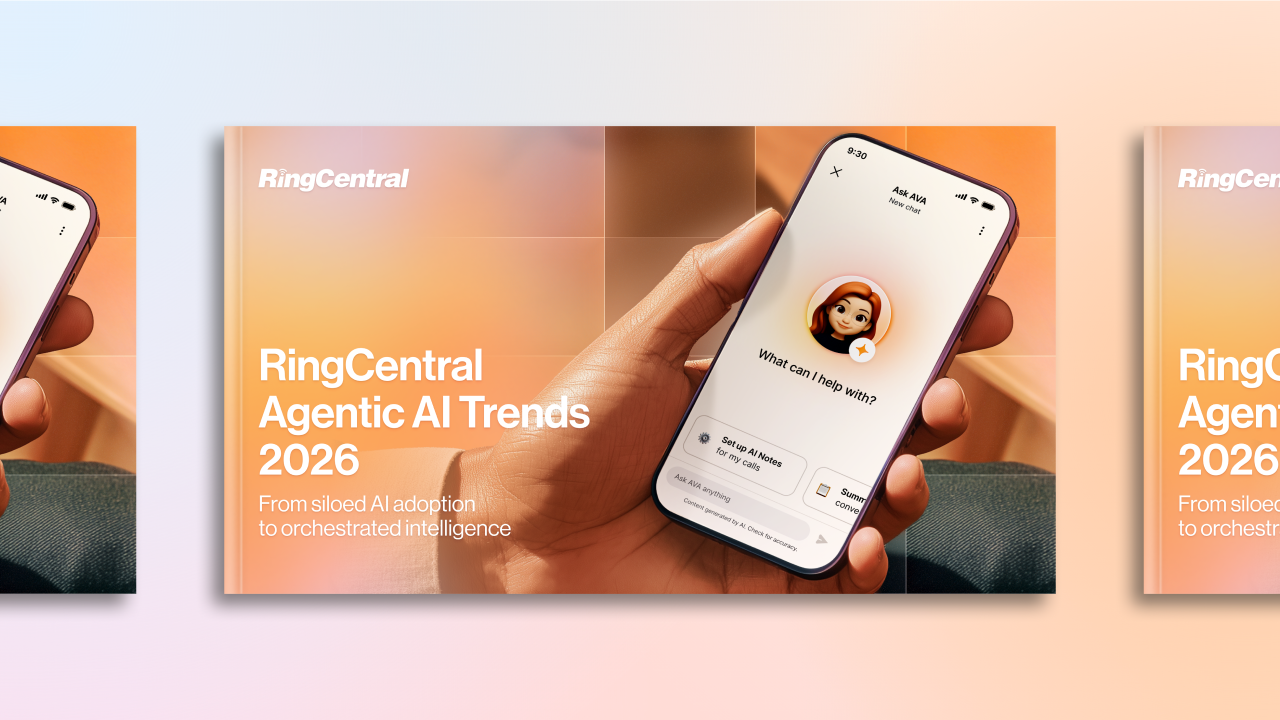
Get the RingCentral Agentic AI Trends 2026 report in full
When to use IVR and when to use an AI voice agent
Both technologies have a role. The right choice depends on business conditions, not on which option sounds newer.
Traditional IVR for narrow and predictable business needs
IVR works when callers have low-stakes, predictable needs and timing isn’t critical. It may be sufficient when:
-
- The same three or four questions account for nearly all inbound volume
- No CRM, scheduling, or backend system integration is required
- Callers aren’t in a stressed or time-sensitive state when they reach you
Business types where IVR may still be sufficient: Large enterprises that need basic inbound call triage before connecting to a human team, government agencies delivering static information, or organizations handling a consistently narrow and predictable set of caller needs.
Voice AI agents for urgent, repetitive, or complex needs
Voice AI agents are the better fit when resolution is what the caller came for. Nobody wants to navigate a four-level menu when they’re calling about a health concern, a billing dispute, a missed delivery, or an urgent booking. A slow, impersonal experience in those moments doesn’t just frustrate callers—it erodes trust and loses customers.
Choose an AI voice agent when:
-
- Callers may have urgent or emotionally sensitive needs where a slow, impersonal experience creates real harm to the relationship
- You are handling high call volumes or repetitive queries that would otherwise overwhelm your team
- You want to resolve requests automatically, not just route them to another queue
- Real-time access to CRM or scheduling data is needed to answer or complete the caller’s request
- Scalable, 24/7 support is a priority and headcount increases are not an option
- Continuous improvement through call data and AI learning is part of your operations strategy
Top voice AI agent use cases: voice AI agents deliver the strongest results for healthcare practices, insurance providers, home services companies, legal offices, real estate teams, and contact centers—essentially any business where people call because something matters and they need it handled now.
How RingCentral AI Receptionist (AIR) replaces IVR without the complexity
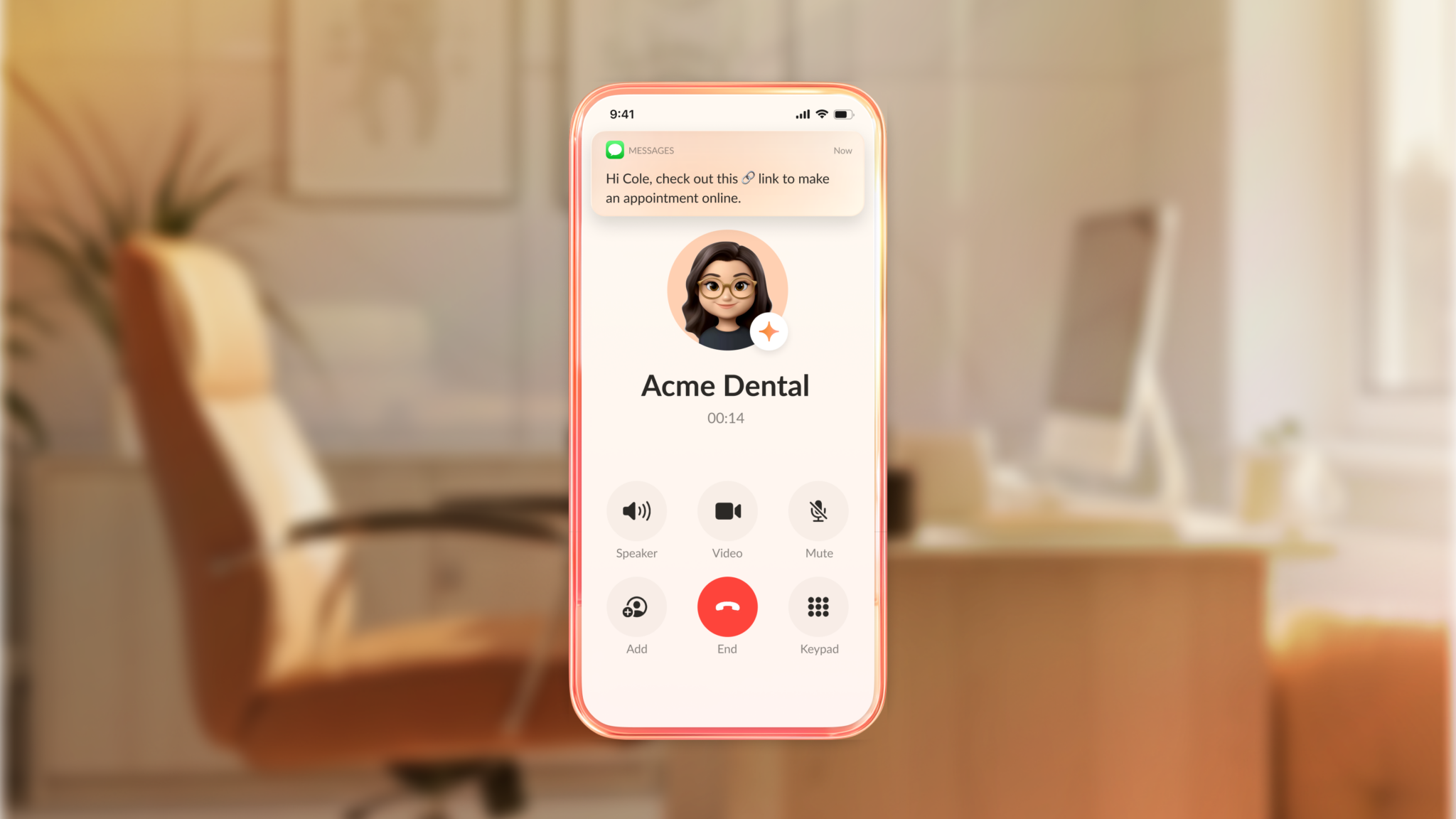
RingCentral AI Receptionist (AIR) is a purpose-built AI voice agent designed to answer every inbound call intelligently, understand the caller’s intent in natural language, complete tasks end-to-end, and hand off to your team when human judgment is needed—all with full context preserved.
AIR directly addresses the pain points that IVR cannot. Here’s how:
-
- No more rigid menus. Callers speak naturally, and AIR interprets their intent—routing based on what people say, not which button they press.
- 24/7 availability and resolution. AIR is available around the clock and across multiple languages, ensuring every call is answered regardless of when it comes in.
- Native CRM integration. AIR connects directly with platforms such as Salesforce, HubSpot, and Zoho, logging every interaction as structured data with no manual entry required.
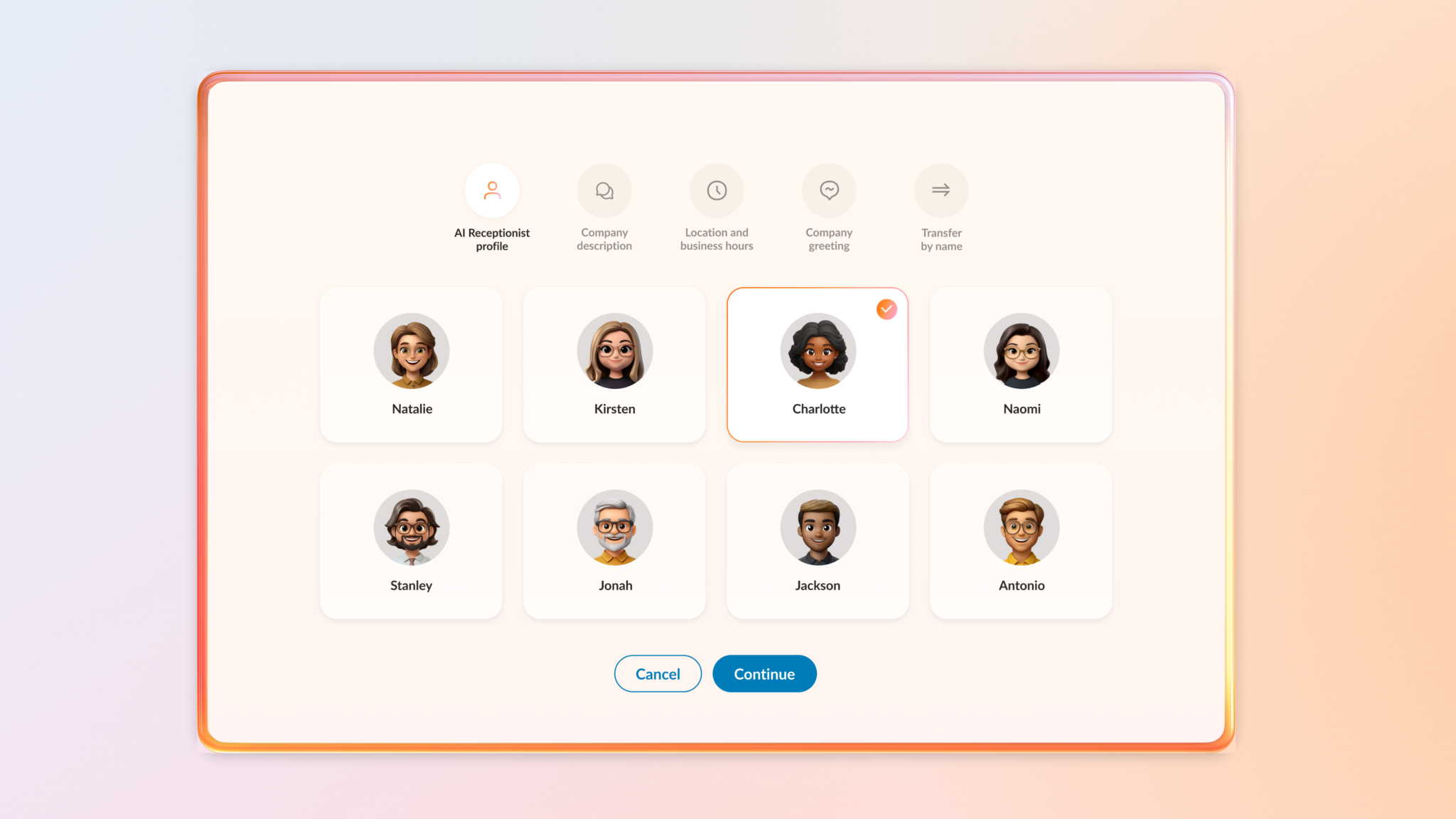
Setting up your AI Receptionist is straightforward. You enter your business website into the RingCentral portal, and AIR automatically generates a ready-to-use configuration that includes your business hours, a greeting, a summary of your services, and responses to common questions. From there, you review and refine before going live—no IT team required.
Real results across industries
The value of AIR becomes especially visible in organizations handling high inbound call volume or distributed operations.
For example, Televero Health, a behavioral health practice experiencing rapid growth, had been relying on a legacy IVR system that routinely frustrated patients—incorrect menu selections created call-transfer delays of up to five minutes, and a significant share of calls were never connected at all.
After deploying RingCentral AI Receptionist, the organization began capturing 100% of inbound calls and routing patients to the right department in under 10 seconds. This resulted in a 15% increase in monthly appointments and a $204,000 increase in monthly revenue.
Keller Interiors, a home design firm, had a different but equally familiar problem: client inquiries were going unanswered outside business hours, and no one on the team had visibility into what was being missed.
The firm began capturing every inbound lead automatically after deploying AIR, ensuring that no after-hours call went unaddressed and every prospect received a timely follow-up. This reduced average wait times by 87% and improved customer satisfaction while streamlining call routing across locations.
What should businesses consider before switching from IVR?
Switching from IVR to voice AI agents is a practical decision that benefits from a clear transition plan. Before you move forward, work through the following:
-
- Review your current call workflows. Map out how calls flow—where they go, what callers typically need, and where drop-offs or transfers happen most. This becomes the foundation for configuring your AI voice agent effectively.
- Check system integrations and data access. Voice AI agents deliver the most value when connected to your CRM, scheduling tools, or ticketing systems. Confirm those integrations are available and accessible before you launch.
- Define escalation and fallback logic. Decide what happens when a call exceeds what the AI can handle. A clear escalation path to a live agent prevents callers from feeling stranded or looping through dead ends.
- Address compliance and data handling. Review how voice data is stored, processed, and retained. Confirm your provider meets the relevant standards for your industry.
- Start with a pilot rollout. Begin with one call type or location, monitor resolution rates and caller feedback, and make adjustments before rolling out across the full organization.
The future of phone support is resolution-first
Traditional IVR still works for narrow, static call flows. But for any business that handles real volume—where people call because they need something done—IVR creates friction that costs customers and revenue.
Voice carries signals that structured data fields can’t: real-time intent, emotions, and urgency. Businesses that treat voice as a strategic channel rather than a legacy one are better positioned to act on those signals. The RingCentral Agentic AI Trends 2026 report points clearly in that direction, and so does the broader market.
McKinsey’s 2025 agentic AI in customer care research identifies service operations as one of the primary areas where organizations are investing in AI-driven workflows. The numbers reflect where this is heading: 35% of organizations plan to automate more than 60% of inbound inquiries by 2028, while 62% expect functions like authentication and call summaries to become fully automated.
Voice AI agents change what your phone channel can accomplish—shorter wait times, more calls that end in resolution rather than queue transfer, less repetitive work for your team, and data that improves operations over time. That combination doesn’t just improve customer experience, but it also changes what’s possible at scale.
See how RingCentral AI Receptionist (AIR) can answer every call, capture every lead, and resolve more without adding headcount. Request a demo today.
FAQs
Is IVR still relevant today?
Yes, but only for a narrow set of use cases. IVR remains a workable solution for simple, static call flows where callers consistently need to be directed to a department, hear business hours, or navigate a small and predictable set of options that rarely change.
For businesses managing high call volume, urgent inquiries, or interactions that require live access to scheduling or CRM data, AI IVR is a more capable alternative. AI IVR systems replace rigid menus with voice AI agents to resolve requests end-to-end.
Can voice AI agents replace IVR completely?
Yes, for businesses where resolution matters. voice AI agents handle everything IVR does—and far more. This includes task completion, real-time system integration, multilingual support, and post-call intelligence.
Do voice AI agents work with CRM systems?
Yes, voice AI agents like RingCentral AI Receptionist (AIR) integrate with platforms such as Salesforce, HubSpot, and Zoho to retrieve caller data, update records, book appointments, and log interaction details automatically—with no manual entry needed.
Updated Jun 29, 2026