AI Communications







A practical framework for connecting digital and physical channels through unified communications that drive measurable retention and revenue gains.
Retail customer experience (CX) determines whether customers stay or go. When your website, store, and support teams operate on disconnected systems, customers feel the fragmentation instantly. Each friction point increases service costs while reducing repeat purchase likelihood and customer lifetime value.
The financial impact is immediate and measurable. Retailers who deliver consistent, personalized experiences across digital and physical channels see customers spend more per transaction, return more frequently, and require less support. Those who fragment the experience watch revenue disappear.
But with the right omnichannel customer engagement platform, you can connect teams and communications in a single system to drive retention and operational efficiency.
Key takeaways
- Unified communications infrastructure eliminates channel silos and connects store associates, contact center agents, and digital teams
- Enterprise retailers can achieve measurable ROI in 90–180 days by diagnosing friction points, deploying omnichannel improvements, and optimizing continuously
- Voice-first AI and real-time customer context drive retention through intelligent routing, proactive communication, and associate enablement
What is retail customer experience?

Retail customer experience is the sum of every interaction a customer has with your brand, spanning product discovery through post-purchase support. When those interactions are consistent and connected, they build the trust that fuels repeat purchases and long-term loyalty.
When they aren’t, costs compound quickly. Disconnected systems that treat each channel as a separate business create friction at every touchpoint. When customers can’t find answers through digital channels, they call your contact center and drive up service costs. Associates without visibility into online orders create in-store friction that kills conversion, and preventable returns and complaints consume operational resources.
Unified communication infrastructure connects your contact center, store teams, and digital channels through a common data layer, delivering the consistency that turns first-time buyers into loyal customers who spend more and cost less to serve.
5 retail CX strategies that drive measurable outcomes across channels
Retailers who consistently outperform on CX treat customer experience as an operational system, not a service philosophy. They connect internal operations with customer-facing touchpoints through structured strategies that deliver measurable results.
1. Map customer needs and quantify friction points
Before you can fix customer experience problems, you need to know exactly where they occur and what they cost your business. Most retail businesses operate on assumptions about friction points rather than data-driven insights, leading to investments that miss the mark.
To identify friction points in your customer journey:
- Deploy conversation analytics across voice, chat, SMS, and in-store interactions to quantify where customers struggle most
- Track repeat contact rates, escalation frequency, and sentiment scores by journey stage to understand which touchpoints create the most frustration
- Calculate the business impact of each friction point—lost conversions, increased handle time, and customer defection—to prioritize improvements that deliver measurable ROI
This diagnostic phase reveals which fixes will drive the greatest impact on retention and revenue, building your business case for specific investments.
2. Deliver omnichannel consistency
Customer expectations stay the same whether they shop online, call your contact center, or visit a physical store. Here’s how to deliver on them:
- Deploy unified customer profiles that travel across every channel—eliminating the need for customers to repeat information when they switch from web to phone to brick-and-mortar store
- Standardize service protocols and response times across all touchpoints. If your website promises two-hour responses, your contact center and store teams must deliver the same speed
- Implement omnichannel routing that connects customers to available resources regardless of channel, backed by service level agreements (SLAs) that apply uniformly across digital and physical environments
Consistency drives higher conversion rates and retention by eliminating the friction customers experience when moving between channels.
3. Equip associates with unified customer context
Retail store teams and contact center agents need mobile-first platforms that deliver real-time customer history, inventory data, and communication tools directly on the sales floor and at service desks.
Unified customer context enables:
- Single-view dashboards that surface previous purchases, support interactions, browsing history, and preferences—eliminating mid-conversation system toggling
- Instant collaboration tools that let associates connect with specialists, check inventory across locations, and escalate complex issues without transferring customers
- AI-powered prompts that suggest next-best actions based on customer context and proven resolution paths
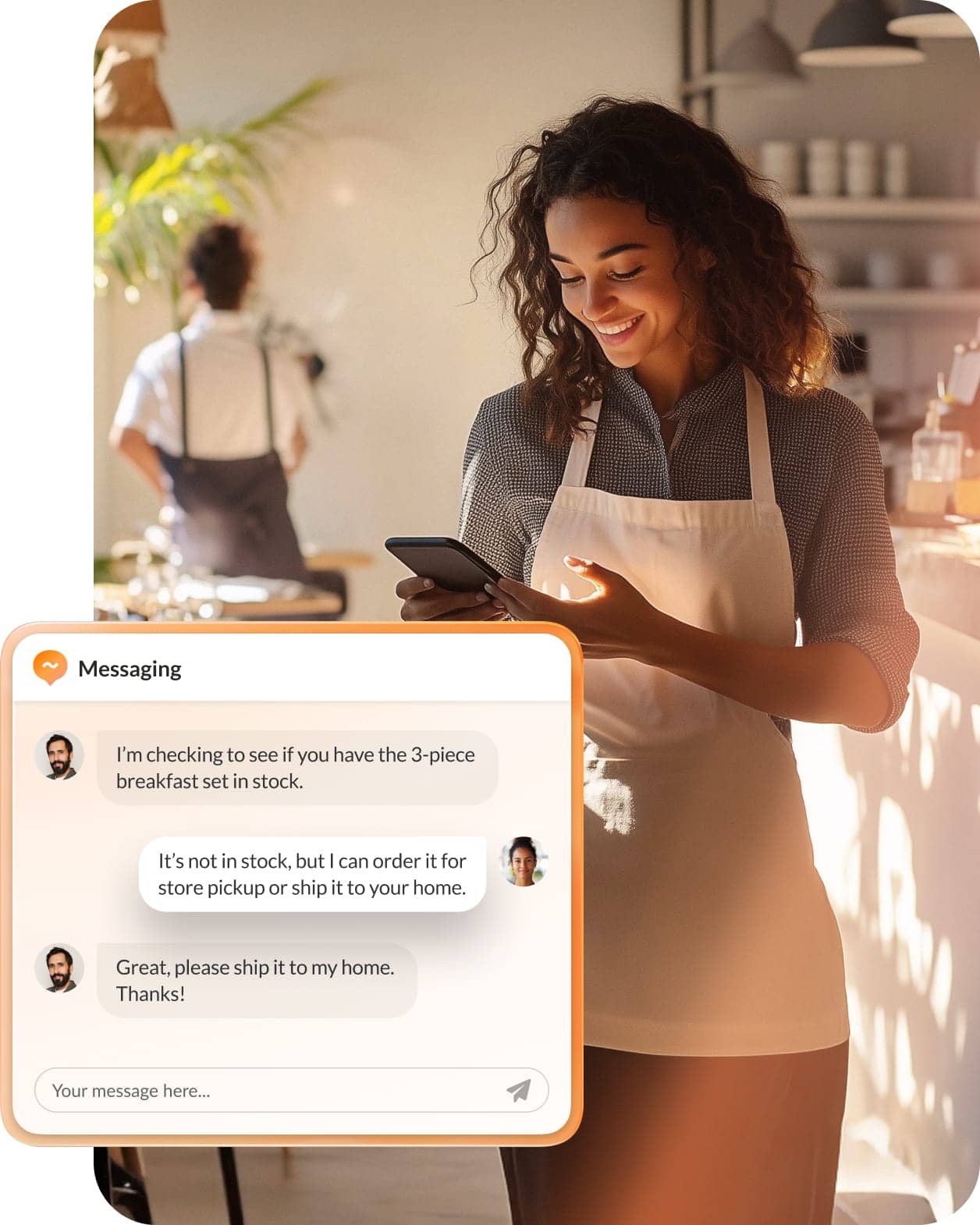
According to Salesforce research, the share of customers who feel businesses treat them as individuals jumped from 39% to 73% in just two years, raising the bar for what personalization now requires.
4. Integrate backend systems for operational excellence
Integration layers connect your inventory management, order fulfillment, and customer service platforms to enable real-time data flow without manual intervention.
This unified infrastructure lets you:
- Sync inventory across all channels through APIs that connect ecommerce, point-of-sale, and contact center systems, so associates see accurate availability instantly
- Deploy order management platforms that provide end-to-end visibility from purchase through delivery, enabling proactive communication when issues arise
- Automate routine processes like order status updates, return authorizations, and appointment confirmations to eliminate delays and reduce manual workload
This integration eliminates the “let me check on that” moments that frustrate customers and consume agent time, reducing operational costs while improving customer satisfaction scores.
5. Build continuous feedback loops
Continuous feedback loops start with capturing customer feedback and sentiment immediately after every interaction—through post-call surveys, SMS requests, and in-app ratings—and routing those insights directly to teams who can act within hours, not weeks.
AI-powered conversation intelligence lets retailers analyze 100% of customer interactions, surfacing emerging issues, trending complaints, and coaching opportunities without manual review delays.
When satisfaction scores drop below thresholds or specific issues spike in frequency, cross-functional response protocols activate automatically. Weekly review cadences keep operations, IT, and customer service leaders aligned on feedback trends and committed to specific improvements.
Tracking the right metrics makes continuous improvement possible:
- Customer satisfaction scores by channel and interaction type identify which touchpoints need immediate attention
- First-contact resolution trends reveal whether process changes are reducing repeat contacts
- Sentiment analysis patterns and customer experience trends highlight emerging issues before they escalate into widespread problems
- Associate performance indicators pinpoint coaching opportunities and best practices worth scaling
Replacing quarterly reviews of stale data with actionable intelligence that enables rapid course correction reduces customer churn and drives immediate results.
What technologies enable modern retail customer experience at scale?
According to Deloitte’s 2026 retail industry outlook, 46% of retailers are prioritizing omnichannel experience improvements, and 36% are strengthening loyalty programs, with technology-enabled personalization emerging as the key differentiator.
Disconnected systems undermine that omnichannel ambition. Point-of-sale platforms that can’t share data with contact centers force customers to repeat information, while store associates without online order visibility lose sales and erode trust.
Here are the five technology layers that work together to eliminate these silos:
- Customer data platforms (CDPs): Unify customer interactions, purchase history, and preferences into single profiles that power personalized positive experiences across every channel.
- Omnichannel commerce engines: Power buy-online-pickup-in-store, curbside fulfillment, and seamless cart transitions between digital and physical touchpoints.
- Store operations platforms: Give associates mobile tools for instant inventory lookup, clienteling, and assisted selling that deliver the same convenience customers expect online.
- AI-powered analytics: Deliver real-time customer insights on sentiment, bottlenecks, and trends that enable rapid response before issues spread.
- Voice-first communication infrastructure: Connect customer service, store teams, and back-office operations through unified voice, SMS, and digital channels that give every team member complete customer context.
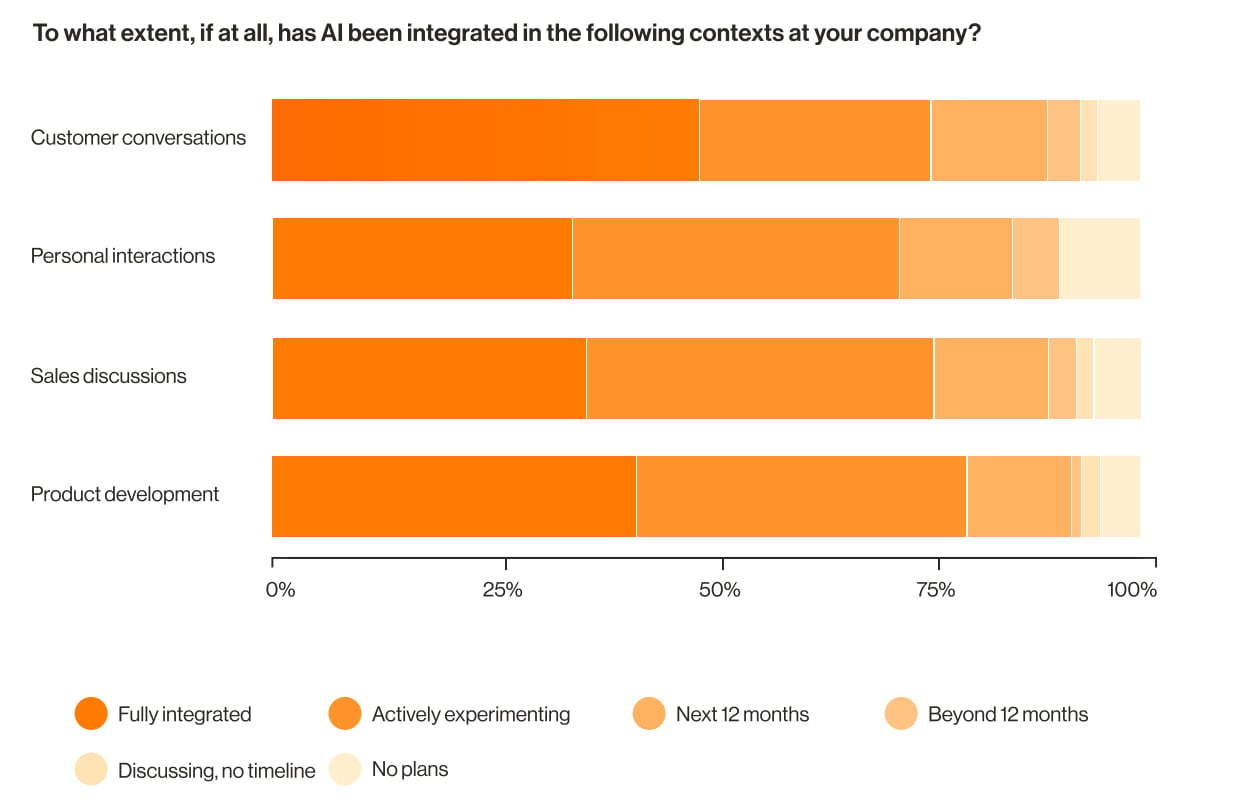
Voice-first AI serves as the connective tissue between these systems. It automates routine inquiries, routes customers intelligently based on context, and coordinates contact center agents with store associates. When a customer calls about an online order, your team sees order status, inventory availability, and complete interaction history instantly.
How to improve retail customer experience in 90–180 days
You don’t need a multi-year transformation to improve retail customer experience. Focus on high-value improvements that connect your systems, teams, and customer touchpoints, and you’ll deliver measurable impact in 90–180 days.
Here’s how to break your initiative into focused phases that build momentum without disrupting daily operations:
1. Diagnose journeys and quantify friction with unified data
Fragmented data causes most retail CX breakdowns. Customer interactions scatter across point-of-sale systems, contact centers, mobile apps, and in-store associates who can’t see previous touchpoints. Without unified journey visibility, you’ll guess at friction points instead of targeting fixes that drive retention and revenue.
Start by consolidating interaction data from every channel into a single analytics layer. Connect voice calls, SMS conversations, chat transcripts, and digital touchpoints to map actual customer paths.
Look for friction patterns that signal systemic issues:
- Repeat contacts about identical issues indicate unresolved problems or unclear initial guidance.
- Mid-journey channel-switching reveals where customers can’t complete tasks in their preferred channel.
- Abandoned transactions after specific interactions pinpoint exactly where you’re losing revenue.
Track the metrics that reveal both customer pain and business impact:
- First-contact resolution rates across channels to identify which touchpoints solve problems versus create more work
- Average handle time by issue type to spot inefficient processes consuming agent capacity
- Channel-switching frequency to measure how often customers must move between touchpoints to complete simple tasks
- Sentiment trends by journey stage to understand which moments create frustration versus satisfaction
Quantify each friction point’s business impact—lost conversions, increased service costs, customer defection rates—to build your case for high-priority improvements that deliver measurable ROI.
2. Prioritize and deliver high-impact omnichannel improvements
Score each friction point against two dimensions: customer impact and implementation complexity. High-impact, low-complexity improvements become your quick wins, such as streamlining store associate communication during peak hours or enabling SMS order updates that eliminate unnecessary calls.
Target four areas that deliver immediate results:
- Associate enablement: Equip store teams with mobile-first communication tools that connect them instantly to inventory systems and customer service specialists.
- Proactive customer communication: Deploy automated SMS and voice notifications for order status that reduce inbound call volume by 30%–40%.
- Unified customer context: Connect your contact center, store systems, and digital channels so every associate sees complete customer history.
- Intelligent routing: Implement AI-powered call and chat routing that directs customers to the right resource based on intent and purchase history.
Modern unified communications platforms for retail collapse implementation timelines from months to weeks. Deploy pre-integrated voice, SMS, and collaboration capabilities that work across your existing systems while maintaining the reliability that retail operations demand.
3. Operationalize measurement and continuous optimization
High-impact improvements deliver initial results, but sustained CX excellence requires structured measurement and optimization processes that prevent momentum loss as priorities shift.
Build a cross-functional CX governance team that unites operations, IT, marketing, and store leadership in monthly reviews. This team owns a shared dashboard tracking:
- Customer satisfaction by channel to identify which touchpoints need immediate attention
- First-contact resolution rates that reveal whether improvements are reducing repeat contacts
- Average handle time to spot efficiency gains or emerging bottlenecks
- Conversion rates at critical journey stages to measure revenue impact
- Associate productivity metrics that highlight coaching opportunities
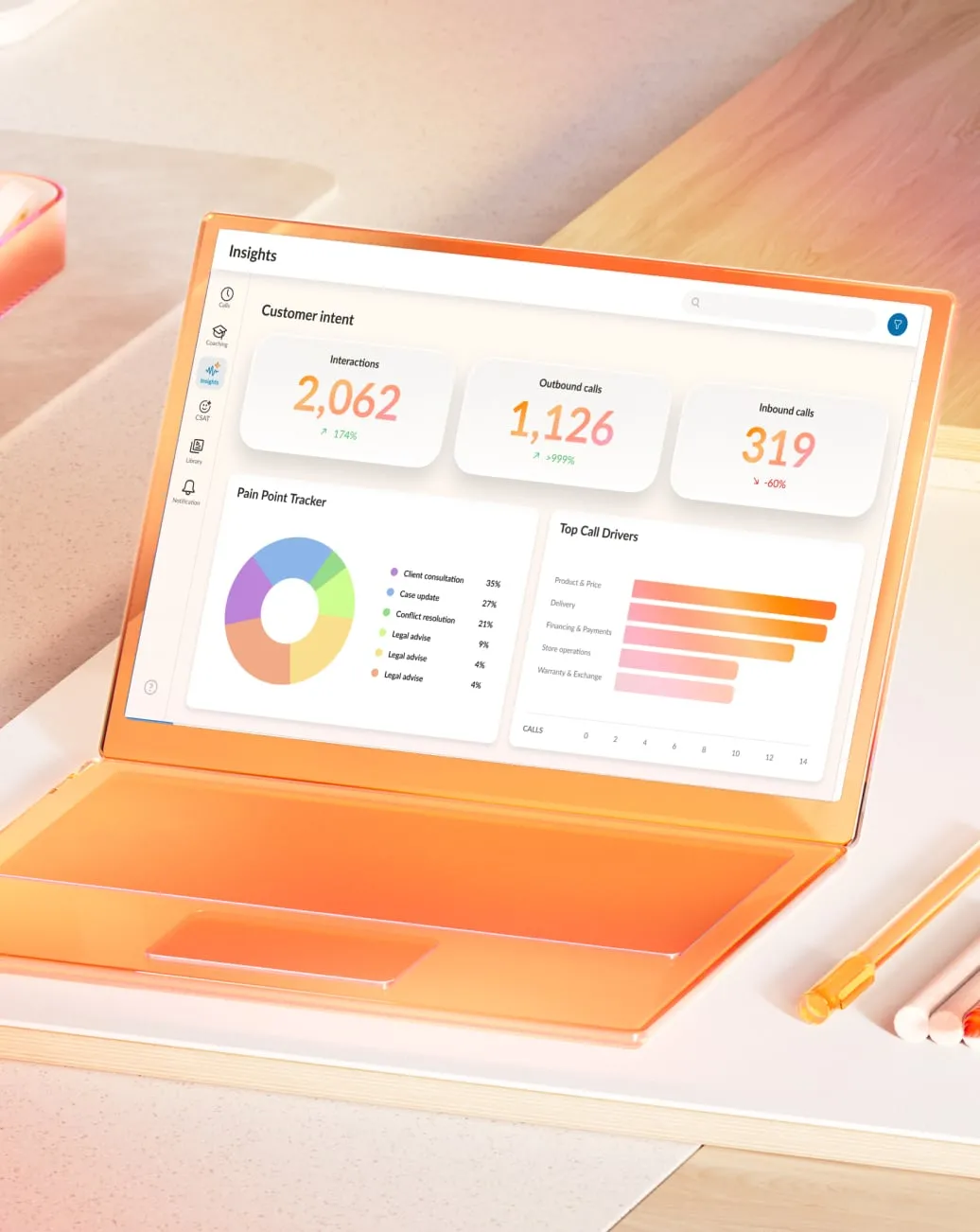
Deploy automated alerts when metrics breach acceptable thresholds, and apply AI-powered conversation intelligence to identify trending issues before they escalate.
Embed experimentation into your quarterly rhythm. Test new IVR flows, staffing models, and self-service options, then scale what drives measurable results. Omnichannel customer engagement platforms deploy proven improvements consistently across all touchpoints, transforming isolated wins into enterprise-wide gains.
Transform retail CX with unified communications infrastructure
Retail customer experience determines whether customers return or defect to competitors. The retailers who win connect digital and in-store experiences through unified communications that eliminate friction, reduce service costs, and drive measurable retention gains.
Start by diagnosing friction points with unified data analytics. Prioritize high-impact improvements like associate enablement, proactive communication, and intelligent routing that deliver results in 90–180 days. Then operationalize continuous optimization through cross-functional governance and real-time measurement.
Voice-first AI and omnichannel platforms connect your contact center, store teams, and digital channels in a single system, giving every associate complete customer context and enabling consistent experiences that convert first-time buyers into loyal customers.
Ready to eliminate channel silos? Discover how RingCX powers omnichannel customer engagement that drives retention and operational efficiency across enterprise retail operations.
Retail customer experience FAQ
How do you measure retail customer experience?
Measure retail CX through metrics that connect directly to revenue, such as Net Promoter Score (NPS) for customer loyalty, Customer Satisfaction (CSAT) for transaction feedback, and Customer Effort Score (CES) for friction points. You’ll also want to:
- Monitor first-contact resolution rates, average handle time, and omnichannel engagement patterns
- Analyze behavioral signals, including repeat purchase rates, cart abandonment, and customer lifetime value, to measure revenue impact
Unified communications platforms deliver real-time conversation analytics that surface sentiment trends instantly, eliminating customer feedback delays.
What are examples of great retail customer experience?
Great retail CX delivers consistency and personalization across every touchpoint:
- Buy-online-pickup-in-store (BOPIS) systems give associates complete visibility into online orders, enabling friction-free fulfillment.
- Proactive SMS updates eliminate unnecessary inquiries.
- Store associates with unified customer profiles resolve issues immediately without transfers.
- Connected systems ensure customers never repeat information across channels.
How can technology improve customer experience in retail
Technology eliminates channel silos by connecting voice, SMS, chat, and email in unified platforms that deliver consistent customer support across every touchpoint:
- AI-powered routing directs customers to the right specialist instantly.
- Conversation analytics surface trends that drive targeted improvements.
- Integration layers sync CRM, inventory, and point-of-sale systems, giving associates complete customer context.
- Voice-first AI automates routine inquiries, freeing agents for complex issues that require empathy and expertise and reducing customer effort while driving loyalty and repeat purchases.
Originally published Mar 24, 2026