AI Communications






A missed maintenance call at 11 p.m. costs more than a bad review. Here’s how to make sure it never happens again.
It’s 11 p.m. and a tenant’s water heater just gave out. They call the emergency line, listen to four rings, and hang up. Twenty minutes later, a prospective renter calls about a listing, gets the same silence, and calls the next property on their list instead. By morning, a vendor has left three unreturned voicemails about a job that was supposed to start at 8 a.m.
For most property managers, every one of those calls routes through the same phone line, often to the same person. That works fine until you’re managing hundreds of units—the phone doesn’t stop ringing just because you’re asleep, in a walkthrough, or already on another call.
More phone lines won’t fix this. Every emergency, leasing question, or vendor has to reach a live person without pulling you or your team off the property. A property management answering service covers that volume around the clock, so tenants get a live answer at 11 p.m. and prospective renters never hit dead air. Three models can deliver that coverage: traditional live answering services, AI receptionists, and hybrid setups that combine both. Here’s how they compare.
Key takeaways
- Missed tenant calls create liability risk, not just lost leasing opportunities
- Live, AI, and hybrid answering models solve different volume and budget problems
- AI receptionists cut cost per call while keeping response times consistent
- Emergency triage logic matters more than answer speed alone
- RingCentral AI Receptionist routes and captures calls without adding headcount
Why missed calls cost property managers more than a bad review
A property manager’s phone line carries three kinds of urgency at once: a tenant reporting a gas leak, a prospective renter comparing your listing against three others, and a contractor confirming a job site address. When nobody picks up, an annoyed caller is the least of it. A liability exposure, a lost lease, and a strained vendor relationship can all come from the same missed window.
The leasing side is well documented. According to Rently’s 2026 Renter Touring Expectations Report, a 30-minute delay in responding to a rental inquiry drops renter engagement from 40% to just 10%. Prospective tenants call multiple properties in the same afternoon, and the first manager to answer usually wins the lease.
On the maintenance side, the stakes carry more weight: a missed emergency call means a burst pipe running unchecked for six more hours, or a tenant who documents they got no response, documentation that matters in a dispute. Treating “someone will call back in the morning” as an acceptable after-hours policy means accepting a risk most small businesses can’t afford.
Vendor and leasing calls compound the problem because they compete for the same attention. A property manager fielding a tenant emergency can’t simultaneously return a contractor’s callback or answer a leasing inquiry, so whichever call comes in second waits, and waiting is what callers won’t tolerate.
What a property management answering service needs to handle
Not every call that hits a property management line needs the same response. A useful answering service, whether live, AI, or hybrid, has to sort three distinct categories correctly and route each one differently. Getting that triage wrong costs more than being slow.
Tenant maintenance and emergency requests
These calls need the fastest, most reliable triage of the three categories, since getting it wrong risks physical damage or safety, not just an annoyed caller. A tenant reporting no heat in January outranks one reporting a dripping faucet, and the answering system needs logic that tells the difference rather than routing everything to the same voicemail box.
The best setups ask a few qualifying questions (what’s happening, is anyone in danger, is water or gas involved) before deciding whether to dispatch a vendor immediately, queue the request for morning, or escalate to a live person. A system that can’t distinguish “the dishwasher is loud” from “there’s water coming through the ceiling” either wakes the maintenance team unnecessarily or leaves a real emergency until business hours, and the second mistake costs far more.
Prospective tenant and leasing inquiries
Leasing calls are a conversion problem first. A prospective renter calling about a vacancy is almost always calling two or three other properties the same day, and whichever property answers first, captures the caller’s information accurately, and offers a next step (a showing, a callback window, an application link) usually gets the lease. Every unanswered ring lets a caller narrow their list without you in it.
Handling these calls well means capturing the right details on first contact: which unit, move-in timeline, budget, and contact information, so a leasing agent can follow up with context instead of asking questions the caller already answered.
Vendor and contractor coordination calls
Vendor calls carry lower urgency than emergencies but generate higher operational cost when mishandled, since a missed callback about a job site address or an access code can delay a repair by a full day. These calls tend to be transactional: confirming a time, relaying a gate code, verifying which unit needs the work.
What they do need is accurate routing to the right person or team. Misrouting a vendor call to a leasing inbox can leave it unanswered for hours while a job window closes, and treating vendor calls as an afterthought creates friction with the contractors you depend on.
Live agents, AI receptionists, and hybrid models compared
Property managers generally choose between three models for handling this call volume, and each trades cost, consistency, and scalability differently. None is universally correct. The right choice depends on how many units you manage and how much call volume swings by season.
Live agents
Traditional live answering services route calls to a human operator, either an in-house employee or a staffed third-party service, who answers, gathers information, and either resolves the call or routes it.
Benefit of live agents
The advantage is judgment. A trained person can handle an ambiguous or emotional call better than a script can, which matters when a tenant is upset or a situation is genuinely unclear.
Tradeoffs
The tradeoff is cost and consistency. Providers typically price live agents per call or per minute, so cost scales linearly with volume: a portfolio that doubles in units roughly doubles its answering bill. Coverage also varies by shift and agent, and turnover makes consistency harder to guarantee.
AI receptionists
AI voice agents answer every call with the same logic and tone, whether it’s the first call of the day or the last one before midnight.
Benefit of AI receptionists
The system doesn’t get tired, take breaks, or vary by shift, so response quality stays consistent across every hour a portfolio operates, which matters most for the after-hours and weekend gaps where live coverage is hardest to staff.
Cost per call behaves differently too. Rather than scaling per minute like a live agent, providers typically price AI receptionists as a flat platform cost that absorbs volume growth more efficiently, so adding units doesn’t require adding headcount.
Tradeoffs
AI systems handle structured triage and routing best. Calls involving real ambiguity still benefit from a fast handoff to a live person.
Hybrid models
Hybrid models pair AI-native call automation for first-response triage with live agents for calls that need human judgment. The AI answers every call immediately, gathers the relevant details, and either resolves simple requests (confirming an appointment, answering a routine question) or hands off to a live agent with full context when the situation calls for it.
Benefit of hybrid models
This model tends to fit growing portfolios best, since it scales like AI for volume while keeping a human safety net for edge cases. It also comes with less risk of a complicated call getting mishandled by a rigid system.
Tradeoffs
A hybrid answering service carries two tradeoffs. Its cost sits between the other two models: lower than an all-live model at scale, higher than an AI-only model.
Coordination is the second tradeoff. Someone still has to manage the handoff between the AI receptionist and live agents, so call routing rules need regular upkeep as call volume and staffing change.
What good call handling looks like for a growing portfolio
The real test of an answering system is whether call quality holds steady as a portfolio adds units, locations, or a language your current staff doesn’t speak. Inconsistency, more than missed calls, is the problem property managers run into as they scale.
Consistency across locations matters because tenants and prospects judge a management company by its worst call, not its average one. If a caller to one property gets a fast response and a caller to a different building in the same portfolio gets voicemail, that inconsistency erodes trust in the brand, not just the local office.
The gap between a fast property and a slow one is a direct revenue gap. According to Doorloop, property managers who return calls within five minutes can greatly improve their conversion rates.
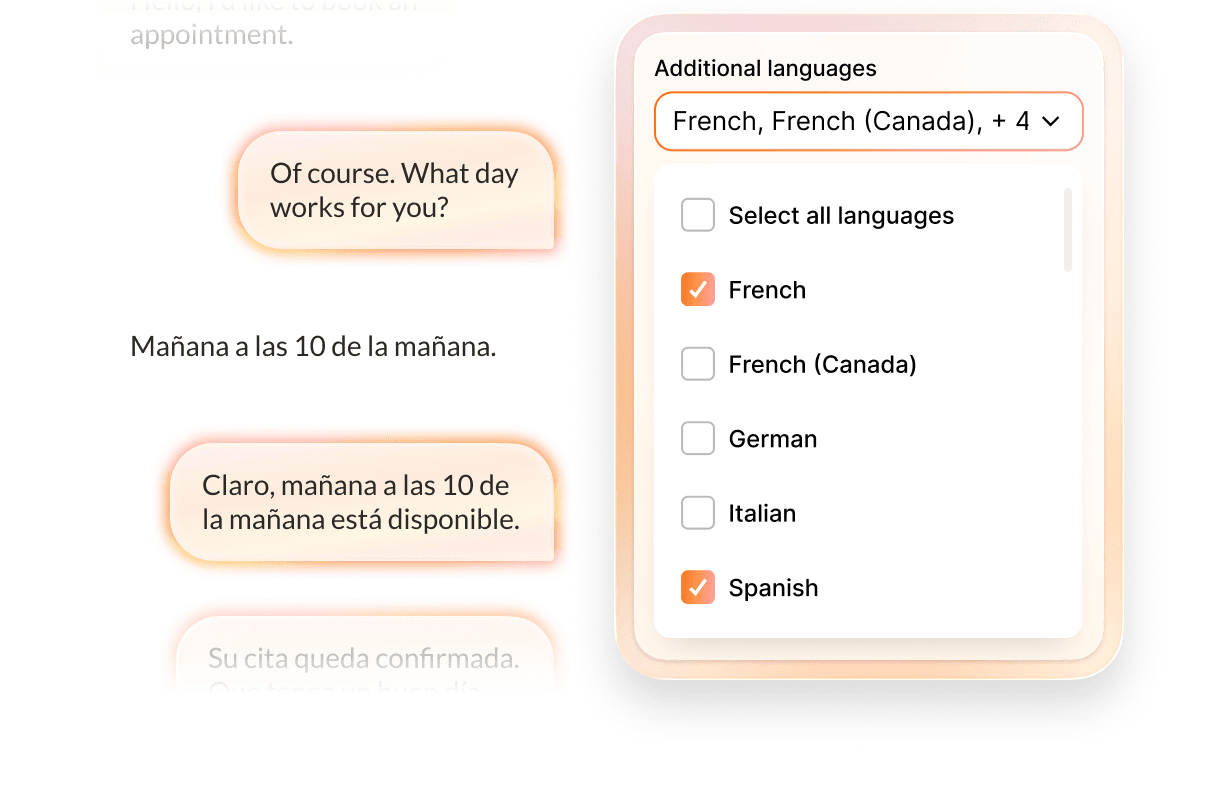
Multilingual coverage is increasingly a real requirement in portfolios spanning diverse metro markets. A system that only handles English-language calls caps a portion of leasing and tenant inquiries before they even start.
Consistency also extends to what happens after the call. A caller who doesn’t reach a live person right away still needs a next step instead of silence, whether that’s a follow-up text, a callback window, or a call queue that doesn’t just drop them. Property managers who scale smoothly treat call handling as infrastructure, not an afterthought.
How RingCentral AI Receptionist handles property management calls
If your after-hours coverage depends on whoever happens to be reachable that week, that’s a rotation, not a system, and rotations break down once a portfolio grows past the point where one or two people can cover every shift.
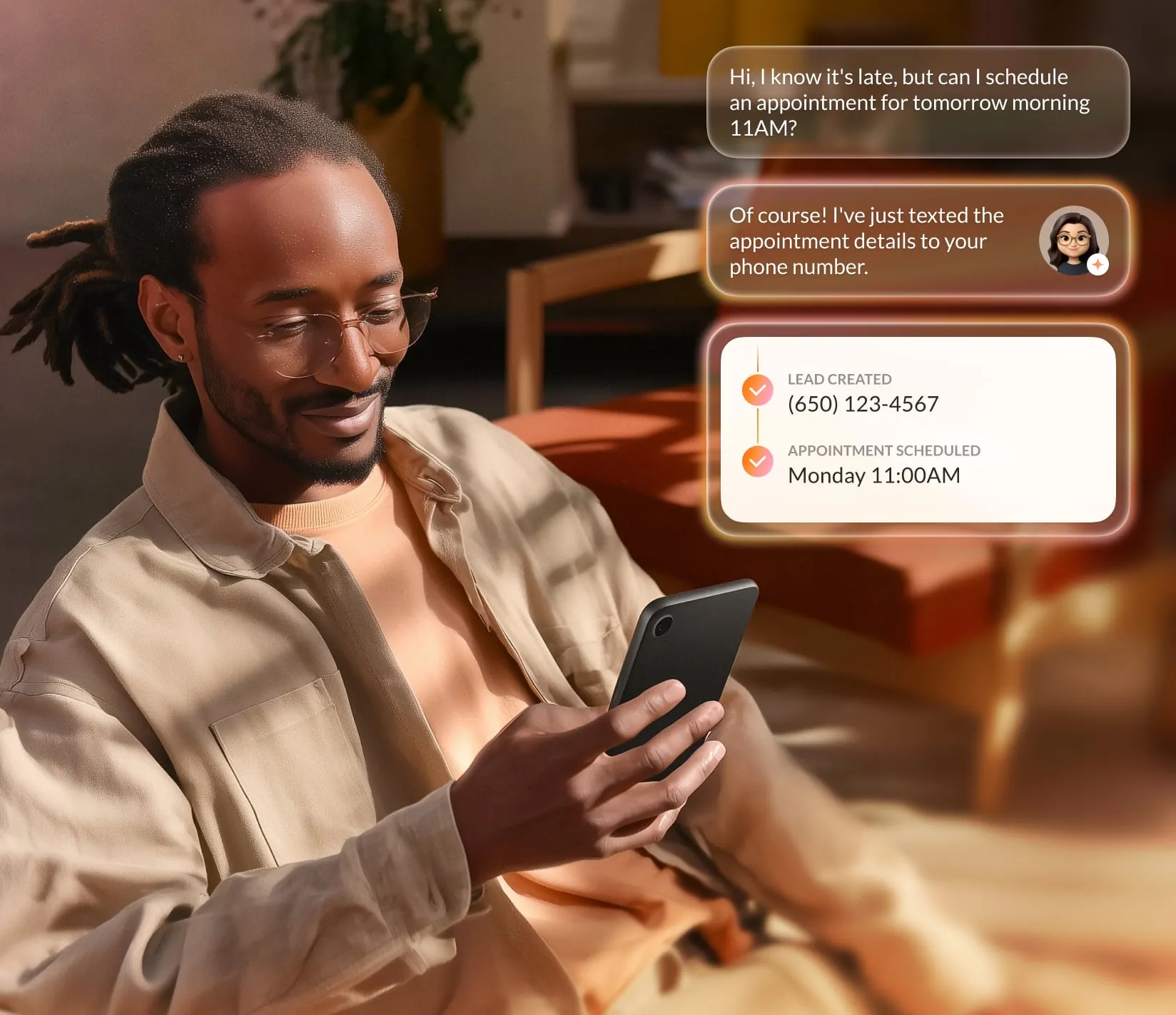
RingCentral AI Receptionist (AIR) closes that gap without adding staff. It answers every inbound call automatically before a human ever needs to join, so no call rings out to voicemail regardless of the hour.
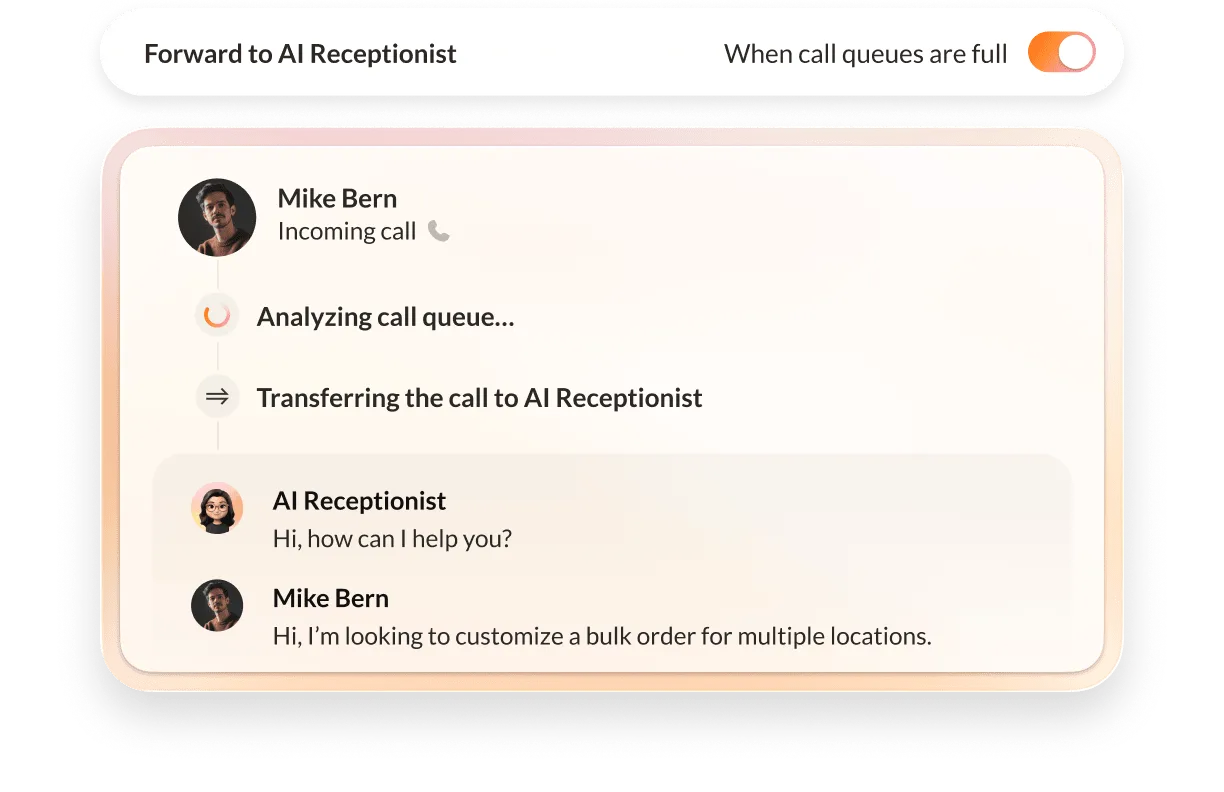
Instead of rigid menu trees, AIR uses context-aware routing that listens to what the caller needs and directs the call accordingly, whether that’s a leasing inquiry, a maintenance question, or a vendor coordination call. Our Agentic AI Trends 2026 report highlights this as one of the standout benefits of agentic voice AI.
AIR also captures lead information and supports appointment scheduling directly on the call, so a prospective tenant calling about a vacancy can get a showing on the calendar without waiting for a callback the next business day. Because the system applies the same logic to every call, coverage stays consistent across every property in a portfolio and every shift.
For a property manager weighing whether to hire more after-hours staff or find a system that scales instead, AIR offers a way to handle growing call volume without the linear cost of adding people.
Match your answering model to your portfolio, not the other way around
The real cost in property management call handling is the same caller getting a different experience depending on the hour, the shift, or which property they happen to be calling. Live agents, AI receptionists, and hybrid models each solve that inconsistency differently, and the right fit depends on your unit count, your after-hours coverage gaps, and your budget for scaling call volume without scaling headcount.
If your portfolio has outgrown what your current phone setup can reliably handle, it’s worth seeing what consistent, automated call handling looks like in practice. Schedule a demo of RingCentral AI Receptionist to walk through how it can handle your call volume.
FAQs about property management answering service
Is a property management answering service worth it for a small portfolio?
Yes. Even a small portfolio benefits once a single missed emergency call or lost leasing inquiry outweighs the monthly cost of coverage.
A property manager handling 20 to 30 units alone can’t be reachable at every hour a tenant or prospect might call, and one after-hours emergency handled poorly can incur a great amount of cost in terms of lost business or damaged tenant relationships.
What is the difference between a live and an AI answering service for property managers?
A live answering service routes calls to a trained human operator who can use judgment on ambiguous or emotional calls, but its cost scales per call or per minute and quality can vary by shift and agent.
An AI-native service applies the same routing logic to every call regardless of time or volume, keeping coverage consistent and typically costing less as volume grows.
Many property managers land on a hybrid approach: AI for first response, live agents for calls that need a human touch.
Can an AI receptionist handle maintenance emergencies?
Yes. An AI receptionist can answer maintenance calls immediately, gather the details of what’s happening, and route the call based on that information instead of a rigid menu. This keeps emergencies from sitting in voicemail overnight.
RingCentral AI Receptionist, for example, uses context-aware routing to direct calls appropriately and can escalate to a live person when the situation calls for it.
How much does a property management answering service typically cost?
Costs vary widely by model. Traditional live services generally charge per call or per minute, scaling directly with volume, while AI-native services are typically priced on a flat platform basis that handles higher volume more efficiently.
Hybrid models usually cost more than AI-only options but less than an all-live setup. The right comparison isn’t the sticker price; it’s cost per call at the volume your portfolio actually generates, including after-hours coverage.
Originally published Jul 22, 2026