AI Communications







Compare unified AI-native platforms that reduce vendor sprawl and operational complexity.
Enterprise contact center leaders evaluating Five9 alternatives face a decision that extends beyond feature comparison. The platforms that deliver measurable outcomes share three architectural characteristics: AI embedded natively rather than bolted on, unified communications that eliminate vendor sprawl, and infrastructure that reduces operational complexity rather than adding to it.
If your current platform requires separate vendors for internal communications, relies on third-party AI integrations, or locks you into rigid per-seat pricing that doesn’t flex with business cycles, you’re not alone—and you have options built for where enterprise contact centers are actually headed.
Key takeaways
- Five9’s enterprise limitations include per-seat pricing lock-in, separate unified communications as a service (UCaaS) and contact center as a service (CCaaS) vendors, and AI retrofitted onto legacy architecture
- Look for native AI architecture like real-time agent guidance and 100% interaction analysis
- Integrated UCaaS and CCaaS reduce vendor complexity and integration overhead for enterprise teams
Why enterprise teams outgrow Five9
Enterprise contact centers outgrow Five9 when three structural constraints collide with operational priorities.
- Cost: Per-seat monthly pricing comes with a 50-seat minimum, according to the fine print on Five9’s pricing page. This creates a significant upfront commitment, and each add-on increases total cost of ownership (TCO) unpredictably.
- Architecture: Five9 is contact center-only. Teams need separate vendors for internal communications, video, and collaboration, forcing agents to toggle between tools and adding ongoing integration overhead for IT.
- AI: Many of Five9’s AI capabilities were added through acquisitions and partnerships, and these often sit on top of legacy infrastructure rather than embedded within it. Some of the platform’s most advanced AI features are sold as separate add-ons or only with upgraded plans, and your TCO expands as you add AI and automation to Five9.
Top 5 Five9 alternatives for enterprise contact centers
Enterprise buyers evaluating Five9 competitors should prioritize platforms that combine AI-native architecture, unified communications, and global reliability.
These five customer service platforms were selected for architectural depth, enterprise deployment track record, and their ability to reduce operational complexity.
| Platform | Key differentiator | AI feature integration | Deployment speed |
|---|---|---|---|
| RingCentral RingCX | Integrated UCaaS and CCaaS | Native AI-first architecture | 2–4 weeks for standard enterprise deployments |
| Genesys Cloud CX | Enterprise-tier workforce engagement management (WEM) | Mix of native and AI add-ons | 3–6 months for full enterprise implementation |
| Talkdesk | Visual workflow builder | Layered on legacy architecture | 4–8 weeks with visual configuration tools |
| Amazon Connect | Consumption-based pricing | Requires AWS AI services setup | 2–4 months requiring dedicated engineering resources |
| NiCE CXone | WEM suite benchmark for 500+ agent operations | Mix of native and AI add-ons | 3–6 months for enterprise-scale deployments |
These five platforms stand out because they address enterprise needs beyond feature parity, focusing on scalability, AI-driven workflows, and operational efficiency.
1. RingCentral RingCX
RingCentral RingCX is a cloud-native, voice-first AI contact center platform with AI embedded across routing, agent assist, quality management, and conversation analytics. Built for enterprise contact centers running global operations, RingCX routes interactions by intent, surfaces real-time agent guidance, and measures quality across every conversation channel from a single platform. It also integrates natively with RingEX to reduce the overhead of managing separate communications and contact center vendors, while still supporting third-party integrations where needed.
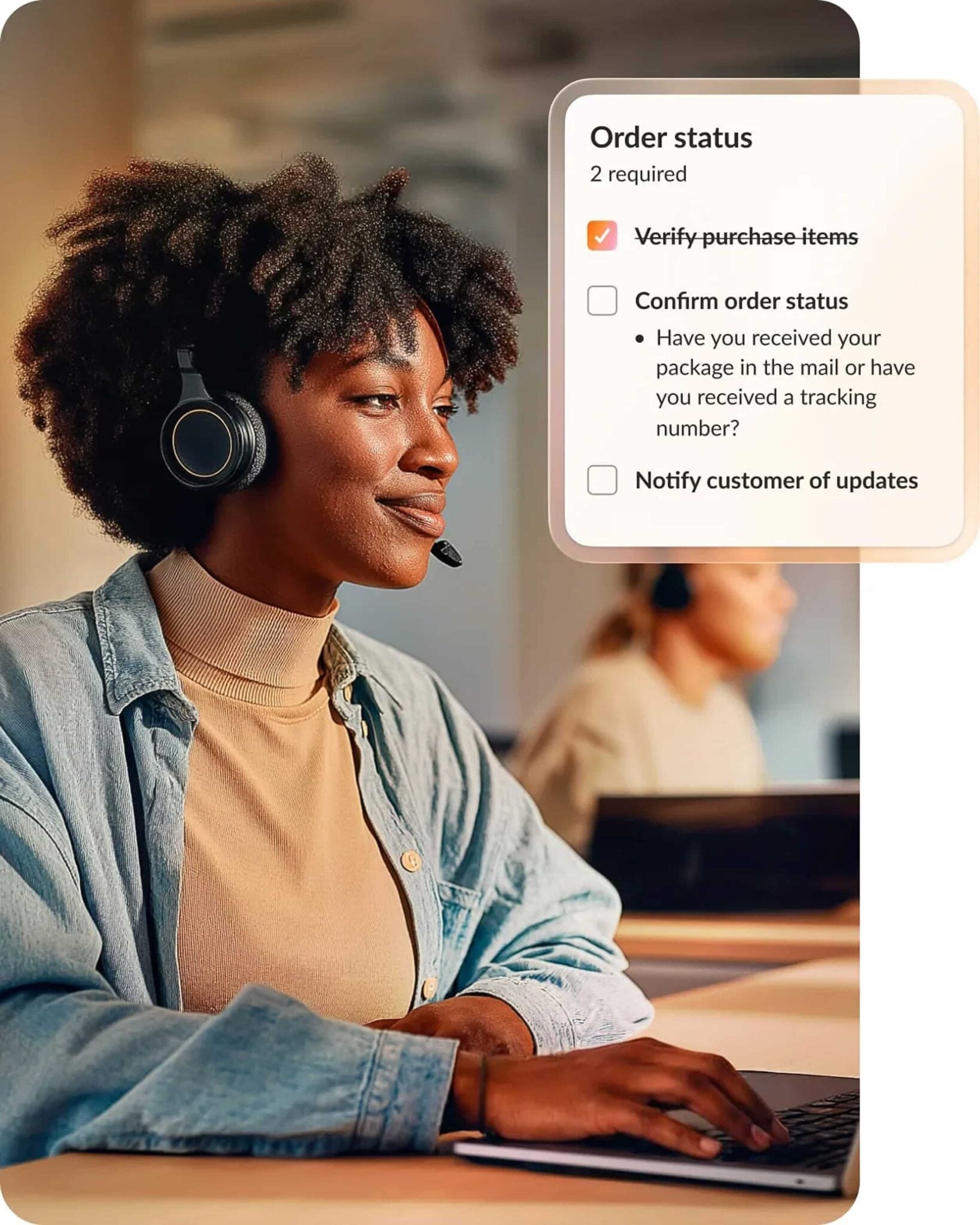
- Real-time agent guidance: AVA Agent Assist surfaces company knowledge, next-best-actions, and compliance flags directly in the agent desktop during live calls, reducing handle time without requiring agents to switch systems.
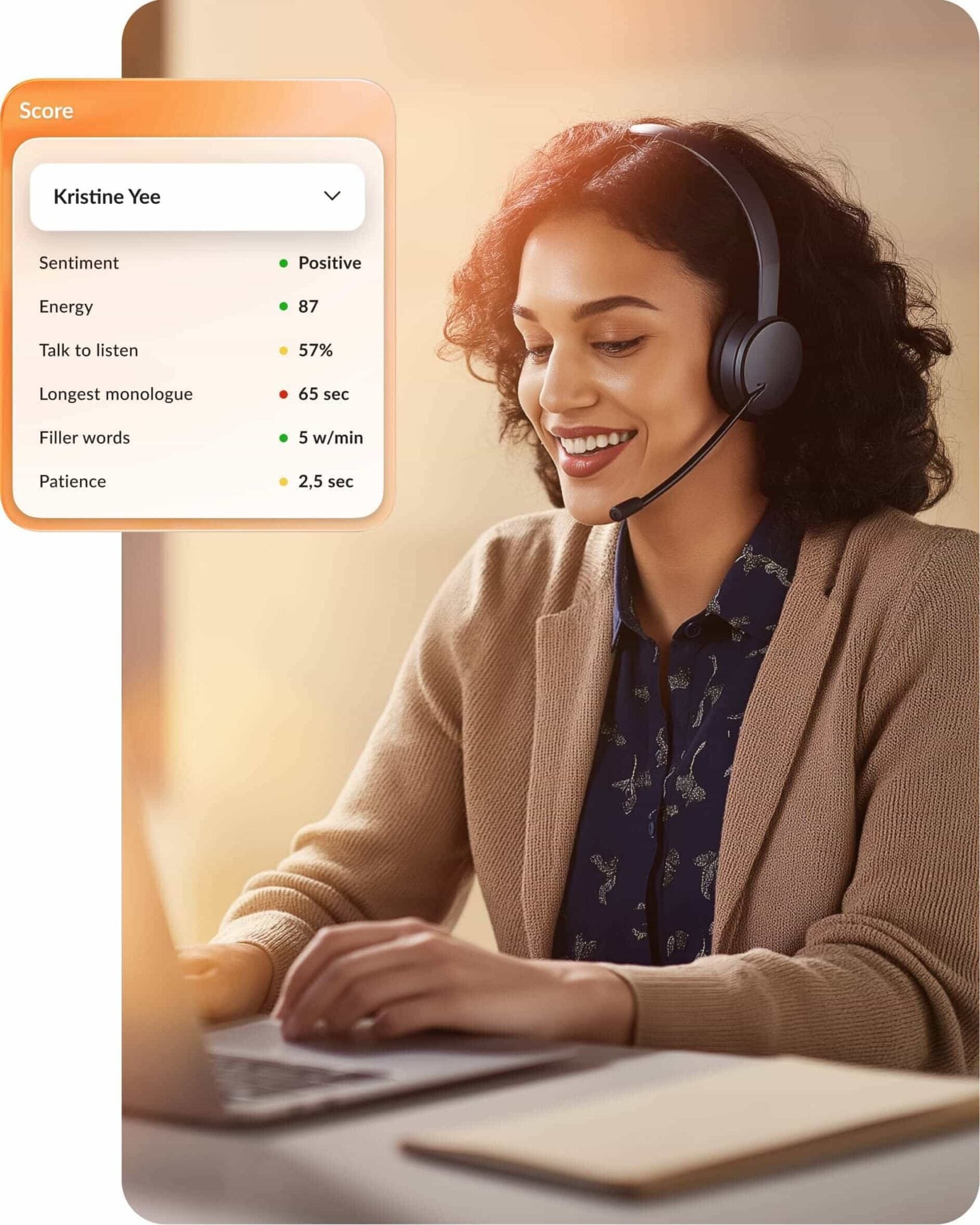
- Automated quality review: AI Quality Management analyzes 100% of customer interactions across voice, chat, and email for compliance, sentiment, and performance patterns, replacing the 2–5% sample rates typical of manual quality assurance.
- Unified platform: Combines contact center, UCaaS, and video under a single vendor contract, eliminating integration overhead from managing separate contact center and unified communications platforms.

- Autonomous call handling: The AI Receptionist add-on handles routine inbound inquiries, appointment scheduling, and call routing before human agent involvement, reducing queue volumes during peak periods.
- 99.999% uptime service level agreement (SLA): Geographically distributed infrastructure with automatic failover meets the enterprise baseline for mission-critical contact center operations.
- Live supervisor coaching: AVA Supervisor Assist delivers real-time AI alerts, live summaries, and transcripts that help supervisors identify which calls need attention, accelerating coaching and quality interventions without pulling agents off the line.

- AI workforce engagement: AI Workforce Engagement Management automates forecasting, scheduling, and quality management so workforce planners can scale operations without proportional headcount in supporting roles.
See your RingCentral AI savings
Find out how AI-powered customer engagement and conversation intelligence can reduce costs and improve service outcomes for your team.
2. Genesys Cloud CX
Genesys Cloud CX is often considered the most feature-rich enterprise contact center solution, particularly for organizations with advanced workforce engagement management (WEM) needs.
Its strengths include:
- Deep workforce optimization tools
- Advanced routing and journey orchestration
- Strong analytics and forecasting capabilities
However, this depth comes with trade-offs:
- Longer implementation timelines (typically 3–6 months)
- Higher operational complexity
- Greater reliance on internal IT resources
For enterprises with complex workflows and large agent teams (500+), Genesys can be a strong fit, but it requires significant investment to deploy and maintain.
3. Talkdesk
Talkdesk positions itself as an AI-driven contact center platform with a strong focus on ease of use and rapid deployment.
Key advantages include:
- Visual workflow builder for routing and automation
- Faster deployment compared to legacy platforms
- Strong omnichannel capabilities (voice, SMS, messaging)
This reduces dependency on IT teams for day-to-day changes—allowing operations leaders to manage workflows directly.
That operational ease, however, comes with a separate consideration on the vendor side. Talkdesk has experienced notable acquisitions and financial developments in recent years. While the platform remains competitive, enterprise buyers should include vendor stability as part of their evaluation.
4. Amazon Connect
Amazon Connect operates as infrastructure, not a turnkey platform. Built on AWS, it gives organizations direct control over call routing, IVR logic, and data residency, but requires significant engineering effort to configure and maintain.
Unlike the per-seat licensing models most platforms use, Amazon Connect charges per-minute for calls and per-user for administrative access. That consumption-based pricing can reduce costs for enterprises with variable call volumes, but demands careful capacity planning to avoid unexpected expenses during traffic spikes.
Most of Amazon Connect’s AI capabilities come through AWS services: Amazon Lex for chatbots, Amazon Comprehend for sentiment analysis, and Amazon Bedrock for generative AI, but each requires integration work rather than native activation. Organizations expecting a turnkey migration experience comparable to Five9 or Genesys frequently underestimate the engineering lift required.
5. NiCE CXone
NiCE CXone is widely regarded as a benchmark for workforce optimization and analytics in large-scale contact centers.
Its strengths include:
- Best-in-class WEM capabilities
- Advanced analytics and real-time dashboards
- Strong forecasting and workforce management tools
For enterprises managing large agent pools (500+), NiCE CXone excels in operational efficiency.
However, similar to Genesys:
- Implementation complexity is high
- Deployment timelines are longer
- Dedicated operational resources are required
NiCE CXone is often the better choice when workforce optimization is the top priority, especially for enterprises already using NiCE products.
How to choose the right Five9 alternative
Enterprise teams that rely on feature checklists alone often face post-migration friction. The platforms that succeed long-term are chosen based on architecture, integration strategy, and operational impact.
Here are the specific features to look for when assessing Five9 alternatives:
AI capabilities and conversation intelligence
Not all enterprise AI capabilities deliver the same outcomes. They may address different operational needs, requiring different architectural approaches.
Additionally, the distinction between native AI and third-party integrations determines how much of your interaction data gets analyzed. Platforms with native AI can analyze 100% of interactions without additional licensing or integration overhead. Third-party AI tools typically analyze a sample due to API rate limits and per-interaction pricing, creating blind spots in quality management.
Ask vendors what percentage of interactions their AI analyzes by default and whether full coverage requires additional licensing.
Platform integration and unified architecture
Separate unified communications, contact center, and workforce management vendors create an integration tax that shows up in IT overhead, data reconciliation complexity, and broken context between channels. When unified communications and contact center platforms come from different vendors, every system update requires coordination across multiple support teams, and customer data lives in disconnected silos.
Platforms that integrate UCaaS and CCaaS eliminate this overhead. Evaluate whether platforms offer native integrations with your tech stack, such as Salesforce, ServiceNow, and Microsoft Dynamics 365, or whether they rely on generic API connections requiring custom development. For custom enterprise systems, verify that platforms offer open APIs with comprehensive documentation.
Deployment speed and migration complexity
Enterprise migration from Five9 involves more than switching platforms. You’re migrating CRM data, porting phone numbers at scale, documenting IVR and routing rules that may exist only in institutional knowledge, and retraining agents while maintaining service levels.
The timeline difference between a three-month migration and a six-month one isn’t just about speed. It’s about how long your teams operate in a hybrid state with divided attention.
Ask vendors specific questions during evaluation:
- What dedicated migration support do you provide beyond standard implementation services?
- Can we execute a phased rollout by department rather than a single cutover date?
- What SLA commitments apply during the migration period?
Number porting at scale, particularly for toll-free numbers and international direct inward dialing (DID) lines, can extend timelines by 4 to 8 weeks. Ask whether vendors assign dedicated migration project managers, what phased rollout options exist, and what post-migration support is included.
Enterprise reliability and compliance
The 99.999% uptime SLA is the enterprise baseline, translating to less than six minutes of downtime per year. Ask vendors where their data centers are located, how they handle failover between regions, and what happens to in-progress calls during a failover event.
In terms of compliance, regulated industries face requirements that generic platforms don’t always address.
- Healthcare organizations need Health Insurance Portability and Accountability Act (HIPAA)-compliant call recording retention and data residency controls.
- Financial services firms require Payment Card Industry Data Security Standard (PCI DSS) certification for payment card handling and Financial Industry Regulatory Authority (FINRA)-compliant archiving.
- Government contractors need Federal Risk and Authorization Management Program (FedRAMP) authorization.
Verify that platforms hold the certifications your industry requires. For example, RingCX maintains HIPAA, PCI DSS, and System and Organization Controls (SOC) 2 Type II certifications, enabling deployment in regulated industries without requiring custom compliance infrastructure.
Reduce complexity, don’t add to it
Selecting a viable Five9 alternative requires you to assess architecture, not feature count. Every additional vendor, integration layer, and custom API connection adds operational overhead that compounds over time.
Start with a concrete action before your first vendor demo: document every integration data flow between your contact center and external systems, including CRM instances, workforce management tools, helpdesk APIs, and any custom applications your teams rely on. This exercise changes the questions you ask from “Can you do this?” to “How long will it take to replicate this specific workflow, and what resources do we need?” The vendors who answer with precision are the ones who’ve done this before.
Unified platforms reduce total IT overhead by consolidating vendor relationships and eliminating entire categories of operational complexity. Explore RingCentral RingCX to find out how a unified, AI-native platform can simplify your contact center operations and reduce the total cost of switching.
Five9 alternatives FAQ
What are the main reasons enterprise teams switch from Five9?
Enterprise teams typically switch from Five9 for three structural reasons:
- Cost: Per-seat pricing, add-on feature gating, and multi-year contract lock-in inflate total cost of ownership as teams scale or adopt AI.
- Architecture: The separation between UCaaS and CCaaS creates vendor sprawl, integration overhead, and fragmented agent and customer data.
- AI: Five9’s AI features sit on legacy infrastructure or come through acquisitions, limiting real-time automation, routing intelligence, and embedded analytics relative to AI-native platforms.
How does RingCX differ from Five9 for enterprise contact centers?
RingCentral RingCX differentiates from Five9 through native AI-first design, integrated UCaaS and CCaaS in a single platform, and comprehensive interaction analysis.
- RingCentral’s AI Quality Management automatically analyzes 100% of customer interactions, including voice, chat, email, and messaging, providing quality management insights without manual call sampling.
- AVA Agent Assist delivers real-time agent guidance during live interactions, surfacing relevant knowledge base articles and flagging compliance risks as conversations unfold.
Both capabilities operate natively within the platform rather than as add-on modules. RingCX also delivers contact center, business phone, messaging, and video from a single vendor, eliminating the data reconciliation and integration overhead that Five9’s contact center-only model requires.
What should enterprise teams evaluate before selecting a Five9 alternative?
Anchor your evaluation on five criteria:
- AI architecture (native vs. layered)
- UCaaS and CCaaS integration depth
- CRM connector completeness
- Migration complexity and support model
- Compliance certifications for regulated industries
It’s also worth pressure testing a potential alternative in the following ways:
- CRM connectors: Confirm whether customer data flows bidirectionally in real time across Salesforce, HubSpot, ServiceNow, or your system of record, or whether key fields require custom development.
- Migration: Ask vendors about dedicated cutover teams, phased rollout options, and SLA commitments that apply during the transition, not just steady state.
- Compliance: Verify HIPAA, PCI DSS, FINRA, and FedRAMP certifications, and confirm they cover the specific deployment regions and data residency requirements your business operates in.
How long does enterprise migration from Five9 typically take?
Enterprise migration from Five9 typically takes 2 to 6 months, depending on integration complexity, agent count, and customization depth.
Organizations with straightforward deployments often complete migrations in 8 to 12 weeks. Complex environments with custom IVR logic, multi-site deployments, and 500-plus agents frequently require 4 to 6 months from planning through full production cutover. Number porting at scale, particularly for toll-free numbers and international direct inward dialing (DID) lines, can extend timelines by 4 to 8 weeks.
Ask whether vendors assign dedicated migration project managers, what phased rollout options exist, and what post-migration support is included.
What is the total cost of ownership difference between Five9 and alternatives?
Five9’s TCO is driven by per-seat pricing, add-on modules, and long-term contracts, which can increase costs as contact centers scale.
Alternatives with unified platforms reduce expenses by consolidating UCaaS, CCaaS, and AI capabilities into a single system. Implementation costs, such as integration, training, and operational overhead, are often lower with platforms designed for enterprise-scale efficiency.
Updated May 06, 2026