AI Communications



Five platforms compared with clear criteria for channel coverage, compliance, and total cost of ownership.
Shortlisting a customer engagement platform (CEP) is harder than it looks. Every vendor claims full-channel coverage, but few are upfront about implementation timelines, pricing complexity, or how deep their compliance capabilities actually go. When you’re the one defending the shortlist internally, vague promises don’t cut it.
This guide compares five popular platforms to give you a clear picture of what each platform does well, where the trade-offs are, and what criteria matter most based on your company size, existing stack, and use case.
The platforms covered here range from developer-first messaging infrastructure to unified communications as a service (UCaaS) and marketing automation suites. They serve different buyers with different problems. By the end of this guide, you’ll have a framework for narrowing your shortlist to platforms that actually fit your situation, not just those with the biggest marketing budgets.
Key takeaways
- Integration depth with your customer relationship management (CRM), data warehouse, and identity stack determines long-term fit
- Enterprise buyers should verify SOC 2, data residency, role-based access controls (RBAC), and audit logging before shortlisting a platform
- Implementation timelines typically run 30 to 90 days, depending on integration complexity and team readiness
Top 5 customer engagement platforms for 2026
Each platform below serves a distinct buyer profile: some are built for developers, some for marketers, and one is built for support teams that need contact center performance without contact center complexity.
Here’s a quick overview of how all five platforms compare across the criteria that matter most.
| Platform | Channel coverage | AI/automation | Key integrations | Compliance highlights |
|---|---|---|---|---|
| RingCentral Customer Engagement Bundle | Voice, SMS | Automated callbacks, queue announcements, and SMS compliance management | Salesforce, Zendesk, Microsoft, Google | SOC 2 Type II, RBAC, configurable data retention |
| Braze | Push, email, SMS, in-app, web | Predictive segmentation, journey orchestration | Segment, Amplitude, Snowflake, Salesforce | SOC 2 Type II, GDPR, CCPA |
| Twilio | SMS, voice, email, WhatsApp, video | Programmable workflows, AI model integration | Salesforce, HubSpot, AWS, custom APIs | SOC 2 Type II, HIPAA eligible, GDPR |
| Salesforce Agentforce Marketing | Email, SMS, push, social, advertising | Einstein AI, journey builder, predictive content | Native Salesforce CRM, MuleSoft, Google | SOC 2 Type II, HIPAA, FedRAMP (select products) |
| HubSpot | Email, SMS, live chat, social, ads | AI content tools, workflow automation | Native CRM, Shopify, Slack, Zapier | SOC 2 Type II, GDPR, CCPA |
1. RingCentral Customer Engagement Bundle (CEB)
Teams managing customer support over voice and SMS often don’t need a full contact center deployment. Instead, they need shared queues, message visibility, and real-time reporting without the implementation overhead. The Customer Engagement Bundle (CEB) packages the RingEX Ultra plan with the Business SMS Booster and Call Queues Booster in a single offering, so teams get the tools they need without stitching together separate plans or add-ons.
- Shared call queue management: Incoming calls are routed through shared queues with wait time announcements and automated callback options, reducing abandonment without increasing headcount.
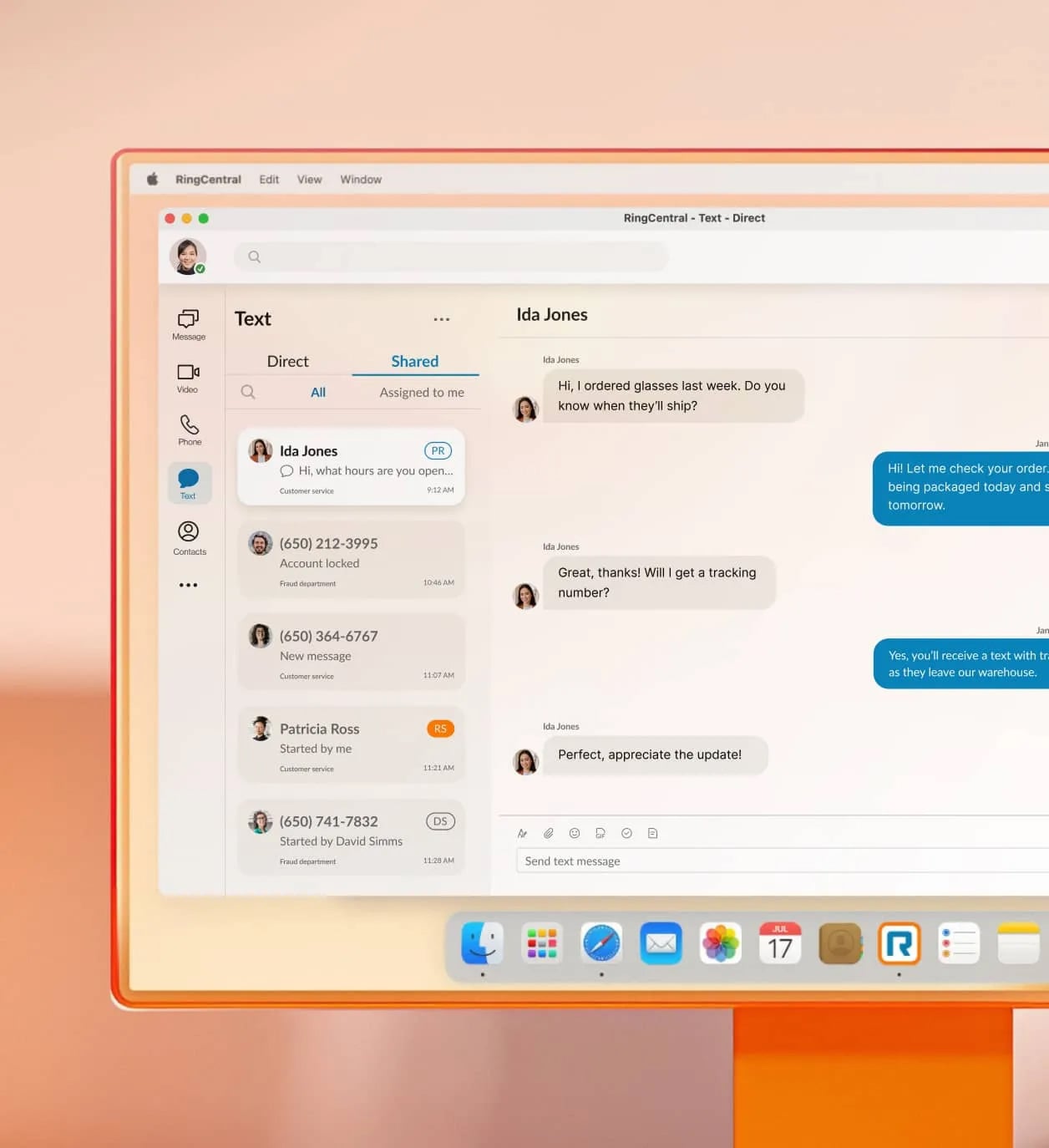
- Shared SMS inbox: Multiple team members view and respond to customer messages from a centralized inbox, with reply templates for common questions and built-in opt-in/opt-out compliance management.
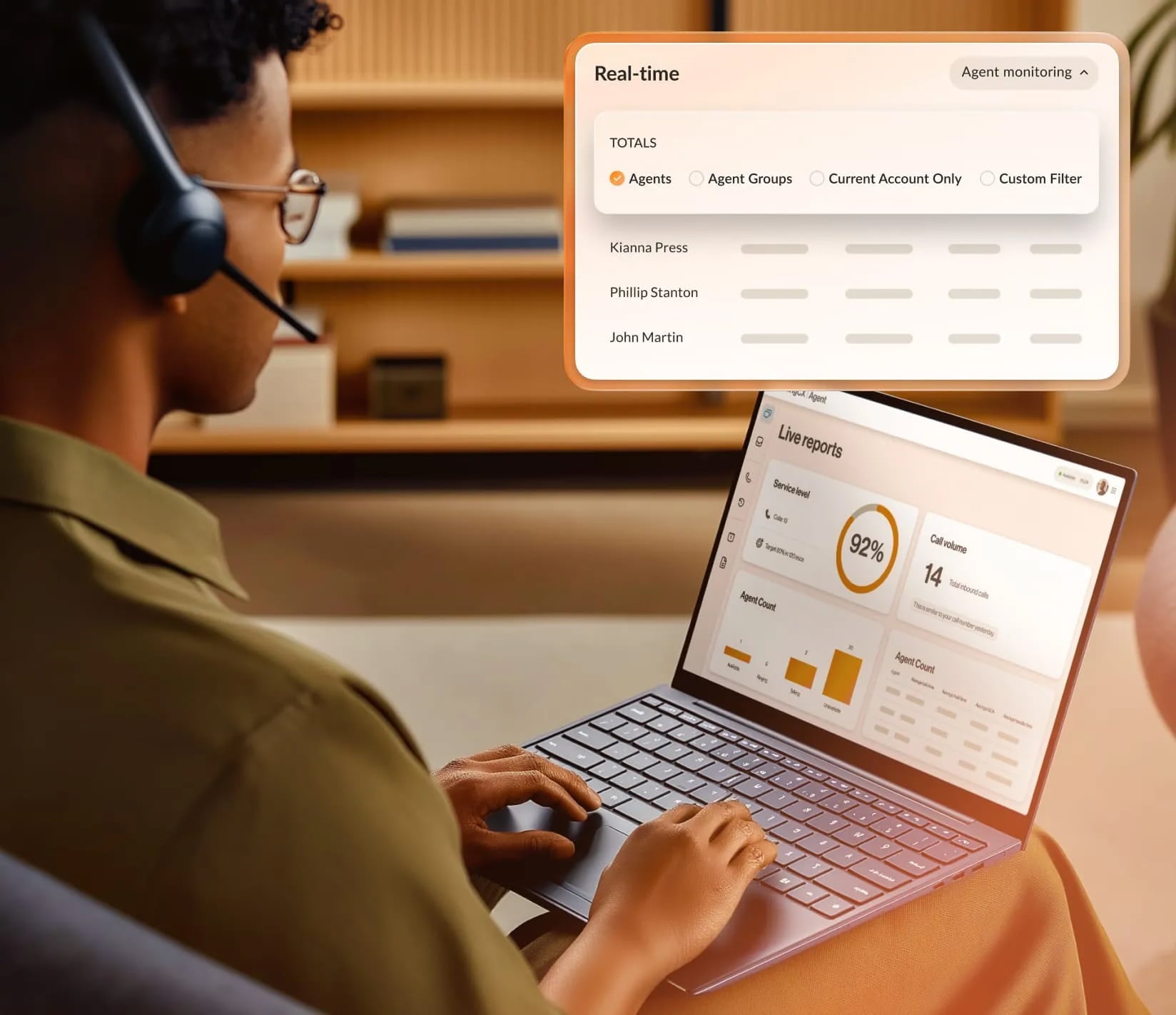
- Real-time queue visibility: Supervisors monitor live call volume, agent availability, and queue performance from a single dashboard, allowing faster adjustments before service levels slip.
- No IT deployment required: The Customer Engagement Bundle activates without dedicated IT resources or external consultants, allowing teams to start managing voice and SMS support within days, not months.
2. Braze
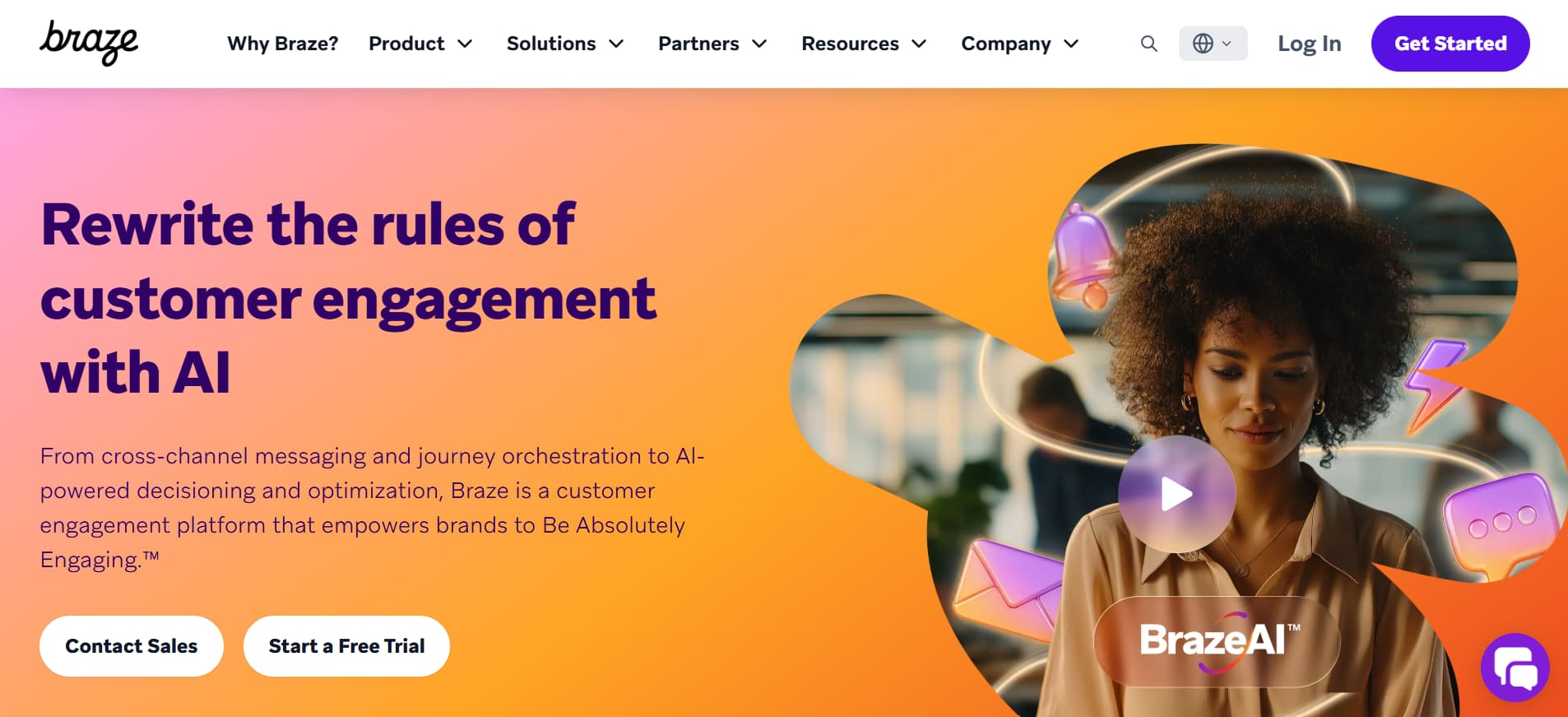
Braze is a customer engagement platform built for marketing and product teams that need to orchestrate personalized, real-time campaigns across mobile, web, and messaging channels. Braze ingests real-time event streams to trigger messages at the right moment across push notifications, email, SMS, in-app messaging, and web. Its Canvas Flow tool lets marketers build multi-step journeys with branching logic, A/B testing, and predictive segmentation powered by machine learning.
It’s most commonly used by consumer-facing brands in retail, media, and fintech that need high-volume, personalized messaging at scale. Implementation typically requires technical resources and a defined data architecture before teams can fully realize its capabilities.
3. Twilio
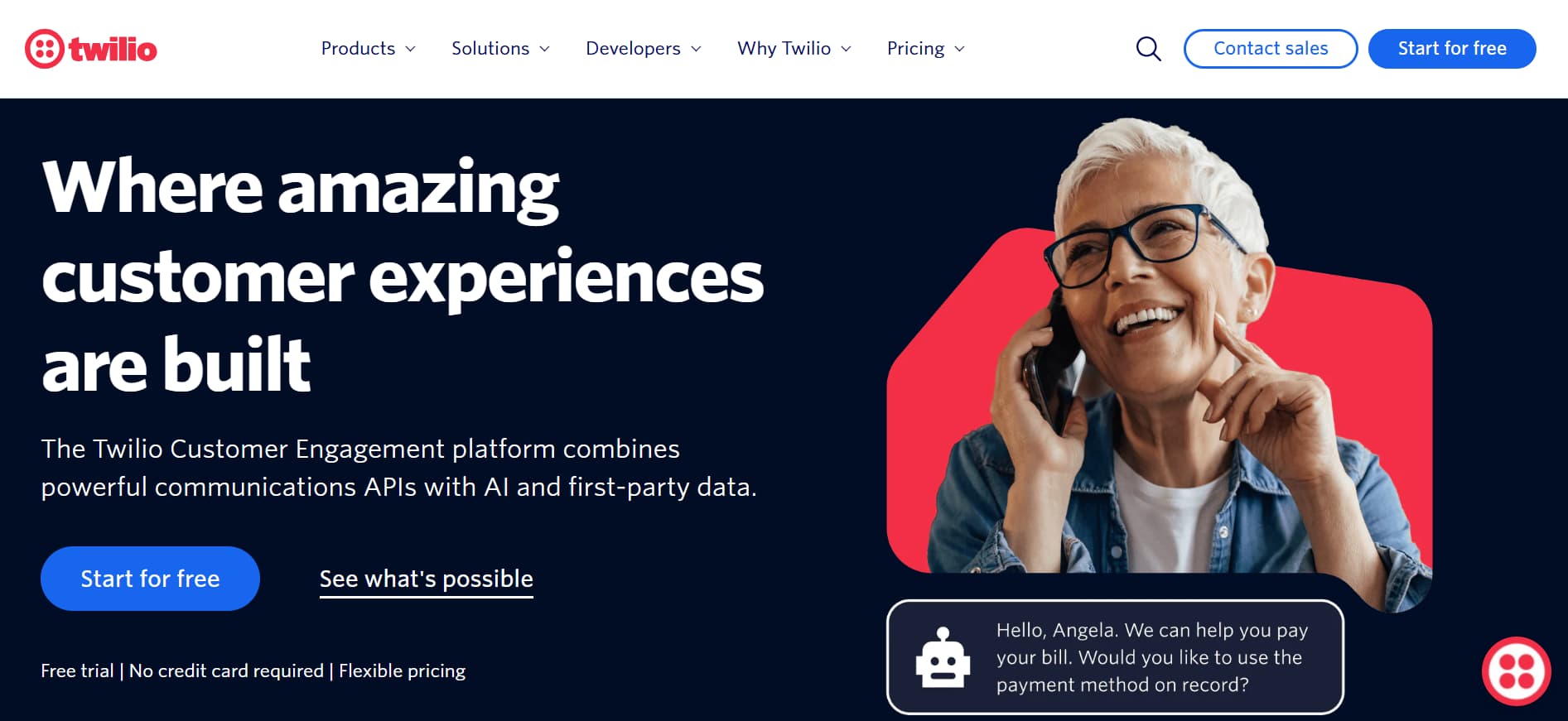
Twilio is a cloud communications platform that gives developers programmable building blocks for SMS, voice, email, WhatsApp, and video, along with higher-level tools for customer engagement orchestration.
Twilio’s APIs let engineering teams build custom communication workflows that fit their exact product requirements, rather than adapting to a vendor’s fixed feature set. Twilio Engage, its customer engagement layer, adds journey orchestration and audience segmentation on top of the underlying communications infrastructure. Twilio also offers Flex, a programmable contact center platform, for teams that need agent-facing tools.
The trade-off for that flexibility is implementation complexity: Twilio typically requires dedicated developer resources to configure, maintain, and extend.
4. Agentforce Marketing
Agentforce Marketing, formerly Salesforce Marketing Cloud, is an enterprise marketing automation and customer engagement suite built for large organizations already running their business on the Salesforce platform. Marketing Cloud covers email, SMS, push notifications, social advertising, and web personalization through a set of interconnected products, including Journey Builder, Email Studio, and Mobile Studio.
Its Einstein AI layer adds predictive content recommendations, send-time optimization, and audience scoring. Because it sits natively within the Salesforce ecosystem, it shares data directly with Sales Cloud and Service Cloud, which gives marketing and service teams a unified view of the customer without custom integration work.
That tight ecosystem integration is also its primary constraint: teams without an existing Salesforce footprint face a steeper path to value.
5. HubSpot
HubSpot is an all-in-one customer platform that combines a native CRM with marketing, sales, and service tools. HubSpot’s engagement tools cover email, SMS, live chat, social media, and paid advertising, all connected to its native CRM so every interaction updates the contact record automatically. Its workflow automation engine lets non-technical users build multi-step sequences without developer support, and its AI content tools help teams generate and optimize messaging across channels.
HubSpot’s free and starter tiers make it accessible for early-stage teams, while its Professional and Enterprise tiers add more advanced automation, reporting, and permissions. The platform’s breadth is also its limitation at scale: teams with complex data architectures or high-volume contact center needs often outgrow HubSpot’s native capabilities.
How to choose the right customer engagement platform
Choosing a customer engagement platform comes down to three questions:
- What channels do your customers use to reach you?
- What systems do you already run?
- What are your compliance requirements?
The answers to those questions narrow the field faster than any feature comparison.
Channel coverage and orchestration depth
Start with your customers, not the vendor’s channel list. If your support volume is split between voice and SMS, you need a platform that handles both in a unified workspace, not two separate tools that require manual coordination.
Teams managing voice and SMS support without a unified workspace frequently face high call abandonment and missed messages. For those teams, a solution like RingCentral’s CEB delivers call queue tools, shared SMS, and real-time reporting without the cost or complexity of a full CCaaS deployment.
If your primary engagement channels are email, push, and in-app messaging for a mobile product, you’re looking at a different category of tool entirely. Map your actual channel mix first, then evaluate which platforms cover it natively versus through third-party add-ons.
Integration fit with your existing stack
A customer engagement platform that doesn’t connect cleanly to your CRM, data warehouse, or identity provider creates more work than it saves.
Before evaluating features, audit your existing stack and identify the three or four integrations that are non-negotiable. Check whether each platform offers a pre-built connector or requires custom API work. Pre-built connectors reduce implementation time and maintenance burden. Custom integrations introduce ongoing engineering overhead that compounds over time.
If you’re already deep in the Salesforce ecosystem, a platform with native Salesforce data sharing eliminates a significant integration challenge. If you run a modern data stack with Snowflake or Databricks, prioritize platforms with native data warehouse connectors.
Compliance and security posture
Your compliance requirements should function as a filter. If your industry requires Health Insurance Portability and Accountability Act (HIPAA)-eligible configurations, that eliminates platforms that don’t offer them. If you operate in the European Union, General Data Protection Regulation (GDPR) data residency controls are mandatory, not optional.
For enterprise buyers, verify SOC 2 Type II certification, data residency options, RBAC, and audit logging before a platform makes your shortlist.
For teams handling SMS at volume, native opt-in and opt-out management matters: manual consent tracking introduces compliance risk that scales with message volume.
Some platforms include conversation intelligence tools that monitor compliance. These are ideal for industries with strict regulatory requirements, but can also assist supervisors by flagging high-risk conversations or identifying coaching opportunities.
What customer engagement platforms typically cost
Pricing models across this category vary significantly, and the model a vendor uses shapes your total cost as much as the rate itself. The most common approaches to pricing include:
- Per profile or per contact: You pay based on the number of contacts or profiles in your database, regardless of how often you message them. This model works well for teams with large databases and low send frequency, but costs rise quickly as your contact list grows.
- Per message: You pay for each message sent, which gives you cost predictability at low volumes but becomes expensive at scale. SMS and WhatsApp messaging often carry per-message fees on top of platform licensing.
- Per seat: You pay for each user or agent on the platform. This model is common in contact centers and UCaaS tools and aligns cost directly with team size.
- Per active user: You pay only for contacts who receive a message or take an action within a billing period. This model rewards teams with well-segmented lists and penalizes those with large but disengaged databases.
Beyond the base subscription, the costs that most buyers underestimate are:
- Implementation services
- Training
- Ongoing maintenance
- Cost of any integrations you need to build or license separately
Implementation timelines can run 30 to 90 days for most deployments, but projects with complex CRM integrations and data migrations often take longer.
Teams evaluating cost should weigh deployment speed alongside licensing fees. RingCentral’s CEB, for example, activates without IT support or consultants, which reduces implementation overhead for teams that need to move quickly.
Making an informed decision on your customer engagement platform
The five platforms covered here serve meaningfully different buyers:
- Braze fits marketing teams with mature data stacks and high-volume personalization needs.
- Twilio suits engineering-led organizations that need programmable flexibility.
- Salesforce Marketing Cloud works best for enterprises already running on Salesforce.
- HubSpot serves small businesses and growing teams that want an all-in-one system without enterprise complexity.
- RingCentral addresses the specific needs of teams managing customer engagement across voice and SMS, with unified communications and real-time queue visibility built in.
The criteria that separate a defensible shortlist from a wishlist are channel orchestration, integration depth, compliance posture, and total cost of ownership. Evaluate each platform against your actual requirements in those four areas, not against a generic feature matrix.
For teams managing voice and SMS support, RingCentral’s Customer Engagement Bundle offers a practical starting point: unified voice and SMS, live queue monitoring, and built-in SMS compliance, without deploying a full contact center. Contact us to learn how CEB fits your team’s specific support setup.
Customer engagement platform FAQs
What’s the difference between a customer engagement platform (CEP) and a CRM?
A customer engagement platform orchestrates real-time, cross-channel interactions with customers, triggering messages and routing conversations based on behavior and context.
A customer relationship management (CRM) platform stores and manages customer data, tracks relationships, and supports sales and service workflows.
The two serve different functions: a CEP drives active outreach and engagement across channels, while a CRM is the system of record for customer information. Many organizations run both, with the CEP pulling data from the CRM to personalize interactions.
How long does it take to implement a customer engagement platform?
Implementation timelines for a CEP typically run 30–90 days, depending on integration complexity, data migration requirements, and team readiness. Enterprise deployments with custom CRM integrations, data warehouse connections, and multi-region compliance requirements often take longer.
Platforms designed for self-serve activation, like RingCentral’s CEB, can be configured without IT support or external consultants, which compresses the timeline significantly.
What compliance certifications should I look for in a customer engagement platform?
Compliance certifications are typically determined by your industry, and these are the most commonly required types:
- SOC 2 Type II is the baseline certification to verify for any platform handling customer data.
- HIPAA for US healthcare organizations
- Federal Risk and Authorization Management Program (FedRAMP) authorization for the US federal or public sector
- GDPR data residency controls for businesses in the EU or serving EU customers
- CCPA compliance for businesses in California or handling California consumer data
For teams running SMS at volume, native opt-in and opt-out management is a practical compliance requirement that reduces manual risk. Always request a vendor’s current compliance documentation rather than relying on marketing materials.
Originally published May 18, 2026