AI Communications






The platform you choose determines whether AI automation scales to production or stalls at the pilot stage.
Enterprise teams scaling AI automation need purpose-built platforms that handle production complexity. General-purpose tools require teams to stitch governance, integration, and reliability controls together afterward.
Fragmented systems, inconsistent customer experiences, and governance gaps are the predictable result of scaling general-purpose AI beyond proof of concept. Production-ready agentic AI platforms provide the orchestration, governance, and multi-agent coordination that point solutions don’t.
This guide compares five enterprise-grade platforms, walks through evaluation criteria that matter in real deployments, and maps platform types to organizational profiles.
Key takeaways
- Production-grade agentic AI requires orchestration, governance, and escalation built into the platform architecture, not added as an afterthought.
- Purpose-built platforms for contact centers automate end-to-end call handling and routing; general-purpose AI requires extensive customization.
- Evaluate platforms on orchestration depth, integration breadth, quality management capabilities, and human oversight controls.
- Deployment speed matters: purpose-built solutions deploy in weeks; custom builds take months.
- Build vs. buy depends on your call volume, regulatory exposure, and engineering resources.
Top 5 agentic AI platforms for enterprise compared
These five platforms represent different architectural approaches to agentic AI, each serving a different organizational profile based on deployment model, integration depth, and governance maturity. The right choice depends on your environment, regulatory exposure, and operational scale.
| Platform | Primary use case | Multi-agent coordination | Governance and human-in-the-loop | Enterprise integration depth | Deployment model |
|---|---|---|---|---|---|
| RingCX with AIR Pro | CX and contact center workflow automation | Context-aware agent handoff | Escalation and oversight controls with context-aware, automated handoff | Native UCaaS and CCaaS integration | Cloud, purpose-built, fast deployment |
| Kore.ai | Conversational AI and virtual assistant deployment | Multi-bot orchestration | Configurable guardrails | CRM, ITSM, and enterprise app connectors | Cloud and on-premises |
| AWS Amazon Bedrock Agents | Custom agent development on cloud infrastructure | Agent collaboration framework | Configurable, requires engineering setup | Deep AWS ecosystem integration | Cloud (AWS) |
| Microsoft Copilot Studio | Low-code agent building within Microsoft 365 | Copilot agent orchestration | Policy-based controls via Microsoft 365 admin | Native Microsoft 365 and Dynamics integration | Cloud (Microsoft) |
| Gumloop | No-code AI workflow automation | Limited, single-workflow focus | Basic, user-defined controls | API-based integrations | Cloud, SaaS |
1. RingCX with AIR Pro
RingCX is an AI-first omnichannel contact center platform where AI operates on every conversation across voice, chat, SMS, email, and social media channels. Agents, supervisors, and administrators work from a single interface that manages every customer interaction with AI running in the background on all conversations.
RingCX AI features include:
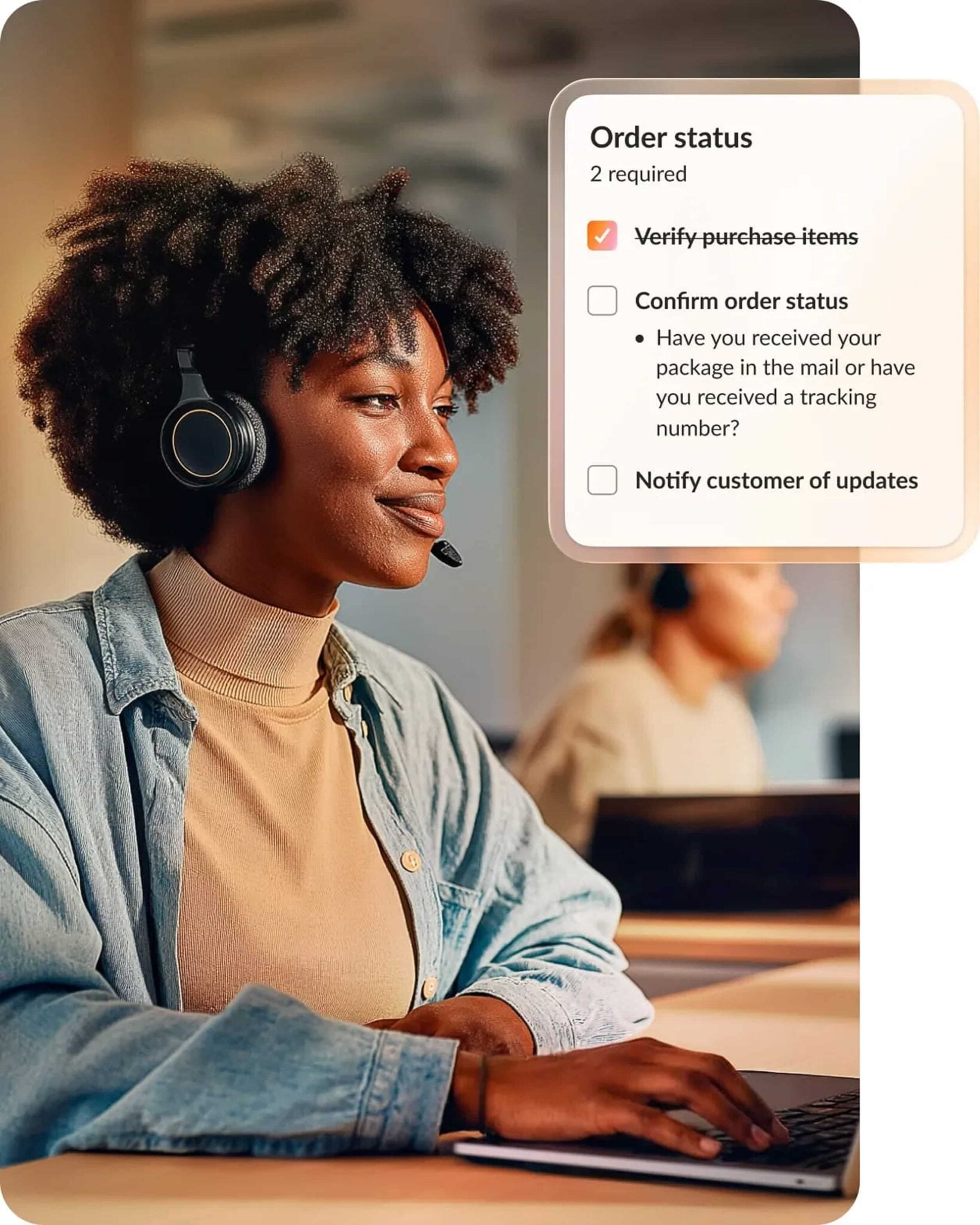
- AVA Agent Assist: Surfaces relevant knowledge and next-step guidance during live interactions so agents spend less time searching and more time resolving issues.
- AVA Supervisor Assist: Proactively identifies calls that require supervisor assistance, leveraging real-time conversation trackers, summaries, and transcripts

- AI Quality Management: Automates QA scoring across 100% of interactions, eliminating manual sampling that leaves gaps invisible. The industry standard for manual QA is 1–2% of interactions; AI QM closes that gap entirely.
- AI Interaction Analytics: Analyzes every customer interaction to predict customer satisfaction (CSAT) and provide an organization-wide view of service trends, customer intents, retention risks, and competitive threats with the ability to drill into root causes and get AI-powered recommendations.
- AI Workforce Management: Forecasts staffing needs, optimizes scheduling, and automates workflows, reducing overstaffing costs and understaffing risk.
AI Representative (AIR Pro) extends RingCX’s capabilities for teams with complex, high-volume call handling needs. Built natively as an extension of RingCX, AIR Pro handles the multi-step workflows that standard call handling can’t support.
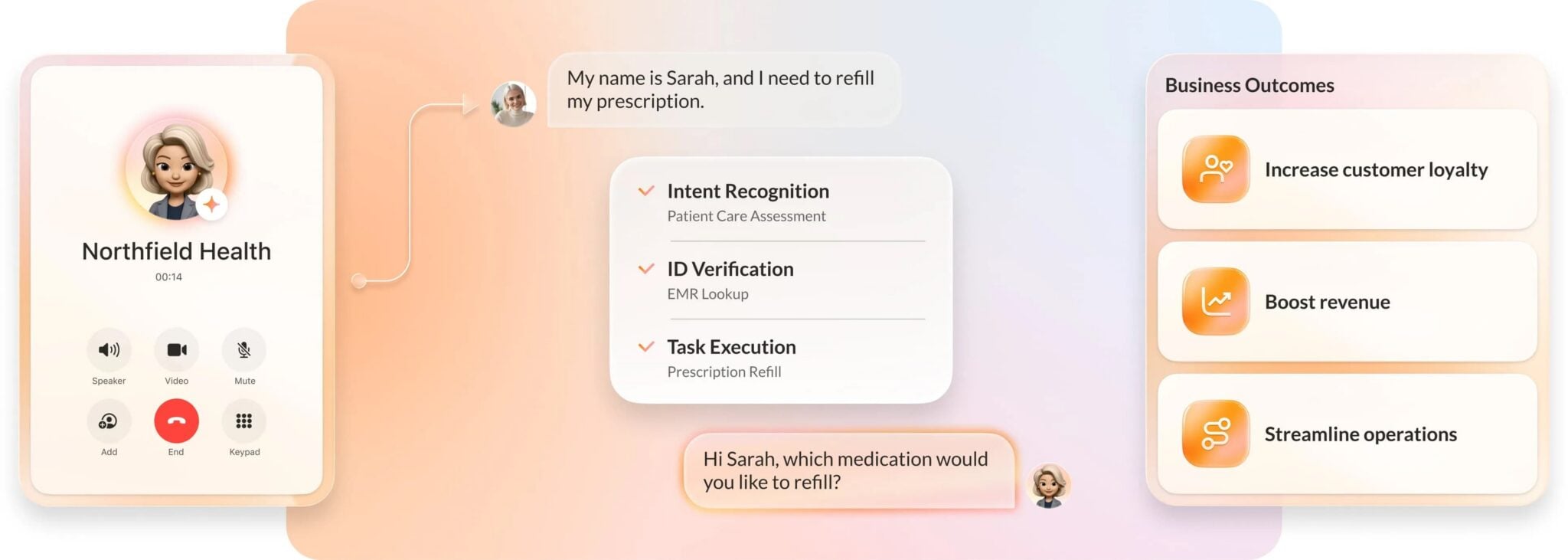
AIR Pro features include:
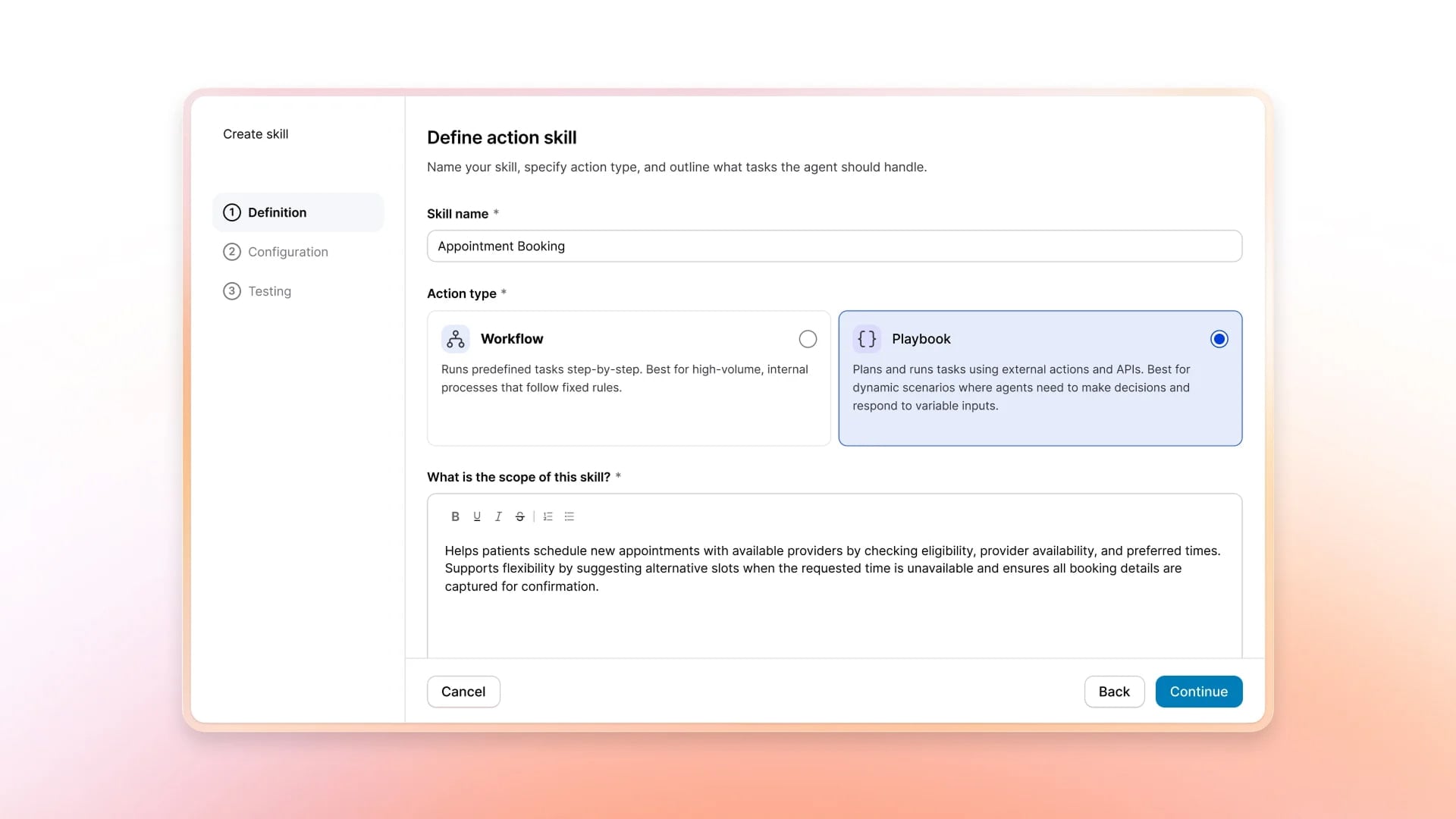
- No-code design and deployment: Enables organizations to design AI agents using natural language, orchestrate workflows across connected systems, and deploy across voice, SMS, web chat, messaging, and social channels while measuring performance in real time.
- Customizable call flow logic: Handles multi-step, multi-condition call flows that go beyond standard IVR replacement, supporting complex routing across locations, teams, and business systems.
- Advanced intent recognition: Identifies caller intent before routing decisions are made, so customers reach the right resource faster and agents receive context-rich handoffs.
- Business system integration: Connects call handling logic to existing CRM, scheduling, and operational systems, so AI actions reflect real-time business data rather than static scripts.
Get early access to AIR Pro—join the waitlist now.
2. Kore.ai
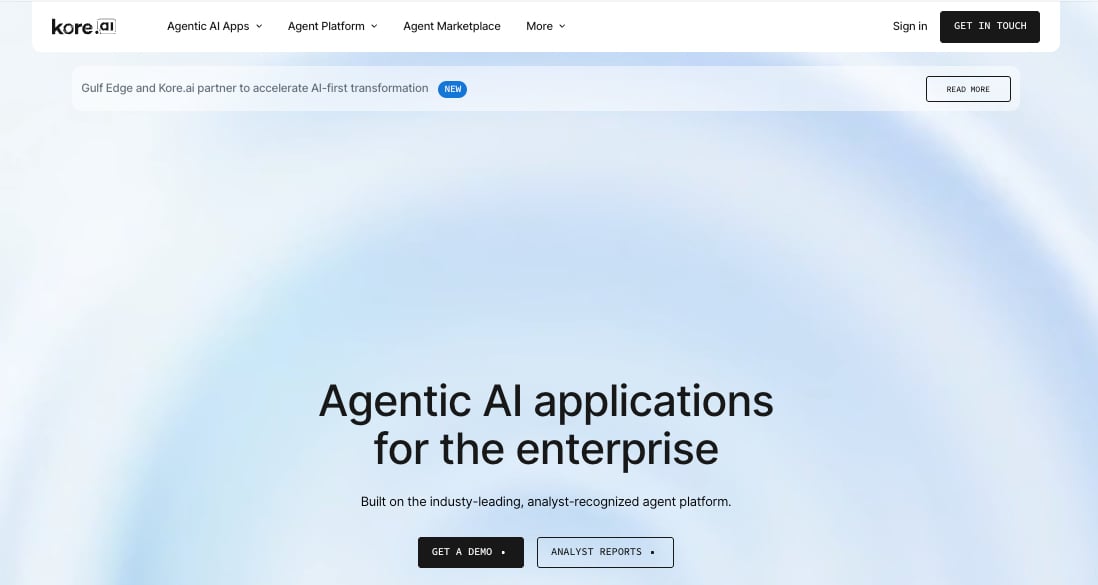
Kore.ai is an enterprise conversational AI platform for building, deploying, and managing AI-powered virtual assistants and intelligent virtual agents (IVAs) across voice and digital channels. It’s designed for organizations that need configurable, multi-turn conversational AI with governance controls built into the deployment architecture.
Kore.ai supports multi-agent systems, allowing organizations to coordinate multiple specialized agents within a single interaction framework.
The platform includes a low-code development environment, pre-built connectors for customer relationship management (CRM) platforms and IT service management (ITSM) systems, and configurable guardrails for regulated industries.
Kore.ai’s primary strength is conversational depth: it handles complex, multi-turn dialogues across channels and provides analytics tools for monitoring agent performance and interaction quality.
3. AWS Amazon Bedrock Agents
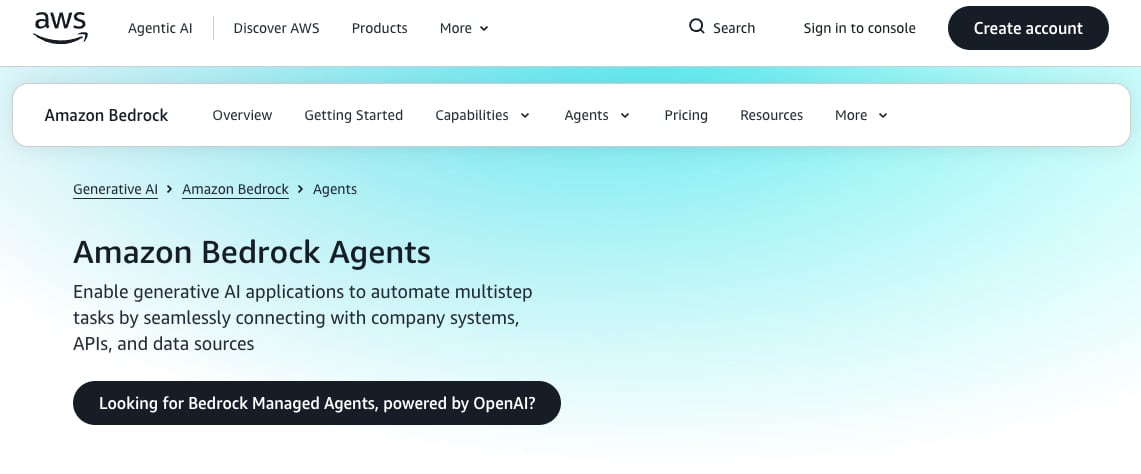
Amazon Bedrock Agents is a managed service that enables development teams to build, deploy, and orchestrate AI agents using foundation models on AWS infrastructure. Organizations with engineering resources and existing AWS investments use it to build custom agentic workflows.
Bedrock Agents supports multi-agent collaboration through agent hierarchies where orchestrator agents coordinate task-specific sub-agents. The platform connects to enterprise data sources through knowledge bases and action groups, and integrates natively with AWS services, including Lambda, S3, and Amazon Connect.
Governance and human-in-the-loop controls are configurable but require engineering setup. Bedrock Agents suits organizations with mature cloud engineering teams that need maximum flexibility in workflow design and deployment.
4. Microsoft Copilot Studio
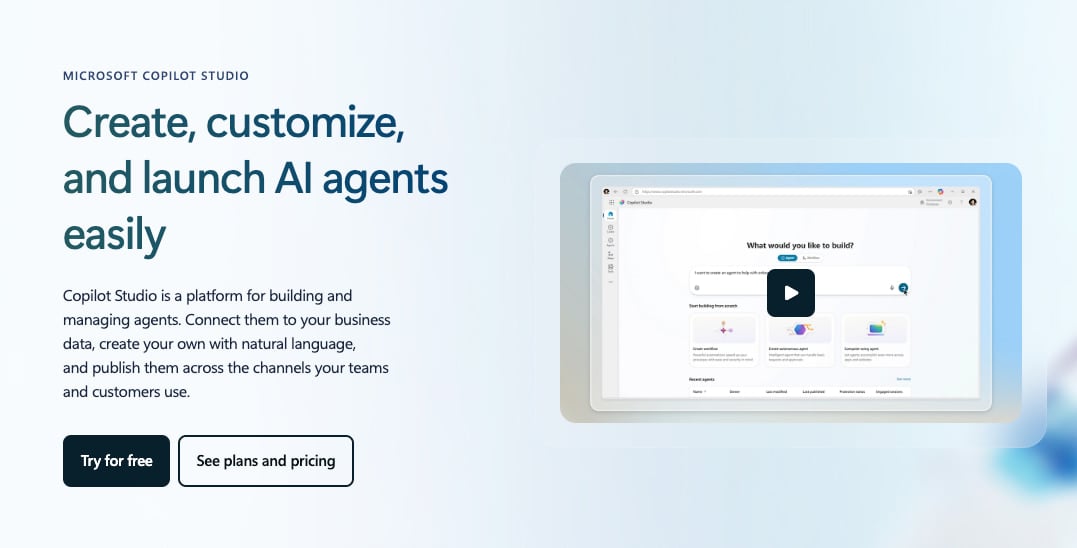
Microsoft Copilot Studio is a low-code platform for building and deploying AI agents within the Microsoft 365 and Azure ecosystem. It works best for organizations already operating on Microsoft infrastructure. Copilot Studio allows teams to build agents that connect to Microsoft 365 data, Dynamics 365, and external systems via connectors and APIs.
It supports multi-agent orchestration through Microsoft’s Copilot agent framework and applies governance controls through existing Microsoft 365 admin policies, including data loss prevention and access management.
Organizations already using Teams, SharePoint, and Dynamics can build agents that operate within that context without rebuilding integrations. Teams outside the Microsoft ecosystem face higher integration overhead and lower value from the platform.
5. Gumloop
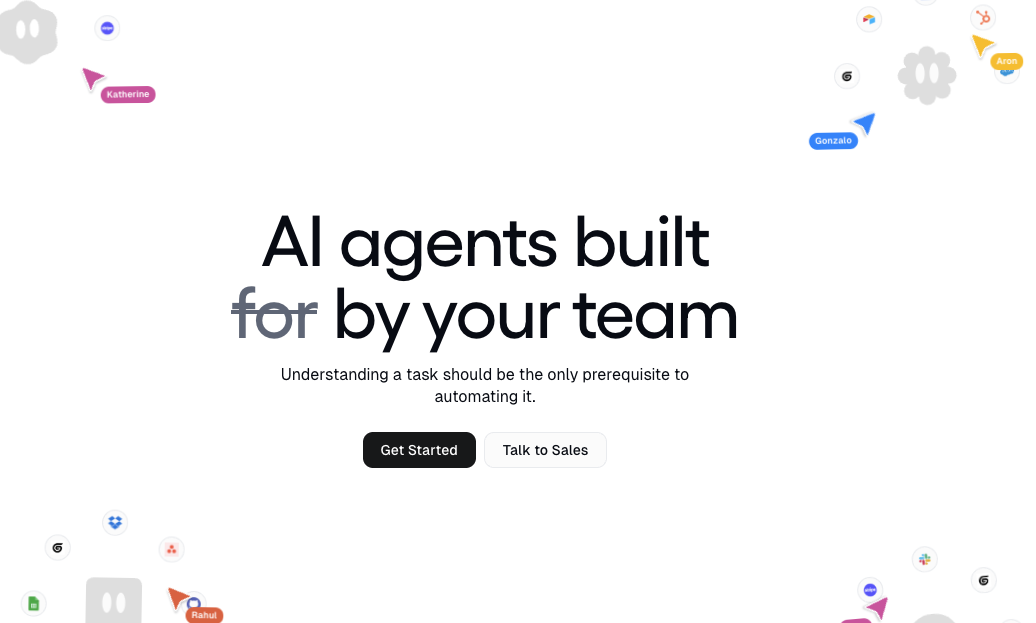
Gumloop is a no-code AI workflow automation platform for teams that need to build and deploy AI-powered workflows quickly without engineering resources. It connects to external tools and data sources via APIs and pre-built integrations.
Multi-agent coordination is limited. Gumloop focuses on single-workflow automation rather than coordinated agent hierarchies. Governance controls are basic and user-defined, making it suitable for low-risk internal workflows but not for regulated environments or customer-facing interactions at scale.
Gumloop works best for teams with straightforward automation needs and no existing AI infrastructure who want to deploy quickly.
How to choose the right agentic AI platform
Choosing an agentic AI platform requires you to assess which architecture fits your operational environment, regulatory exposure, and required scale of automation. Here’s how to evaluate each platform against your specific context.
Orchestration and multi-agent coordination
Whether your workflows involve a single automated process or multiple coordinated virtual agents handling different tasks within the same customer journey determines how much orchestration capability you need. Platforms vary significantly in how they manage agent hierarchies, task delegation, and context passing between agents.
- Orchestration depth: Confirm the platform supports multi-agent coordination natively. For contact center environments, this means agents that can hand off context, escalate to humans, and resume workflows without losing interaction history.
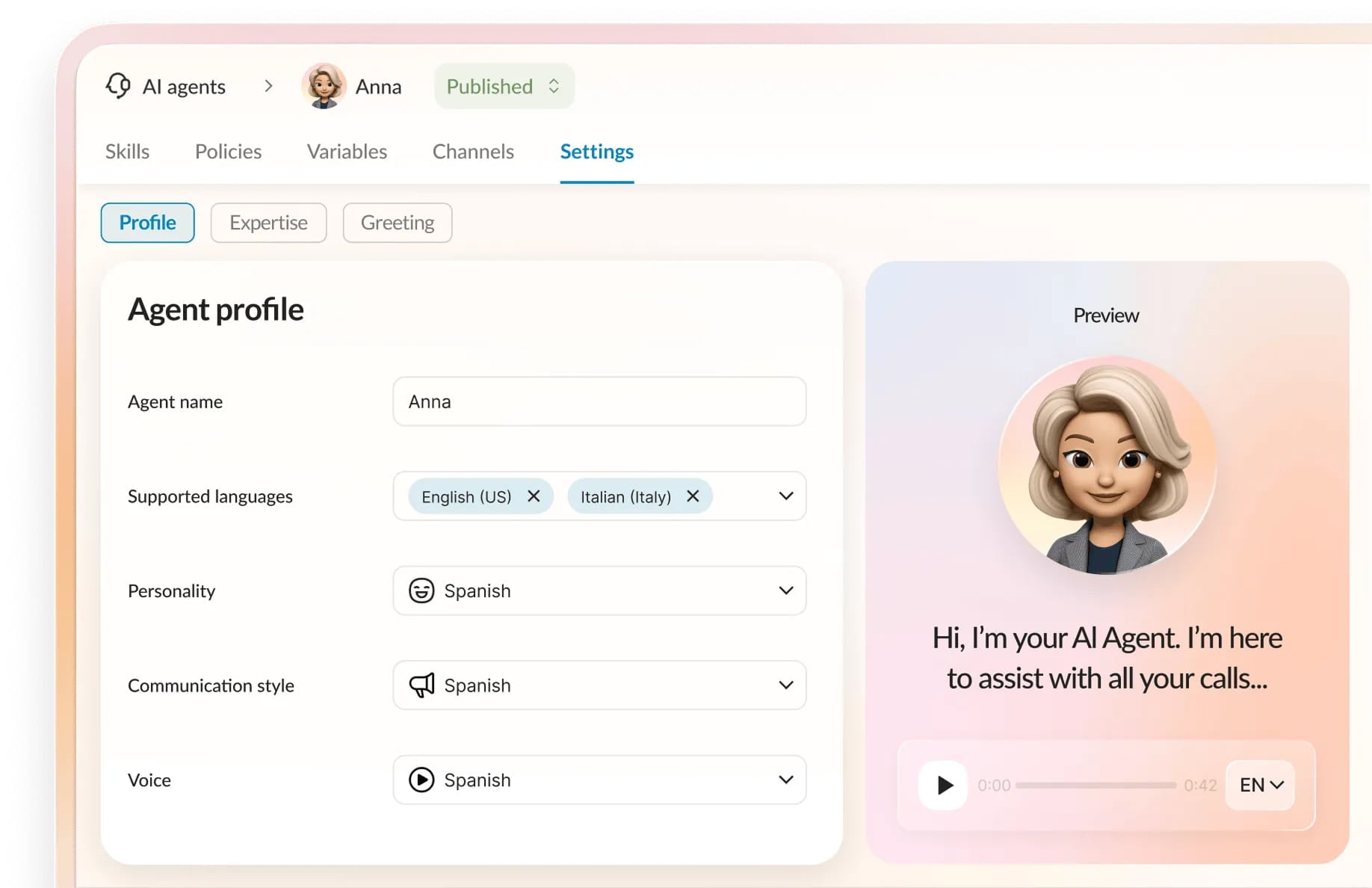
- Agent and workflow customization: Evaluate whether you can design call flows, interaction logic, and agent scripts that match your specific processes, or whether you’re constrained to pre-built templates.
- Context persistence: Agents that lose context between steps create inconsistent experiences, and customer satisfaction rises by 15–20% when agentic AI balances speed with context. Confirm how the platform maintains and passes context across multi-turn interactions and system integrations.
Security, compliance, and governance controls
Regulated industries and customer-facing deployments require governance built into the platform architecture. Audit trails, role-based access controls, and human-in-the-loop escalation paths are mandatory in healthcare, financial services, or any environment where interaction data carries compliance obligations.
- Data residency and sovereignty: Confirm where interaction data is stored and processed, and whether the platform supports regional data residency requirements.
- Human-in-the-loop controls: Every production-grade agentic AI deployment needs defined escalation paths. Verify that the platform supports configurable intervention triggers without requiring custom engineering.
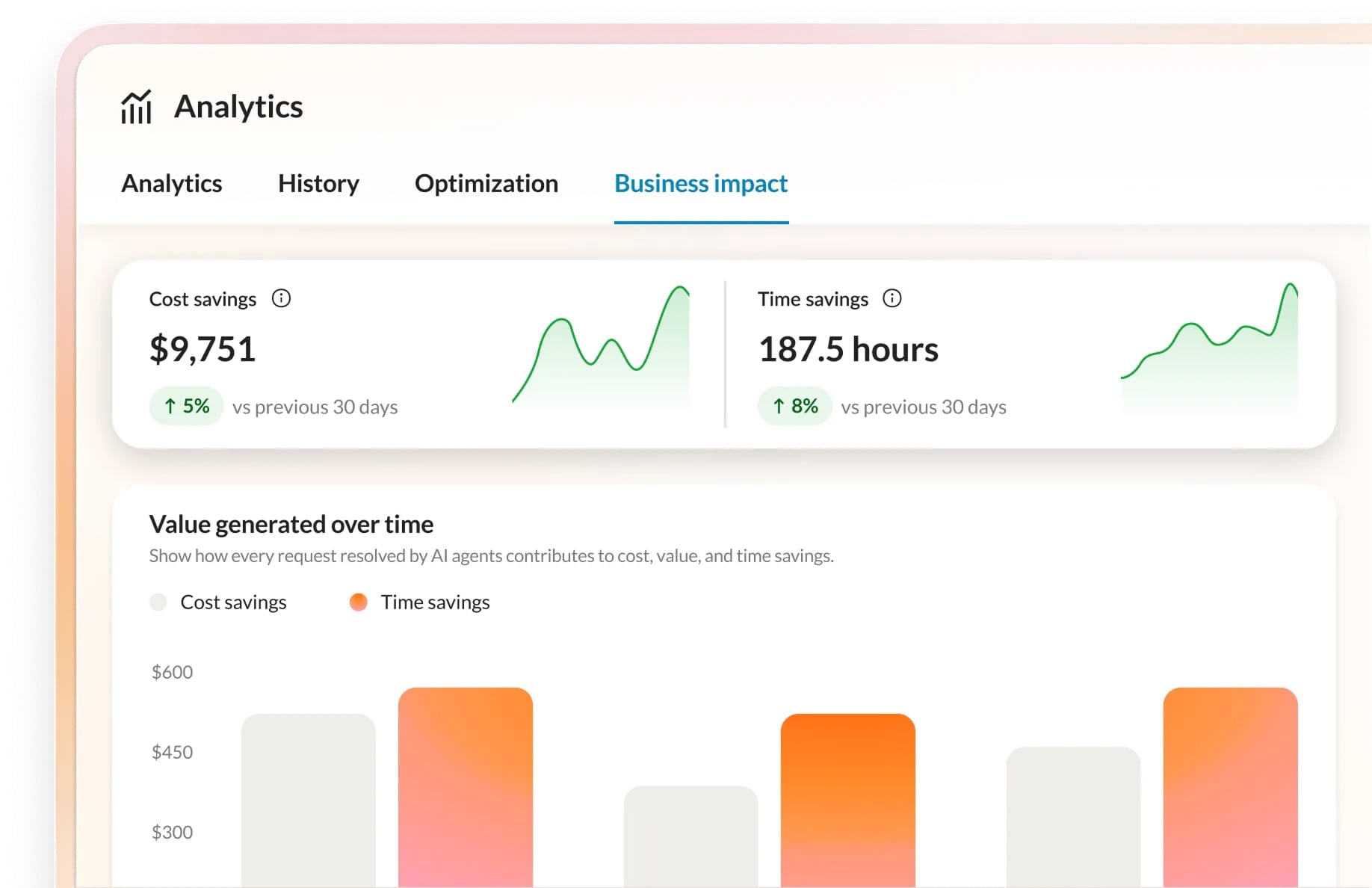
- Observable performance tracking: Agentic AI tools with native analytics, like RingCentral’s AIR Pro, provide the insight to help you spot and address problems as well as prove ROI.
- Role-based access (RBAC) and policy enforcement: Confirm that your AI governance policies apply consistently across all agents and workflows at the system level, not just the user interface.
CX and contact center readiness
General-purpose AI platforms require significant configuration to handle customer-facing voice and digital interactions reliably. Purpose-built contact center AI platforms provide the routing logic, IVA capabilities, and quality management infrastructure that CX workflows need from day one.
- Voice channel support: Confirm the AI agent offers native voice handling across inbound and outbound calls. High-volume contact centers need AI that manages call routing, intent recognition, and escalation on every call.
- Quality management at scale: Evaluate whether the platform scores every interaction or relies on sampling. Sampling misses the patterns that drive coaching and compliance decisions.
- Integration with existing CX infrastructure: Platforms that connect natively with your contact center and UCaaS stack reduce the integration work required to deploy AI in production.
Integration depth and deployment flexibility
The value of an agentic AI platform depends on its ability to pull context from your existing systems and act on that context in real time. Generic interactions result from shallow integrations. Personalized, context-aware experiences from deep integrations reduce handle time and improve resolution rates.
- CRM and ITSM connectivity: Confirm the platform connects to your systems of record, including Salesforce, ServiceNow, or Microsoft Dynamics, and can read and write data during live interactions.
- API flexibility: Evaluate whether the platform supports custom API connections for proprietary or legacy systems that don’t have pre-built connectors.
- Deployment model: Cloud-only platforms may not meet data residency or infrastructure requirements for regulated enterprises. Confirm whether on-premises or hybrid deployment is available if your environment requires it.
Build vs. buy vs. extend
This decision shapes your time-to-value, total cost of ownership, and long-term maintenance burden. The right path depends on your operational scale, engineering resources, and regulatory environment.
| Path | Recommended scenario |
|---|---|
| Buy (purpose-built platform) | You’re a regulated enterprise with high call volume that needs production-ready CX automation without building a large AI engineering team. |
| Extend (low-code, ecosystem-native) | You’re operating within an established ecosystem with moderate automation needs and want to minimize integration work by leveraging existing infrastructure. |
| Build (cloud infrastructure) | You’ve got a mature engineering team and need maximum flexibility in workflow design, even if it means longer deployment timelines. |
What agentic AI platforms deliver for enterprise operations
Gartner expects agentic AI to automate at least 80% of customer service interactions by 2029, leading to cost savings of 30%.
The operational outcomes an agentic AI platform delivers depend on which workflows you automate and how deeply the platform integrates with your existing systems. Contact center leaders and IT and operations leaders see consistently high-impact business outcomes when deploying agentic platforms at production scale.
Contact center leaders
Contact center leaders gain immediate value from intent-to-resolution automation. Every caller routes to the right destination based on what they actually need, not a menu selection. After-call work drops when automated interaction summaries replace manual note-taking. Quality assurance scales when every interaction is scored rather than a 1–2% sample.
These outcomes require a platform with native voice handling, context-aware routing, and quality management infrastructure. General-purpose AI tools can’t deliver this level of operational depth.
IT and operations leaders
IT and operations leaders see impact in ticket triage, incident response, and access request automation, where agentic workflows handle classification, routing, and initial resolution steps without human intervention.
Governance is equally significant: automated workflows touching sensitive systems need audit trails, role-based controls, and defined escalation paths.
Platform selection determines production readiness
Platform selection determines whether these outcomes are achievable at production scale or remain confined to controlled pilots. Purpose-built agentic AI solutions deliver these outcomes within an existing enterprise communications environment, with the governance controls, integration depth, and interaction coverage that production deployments require.
Move from evaluation to deployment
The platform you select determines whether AI automation becomes a production asset or remains a proof of concept that never scales. Enterprise-grade agentic AI platforms orchestrate workflows, coordinate agents, and provide the governance controls that customer-facing and regulated environments require.
For contact center and CX leaders managing growing interaction volumes across multiple channels, the right platform is one built for that complexity. RingCX with AIR Pro handles that complexity on a unified platform without stitching together separate tools.
Sign up for early access to give AIR Pro a try and connect with a RingCentral specialist.
Agentic AI platforms FAQs
What’s the difference between an agentic AI platform and an agentic AI tool?
An agentic AI tool automates a specific task or step within a workflow. An agentic AI platform orchestrates multiple agents, coordinates handoffs between them, enforces governance policies, and integrates with enterprise systems across an entire workflow.
Platforms allow AI automation to run reliably at organizational scale with the observability and control that regulated or customer-facing environments require.
How do agentic AI platforms handle security and compliance in regulated industries?
Production-grade agentic AI platforms address compliance through:
- Data residency controls
- Role-based access (RBAC) management
- Audit logging
- Human-in-the-loop escalation paths
Purpose-built platforms typically provide these as configurable features within the deployment architecture. Build-your-own approaches using cloud infrastructure frameworks give engineering teams more flexibility but require manual implementation of each control.
Before selecting a platform, confirm it meets your industry’s compliance requirements and that controls apply consistently across all agents and workflows.
How long does it take to deploy an agentic AI platform in an enterprise environment?
Purpose-built platforms with native integrations reach initial production deployment in days to weeks. Custom builds on cloud infrastructure frameworks take months, depending on workflow complexity and engineering resources.
Map your integrations, governance controls, and workflow complexity against the platform’s capabilities before choosing a deployment path.
Originally published May 27, 2026