Small Business
Enterprise
Developers
Talk to an expert:(800) 574 5290
Support
Plans & PricingCompany
  1. What is omnichannel customer service?
  2. Why is omnichannel customer service important for modern enterprises?
  3. How mature is your omnichannel customer service strategy?
  4. How to implement a successful omnichannel customer service strategy
  5. How to choose the right omnichannel customer service platform
  6. 5 common omnichannel customer service implementation challenges and solutions
  7. Transform your customer service with omnichannel solutions
  8. Omnichannel customer service FAQs
  1. Home
  2. Features

TABLE OF CONTENTS

  1. What is omnichannel customer service?
  2. Why is omnichannel customer service important for modern enterprises?
  3. How mature is your omnichannel customer service strategy?
  4. How to implement a successful omnichannel customer service strategy
  5. How to choose the right omnichannel customer service platform
  6. 5 common omnichannel customer service implementation challenges and solutions
  7. Transform your customer service with omnichannel solutions
  8. Omnichannel customer service FAQs

Products

  • RingEX
  • Team Chat
  • AI Meetings
  • Business Phone
  • Fax
  • SMS
  • Omnichannel Customer Service
  • What is omnichannel customer service?

    Connect voice and digital channels into a single, seamless experience with AI-powered platforms built for scale.

    • Omnichannel customer service connects voice and digital interactions
    • Unified platforms and AI reduce customer effort and improve agent efficiency
    • Integrated systems ensure consistent experiences at scale
    • Shared context allows for seamless transitions
    • Clear data privacy policies are essential when collecting customer information
    Contact salesPlans & pricing

    Get started offering omnichannel customer service today

    Whether you’re a B2B, B2C, ecommerce, or brick-and-mortar business, your customers engage across web, mobile, voice, and in-person channels. Because they expect you to keep up without asking them to start over or repeat details, you can’t simply add more channels.

    Instead, you need a way to connect every customer interaction, keep it consistent, and keep it personalized—and a unified, AI-ready omnichannel foundation is the key.
    What is omnichannel customer service?

    Omnichannel customer service is a unified approach to supporting customers across communication channels, including phone, email, chat, SMS, social, in-app, and in-person, while maintaining a single, continuous conversation and shared data layer. It allows customers to begin an interaction on one channel and switch to another without agents losing track of who they are, why they’re reaching out, and what’s already been done.

    The “omni” in omnichannel isn’t about offering every possible channel. It’s about ensuring different channels connect to the same systems, context, and history. That way, agents don't have to ask customers to repeat information they already provided via a chatbot , a web form, or another department.

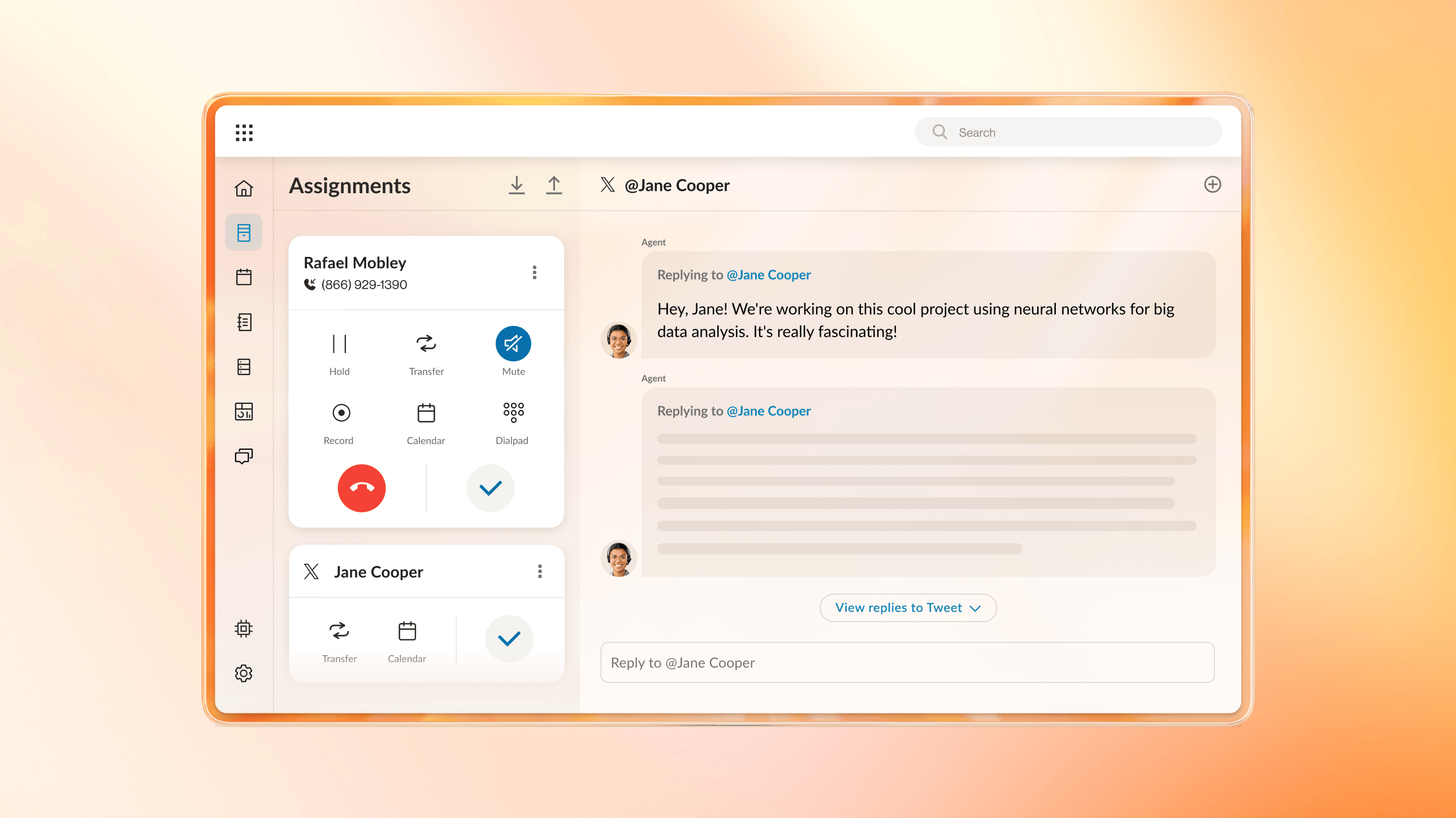
    A RingCentral agent dashboard shows an omnichannel customer service agent assisting customers by phone and via X (Twitter)

    Modern omnichannel customer service relies heavily on AI and automation. Intelligent routing, virtual assistants, real-time transcription, and AI-generated summaries help preserve context and enable personalization at scale. This makes every interaction more efficient without sacrificing the human touch when it matters.

    Omnichannel vs. multichannel customer service

    Multichannel and omnichannel strategies both involve using multiple channels to serve customer needs, but they differ fundamentally in how the channels work together.

    In multichannel customer service , you manage each channel separately. Since each channel uses different tools and data, multichannel support often creates data silos and inconsistent support, forcing customers to repeat themselves every time they switch channels.

    An omnichannel approach integrates all channels into a single, connected experience. By using one shared platform for interaction history, customer data, and workflows, you can preserve vital context to deliver consistent, personalized customer service experiences.

    While both approaches look similar from the outside, only omnichannel ensures everything works together to make life easier for customers and for your teams.

    Omnichannel customer service examples and use cases

    Seeing omnichannel customer experiences in action makes the benefits clear. Here are practical scenarios that mirror modern situations:

    Buy online, pick up in store (BOPIS)

    A customer places an order via your mobile app, opts for in-store pickup, and later messages your support team through WhatsApp to change the pickup time. The customer service agent instantly sees the order, location, and customer profile. When the customer arrives and calls from the parking lot, the agent has access to that same record, including the chat history and updated timing.

    Financial services across channels

    A banking customer starts a conversation with a chatbot to check a balance, then asks a more complex question about a suspicious transaction. The bot escalates to a live agent via secure messaging, automatically passing along the conversation transcript and account details.

    B2B support with multiple stakeholders

    A business customer logs a ticket via email about a billing discrepancy, follows up via SMS, and later joins a video meeting with an account manager and a support specialist. Every interaction remains in one place, allowing both the billing and technical teams to see the same case, documents, and conversation history. This allows them to coordinate internally without pulling the customer into a back-and-forth.

    Why is omnichannel customer service important for modern enterprises?

    Omnichannel customer service is critical because customers already move fluently across channels and expect continuity at every touchpoint.

    In its 2025 State of Customer Experience Survey , PwC states that customer loyalty hinges on the connected sequence of interactions that span from brand discovery to brand advocacy.

    For customer service in particular, Deloitte found that apps and online chat are the preferred channels for 57% of consumers because these provide immediate, convenient, and personalized support . Meanwhile, Gen Zers and millennials are nearly twice as likely to seek support on social media compared to their older counterparts.

    If your systems aren’t connected across these channels, your customer experience (CX) can quickly break down.

    Your data usage policies are just as important

    Customer information is critical for personalizing customer experiences, but the last thing you want is to come off as invasive when gathering data.

    Sharing transparent data privacy policies during collection is key to building customer trust and personalizing experiences.

    Omnichannel customer support benefits

    Consolidating omnichannel customer support into a unified strategy and platform helps you:

    Meet customer expectations

    When you deliver consistent, contextual support across channels, you reduce effort for your customers. They don’t have to remember case numbers, repeat their story, or figure out which department to contact. That reduces frustration and builds trust.

    Streamline customer journeys

    A single view of the customer journey, from initial inquiry to renewal or repeat purchase, allows you to identify friction points and design smoother workflows. You can use data from every channel to improve routing, staffing, and self-service content.

    Boost customer loyalty and retention

    Positive, low-effort support experiences make it easier for customers to stay with your brand. Unified customer context also improves agent accuracy and results in faster resolutions. Over time, consistency and shared context help increase satisfaction, turn customers into brand advocates, and empower your support agents.

    Strengthen brand consistency

    A unified omnichannel strategy helps enforce common standards for tone, policies, and resolution across regions and departments. This protects your brand and makes every touchpoint feel like part of the same organization.

    Increase revenue and upsell opportunities

    A shared data layer provides agents with visibility into prior customer preferences and purchases as they resolve issues. This makes it easier to recommend relevant add-ons or expansions in a way that feels natural and personalized, not pushy.

    Improve operational efficiency

    Centralizing interactions into a single platform reduces manual data entry and duplicate tickets. You can pool agents across channels, use AI to automate repetitive tasks, and optimize staffing with accurate cross-channel reporting.

    How mature is your omnichannel customer service strategy?

    While most organizations already support several channels, true maturity depends on how connected those channels are and how consistently you manage them.

    This simple maturity framework can help you benchmark your current state and determine where to prioritize investment:

    Level 1: Channel-centric support

    • Each channel uses different tools and workflows
    • Limited or no integration with CRM or ticketing systems
    • Leadership has little visibility into cross-channel journeys, and reporting is channel by channel
    • Customers frequently repeat information when they switch channels or departments

    Level 2: Connected multichannel

    • Some channels share data through integrations or manual workarounds
    • Agents can sometimes see previous interactions, but not always in real time
    • There are basic routing rules and escalation paths
    • Self-service support exists but isn’t tightly aligned with live support

    Level 3: Omnichannel and AI-enabled

    • A unified customer service or contact center platform manages all channels
    • Agents, bots, and back-office teams share real-time customer data
    • AI assists with routing, agent guidance, and self-service conversations
    • Leadership can measure cross-channel journeys end to end

    How to implement a successful omnichannel customer service strategy

    Moving to true omnichannel customer service is a significant cross-functional change. Breaking the work into clear steps makes the transition more manageable.

    Here's a simple workflow you can follow:

    Step 1: Map your customer journey

    To create a clear picture of how your customers discover your brand, make purchases, and seek help across all regions and segments, start by analyzing existing interaction data to see which channels customers use. Then, interview frontline teams and review customer feedback to find common handoffs and pain points. Finally, map your highest-value or highest-volume journeys.

    For each stage, document:

    • The channels used
    • Who owns each step
    • The data created or required

    These maps help you determine which journeys to prioritize for omnichannel improvement.

    Step 2: Integrate data and systems

    Next, connect the systems behind your customer journeys.

    To do this:

    • Standardize a core CRM system and make it the source of truth for identities, accounts, and interaction history.
    • Consolidate onto a modern, cloud-based contact center platform that supports voice, digital, and self-service channels in one place.
    • Integrate communications tools with your CRM and ticketing to automatically log conversations with the right customers.
    • Connect digital channels so transcripts, tags, and outcomes are visible alongside phone and email interactions.
    • Plan where AI and automation fit , such as using chatbots to answer common FAQs or AI for skills-based routing , and ensure AI and human agents connect to the same real-time data.

    Step 3: Train teams and establish consistent processes across channels

    Technology alone won’t create an omnichannel customer experience. You also need well-trained teams who can operate across channels with confidence.

    Focus on these training areas:

    • Skills and enablement: Make sure agents understand products, escalation paths, and channel capabilities. Train them to communicate effectively via phone, messaging apps, social, and email, including tone, response times, and expectations for each channel.
    • Standardized workflows and knowledge: Align policies and procedures across regions and departments. Centralize your knowledge base and playbooks so agents, bots, and self-service channels draw from the same guidance.
    • Tools that support omnichannel work: Give agents a single place to view customer context and manage multiple channels without switching apps. Consider capabilities like call center transcription, real-time guidance, and integrated ticketing to keep experiences consistent.

    Step 4: Gather feedback and iterate

    Collect feedback from agents and supervisors as you roll out new channels or AI features, and use quality management tools to monitor interactions and agent productivity.

    Over time, you can expand your strategy with additional elements already common in leading organizations, like live chat, self-service options, and social media support . These should plug into the same omnichannel foundation you've built, increasing capability without adding complexity.

    How to choose the right omnichannel customer service platform

    For mid-size and large organizations, the decision of which omnichannel customer service tools to use has long-term implications.

    When evaluating solutions, look for:

    • Unified channel support: The platform should natively support the channels that matter most to your customers.
    • A single, intuitive agent interface: Agents should handle all channels from one dashboard that surfaces customer history, interaction context, and next-best actions in real time.
    • Deep CRM and business app integrations: Pre-built integrations with your CRM, ticketing, workforce management, and collaboration tools—as well as open APIs—are vital for extending and customizing as your environment evolves.
    • AI and automation capabilities: Modern platforms should offer AI-powered virtual assistants, routing, summarization, sentiment analysis, and real-time agent assistance.
    • Scalability: A multi-tenant cloud platform helps you scale, support remote or distributed agents, and roll out new channels and features without long wait times or hassle.
    • Global reliability, security, and compliance: Strong uptime SLAs , robust voice quality, and compliance with regulations relevant to your industry and regions are essential.
    • Analytics and reporting across channels : Visibility into performance across teams, channels, and locations provides insights into journeys rather than siloed channel metrics.
    • Transparent pricing and total cost of ownership (TCO): Clear and predictable pricing models ensure you understand how AI usage, new channels, or additional users affect your TCO.

    5 common omnichannel customer service implementation challenges and solutions

    Even with the right strategy and platform, you may encounter complex issues on the way to omnichannel success.

    Here’s how to recognize and address them:

    1. Challenge: Persistent data silos

    Customer data is often scattered across legacy CRMs, billing systems, and marketing platforms.

    Solution: Establish a clear system of record for customer data and use integrations or middleware to connect other systems to it. Prioritize use cases where unified data will have the biggest impact, such as high-value accounts or critical journeys, and phase in additional integrations over time.

    2. Challenge: Complex technology integration

    Enterprises often have multiple telephony systems, contact centers, and collaboration tools.

    Solution: Consolidate onto a cloud-based platform that can handle both UCaaS and CCaaS. RingCentral’s approach lets you standardize voice and messaging globally while layering in an omnichannel contact center ( RingCX ) and AI capabilities without a complete rip-and-replace.

    3. Challenge: Agent training and adoption gaps

    If agents are used to working in a single channel or application, introducing new channels and tools without adequate training can lead to inconsistent experiences.

    Solution: Roll out new capabilities in stages with clear playbooks and success metrics. Use built-in quality management, coaching tools, and conversation intelligence to monitor how agents adapt and to target training where it’s needed most.

    4. Challenge: Inconsistent processes across departments

    Different teams may handle customer issues differently, which can create frustration when customer requests are handed off.

    Solution: Define shared omnichannel standards for response times, handoffs, and case ownership. Use workflow automation in your contact center platform to enforce routing and escalation rules so customers don’t get lost between teams.

    5. Challenge: Measuring success across channels

    If each channel has its own reporting, it’s difficult to understand the end-to-end journey or quantify the impact of omnichannel investments.

    Solution: Move to a platform that consolidates interaction data and analytics in one place. Use common KPIs—such as customer satisfaction (CSAT), first contact resolution, and time to resolution—across channels. Add journey-level metrics like channel switches per case and cross-channel containment to get a complete picture.

    Transform your customer service with omnichannel solutions

    Omnichannel customer service aims to deliver connected journeys and low-effort interactions no matter how a customer reaches you. To ensure every interaction feels like part of a continuous, engaging conversation, you need to unify context, workflows, and data.

    When you consolidate onto a unified, cloud-based platform like RingCX, you can:

    • Set up omnichannel routing across 20+ channels
    • Assist customers 24/7 with an AI-powered interactive virtual agent (IVA) and self-service options
    • Share full customer conversation context in real time

    If you’re ready to modernize your customer service, an omnichannel approach is the foundation. Map your key customer journeys, assess your readiness, and contact our sales team to explore how RingCentral can help you deliver faster, more personal, and more reliable service at scale.

    Build a scalable foundation for your omnichannel support

    RingCX brings voice, digital channels, routing, analytics, and quality management into one platform.

    Talk to sales

    Omnichannel customer service FAQs


    RingCX
  • Webinars & Events
  • Features
  • Phones and headsets
  • Partners

    • Global service providers
    • Channel partners
    • ISV partners
    • Hardware partners
    • Connectivity partners
    • Affiliate partners
    • Strategic alliances

    Open Ecosystem

    • Developer platform
    • APIs
    • App gallery
    • LLM Plugins & MCPs

    Learning

    • What's new
    • Resource center
    • Blog
    • Customer stories
    • Newsroom
    • Events & Webinars

    Company

    • About Us
    • Leadership
    • Investor relations
    • Ventures
    • Trust Center
    • Corporate Responsibility
    • Careers

    Help & Support

    • RingCentral app login
    • Admin portal login
    • Customer support
    • Download app
    • View demo
    • Contact sales

    How can we help? Contact us

    LegalPrivacyCookie NoticeSite MapAccessibilityContact Us
    Cookie Preferences
    Do not sell or share my personal data
    © 2026 RingCentral, Inc. All rights reserved.
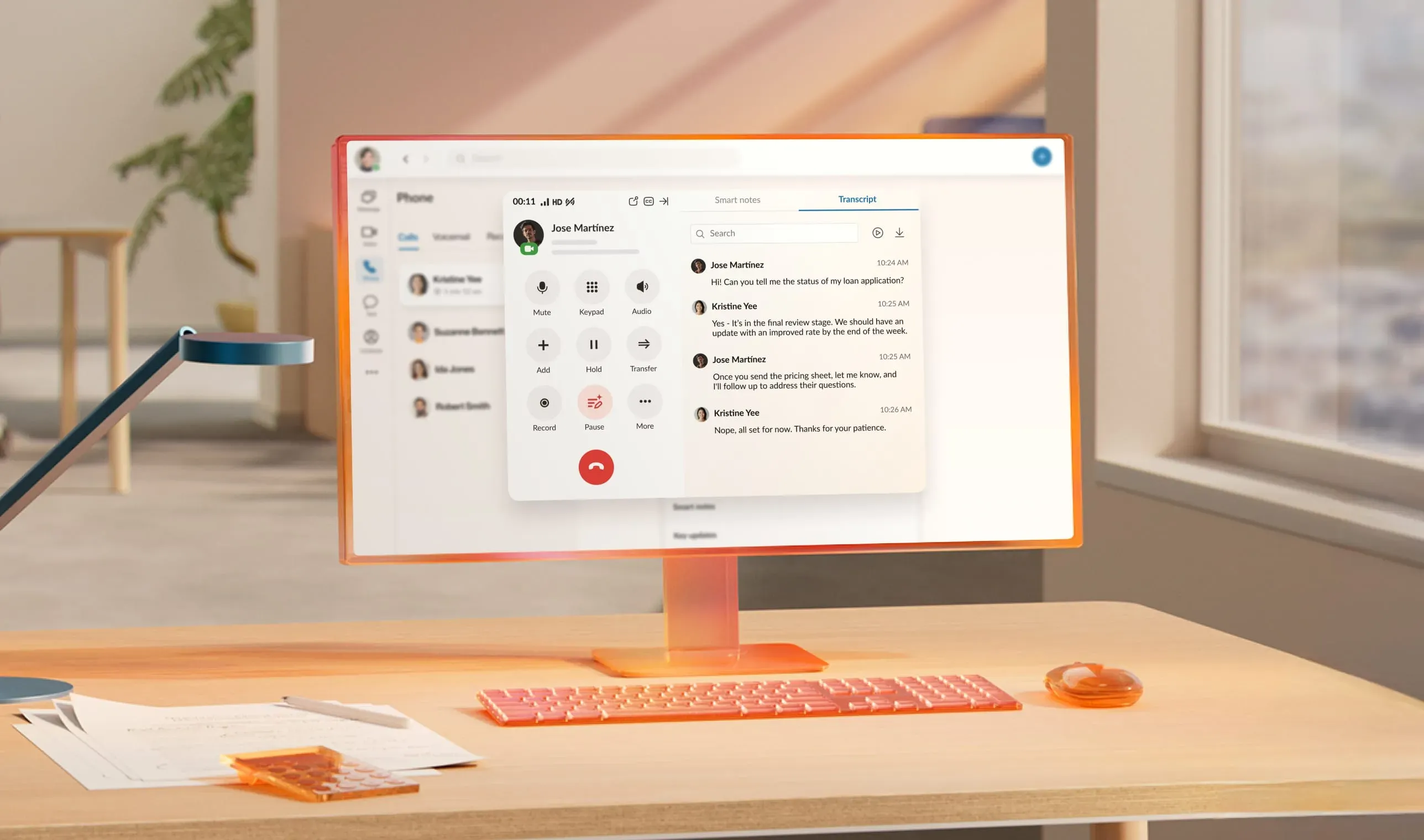
     A monitor displaying a written interaction within the RingCentral platform, discussing the status of a loan application
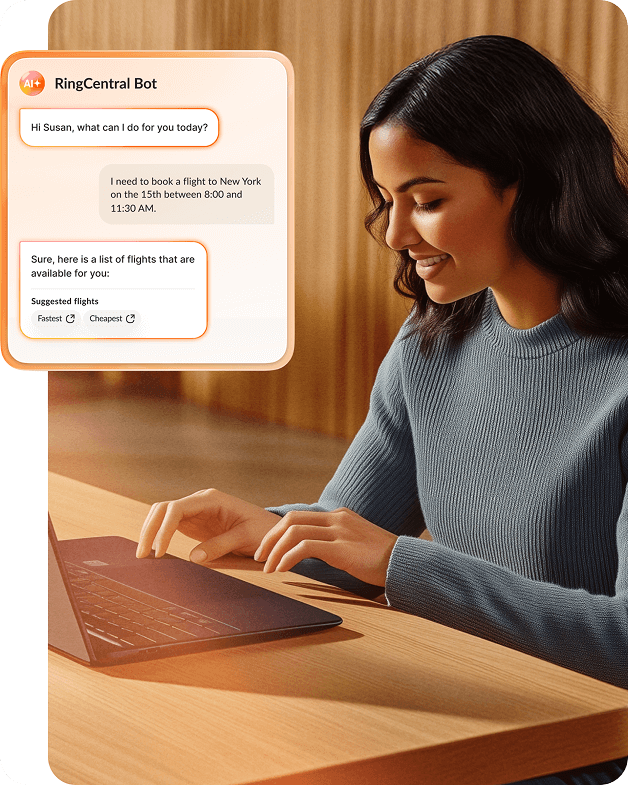
    A person typing at a laptop, asking a RingCentral chatbot to help her book a flight to New York
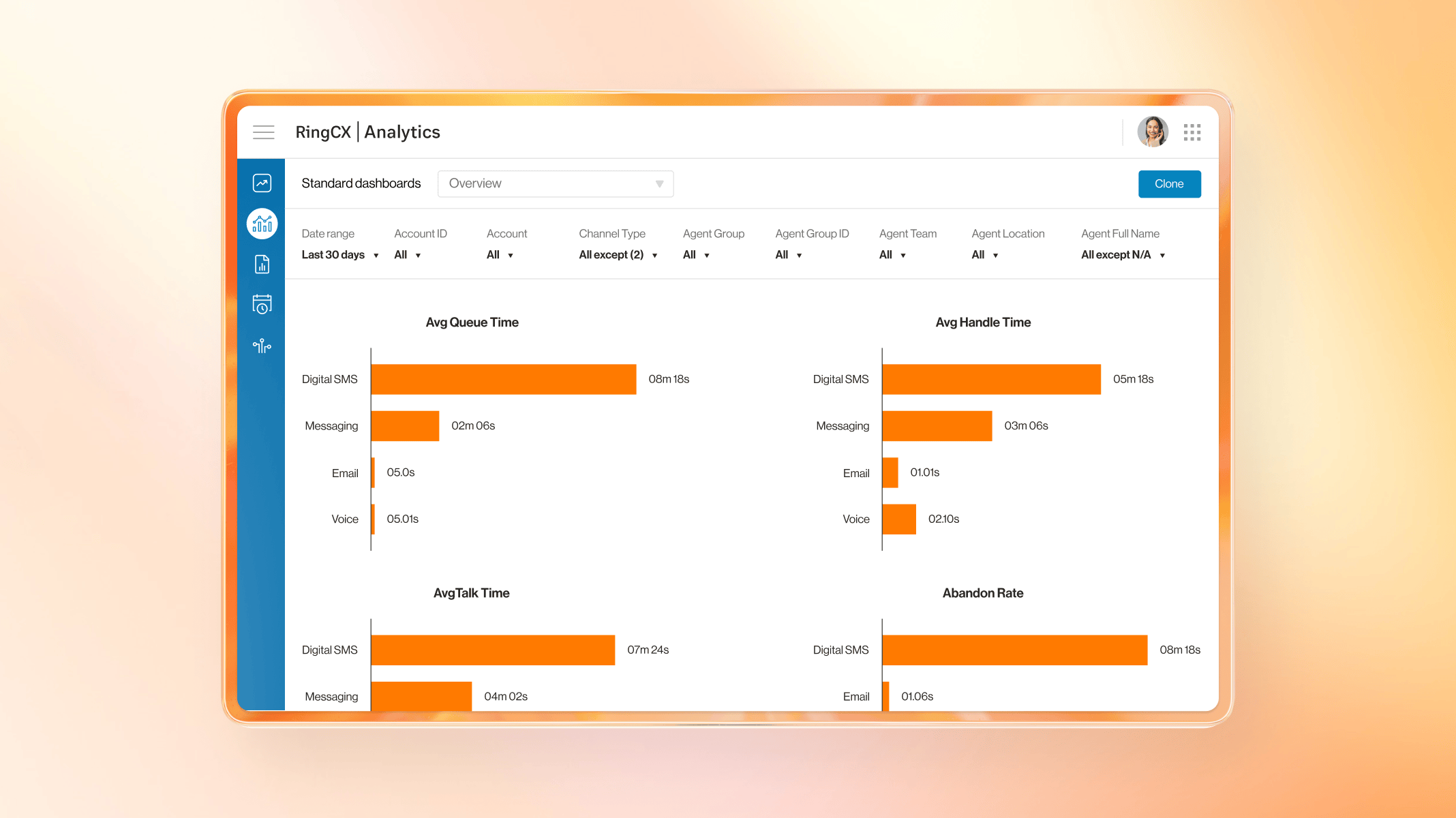
    RingCX Analytics dashboard with average queue, handle, and talk time across digital SMS, messaging, email, and voice channels
    Country

    By clicking the button, you consent to receiving calls and emails from RingCentral. Calls may be made using automated technology.

    Privacy Policy
    *Required fields