Virtual receptionist guide for enterprise call routing and CX
Standardize call handling, route interactions accurately, and scale the customer experience across teams, locations, and time zones.
Call handling doesn't fail because of volume. It fails because of fragmentation.
When different systems answer calls, different teams manage queues, and different regions follow different rules, you end up with inconsistent experiences, missed opportunities, and limited visibility into what’s actually happening.
A virtual receptionist replaces this patchwork with a standardized process for handling, routing, and measuring every inbound call across your entire communications stack.
What is a virtual receptionist?
A virtual receptionist is an AI-powered system that answers, understands, and routes incoming calls automatically rather than relying on rigid menus or manual intervention.
Instead of forcing callers through predefined options, modern virtual receptionists use conversational AI to handle phone calls the way a real person would. They greet callers, identify intent, and route interactions based on agent availability and role or call priority. Along the way, they capture key context so when they transfer calls, the agent understands who the caller is and what they need.
Virtual receptionist services matter because enterprise call handling must evolve quickly to keep pace with business needs. In fact, it’s predicted that one in four brands will achieve a 10% gain in successful simple self-service interactions by the end of 2026.1
How it differs from legacy call handling
Many organizations still rely on a mix of disconnected systems:
- Auto-attendants and chatbots that force callers through static menu trees
- Call answering services that lack integration with internal systems
- In-house receptionists who can't scale across locations or time zones
While each approach solves part of the problem, none delivers the consistency, visibility, or scalability an enterprise requires. When you embed a virtual receptionist directly into your communications platform, it becomes part of your operational workflow, standardizing call handling, improving routing accuracy, and providing a consistent experience at scale.
Types of virtual receptionist solutions
Enterprise teams typically evaluate three types of virtual receptionists, each with different trade-offs in scalability, cost, and control.
AI-powered virtual receptionist
AI-powered solutions use voice AI to handle calls autonomously, identifying intent and routing incoming calls without human intervention.
For most enterprises, this model delivers the strongest results. It scales instantly with call volume, maintains consistent call handling across regions, and reduces reliance on manual processes. It’s especially effective for organizations with high call volumes, distributed teams, or a need to standardize customer support across locations.
Hybrid (AI + human support)
Hybrid models combine AI-driven routing with live agents for more complex or sensitive interactions.
This approach works well in environments where automation handles routine calls but human judgment is still required for edge cases—such as regulated industries or high-touch customer scenarios.
The trade-off is operational complexity. Managing both automated and human workflows typically increases costs and introduces greater variability.
Answering services and IVR systems
Legacy solutions—such as traditional answering services and interactive voice response (IVR) systems—still exist, but they’re increasingly limited in modern environments. Answering services rely on manual processes and offer limited integration with internal systems, while IVR depends on rigid menu structures that slow callers down.
Both approaches can handle basic call routing, but neither provides the flexibility, intelligence, or system-level integration required at enterprise scale.
How virtual receptionists integrate with enterprise systems
In many enterprises, call handling is fragmented across tools that don't talk to each other.
Integration changes that. Unified communications as a service (UCaaS) and contact center platforms with built-in virtual receptionists provide a single, coordinated routing system that handles calls using real-time data instead of static rules.
That allows your system to:
- Route calls based on live agent availability
- Reach employees across devices, whether they’re in-office or remote
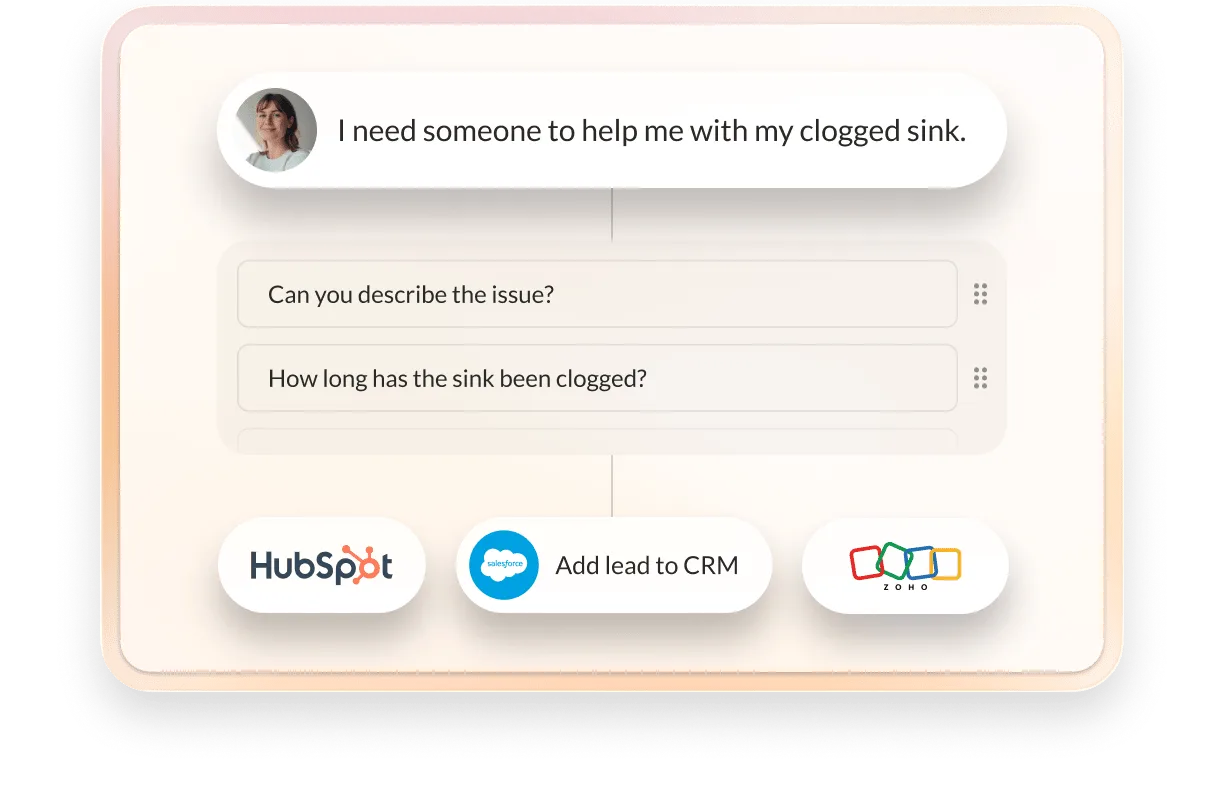
- Pull customer relationship management (CRM) data before routing so interactions start with context
- Prioritize queues using contact center logic like skills-based routing
- Pass full caller context during transfers to eliminate repetition
By consolidating handling, routing, and analytics into one layer, you maintain consistent logic for every caller, regardless of which office or department they reach.
Enterprise call routing capabilities to prioritize
Once your system is unified, the next question is capability. Enterprise scale requires a system that can adapt in real time across locations, teams, and conditions.
The best virtual receptionist platforms combine three functions:
1. Intelligent routing
Moving beyond menus means routing live calls based on what the caller needs, not what they select. This includes:
- Intent-based routing using conversational AI
- Skills-based matching in call center environments
- Priority routing for VIP or high-value callers
2. Global and distributed handling
Unlike many small businesses, enterprise operations don’t have a single schedule or location. Enterprise routing should account for:
- Time zones and business hours across regions
- Language preferences
- Geographic distribution of teams and resources
3. Resilience and real-time adaptability
Conditions change constantly, and your routing should too. Look for phone systems that provide:
- Call forwarding during outages or spikes in volume
- Queue balancing across teams and locations
- Dynamic adjustments based on availability
- Real-time syncing with workforce and scheduling systems
These capabilities directly impact speed and consistency at scale.
Business outcomes for customer experience, operations, and IT
When routing is both intelligent and unified, the benefits extend into team operations, IT infrastructure, and customer experience (CX).
Improved customer experience
Reaching the right person faster and with less friction results in:
- Higher first-call resolution
- Lower abandonment rates
- More consistent experiences across regions
These capabilities directly impact speed and consistency at scale.
More efficient operations
Spending less time managing calls and more time resolving them reduces:
- Manual transfers and interruptions
- Bottlenecks during peak periods
- Dependence on additional headcount to scale
Consolidated IT and infrastructure
Operating from a single platform instead of managing multiple systems leads to:
- Fewer vendors and integrations to maintain
- Centralized governance and control
- Unified reporting across communications
The outcome is straightforward: faster response times, more consistent service, and lower operational complexity.
5 high-value enterprise use cases
The value of a virtual receptionist becomes most evident when operational complexity creates friction across an organization. These aren’t edge cases. They’re everyday operational realities for enterprise teams.
Here’s where impact tends to show up most clearly:
- Multi-location routing: As organizations expand, call handling often becomes inconsistent across regions. A virtual receptionist centralizes this, routing calls automatically based on geography, availability, and business hours so customers reach the right team without delays.
- After-hours and overflow coverage: Instead of dropping calls or overstaffing, a virtual receptionist redistributes demand in real time. It handles calls automatically, routes them across time zones, or directs them to available teams to maintain service levels without adding headcount.
- VIP and priority routing: Because virtual receptionists can identify high-value customers and route them immediately to the right team or stakeholder, they reduce wait times and ensure critical relationships are handled with the necessary urgency.
- Department-level automation: With intent-based routing, calls are directed based on what the customer actually needs. Sales, support, and billing inquiries reach the right team right away, reducing friction for both customers and employees.
- Dynamic, event-based routing: A virtual receptionist allows you to adjust routing logic in real time, without reconfiguring infrastructure. You can scale up, redirect flows, and maintain performance as demand shifts.
Across these scenarios, the goal is the same: route every call correctly, the first time. This acts as a direct safeguard against churn: research shows that 40% of customers will defect to a competitor when their issues aren't resolved on the first call.2 Standardizing routing turns call handling from a reactive process into a reliable, scalable system that supports loyalty and growth.
How to evaluate a virtual receptionist for enterprise use
At the enterprise level, choosing a virtual receptionist provider isn’t about comparing feature lists. It’s about understanding how well a solution fits into your existing architecture, governance model, and operating scale.
Most evaluation challenges come down to one question: “Will this system simplify our environment or add another layer of complexity?”
The following areas can help clarify that distinction:
Integration and architecture: Does it unify or fragment?
Start with how the solution connects to your existing systems. Many vendors claim “integration” but rely on middleware or custom development to connect with your UCaaS, contact center, and CRM platforms. This approach often leads to latency, increased maintenance overhead, and limited visibility.
Prioritize solutions that are natively embedded in your communications stack. This allows routing decisions to happen in real time—based on live availability, customer data, and contact center logic—without introducing additional points of failure.
If integration feels like a project, it’s a risk.
Control and governance: Can you scale without losing consistency?
Enterprise environments require both centralized control and local flexibility. You should be able to define global routing policies, security standards, and workflows while still allowing regional or departmental teams to adapt where necessary.
Look for platforms that support:
- Role-based access across IT and business teams
- Centralized policy management with auditability
- Controlled customization at the regional or team level
Without this balance, organizations either lose consistency or slow down execution.
Visibility and performance: Can you improve what you deploy?
Routing decisions shouldn’t be static. To continuously improve performance, you need visibility into how calls are actually handled across your organization.
This requires:
- Clear insight into routing accuracy and outcomes
- Visibility into queues, workloads, and bottlenecks
- Trend analysis across regions, teams, and time periods
The goal is to turn call handling into something you can measure, refine, and optimize.
Security and compliance: Does it meet enterprise standards by default?
At scale, security and contact center compliance is a requirement. Your virtual receptionist should meet the same standards as the rest of your communications infrastructure without requiring additional configuration or oversight.
This includes:
- Compliance with frameworks like SOC 2, Health Insurance Portability and Accountability Act (HIPAA), and General Data Protection Regulation (GDPR)
- Encryption in transit and at rest
- Full audit trails and data residency controls
If these capabilities aren’t built in, they become an ongoing operational burden.
Reliability and scale: Will it hold up under real conditions?
Call handling is a front line for your business—downtime or routing failures directly impact the customer experience.
Look beyond stated service level agreements (SLAs) and evaluate how the system performs under load:
- Consistent uptime at enterprise levels (99.99% or higher)
- Built-in redundancy and failover
- Proven ability to handle high-volume, distributed environments
How to implement a virtual receptionist and measure success
Deployment is a high-risk phase that many teams overcomplicate. Rather than trying to launch everywhere at once, start by validating performance in a controlled environment so you can scale with confidence. Beginning with a focused rollout—typically within a single region, department, or call flow—establishes a clear baseline and limits disruption.
In the early phase, focus on a small set of indicators that confirm the system is working as expected:
- Routing accuracy
- Call completion rates
- Customer satisfaction
Once performance stabilizes, expand incrementally and track broader operational impact, including:
- First-call resolution
- Average handle time
- Call abandonment
- Missed call reduction
At this stage, the priority shifts from validation to optimization. The most effective teams treat implementation as an ongoing system, continuously refining routing logic, improving AI performance, and adjusting workflows based on real usage data. This approach turns a virtual receptionist from a functional tool into a reliable, scalable part of your communications infrastructure.
How RingCentral supports enterprise virtual receptionist workflows
Most virtual receptionist solutions solve a narrow problem: answering and routing calls. RingCentral takes a different approach by treating call handling as part of a broader communications system—one that connects routing, conversations, and insights into a single, unified platform.
That means you’re not adding another tool. You’re standardizing how your organization handles every inbound interaction.
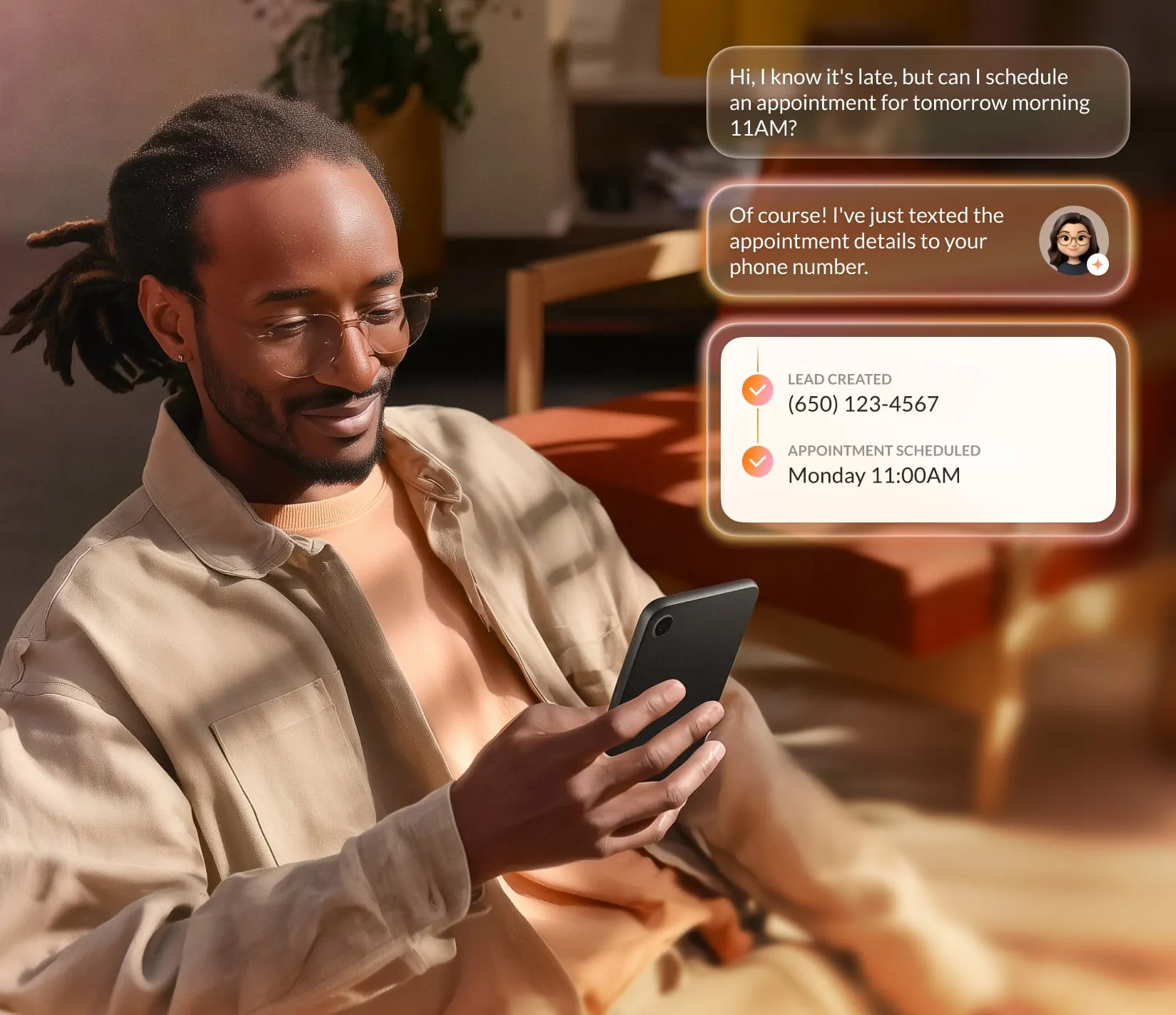
At the center of this is AI Receptionist (AIR), which manages call intake and routing natively within RingCentral’s unified communications and contact center platform. Operating from one environment ensures consistent logic across every team and location.
A lifecycle approach to every interaction
Call handling is part of a larger workflow that spans the pre-, during-, and post-conversation phases. Along with AIR, RingCentral’s agentic voice AI framework supports that entire lifecycle:
- AI Receptionist (AIR) handles call intake and routing before a human joins the conversation.
- AI Virtual Assistant (AVA) supports employees with admin tasks like recording calls, taking notes, surfacing action items, providing translation, and drafting messages.
- AI Conversation Expert (ACE) analyzes interactions to uncover insights and improve performance over time.
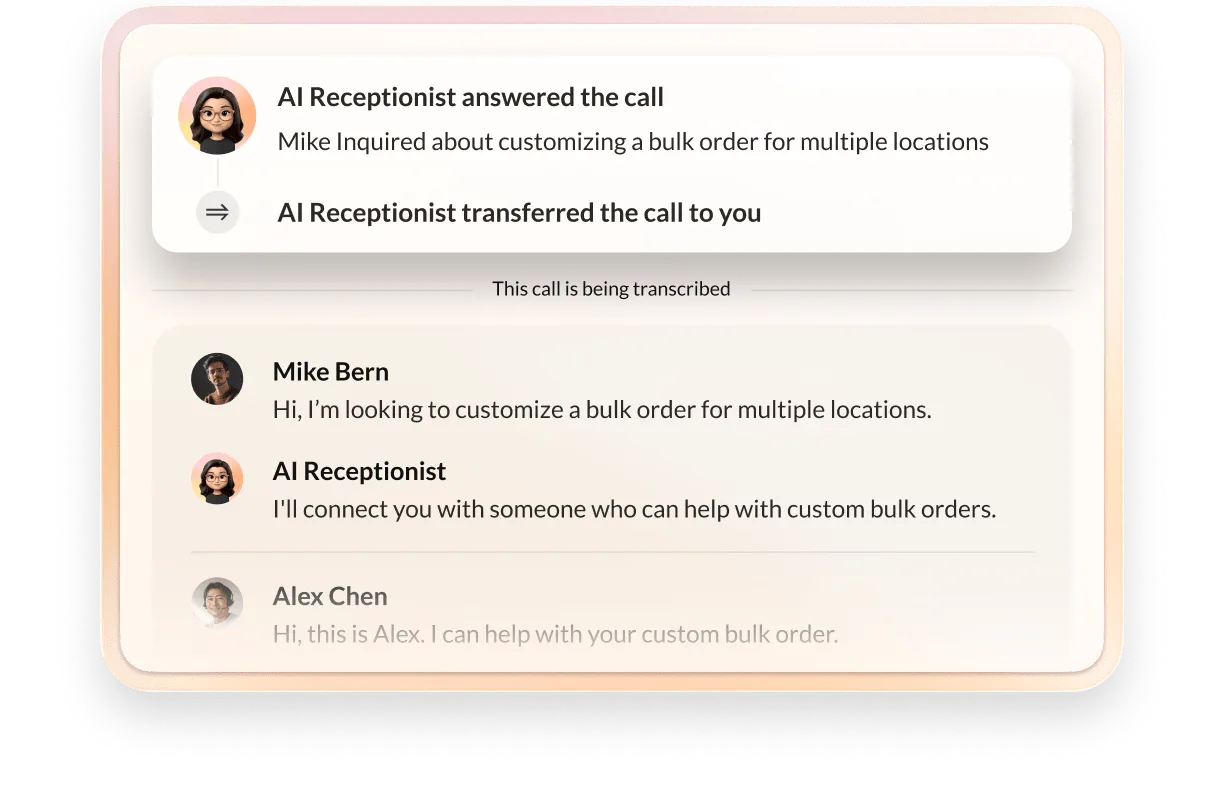
This framework ensures every customer call and interaction is handled consistently, transferred with full context, and continuously improved.
Built for enterprise scale and control
Because these capabilities are native to RingCentral, they operate as part of your existing environment. That translates into:
Creating a standardized system for how your business responds to customers across every location, team, and interaction means you maintain control, consistency, and visibility without adding technical overhead.
Choose a virtual receptionist that scales with your enterprise
A virtual receptionist is no longer just a front-desk replacement. It’s part of the system that determines how quickly, accurately, and consistently your organization responds to customers at scale.
Integrated platforms like RingCentral connect call handling to your broader communications environment so routing decisions, conversations, and insights all operate as part of the same system. This leads to fewer unanswered calls, improved routing accuracy, and operations that scale without added complexity.
See how RingCentral AI Receptionist helps you standardize call handling, improve response times, and deliver more consistent customer experiences.


Sources
1. Leggett, K. (2025, November 11). Predictions 2026: AI gets real for customer service — but it’s not glamorous work. Forrester.
2. First call resolution (FCR): A comprehensive guide. SQM Group. (n.d.).